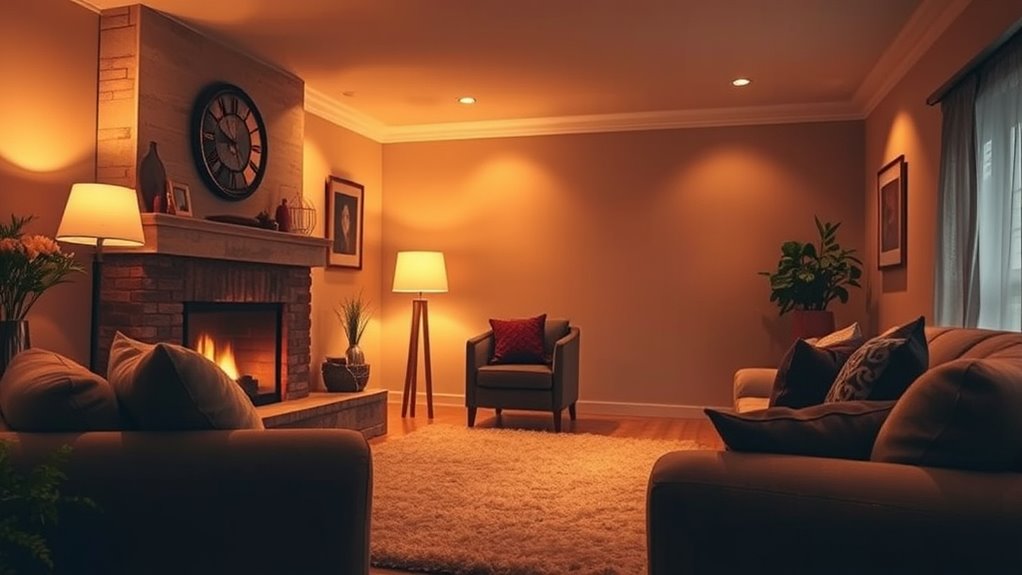

Layered lighting helps you set the perfect mood by combining ambient, task, and accent lights for balanced illumination. You can use dimmers and adjustable fixtures to create versatile atmospheres, from cozy and warm to bright and energizing. Playing with color temperature also influences feelings, while strategically placing lights highlights your decor and architectural features. Mastering these techniques allows you to craft inviting spaces that reflect your desired ambiance—continue exploring to learn more about achieving the ideal glow.
Key Takeaways
- Layered lighting combines ambient, task, and accent lights to create a balanced, functional, and mood-enhancing environment.
- Proper fixture placement at different heights and angles prevents shadows and highlights features for added ambiance.
- Adjusting light intensity with dimmers or smart controls allows seamless mood changes from bright to relaxed settings.
- Using warm or cool color temperatures influences the emotional tone and overall atmosphere of a space.
- Highlighting architectural details and artwork with accent lighting adds depth and visual interest to the mood.
Understanding the Basics of Layered Lighting

Layered lighting is essential for creating a well-balanced and functional space. To achieve this, you need to understand how fixture placement influences the overall look and feel. Proper placement enhances color contrast, making your room more vibrant and inviting. For example, placing fixtures at different heights and angles prevents shadows and highlights key features. Think about layering light sources: overhead fixtures for general illumination, task lights for specific activities, and accent lights to emphasize artwork or architectural details. Balancing these elements ensures your space is both practical and visually appealing. Additionally, understanding color temperature adjustments can help optimize the mood and ambiance of your environment. By paying attention to fixture placement and how each light interacts, you create a harmonious environment that adapts seamlessly to your needs and mood.
Differentiating Ambient, Task, and Accent Lighting
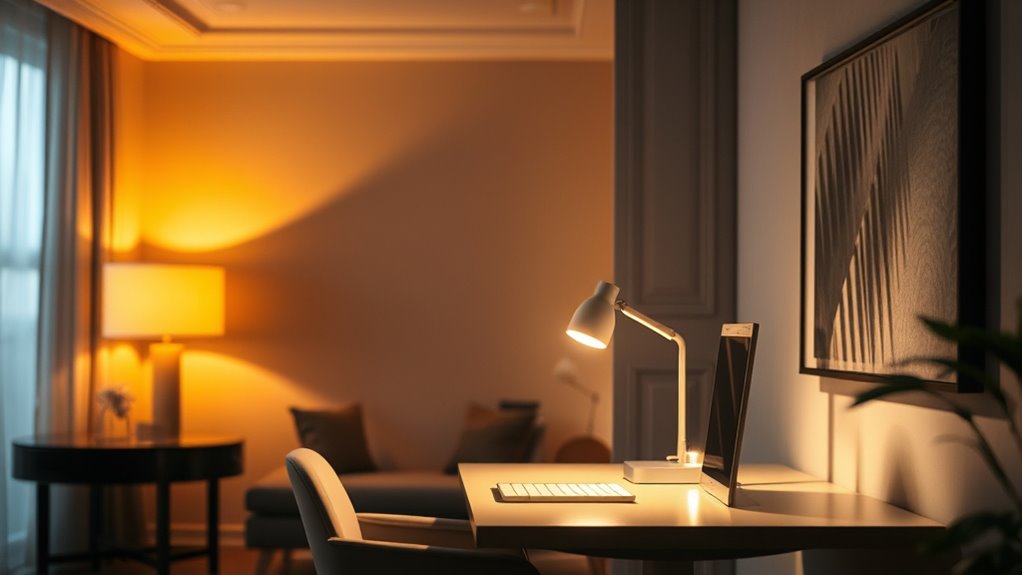
Have you ever wondered how different types of lighting work together to shape a room’s atmosphere? Understanding the roles of ambient, task, and accent lighting helps you create a balanced space. A well-designed lighting scheme can even incorporate layered lighting principles to enhance the room’s visual interest and functionality.
Discover how ambient, task, and accent lighting work together to create a balanced, inviting space.
- Ambient lighting provides general illumination and sets the overall mood, often achieved through fixture placement that avoids harsh color contrast.
- Task lighting focuses on specific areas, like countertops or desks, with fixtures placed close for direct light, minimizing shadows.
- Accent lighting highlights features or art, using strategically positioned fixtures to draw attention without overpowering the room’s ambiance.
Choosing the Right Fixtures for Each Layer
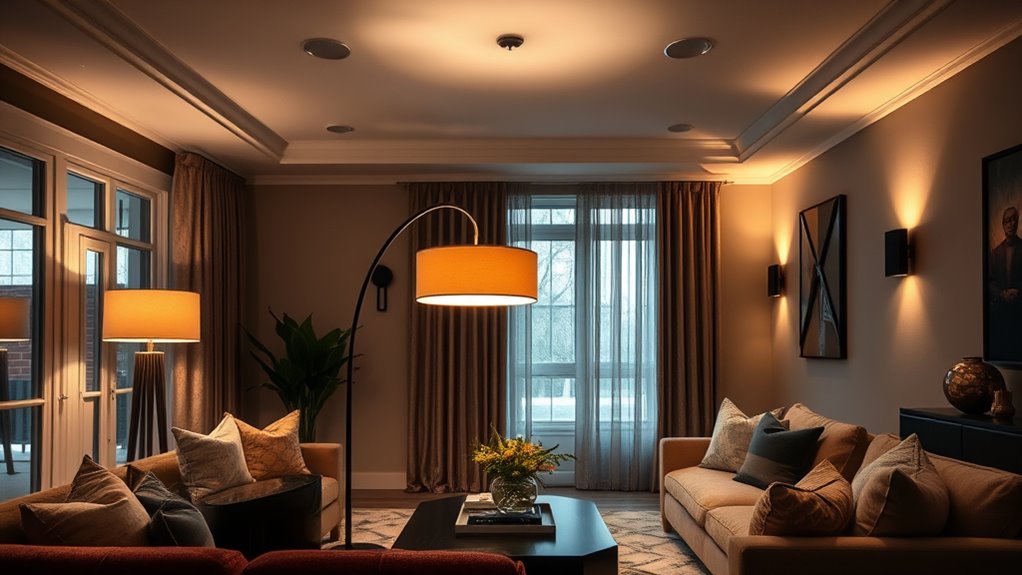
Selecting the right fixtures for each lighting layer is essential to creating a functional and inviting space. Your choice of fixture styles, such as chandeliers, recessed lights, or wall sconces, directly impacts the room’s overall look and purpose. For ambient lighting, opt for fixtures that provide broad, even illumination, like ceiling-mounted fixtures or flush mounts, with warm bulb types to set a cozy mood. Task lighting requires focused fixtures like adjustable desk lamps or pendant lights, often using brighter, cooler bulbs for clarity. Accent lighting benefits from smaller fixtures such as track lights or picture lights, highlighting artwork or architectural features. Pay attention to fixture styles and bulb types to guarantee each layer complements your decor and meets your lighting needs effectively. Additionally, understanding how to layer lighting effectively can greatly enhance the ambiance and impact of wind turbine blades on energy production, ensuring your space remains both beautiful and efficient. Incorporating energetic alignment strategies into your lighting design can also promote a more harmonious environment that supports your mood and well-being. Moreover, choosing fixtures that are compatible with bicycle lighting standards can improve safety during nighttime activities.
Creating Ambiance With Dimmable Lights

Dimmable lights let you easily adjust brightness levels to suit any mood or activity. They give you room flexibility, making it simple to switch from bright task lighting to soft, relaxing glow. With dimmable options, you can create intimate settings perfect for unwinding or entertaining. Incorporating ambient sounds into your space can enhance the overall ambiance and make your environment more inviting. Additionally, understanding lighting scams can help you choose safe and reliable lighting options for your home. When selecting your lights, consider styles that reflect your dog’s names, as the right lighting can complement your decor and your pet’s personality.
Adjusting Brightness Levels
Adjusting brightness levels is a simple yet powerful way to set the mood in any space. With dimming controls, you can easily tailor the lighting to match your activity or atmosphere. To get the most out of your dimmable lights, perform brightness calibration regularly, ensuring smooth changes and accurate levels. Here are three key points to take into account:
- Use dimming controls to create intimate or lively environments, adjusting light intensity as needed.
- Calibrate brightness settings to prevent flickering and achieve consistent illumination.
- Recognize how subtle shifts in brightness can influence mood, making your space more inviting or energizing.
Enhancing Room Flexibility
By fine-tuning brightness levels, you can considerably enhance your room’s versatility and mood. Installing dimmer switches allows you to easily adjust lighting intensity to suit any activity or time of day, from bright work sessions to relaxing evenings. Smart bulbs take this flexibility further by offering remote control and customizable presets via your smartphone or voice commands. With dimmer switches and smart bulbs, you can create a dynamic environment that adapts effortlessly, making your space more functional and inviting. This layered approach to lighting gives you the power to set the perfect ambiance for any occasion, whether you’re hosting guests or enjoying a quiet night in. Ultimately, these tools help you maximize your lighting options without cluttering your space.
Creating Intimate Settings
Have you ever noticed how the right lighting can instantly transform the mood of a room? Dimmable lights help you create intimate settings by adjusting brightness to suit the moment. Focus on fixture placement to highlight cozy corners or soften harsh areas. Play with color contrast by mixing warm and cool tones to add depth and warmth. Here are three ways to enhance intimacy:
- Use dimmable sconces near seating areas for a gentle glow.
- Position fixtures strategically to avoid glare and create soft shadows.
- Layer different light sources to control focus and ambiance. Additionally, incorporating layered lighting techniques can further refine the mood and functionality of your space. Understanding layered lighting allows you to seamlessly combine various light sources, creating a balanced and customizable environment that can be as lively or as serene as you desire. For example, selecting vintage-inspired fixtures can add rustic charm while providing versatile lighting options.
Using Color Temperature to Set the Mood
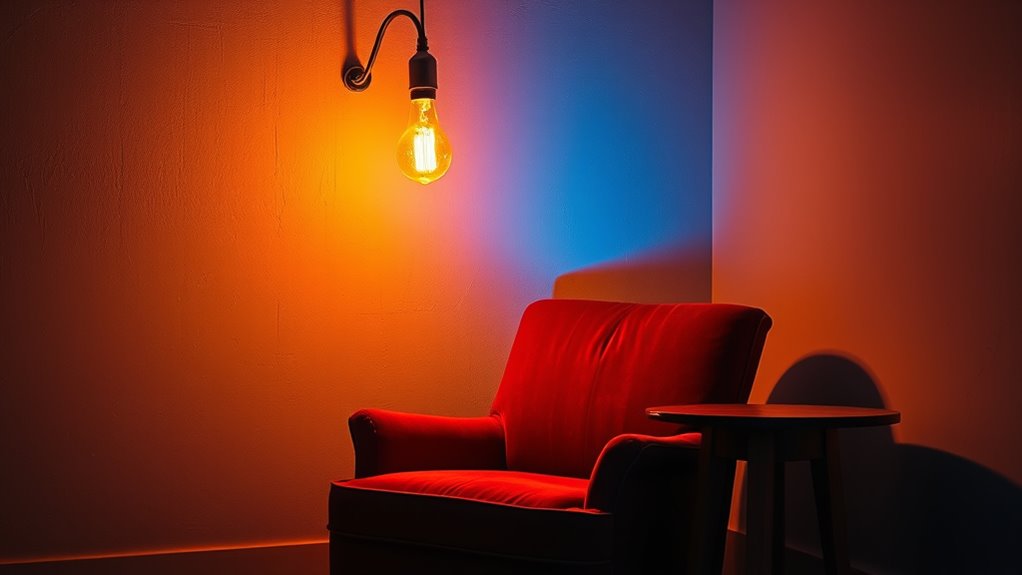
Color temperature plays a pivotal role in setting the mood of a space because it influences how we perceive the environment and how it makes us feel. Warm tones, like soft yellows and amber, create cozy, inviting atmospheres perfect for relaxation or intimate gatherings. Cool tones, such as bluish whites, promote focus and a sense of freshness, ideal for workspaces or modern designs. By adjusting the color temperature, you can enhance your mood creation efforts, making a room feel more energetic or calming, depending on your intent. Understanding how to manipulate this aspect of lighting allows you to craft environments that align with your desired emotional response, making your space more functional and emotionally resonant. Lighting control methods are essential for tailoring your environment to suit your needs. Ultimately, color temperature is a powerful tool in your lighting toolkit.
Incorporating Smart Lighting for Flexibility
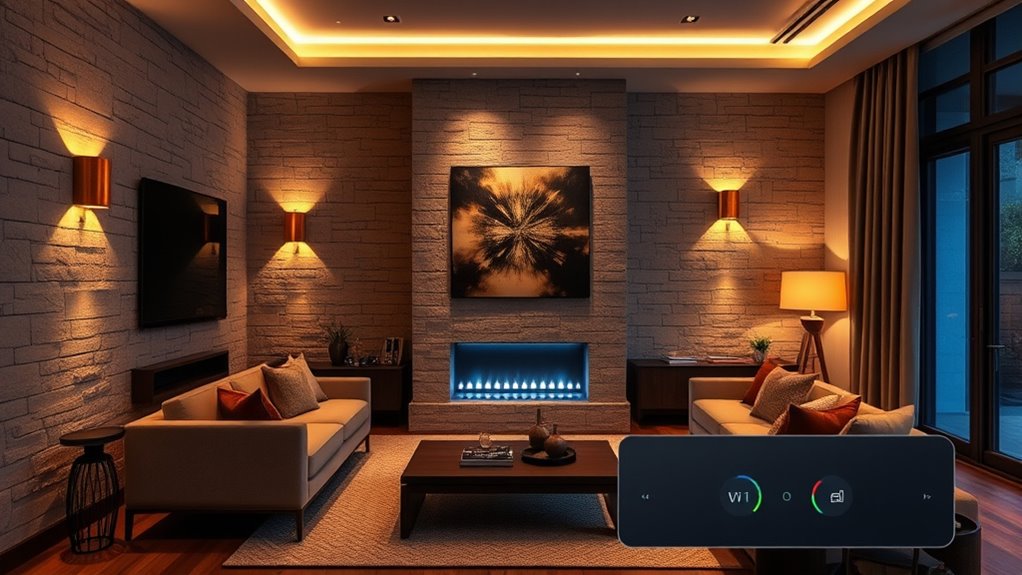
Smart lighting systems offer a versatile way to customize your environment effortlessly. With voice control, you can adjust your lights without leaving your seat, making changes quick and simple. These systems also enhance energy efficiency by automatically adjusting brightness and turning off lights when not needed, saving you money. To maximize flexibility, consider these key benefits:
Smart lighting offers effortless customization, energy savings, and remote control for a more flexible, eco-friendly home.
- Personalized Scenes: Create presets for different moods or activities, like movie nights or work sessions.
- Scheduling: Automate lighting to match your routine, ensuring *ideal* ambiance and efficiency.
- Remote Control: Manage your lights from anywhere, perfect for busy or unpredictable schedules.
Incorporating smart lighting empowers you to control your space precisely while reducing energy consumption, creating a more adaptable and eco-friendly home environment.
Tips for Balancing Light and Shadows
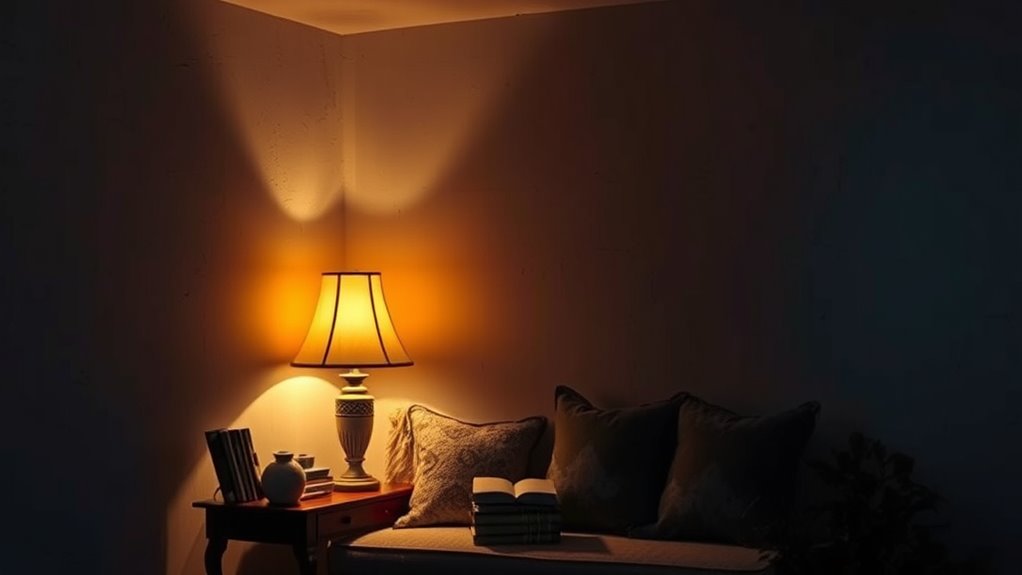
Achieving a balanced interplay of light and shadows enhances the depth and mood of a space. To master shadow play, position light sources at varying heights and angles to create subtle shadows that add visual interest without overwhelming the room. Use light diffusion techniques, like frosted bulbs or lampshades, to soften harsh light and prevent stark contrasts. Incorporate layered lighting—combining ambient, task, and accent lights—to control shadow intensity and distribute illumination evenly. Adjust dimmers to fine-tune brightness levels, ensuring shadows enhance rather than obscure details. Remember, shadows should complement your space, highlighting textures and shapes without dominating. Understanding lighting effects can help you tailor illumination to achieve your desired ambiance. Thoughtful placement and diffusion of light help you achieve a harmonious balance, creating a cozy, inviting atmosphere. Additionally, understanding the impact of lighting on mental health can guide you in designing environments that promote relaxation and well-being. Recognizing how proper lighting techniques influence mood can help create spaces that feel both comforting and stimulating. Developing an awareness of lighting design principles enables you to craft environments that support emotional comfort and visual harmony.
Enhancing Decor With Accent Lighting
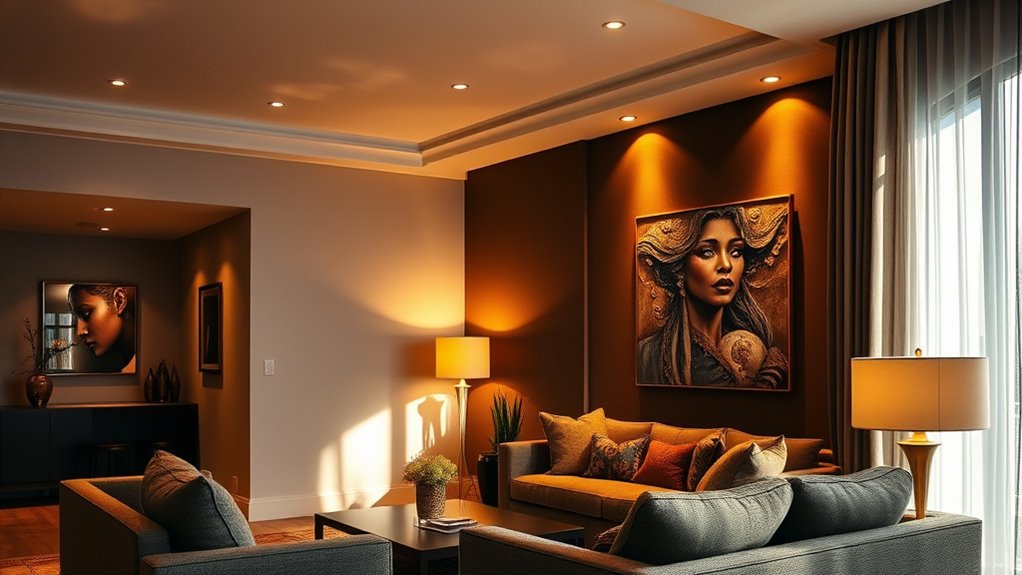
Accent lighting is a great way to make architectural details stand out and add depth to your space. You can also use it to draw attention to decorative elements like artwork or unique furniture. By strategically placing these lights, you enhance your decor and create a more inviting atmosphere.
Highlight Architectural Details
Highlighting architectural details with accent lighting immediately draws attention to the unique features of your space. This technique creates architectural emphasis and enhances the overall aesthetic. To achieve effective detail illumination, consider these strategies:
- Use adjustable spotlights to target specific features like crown molding or textured walls.
- Incorporate wall washers to evenly highlight large architectural elements.
- Install uplights at the base of columns or sculptures to emphasize their form and depth.
Showcase Decorative Elements
Decorative elements like artwork, vases, and sculptures can truly stand out with the right accent lighting. This type of lighting highlights your decor’s unique textures and colors, transforming them into decorative focal points that enhance your space’s visual storytelling. Well-placed accent lights draw the eye and create depth, making your decor feel purposeful and engaging. Consider how a spotlight on a sculpture or a subtle wash over a painting can evoke emotion and add personality to your room. Use the table below to explore different lighting techniques for showcasing decorative elements:
| Technique | Effect |
|---|---|
| Spotlighting | Creates dramatic emphasis on features |
| Wall Washing | Softly illuminates large decor pieces |
| Accent Uplighting | Adds depth and a sense of dimension |
Practical Examples of Mood Settings
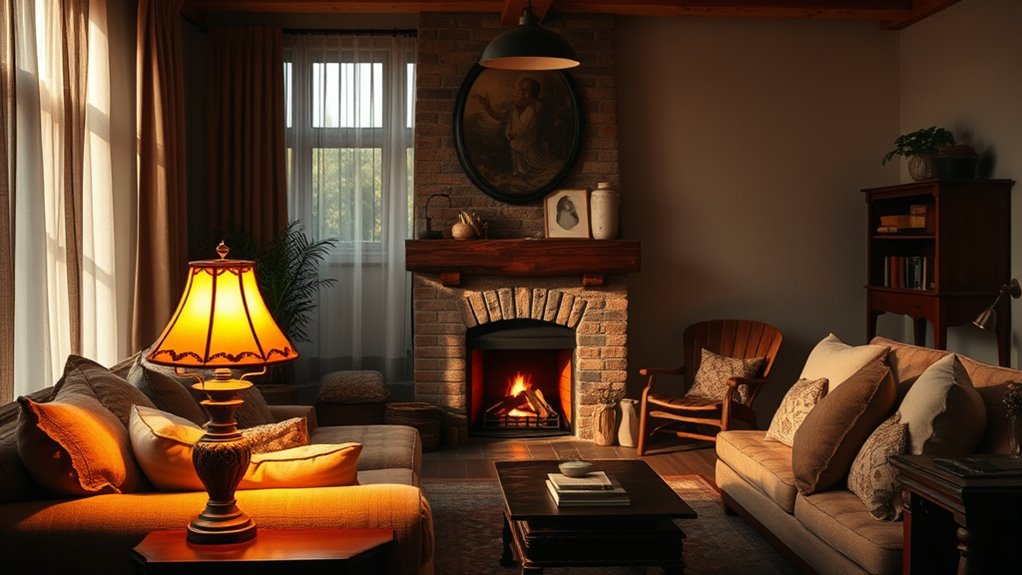
Creating the right mood with lighting involves thoughtfully choosing brightness levels, color temperatures, and fixture placement to match the atmosphere you want to evoke. For example, a cozy reading nook benefits from warm color palettes and soft, indirect light placement that minimizes glare. In contrast, a lively kitchen requires brighter lighting with cooler tones and strategic light placement to highlight functional areas. Here are some practical tips:
- Use warm hues and diffuse lighting for relaxing spaces to promote comfort.
- Incorporate layered light placement—ambient, task, and accent—to add depth and flexibility.
- Select color palettes that complement the mood; darker shades for intimacy, brighter for energy.
Maintaining and Adjusting Your Lighting Layers

To keep your lighting layers working smoothly, you need to master dimming and brightening techniques. Adjusting your layers effectively depends on strategic layer balancing and knowing when to fine-tune each element. With the right strategies, you can easily maintain the perfect mood and clarity in your scene.
Dimming and Brightening Techniques
Adjusting your lighting layers effectively involves mastering both dimming and brightening techniques to create the desired mood and guarantee proper visibility. By controlling bulb brightness and light color, you can fine-tune each layer for seamless progressions. To do this effectively:
- Use dimmers to adjust bulb brightness smoothly, setting the right ambiance without flickering.
- Mix light sources with different light colors to add warmth or coolness, enhancing mood.
- Balance bright and dim layers so they complement each other, avoiding overpowering or dull effects.
Layer Adjustment Strategies
Maintaining and adjusting your lighting layers requires ongoing attention to guarantee they work harmoniously. Start by regularly evaluating fixture placement to ensure each layer complements the others, avoiding overcrowding or dark spots. Adjust the intensity of your ambient, task, and accent lights as needed to maintain the desired mood. Incorporate subtle color accents to add depth and personality without overpowering the space. Don’t hesitate to tweak fixture angles or swap out bulbs to refine the lighting balance. Keeping these layers flexible allows you to respond to changing needs, whether you’re hosting guests or relaxing. Consistent adjustments ensure your layered lighting remains functional and visually appealing, creating a cohesive environment that enhances your space’s mood and atmosphere.
Frequently Asked Questions
How Can I Prevent Over-Lighting or Under-Lighting a Room?
To prevent over-lighting or under-lighting, focus on achieving ambient balance by carefully adjusting your fixture placement. Start with multiple light sources at different levels to distribute light evenly. Use dimmers to fine-tune brightness and avoid harsh shadows. Regularly step back and assess your space, making adjustments as needed. This approach guarantees a comfortable, well-lit environment without overwhelming or dimly lighting your room.
What Are Common Mistakes to Avoid When Layering Lights?
Think of layering lights like composing a symphony—you want harmony, not chaos. Avoid common mistakes like creating a lighting imbalance, which leaves some areas too bright or dark, and fixture clutter that overwhelms your space. Focus on balancing different layers—ambient, task, and accent—without overloading the room. This helps you achieve a cohesive, inviting atmosphere without turning your space into a visual jumble.
How Does Natural Light Impact Layered Lighting Design?
Natural light profoundly impacts layered lighting design by providing daylight influence that shapes your space’s ambiance. You should consider outdoor integration, as windows and skylights bring in changing sunlight, affecting your layered setup. During the day, natural light reduces the need for artificial lighting, saving energy. At night, your layered system can complement the remaining outdoor lighting, creating a seamless shift and enhancing the overall mood your space projects.
Can Layered Lighting Help Improve Energy Efficiency?
Think of layered lighting as a well-orchestrated symphony where each instrument plays its part efficiently. By combining ambient, task, and accent lights, you can target specific areas, reducing unnecessary energy use. This approach boosts energy savings and promotes sustainable lighting practices. When you layer your lighting thoughtfully, you create a balanced environment that minimizes waste, saves money, and supports eco-friendly living—all while enhancing your space’s atmosphere.
What Are Budget-Friendly Options for Layered Lighting Setups?
Layered lighting doesn’t have to be costly. You can find affordable fixtures at local stores or online, making it easy to create a versatile setup. Consider DIY lighting options, like installing track lights or using clip-on lamps, which save money and let you customize your space. Mixing ambient, task, and accent lights with budget-friendly choices helps you achieve a layered look without overspending, enhancing your home’s ambiance efficiently.
Conclusion
Now that you understand layered lighting, you’re ready to craft perfect moods in your space. Think of it as painting with light, blending ambiance, function, and style like a vintage film noir. Don’t forget to experiment, adjust, and have fun—after all, lighting isn’t just about visibility but creating a cozy haven. With a little effort, your home will glow with warmth and personality, making every moment feel like a scene from your own timeless masterpiece.