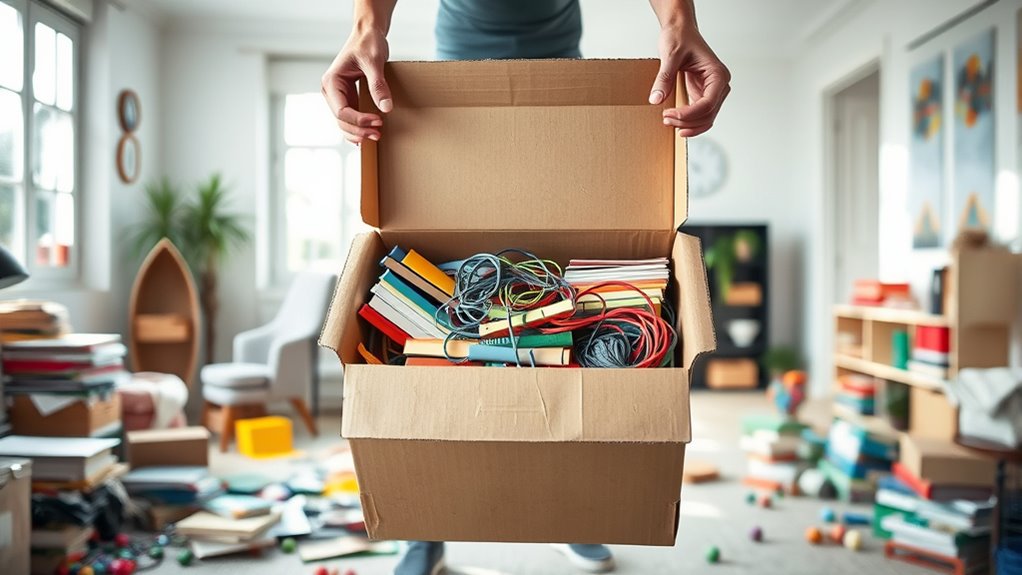

To declutter a room in 15 minutes with the One-Box Challenge, set a timer and focus on a specific area like a corner or shelf. Quickly decide which items are still useful, needed, or sentimental, then toss, donate, or keep accordingly. Fill one box with everything you no longer need. This method boosts your decision-making skills and makes clutter more manageable. Stay with us to discover more effective tips to master quick decluttering.
Key Takeaways
- Set a 15-minute timer and focus solely on decluttering a specific area or corner.
- Quickly assess items, deciding to keep, toss, or donate, and place discarded items into the box.
- Prioritize removing items that no longer serve a purpose to maximize space efficiently.
- Use the box as a temporary container for unnecessary items to contain clutter and streamline cleanup.
- After time is up, sort through the box later for donation, recycling, or proper storage to maintain decluttering momentum.
Mastering Quick Decluttering With the One-Box Challenge

Have you ever wondered how far you can push your skills with just a single box? The One-Box Challenge is all about testing your ability to declutter a room quickly and efficiently, using only one box. It’s a simple yet powerful way to improve your organization skills and develop better time management habits. Instead of feeling overwhelmed by the clutter, you focus on making immediate decisions about what to keep, toss, or donate, all within a strict 15-minute window. This not only sharpens your ability to prioritize but also helps you discover creative storage solutions that can transform your space.
Challenge yourself: declutter a space in 15 minutes using just one box for smarter, quicker organization.
When you start, set a timer for 15 minutes and pick a specific area — whether it’s a corner, a shelf, or a cluttered desk. Your goal is to fill that single box with items that no longer serve a purpose or add unnecessary chaos to your room. As you work, think of the box as your container for solutions, not just clutter. You’ll learn to identify what’s worth saving and what can be discarded or donated, which streamlines your decision-making process. This approach trains you to be decisive, reducing the paralysis often caused by endless options or sentimental attachments. Incorporating automation technologies can help you develop routines that assist in maintaining an organized environment, making this process even more effective. Additionally, understanding projector technology can inspire you to create designated zones for entertainment and relaxation, further enhancing your space.
Time management plays an essential role here. With only 15 minutes, you’re forced to focus intensely and avoid getting sidetracked. You learn to allocate your attention wisely, making rapid judgments instead of overanalyzing every item. This skill translates well into other areas of your life, helping you stay productive and avoid procrastination. You’ll also realize that the room’s initial chaos isn’t impossible to conquer; it’s just a matter of breaking it down into manageable tasks, with the box serving as your organization tool for containment. Once the box is filled, you’re left with a visibly less cluttered space, which boosts your motivation to keep things tidy.
Additionally, developing organizing skills through this challenge can have long-term benefits for maintaining a clutter-free environment. This challenge encourages you to think about storage solutions that maximize space. For example, items that are bulky or seldom used can be stored in under-utilized spots or be donated to free up more room. Over time, you develop an intuitive sense of what belongs where and how to maintain order with minimal effort. The One-Box Challenge teaches you that decluttering isn’t about perfection — it’s about making smarter choices quickly. As you get better at managing your time and recognizing what truly matters, you’ll find it increasingly easier to keep your space organized, turning a formidable task into an empowering habit.
Frequently Asked Questions
What Size Should the Box Be for Optimal Results?
When choosing a box size for decluttering, you want ideal dimensions that are manageable yet spacious enough. A medium-sized box, about 12x12x12 inches, usually works best. It’s large enough to hold various items but small enough to carry easily. Avoid overly small boxes that limit what you can put in, and steer clear of huge ones that become cumbersome. Select a box that balances capacity and convenience for quick, effective decluttering.
Can This Method Work for Large Rooms or Only Small Spaces?
Imagine walking into a room that suddenly feels lighter and more organized. This method works for large rooms too; it’s all about breaking the space into manageable areas. For bigger spaces, use multiple boxes and creative storage solutions to keep clutter contained. You’ll find that even with larger rooms, this quick, focused approach helps you declutter efficiently, making the space feel smaller and more inviting in just 15 minutes.
How Often Should I Repeat the One-Box Challenge?
You should repeat the one-box challenge as part of your organizing routines, ideally once a week or every two weeks. Consistent decluttering helps maintain a tidy space and prevents clutter from building up. Adjust the frequency based on your habits and how quickly clutter accumulates. Regular sessions keep your space manageable, making decluttering feel less overwhelming and more achievable.
What if I Find Items I Want to Keep After Decluttering?
Finding items you want to keep after decluttering is like discovering hidden treasures. You should set aside a designated spot for these keepsakes, using smart storage solutions to organize them neatly. If you’re unsure whether to keep or let go, consider donation options—it’s a win-win. Remember, the goal is a clutter-free space that sparks joy, so only hold onto what truly matters.
Is the One-Box Challenge Suitable for Sentimental Items?
Sentimental items can be tricky during decluttering because of emotional attachment. The one-box challenge might be suitable if you focus on choosing only the most meaningful items and setting aside others for later. You can quickly decide by asking yourself if each item truly holds significant sentimental value. This approach helps you stay focused and makes decluttering manageable, even with sentimental items that carry emotional weight.
Conclusion
Now, picture your room transformed—a neat space with a single box of unwanted clutter gone, leaving behind clear surfaces and open floors. In just 15 minutes, you’ve turned chaos into calm, creating a peaceful retreat you can enjoy. Remember, the one-box challenge isn’t just about tidying up; it’s about reclaiming your space and feeling lighter. Keep that vision in mind, and you’ll find decluttering becomes quicker and more satisfying each time.