
TL;DR

Get beauty and skincare favorites delivered free — and shop member deals
- Fast, free delivery on millions of items
- Access to Prime Big Deal Days deals on October 6–7
- Prime Video, Amazon Music and more included
Luxury facial cleansing brushes pair premium materials and features such as sonic vibration, adjustable settings, and water-resistant designs with a more polished cleansing experience. They can help you work cleanser over your face consistently, but they are not essential, and aggressive or frequent use can irritate skin. Choose a comfortable, easy-to-clean model, follow its instructions, and start gently.
A glowing display stand can make a facial brush look like a tiny spa machine, but the best luxury model is the one your skin tolerates and your hand can use comfortably. Price alone does not make a cleanse better; the brush’s texture, settings, upkeep, and your technique all matter.
This guide explains what distinguishes luxury facial cleansing brushes, which features earn their place in your bathroom, and how to use one without turning a gentle routine into a scrub session. You’ll also get a practical way to compare models, a simple first-use routine, and clear reasons to skip the device or ask a skincare professional for guidance.
Compare the brush surface, lowest setting, water-use guidance, cleaning steps, and replacement-head cost—not just the brand or packaging.
Start with a brief, gentle trial and reduce use or stop if you notice persistent redness, stinging, or tightness.
Follow the manufacturer’s directions for rinsing, drying, and replacing the head; three to six months is a common guide, not a universal rule.
Avoid brushing over tender or irritated areas, and ask a dermatologist about use if you have a skin condition or ongoing concerns.
Treat app features, UV claims, and premium accessories as conveniences rather than proof of better skincare results.
What makes a luxury cleansing brush different from a basic one?
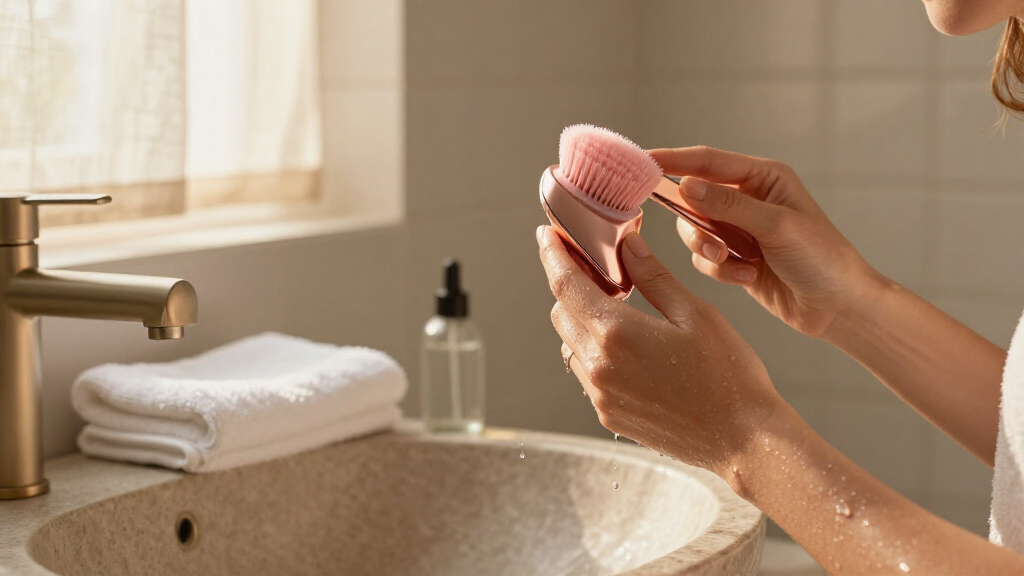
Luxury facial cleansing brushes are higher-end skincare tools that combine a face-contact surface with features such as vibration, multiple intensity settings, refined ergonomics, or upgraded accessories. Their premium feel often comes from material quality and design, not a guaranteed change in your skin. A sleek handle, charging dock, or travel case may make daily use more pleasant, but it does not prove that the brush cleans better.
Many models are typically made with soft silicone, fine bristles, or a combination of components; some advertise antimicrobial components. Those descriptions can help you compare construction, but claims vary by product, so check the maker’s care instructions and what the claim specifically covers. Silicone can be quick to rinse, while a bristled head may feel familiar but usually needs careful drying and timely replacement.
Imagine choosing between two brushes at a counter. One has a polished case and app; the other has a simple handle, an easy-to-wash silicone surface, and a low setting you find comfortable. If you’ll use the second one more consistently, its practical design may matter more than the first model’s extra features.
Think of a cleansing brush as a kitchen whisk, not a magic wand: it can help you work cleanser around, but the tool does not replace a suitable cleanser or a light touch.
As an affiliate, we earn on qualifying purchases.
Which features are worth paying extra for?
The features worth paying for are the ones that make a brush comfortable, manageable, and simple to maintain. Adjustable intensity is useful when you want to begin on a low setting; water resistance can make rinsing easier; and a rechargeable battery avoids disposable batteries. Sonic or oscillating movement may suit someone who likes a guided-feeling routine, but more power is not automatically better for skin. These features matter because they reduce friction in the routine—less fiddling, easier rinsing, or more control—rather than because they promise a different skin result. Consider whether each convenience solves a real problem for you before treating it as a reason to pay more.
Here’s a real-world comparison: if you cleanse at the sink before work, a basic model with a comfortable grip and clear timer may be all you need. If you travel often, a protective case and reliable charging setup could earn their cost. App features that track duration may help you stick to a short routine, but they are optional—not a substitute for noticing redness or discomfort. Extra electronics and accessories can also mean more parts to charge, clean, or replace, so their value depends on whether you will use them often enough to justify that added cost and upkeep.
| Feature | Why it may help | What to check |
|---|---|---|
| Soft silicone or fine bristles | Changes the feel against your skin | Texture, cleaning directions, and replacement needs |
| Adjustable settings | Lets you start gently | Whether the lowest setting feels comfortable |
| Water-resistant design | Allows easier rinsing | Manufacturer’s limits for shower or water use |
| App, timer, or travel case | Adds routine prompts or convenience | Whether you will actually use the extra |
When comparing grade materials such as silicone or specialty brush fibers, read the product details rather than relying on luxury packaging. The surface affects both sensation and care: a texture that feels gentle but traps residue may take more attention to clean, while an easy-rinse surface may be simpler to maintain. A useful premium is one you can feel in comfort and care—not just one you can see on the shelf.
sonic facial cleansing brush with adjustable settings
As an affiliate, we earn on qualifying purchases.
As an affiliate, we earn on qualifying purchases.
How should you use a facial brush without overdoing it?
Use a facial brush with a light touch and follow the model’s instructions; do not press hard or assume daily use suits your skin. Product guidance commonly suggests using a brush once or twice daily, but that is not a universal target. If your skin is sensitive, start less often, use the lowest comfortable setting, and stop if you notice stinging, persistent redness, or tightness. The point of beginning slowly is to learn how your skin responds before making the brush a habit; irritation can be easier to prevent than to settle after repeated friction.
- Remove eye makeup and rinse: Keep the brush away from the delicate eye area unless its instructions specifically say otherwise.
- Wet your face and brush: Apply a gentle cleanser so the surface glides instead of dragging.
- Move lightly: Guide the brush over one area at a time without scrubbing or holding it in one spot.
- Rinse and pat dry: Wash off cleanser and finish with your usual moisturizer.
- Clean the device: Rinse away residue and let the brush dry as directed.
For example, if you normally wash your face in the evening, try the brush briefly on a small area on a low setting rather than using it over your whole face twice a day from day one. On a night when your skin already feels tender or looks irritated, skip the device. A brush should make the routine feel easier, not like you are polishing a countertop. Pay attention not only to how your skin looks immediately afterward but also to whether tightness, stinging, or redness lingers; those are signs to reduce use or stop, not signals to increase the intensity.
More scrubbing does not mean a more thorough cleanse. A brush adds mechanical contact, so using it harder or more often can turn a cleansing step into unnecessary friction. If you have a skin condition, frequent irritation, or questions about whether mechanical exfoliation suits you, ask a dermatologist or other qualified professional before use.
water-resistant facial cleansing brush
As an affiliate, we earn on qualifying purchases.
As an affiliate, we earn on qualifying purchases.
How do you choose a brush for sensitive, oily, or acne-prone skin?
Choose the gentlest design you can comfortably maintain, and match the settings to your skin’s response rather than a label on the box. For sensitive skin, a soft silicone surface and low intensity may feel less scratchy than a firm bristled head. That softer sensation may make the device easier to tolerate, but it does not make unlimited use harmless: frequency, pressure, and your skin’s condition still affect how much friction you experience. For oily skin, a brush can spread cleanser around, but it does not need to feel abrasive to be useful.
Acne-prone skin deserves extra caution: friction can bother already tender or inflamed areas. If you have active breakouts, skip brushing over sore spots and ask a dermatologist whether the device fits your routine. “Designed for sensitive skin” is a product description, not a promise that every person will tolerate it. The practical tradeoff is that a brush may feel satisfying as part of cleansing, yet brushing over inflamed skin can add discomfort without addressing the underlying concern.
Consider Maya, who gets tight cheeks after washing but notices shine around her nose. Rather than turning up the brush everywhere, she could try a short, low-setting pass only where comfortable, then check how her skin feels later. If tightness or redness follows, she can return to cleansing with her hands; a device is an option, not a requirement. Her example shows why skin type labels are only a starting point: different areas can respond differently, and comfort after use is more useful than trying to achieve an equally scrubbed feeling across the whole face.
- Sensitive skin: Look for a soft surface, a low setting, and clear cleaning instructions.
- Oily skin: Choose a texture you can use gently; do not chase a “squeaky clean” feeling.
- Acne-prone or irritated skin: Avoid brushing tender areas and seek professional advice when unsure.
Some brushes mention antimicrobial components or UV cleaning features. These features do not remove the need to wash and dry the device as directed, and they do not make an unsuitable texture or overly forceful technique skin-friendly. Hygiene technology may be a convenience, but it cannot compensate for poor fit or excessive rubbing.
silicone facial cleansing brush replacement heads
As an affiliate, we earn on qualifying purchases.
As an affiliate, we earn on qualifying purchases.
How do cleaning, replacement, and smart features affect value?
A luxury brush earns its keep only if you can care for it properly and the extra features fit your habits. Rinse the contact surface after use, remove cleanser residue, and dry it according to the manufacturer’s instructions. Some product guidance recommends replacing heads every three to six months, but the correct interval depends on the design and maker’s directions; replace a head sooner if it looks worn or damaged. Regular care is part of the real price of ownership: a brush that is awkward to clean can become a neglected purchase, while a simple design may be easier to keep ready for the next use.
That care matters in ordinary life. After a hurried evening cleanse, a brush left wet in a closed travel case may stay damp longer than one stored open in a dry spot. A washable design can be convenient, but antimicrobial claims are not a reason to skip routine cleaning. Check whether replacement heads are easy to find and how much they cost before buying the handle. Otherwise, a low upfront price or attractive promotion can be misleading if the consumable parts are expensive or difficult to source later.
Newer premium devices may offer app-linked routines, feedback on duration or intensity, rechargeable batteries, recyclable parts, or interchangeable heads. Those features can help if you like reminders or want to reduce disposable-battery use. They can also add cost and complexity: if you would ignore an app prompt, pay for the simpler model that meets your actual needs. Interchangeable heads may make a device more adaptable, for example, but they also create another decision about which head to buy and when to replace it.
For a concrete value check, add the purchase price to likely replacement heads and any charging accessories, then compare that with how often you expect to use the brush. A polished charging stand may look lovely beside your sink; easy cleaning and accessible parts are more likely to matter six months later. Think of value as the cost of keeping a tool useful, not only the amount on the price tag.
Is a luxury brush worth the investment for your routine?
A luxury facial cleansing brush may be worth the price if its comfort, build, and practical features make you more likely to use it gently and keep it clean. It is not automatically a better choice than cleansing with your hands or buying a simpler tool. The market is growing alongside interest in premium skincare and at-home spa-like routines, but popularity does not establish that every buyer needs a device. The relevant question is whether the tool improves the experience or consistency of a routine you already want to maintain, rather than whether it sounds more advanced.
Think about your current routine. If you already cleanse comfortably with your hands and your skin feels fine, a costly brush may add little beyond a pleasant sensation and attractive design. If you enjoy gadgets, struggle to spend enough time washing your face, and find a timer or gentle vibration helpful, the added structure could make the routine more satisfying. These are different kinds of value: convenience and enjoyment can be real benefits, but they are not the same as a guaranteed change in skin condition.
Ask yourself what you are paying for: materials, comfort, usable settings, upkeep, and warranty are tangible points to compare. Brand reputation and gift-ready packaging can add pleasure, but they do not guarantee durability or a particular skin result. Read the return policy, check replacement-head availability, and be wary of promises that suggest a brush will transform your complexion. A good return option is especially useful when comfort is difficult to judge from product descriptions alone.
For example, someone buying a brush as a birthday treat might value the travel case and elegant charging dock, while a minimalist shopper may prefer a simple, easy-to-clean model. Both can make sensible choices. The best purchase is the one that fits your budget and routine without making you feel obliged to scrub more often than your skin likes. If no model offers a benefit you will actually use, keeping your existing routine is also a sound decision.
Frequently Asked Questions
Are luxury facial cleansing brushes worth the money?
They can be worthwhile if better comfort, build quality, adjustable settings, or useful accessories improve your routine. Compare replacement costs and care requirements, too; prestige alone does not guarantee better results.
Can I use a luxury cleansing brush every day?
Some products allow daily use, but your skin’s tolerance and the manufacturer’s directions should guide frequency. Start gently and cut back or stop if your skin becomes irritated.
Are facial brushes safe for sensitive or acne-prone skin?
Some people may tolerate a soft surface and low setting, but no brush suits everyone. Avoid tender or irritated areas, and ask a dermatologist if you have active acne, a skin condition, or uncertainty about using one.
How often should I clean or replace the brush head?
Rinse the device after each use and dry it as the manufacturer directs. Replacement guidance often falls around three to six months, though the model’s instructions and the head’s condition should decide the timing.
Do antimicrobial or UV features mean I can skip cleaning?
No. These features do not replace rinsing, drying, or following the maker’s care instructions. Check what a product’s hygiene claims cover, and keep the brush clean even when it includes extra technology.
Conclusion
Choose a brush for the way it feels, cleans, and fits into your real routine—not for the word “luxury” on its box. Start gently, keep it clean, and let your skin’s response guide how often you use it. If cleansing with your hands already works, you do not need to replace a good habit with a gadget.
The smartest facial brush is the one that makes your sink-side routine calmer, not louder: soft bristles, a light touch, and no pressure to do more.
Fall Picks
fall essentials
As an affiliate, we earn on qualifying purchases.