
TL;DR

Get beauty and skincare favorites delivered free with Prime
- Fast, free delivery on millions of items
- Prime Video, Amazon Music and more included
- Member-only deals all year
A Glamour UK report shares a four-step foundation technique from celebrity makeup artists: dispense product onto the hand, place it on the face with a brush, then blend it using a damp sponge. The artists say tapping in thin layers can help create a more seamless, natural-looking finish; results depend on the product and technique.
Glamour UK has published a step-by-step guide to applying foundation with a makeup sponge, drawing on advice from celebrity makeup artists Christian Briceno, Tim Quinn and Kasey Spickard. Their method uses a slightly damp sponge to tap foundation over product first placed on the back of the hand and distributed onto the face with a brush, aiming for thin, blended layers rather than heavy coverage.
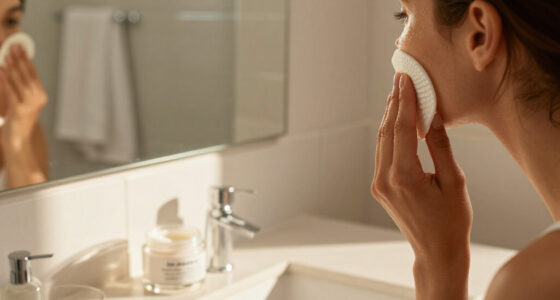
The artists’ central recommendation is to use a clean, slightly damp sponge, not one that is dry or soaked. Quinn advises wetting the sponge, squeezing out excess water, then pressing it in a clean towel. He says a damp sponge can soften the appearance of foundation; the article notes a dry sponge may be useful for more concentrated coverage but can leave makeup looking patchy or streaky.
The guide breaks the application into four steps. First, put a few drops of foundation on the back of the hand so the amount can be controlled. Next, use a foundation brush to dot product onto the centre of the face, where Quinn says many people need more coverage, and work outward. He recommends placing the product rather than rubbing it across the skin.
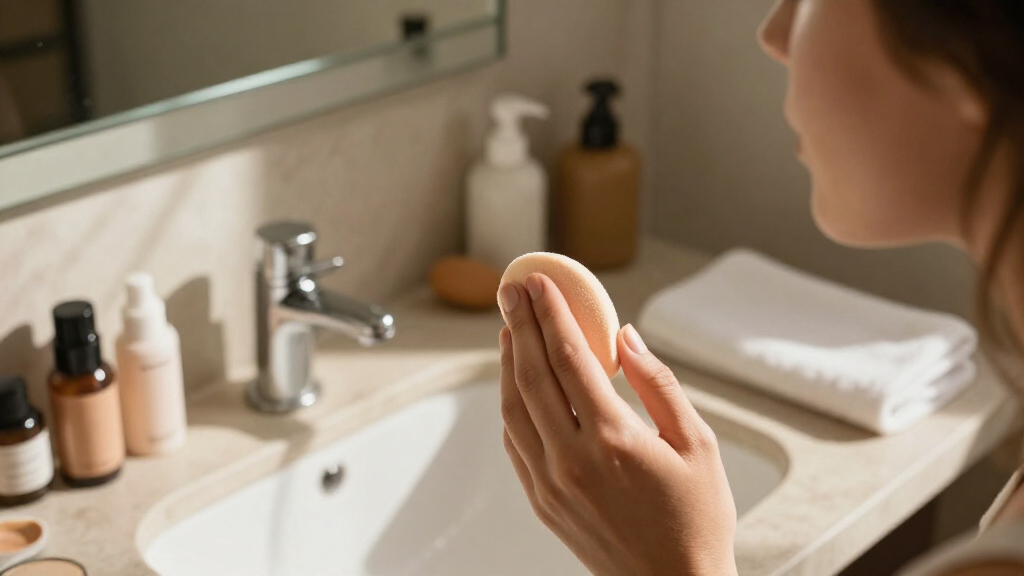
Then use the rounded end of the sponge to bounce or stipple foundation into the skin, adding more only where needed. Spickard says this motion blends product without lifting too much coverage. The pointed end can be used around the nose and under the eyes, Quinn says; remaining product can be blended along the jawline and hairline. The guide suggests finishing with concealer where fuller coverage is wanted, followed by setting powder and setting spray.
A Layered Approach to Foundation
The advice offers a practical alternative for people who find foundation looks uneven, too heavy or difficult to blend. Rather than applying the same amount across the face, the method builds coverage in smaller layers and leaves areas that need less product more lightly covered. That can make it easier to adjust the finish as makeup is applied.
Briceno says the sponge helps him work with thin layers, soften the edges between areas of different coverage and lift excess product without disrupting the rest of the makeup. He links that approach with a finish that can last through the day, but this is an artist’s assessment, not a guarantee for every wearer or formula. Skin type, foundation choice, application and conditions can all affect how makeup wears.
The guide also distinguishes between a natural-looking finish and full coverage. Quinn says a sponge can help foundation look seamless, while warning that a natural finish may not provide the coverage some people want on its own. The technique allows coverage to be built selectively, with concealer offered as an option for areas needing more.
Popular right now

Breville Bambino Espresso Machine, Brushed Stainless Steel

Breville Barista Pro Espresso Machine with Grinder, Brushed Stainless Steel

Samsung 48-Inch S90H OLED 4K Smart TV (2026)
As an affiliate, we earn on qualifying purchases.
The Artists’ Sponge Technique
The report focuses on how to apply foundation, not on a new product launch or a clinical comparison of makeup tools. It discusses makeup sponges, beauty blenders and powder puffs, while its main instructions centre on a conventional sponge with a larger rounded side and a pointed tip. It recommends liquid foundation for this approach and says stick formulas are less suited to the method.
The advice is attributed to three New York-based celebrity makeup artists: Quinn, Briceno and Spickard. Their recommendations are practical professional guidance, rather than results from a controlled test. The article also lists foundation, sponge and brush products, but the reported technique does not depend on any one brand.
Hygiene is part of the instructions: the sponge should be clean before use, and excess water should be squeezed out. The source says this helps avoid bacteria buildup that can contribute to breakouts. It does not provide a cleaning schedule or quantify the risk, so readers should not treat the guidance as a substitute for product-care instructions.
““What I particularly like about sponges is that they let me work with very thin layers, soften transitions between areas with more and less coverage, and gently lift excess product without disturbing the rest of the makeup.””
— Christian Briceno, celebrity makeup artist
Results Depend on Skin and Product
The source does not report a direct comparison test showing that sponge application lasts longer than applying foundation with fingers or a brush. Briceno describes a long-wearing result as an advantage of building light layers, but the article provides no measured wear-time data or evidence that the technique works equally well for all skin types.
It is also unclear how much the finish varies with different sponge materials, foundation formulas or application habits. The guide gives a general method and says a damp sponge tends to produce a softer finish, while a dry one can provide more concentrated coverage. Those are attributed recommendations, not universal outcomes. No specific testing or detailed cleaning protocol is supplied.
Applying the Method to Your Routine
The next step for readers is to try the method with their existing products: start with a small amount, use a clean sponge, and add coverage gradually rather than coating the whole face at once. The guide does not announce a follow-up test or a scheduled next development; it is a practical beauty report, not an ongoing news event.
Anyone trying the technique can adjust the amount of foundation and the areas covered to suit their preferences. The source recommends setting the finished makeup with powder and setting spray, but does not establish that either is required for every formula or routine. Readers should follow the care and use instructions supplied with their makeup tools and products.
Key Questions
Should a makeup sponge be wet or dry for foundation?
The artists recommend a slightly damp sponge, not one that is saturated. Wet it, squeeze out excess water, and press it in a clean towel before use. Quinn says a dry sponge may offer more concentrated coverage but may not create the same soft finish.
What is the suggested order for applying foundation?
Put a small amount on the back of your hand, use a brush to dot it onto the centre of the face and work outward, then tap it in with the sponge. Build coverage in areas that need more instead of applying an equal amount everywhere.
How should the sponge be used around the nose and eyes?
Quinn recommends using the pointed end for smaller areas such as around the nose and under the eyes. Use the rounded end for broader areas of the face.
Does a sponge give full foundation coverage?
Not necessarily. Quinn says sponge application can create a more natural-looking finish, and the guide advises building coverage gradually. It suggests applying concealer to areas where fuller coverage is wanted.
Does the guide prove sponge application makes foundation last longer?
No. Briceno says thin layers can support a long-wearing finish, but the report provides no controlled comparison or wear-time measurements. Results may vary with the foundation, skin and application method.
Source: glamourmagazine.co.uk