Minimalist shoes pair a low-profile feel with room for natural toe spread, but the right choice depends on where you’ll wear them and how much ground feel you want. My best overall pick is the WHITIN Men’s Minimalist Trail Running Shoes for a trail-oriented option; the MIFAWA Barefoot Shoes stand out for a wide toe box and zero-drop design, while the WHITIN W63 Cross-Trainer suits gym use. Across this lineup, the main tradeoff is between flexible, thin soles and the protection or structure that can make longer outings more comfortable. Fit also varies by shape and intended use, so a roomy forefoot alone does not guarantee a good match. Read on for the full breakdown, buying advice, and answers to common fit and use questions.

Get beauty and skincare favorites delivered free with Prime
- Fast, free delivery on millions of items
- Prime Video, Amazon Music and more included
- Member-only deals all year
Complete the kit


Key Takeaways
- Trail and general-use priorities differ: The WHITIN trail models and Spesoul hiking shoes are aimed at outdoor footing, while the W63 cross-trainer has a gym-focused role.
- Wide toe boxes are a recurring feature, not a complete fit solution: Heel hold, midfoot volume, and shoe length still matter across the WHITIN wide models, MIFAWA, and other roomy designs.
- WHITIN offers the broadest range of use cases in this lineup: Trail, everyday sneaker, hi-top, and cross-training options make it easier to match a shoe to a routine, though their roles are not interchangeable.
- Minimalist styling and coverage vary: The WHITIN hi-top adds ankle coverage, while minimalist sock shoes favor a lighter, more flexible feel; neither replaces a conventional supportive shoe for every wearer.
- Several listings have similar names but distinct stated uses: Compare the two W51 trail entries and the different WHITIN sneaker models by fit and intended activity rather than assuming one is a duplicate or upgrade.
| WHITIN Men’s Minimalist Trail Running Shoes |  | Best for a Natural, Simple Trail Feel | Sole material: Rubber | Outer material: Knit | Inner material: Ethylene Vinyl Acetate | VIEW ON AMAZON | See Our Full Breakdown |
| MIFAWA Men’s Barefoot Shoes with Wide Toe Box and Zero Drop |  | Best for Adjustable Ground Feel | Sole material: Rubber | Outer material: Rubber | Inner material: Ethylene Vinyl Acetate | VIEW ON AMAZON | See Our Full Breakdown |
| Barefoot Minimalist Shoes for Men and Women |  | Best for Traction with Removable Arch Support | Sole material: Rubber | Outer material: Mesh | Inner material: Ethylene vinyl acetate | VIEW ON AMAZON | See Our Full Breakdown |
| Unisex Minimalist Barefoot Sneakers with Wide Toe Box |  | Best for Casual Everyday Wear | Sole material: Rubber | Outer material: Mesh | Closure: Lace-up | VIEW ON AMAZON | See Our Full Breakdown |
| WHITIN Men’s Wide Barefoot Trail Running Shoes, W51 |  | Best for Trail Protection and Fit Security | Sole material: Rubber | Outer material: Mesh | Inner material: Foam | VIEW ON AMAZON | See Our Full Breakdown |
| WHITIN Men’s Wide Barefoot Sneakers, W81 |  | Best for Orthotic Compatibility | Sole material: Rubber | Outer material: Fabric | Inner material: Fabric | VIEW ON AMAZON | See Our Full Breakdown |
| WHITIN Men’s Wide Barefoot Trail-Running Shoes W51 | 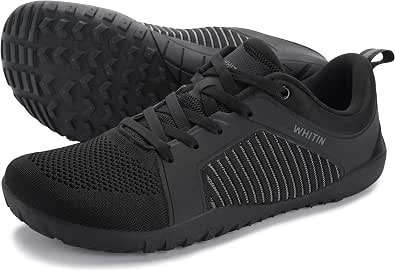 | Best for Trail Feedback | Sole material: Rubber | Outer material: Mesh | Inner material: Mesh | VIEW ON AMAZON | See Our Full Breakdown |
| Women’s Barefoot Sneakers with Wide Toe Box and Zero Drop Sole |  | Best for Casual-to-Active Wear | Sole material: Rubber | Outer material: Mesh | Upper detail: Suede leather | VIEW ON AMAZON | See Our Full Breakdown |
| WHITIN Men’s Wide Barefoot Sneakers |  | Best Simple Everyday Pick | Sole material: Rubber | Outer material: Fabric | Inner material: Fabric | VIEW ON AMAZON | See Our Full Breakdown |
| Men’s Barefoot Zero-Drop Minimalist Sneakers |  | Best for Fit Customization | Sole material: Rubber | Outer material: Knit | Inner material: Knit | VIEW ON AMAZON | See Our Full Breakdown |
| WHITIN Men’s Wide Hi-Top Minimalist Barefoot Shoes with Ankle Support |  | Best for Ankle Coverage | Sole material: Rubber | Outer material: Canvas | Inner material: Natural rubber | VIEW ON AMAZON | See Our Full Breakdown |
| Spesoul Men’s Wide Barefoot Hiking Shoes |  | Best for Light Hiking | Sole material: Rubber | Outer material: Knit | Inner material: Knit | VIEW ON AMAZON | See Our Full Breakdown |
| WHITIN Men’s Barefoot Shoes Minimalist Cross-Trainer W63 |  | Best for Cushioned Cross-Training | Sole material: Rubber | Outer material: Mesh | Inner material: Knit fabric | VIEW ON AMAZON | See Our Full Breakdown |
| ASITVO Men’s Wide Barefoot Minimalist Sneakers |  | Best for Removable Insoles | Sole material: Rubber | Outer material: TPU mesh | Inner material: TPU mesh | VIEW ON AMAZON | See Our Full Breakdown |
| Minimalist Sock Shoes for Women and Men |  | Best for Travel and Indoor Wear | Fabric type: Knitted | Sole material: Ethylene Vinyl Acetate (EVA) | Outer material: Knit | VIEW ON AMAZON | See Our Full Breakdown |
| minimalist shoe | Sole material | Outer material | Closure | Inner material |
|---|---|---|---|---|
| WHITIN Men’s Minimalist Trail | Rubber | Knit | Elastic | Ethylene Vinyl Acetate |
| MIFAWA Men’s Barefoot Shoes wi | Rubber | Rubber | Buckle | Ethylene Vinyl Acetate |
| Barefoot Minimalist Shoes for | Rubber | Mesh | Lace-up | Ethylene vinyl acetate |
| Unisex Minimalist Barefoot Sne | Rubber | Mesh | Lace-up | — |
| WHITIN Men’s Wide Barefoot Tra | Rubber | Mesh | Lace-up | Foam |
| WHITIN Men’s Wide Barefoot Sne | Rubber | Fabric | Lace-up | Fabric |
| WHITIN Men’s Wide Barefoot Tra | Rubber | Mesh | Lace-up | Mesh |
| Women’s Barefoot Sneakers with | Rubber | Mesh | Lace-up | Breathable fabric |
| WHITIN Men’s Wide Barefoot Sne | Rubber | Fabric | Lace-up | Fabric |
| Men’s Barefoot Zero-Drop Minim | Rubber | Knit | Lace-up | Knit |
| WHITIN Men’s Wide Hi-Top Minim | Rubber | Canvas | Lace-up | Natural rubber |
| Spesoul Men’s Wide Barefoot Hi | Rubber | Knit | Elastic | Knit |
| WHITIN Men’s Barefoot Shoes Mi | Rubber | Mesh | Lace-up | Knit fabric |
| ASITVO Men’s Wide Barefoot Min | Rubber | TPU mesh | Lace-up | TPU mesh |
| Minimalist Sock Shoes for Wome | Ethylene Vinyl Acetate (EVA) | Knit | Pull-on | Knitted mesh |
More Details on Our Top Picks
WHITIN Men’s Minimalist Trail Running Shoes
The WHITIN Men’s Minimalist Trail Running Shoes suit buyers who want a straightforward zero-drop design without extra support features. Their anatomical shape gives toes room to sit naturally, while the knit upper offers a softer, more flexible feel than the mesh-and-overlay build of the WHITIN Men’s Wide Barefoot Trail Running Shoes, W51. The W51 is the more trail-focused choice, with stated lugs and foot-securing overlays; this pair makes more sense for simpler routes and everyday wear where a light, uncomplicated build matters more than added trail protection.
The tradeoff is that the product details give no lug depth or protective overlay information, so I would not choose it for demanding terrain. Its elastic closure may also provide less fine adjustment than laces. The stated true-to-size fit is useful guidance, but buyers who need a precise trail fit may prefer the W51’s lace-up design.
Pros:- Anatomical shape is designed to support a natural-feeling fit.
- Zero-drop sole keeps heel and forefoot at the same level.
- Knit outer material offers a flexible alternative to a more reinforced mesh upper.
- Materials are described as vegan-friendly, with 0% animal products.
Cons:- No lug depth or specific trail-protection details are provided.
- Elastic closure offers less fit adjustment than the lace-up WHITIN W51.
- The minimalist design may feel too unprotected for rugged routes.
Best for: Men seeking a vegan-friendly, zero-drop shoe for casual trail outings and everyday use, especially if they prefer a knit upper and a stated true-to-size fit.
Not ideal for: Runners tackling rough or debris-heavy trails who want specified lug depth, reinforced overlays, or the closer adjustment of a lace-up shoe.
- Sole material:Rubber
- Outer material:Knit
- Inner material:Ethylene Vinyl Acetate
- Closure:Elastic
- Heel-to-toe drop:Zero drop
- Sizing:Described as true to size
- Animal products:0%
Our verdict“Choose this WHITIN for a simple, vegan-friendly zero-drop feel on everyday outings and milder trails, not for technical terrain.”
MIFAWA Men’s Barefoot Shoes with Wide Toe Box and Zero Drop
The MIFAWA Men’s Barefoot Shoes stand out for letting the wearer choose between a more cushioned step and a closer-to-ground feel: the removable insole can be taken out when less padding is wanted. That flexibility gives this pair a different use case from the WHITIN Men’s Minimalist Trail Running Shoes, which list a zero-drop sole but no removable insole. A wide toe box and flexible rubber outsole also suit gym sessions, walking, and mixed indoor-outdoor routines rather than one narrow activity.
The main compromise appears when the insole is removed: cushioning is minimal, so the bare setup may be uncomfortable for buyers not accustomed to thin-soled footwear. The buckle closure is another distinction from the lace-up Barefoot Minimalist Shoes for Men and Women; it may be quicker to fasten, but the provided details indicate less opportunity to fine-tune the fit. Pick this for versatility, not for maximum adjustability or padding.
Pros:- Wide toe box gives toes room to spread.
- Removable cushioned insole allows a choice of more or less underfoot padding.
- Flexible rubber outsole is described as providing grip and ground feel.
- Designed for gym workouts, hiking, running, and walking.
Cons:- Removing the insole leaves minimal cushioning.
- Buckle closure may be less adjustable than the lace-up options in this roundup.
- The product details do not specify lug depth for assessing trail grip.
Best for: Men who want a wide-toe-box shoe for varied workouts and walks and would like to adjust ground feel by removing the insole.
Not ideal for: Buyers who need substantial cushioning without an insole or want laces for a closely adjustable fit across different activities.
- Sole material:Rubber
- Outer material:Rubber
- Inner material:Ethylene Vinyl Acetate
- Closure:Buckle
- Heel-to-toe drop:Zero drop
- Insole:Removable cushioned insole
- Toe box:Wide
Our verdict“Choose the MIFAWA if you want a versatile wide-fit shoe with removable cushioning, but skip it if you need a consistently padded or finely adjustable fit.”
Barefoot Minimalist Shoes for Men and Women
These Barefoot Minimalist Shoes for Men and Women pair a wide toe box and zero-drop platform with a lugged, anti-slip rubber sole, making them a more traction-oriented pick than the casual-focused Unisex Minimalist Barefoot Sneakers with Wide Toe Box. Their lace-up closure also offers more fit adjustment than the MIFAWA Men’s Barefoot Shoes, which use a buckle. The removable insole adds another point of difference: it is described as providing arch support, giving buyers a supported setup they can remove if they want a more minimal feel.
That arch support may be a poor match for wearers who prefer an unstructured barefoot interior, and the listing provides no details about fit or durability. The lugged tread points toward varied surfaces, but no lug depth is supplied, unlike the WHITIN Men’s Wide Barefoot Trail Running Shoes, W51, which specify 3 mm lugs. This is a flexible middle ground, though not the clearest choice for either a fully minimal interior or a highly specified trail build.
Pros:- Wide toe box allows natural toe spread.
- Zero-drop design provides a level heel-to-forefoot platform.
- Removable insole is described as offering arch support.
- Lugged, anti-slip rubber sole is intended to provide traction on varied terrain.
Cons:- Arch support may feel intrusive to buyers seeking minimal underfoot structure.
- No durability or fit details are provided.
- Lug depth is unspecified, unlike the 3 mm lugs listed for the WHITIN W51.
Best for: Men or women who want a lace-up, wide-toe-box shoe for workouts and mixed-terrain outings, with the option of removable arch support.
Not ideal for: Barefoot purists who dislike arch support, or trail buyers who want stated lug measurements and clearer durability or fit information.
- Sole material:Rubber
- Outer material:Mesh
- Inner material:Ethylene vinyl acetate
- Closure:Lace-up
- Heel drop:Zero-drop
- Toe box:Wide
- Insole:Removable; described as providing arch support
- Sole design:Lugged, anti-slip
Our verdict“Choose this pair for lace-up adjustability, tread, and optional arch support, but look elsewhere if you want an unstructured feel or detailed trail specs.”
Unisex Minimalist Barefoot Sneakers with Wide Toe Box
The Unisex Minimalist Barefoot Sneakers make the most sense for buyers who want a minimalist shape in a shoe intended for both casual wear and light exercise. A breathable mesh upper, wide toe box, and flexible ultra-thin rubber sole prioritize airflow and ground feel. Compared with the Barefoot Minimalist Shoes for Men and Women, this pair lists only light arch support rather than a removable insole specifically described as providing arch support. That distinction may suit wearers who want some underfoot structure without a more support-focused insert.
The tradeoff is protection: the sole is thin, and the shoes are not water resistant, so wet routes and rough terrain are poor matches. The WHITIN Men’s Wide Barefoot Trail Running Shoes, W51, offer specified 3 mm trail lugs and supportive overlays for trail use; this sneaker is better directed toward daily walking, gym sessions, and casual settings. I would not treat its versatility as a substitute for dedicated trail features.
Pros:- Wide toe box allows room for natural toe movement.
- Flexible, lightweight ultra-thin sole offers close-to-ground feel.
- Breathable mesh upper suits casual wear and exercise.
- Zero-drop design and light arch support provide a less structured alternative to stronger support.
Cons:- Not water resistant, limiting use in wet conditions.
- Ultra-thin sole may not provide enough cushioning for long walks or hard surfaces.
- Lacks the specified trail lugs and supportive overlays of the WHITIN W51.
Best for: Unisex shoppers seeking a breathable, wide-toe-box shoe for everyday walking, casual outfits, and gym workouts in dry conditions.
Not ideal for: People who regularly walk in wet weather, need more cushioning, or want a trail shoe with specified lugs and debris protection.
- Sole material:Rubber
- Outer material:Mesh
- Closure:Lace-up
- Water resistance:Not water resistant
- Design:Zero-drop sole with wide toe box
- Arch support:Light support
- Sole profile:Flexible, ultra-thin
Our verdict“Choose these sneakers for dry-weather daily wear and light workouts if breathability and ground feel matter more than cushioning or trail protection.”
WHITIN Men’s Wide Barefoot Trail Running Shoes, W51
The WHITIN Men’s Wide Barefoot Trail Running Shoes, W51 are the most trail-specific option in this group. Their 3 mm lugs offer a stated tread depth, while supportive overlays help secure the foot and keep debris out. A spacious forefoot preserves room for toe splay, and the padded ankle collar adds comfort around the heel without changing the shoe’s ground-feel focus. Compared with the WHITIN Men’s Minimalist Trail Running Shoes, this model provides more concrete trail details and a lace-up closure for a more adjustable fit; it is also more protective than the thin-soled Unisex Minimalist Barefoot Sneakers.
Those additions bring a tradeoff: overlays, padding, and tread create a more built-up feel than a simple minimalist sneaker, which may not appeal to buyers seeking the least material underfoot. The product information does not state water resistance or cushioning levels, so I would not assume wet-weather protection or a plush ride. This is the strongest match here for trail security, not the most stripped-back option.
Pros:- Spacious forefoot supports natural toe splay.
- Supportive overlays help secure the foot and keep debris out.
- Padded ankle collar helps cushion and secure the heel.
- Rubber outsole has 3 mm trail lugs for grip while preserving ground feel.
Cons:- Overlays and ankle padding create a more built-up feel than simpler minimalist sneakers.
- Water resistance is not specified, so wet-weather performance is unclear.
- Cushioning level is not stated, which leaves underfoot comfort difficult to gauge.
Best for: Men who want a wide forefoot, lace-up security, and stated trail tread for running or walking on routes where grip and debris coverage matter.
Not ideal for: Minimalist-shoe purists seeking the lightest, least structured construction, or buyers who need confirmed water resistance or substantial cushioning.
- Sole material:Rubber
- Outer material:Mesh
- Inner material:Foam
- Closure:Lace-up
- Trail lug depth:3 mm
- Forefoot:Spacious
- Ankle collar:Padded
- Upper details:Supportive overlays
Our verdict“Choose the WHITIN W51 for a wide fit and more clearly specified trail grip and security, not for the most stripped-back barefoot construction.”
WHITIN Men’s Wide Barefoot Sneakers, W81
The W81 pairs a wide toe box and zero-drop sole with a removable sockliner, making it a practical choice for men who want a minimalist shape but need room to fit their own orthotic. That removable layer sets it apart from the Men’s Barefoot Zero-Drop Minimalist Sneakers, which are described as wearable with or without their included insoles but do not specify medical-orthotic accommodation. The flexible rubber sole is designed for grip and abrasion resistance, though it offers less cushioning than a conventional sneaker. This makes the W81 better suited to everyday walking and gradual adjustment to a level foot position than to buyers seeking impact protection. Its minimalist geometry may also feel unfamiliar at first, so it is not a safe pick for anyone who already knows they dislike zero-drop footwear.
Pros:- Wide forefoot gives toes more room to spread.
- Removable sockliner can make space for a medical orthotic.
- Flexible rubber sole supports natural foot movement.
- Non-slip, abrasion-resistant sole suits regular everyday wear.
Cons:- Zero-drop geometry may feel unfamiliar or uncomfortable to some wearers.
- Minimal cushioning offers less impact absorption than a conventional sneaker.
Best for: Men who want a roomy everyday barefoot sneaker and need to replace the sockliner with a medical orthotic.
Not ideal for: Buyers seeking substantial cushioning, or anyone who finds a zero-drop stance uncomfortable.
- Sole material:Rubber
- Outer material:Fabric
- Inner material:Fabric
- Closure:Lace-up
- Toe box:Wide
- Sole design:Zero-drop, non-elevated
- Sockliner:Removable
Our verdict“Choose the W81 if you want a wide, zero-drop everyday shoe with a removable sockliner for orthotic use.”
WHITIN Men’s Wide Barefoot Trail-Running Shoes W51
The W51 is the trail-focused pick here: its 3mm lug pattern adds grip while keeping the sole thin enough for useful ground feedback. Compared with the fabric-upper WHITIN Men’s Wide Barefoot Sneakers, W81, this model is more purpose-built for uneven routes, with mesh, supportive overlays, and a heel-lock design for a steadier fit. The tradeoff is a firmer, less cushioned ride; runners who want strong impact absorption may prefer a more protective trail shoe rather than a barefoot design. Its mesh construction also offers limited defense in severe weather, so wet, cold, or rough conditions may call for a more protective upper. This option makes the most sense for trail users who prioritize foot freedom and traction over plush cushioning.
Pros:- Spacious forefoot supports natural toe splay.
- 3mm lugs add trail grip without a deep, bulky outsole.
- Heel lock and ankle padding help hold the foot securely.
- TPU overlays add structure while keeping the design trail-oriented.
Cons:- Minimal cushioning provides limited impact absorption.
- Mesh upper may not protect well in extreme weather.
Best for: Trail runners and hikers who want a roomy forefoot, light traction, and close contact with the ground on milder routes.
Not ideal for: Runners who need substantial cushioning or people regularly tackling cold, wet, or highly abrasive conditions.
- Sole material:Rubber
- Outer material:Mesh
- Inner material:Mesh
- Closure:Lace-up
- Lug depth:3 mm
- Forefoot:Spacious
- Upper support:Supportive overlays with heel lock and ankle padding
Our verdict“Pick the W51 for trail routes where traction and ground feel matter more than cushioning or weather protection.”
Women’s Barefoot Sneakers with Wide Toe Box and Zero Drop Sole
This women’s model combines a wide toe box and zero-drop platform with a mesh-and-suede upper, giving it a more styled casual look than the trail-oriented WHITIN W51. That mix makes it a flexible option for everyday outfits and lighter activities, rather than a shoe built around trail traction. The listed slight arch support may feel more accommodating than a fully flat-feeling interior, but it is not a substitute for substantial orthopedic support. As with the W51, the minimalist sole provides limited cushioning, which can be a drawback for high-impact workouts or long runs on hard surfaces. Buyers should also note that “versatile” does not mean equally protective across activities: this design is better suited to casual use and moderate movement than demanding terrain.
Pros:- Wide toe box leaves room for toe movement.
- Zero-drop sole supports a level foot position.
- Mesh and suede details offer a more casual, styled look than the WHITIN W51 trail shoe.
- Slight arch support may suit buyers who want some structure without a conventional raised heel.
Cons:- Minimal cushioning may be inadequate for high-impact activity.
- Slight arch support may not meet substantial orthopedic needs.
- No trail-specific lug depth or severe-weather protection is specified.
Best for: Women who want a roomy, level-stance sneaker for everyday wear and occasional lighter exercise.
Not ideal for: People needing strong arch support, high-impact cushioning, or a dedicated trail shoe with defined lugs.
- Sole material:Rubber
- Outer material:Mesh
- Upper detail:Suede leather
- Inner material:Breathable fabric
- Closure:Lace-up
- Drop height:Zero drop
- Toe box:Wide
- Arch support:Slight
Our verdict“Choose this model for casual wear and lighter activity if you want a wide, zero-drop fit with a more styled upper.”
WHITIN Men’s Wide Barefoot Sneakers
This WHITIN sneaker keeps its brief straightforward: a wide toe box, zero-drop sole, and removable sockliner in a flexible everyday design. Its listed construction closely matches the WHITIN W81, so the available details do not establish a meaningful feature advantage between the two; I would compare exact fit and listing details rather than assume one has more support or cushioning. Against the WHITIN Men’s Wide Barefoot Trail-Running Shoes W51, this model is the simpler choice for daily wear, without a specified lug pattern or trail-focused overlays. The removable liner can accommodate an orthotic, but the thin, flexible minimalist approach is not aimed at shoppers seeking a cushioned walking shoe. It makes sense for buyers who want basic barefoot geometry and do not need trail-specific features.
Pros:- Wide toe box provides room for natural toe positioning.
- Zero-drop design keeps the sole non-elevated from heel to toe.
- Removable sockliner can accommodate a medical orthotic.
- Flexible, non-slip rubber sole is described as abrasion-resistant.
Cons:- Minimalist construction offers less cushioning than conventional sneakers.
- No trail-specific lug depth or protective upper features are specified.
Best for: Men seeking a basic wide, zero-drop sneaker for everyday use, especially those who may need to fit a medical orthotic.
Not ideal for: Trail runners who need defined lug traction or wearers who want a cushioned, elevated everyday sole.
- Sole material:Rubber
- Outer material:Fabric
- Inner material:Fabric
- Closure:Lace-up
- Toe box:Wide
- Sole design:Zero-drop, non-elevated
- Sockliner:Removable; accommodates medical orthotics
Our verdict“Choose this WHITIN for a simple wide, zero-drop daily shoe with a removable liner, not for cushioned or technical trail use.”
Men’s Barefoot Zero-Drop Minimalist Sneakers
This sneaker offers the lineup’s clearest fit choice: buyers can select a standard or anatomical toe box and adjust the feel by wearing it with or without the removable insoles. That flexibility gives it a different role from the WHITIN Men’s Wide Barefoot Sneakers, which specify a wide toe box and removable sockliner but do not list alternate forefoot shapes. The thin, grippy rubber sole keeps the design close to the ground, while the knit, sock-like upper and pull loop favor easy everyday wear. The same pared-back build limits cushioning, so it is less suited to buyers who want a protective running shoe. Toe comfort depends on choosing the right version, making careful fit selection more important than with a single specified wide fit.
Pros:- Standard and anatomical toe-box options offer more fit choice.
- Thin rubber sole provides grip and close ground contact.
- Removable insoles let wearers adjust the underfoot feel.
- Knit upper and pull loop support a sock-like fit and easier entry.
Cons:- Thin sole offers limited cushioning.
- Comfort can vary depending on the selected toe-box shape.
- Knit construction may offer less protection than a more structured upper.
Best for: Men who want to tailor forefoot shape and underfoot feel for walking, gym use, or everyday minimalist wear.
Not ideal for: Buyers who need high-impact cushioning or are unsure which toe-box option will fit their foot comfortably.
- Sole material:Rubber
- Outer material:Knit
- Inner material:Knit
- Closure:Lace-up
- Heel-to-toe drop:Zero drop
- Toe box:Standard or anatomical options
- Insole:Removable; shoe can be worn with or without insoles
- Entry feature:Pull loop
Our verdict“Pick this model if you want to customize toe-box shape and insole use, and are comfortable with a thin, low-cushion sole.”
WHITIN Men’s Wide Hi-Top Minimalist Barefoot Shoes with Ankle Support
The high-top cut and padded collar make this the standout choice for buyers who want a barefoot-style shoe with more coverage around the ankle. Its wide, foot-shaped toe box and zero-drop flexible sole retain the natural-movement priorities of minimalist footwear, while the canvas and vegan-suede upper give it a more structured feel than the sock-like WHITIN W63 Cross-Trainer. That extra structure is not the same as substantial underfoot support: the sole remains flexible and minimally cushioned, so the ground feel is more direct. The padded collar may suit wearers who prefer a snugger ankle opening, but it also makes this a less pared-back option than low-cut alternatives. I’d choose it for everyday wear when ankle coverage matters, not for plush cushioning or technical trail protection.
Pros:- Wide toe box leaves room for natural toe spread
- Zero-drop, flexible rubber sole supports a barefoot-style feel
- Padded, quadruple-stitched collar adds ankle coverage
- Canvas and reinforced vegan-suede upper provides more structure than a knit sock-like upper
Cons:- Minimal cushioning may feel too firm to wearers used to padded shoes
- High-top collar is less minimal and may feel restrictive to buyers who prefer an open ankle
- The product details do not specify a technical trail outsole or weather protection
Best for: Men who want a roomy toe box, a zero-drop sole, and a padded high-top collar for casual everyday wear.
Not ideal for: Buyers seeking substantial cushioning, a low-profile shoe, or a shoe specifically described for rugged hiking.
- Sole material:Rubber
- Outer material:Canvas
- Inner material:Natural rubber
- Closure:Lace-up
- Design:High-top
- Toe box:Wide, foot-shaped
- Sole profile:Zero-drop, non-elevated
- Collar:Quadruple-stitched padded collar
Our verdict“Choose this high-top if you want a wide, zero-drop everyday shoe with ankle coverage and are comfortable with minimal underfoot cushioning.”
Spesoul Men’s Wide Barefoot Hiking Shoes
For a shoe described for walking and light hiking, the Spesoul pairs a wide toe box with a lightweight knit upper and flexible zero-drop rubber sole. That combination favors easy movement and airflow over a protective, structured hiking build. Compared with the WHITIN Men’s Wide Hi-Top, it has a more breathable, less covered upper; compared with the WHITIN W63 Cross-Trainer, its listed details do not include a cushioned footbed or a specific sticky-grip outsole. Those omissions matter if your routes are rocky or your workouts involve repeated impact. The elastic closure also offers a quick, simple fit, though it gives you less fine adjustment than laces. I’d pick it for casual walks and easy trails where low weight and toe room matter more than substantial protection or a performance-focused fit.
Pros:- Wide toe box accommodates feet that feel cramped in conventional footwear
- Knit upper is breathable for walking and everyday wear
- Lightweight, flexible rubber sole suits easy movement
- Zero-drop design keeps the sole profile level from heel to toe
Cons:- Light-hiking positioning does not establish suitability for rugged terrain
- Elastic closure offers less fit adjustment than a lace-up design
- Product details do not specify cushioning or protective upper overlays
Best for: Men with wide feet who want a breathable, lightweight shoe for everyday walking, workouts, and easy trails.
Not ideal for: Hikers tackling rugged or rocky routes, or buyers who need a laced fit, substantial cushioning, or detailed outsole protection.
- Sole material:Rubber
- Outer material:Knit
- Inner material:Knit
- Closure:Elastic
- Fit:Wide toe box
- Heel-to-toe drop:Zero drop
- Intended activities:Walking, light hiking, workouts, and everyday wear
Our verdict“Pick the Spesoul for breathable toe room on walks and easy trails, but choose a more protective shoe for demanding hikes.”
WHITIN Men’s Barefoot Shoes Minimalist Cross-Trainer W63
The W63 is the most workout-oriented option here: its zero-drop platform keeps the minimalist profile, while a 5mm Power Footbed adds a modest buffer underfoot. That makes it a more approachable pick for buyers who want some cushioning without moving to a conventional raised-heel trainer. The engineered knit upper gives it a sock-like fit, unlike the more structured canvas high-top WHITIN. Its sticky-grip rubber outsole is also a more clearly specified traction feature than the Spesoul’s general flexible rubber sole. The tradeoff is that 5mm of cushioning remains modest, and the knit upper offers less protection than a sturdier material on rough ground. I’d favor the W63 for gym sessions and mixed everyday use, but not for heavy-impact training or routes where upper protection matters.
Pros:- 5mm Power Footbed adds a modest layer of cushioning
- Zero-drop design preserves a level heel-to-toe profile
- Engineered knit upper offers a sock-like fit
- Sticky-grip rubber outsole is specified for traction
Cons:- The 5mm footbed may not be enough for heavy-impact activity
- Knit upper provides less protection than more structured materials
- Minimalist construction may not meet the needs of buyers seeking substantial support
Best for: Minimalist-shoe newcomers and cross-trainers who want a zero-drop feel with a small amount of underfoot cushioning.
Not ideal for: People who need substantial impact protection, a protective upper for rough trails, or strong built-in support.
- Sole material:Rubber
- Outer material:Mesh
- Inner material:Knit fabric
- Closure:Lace-up
- Sole height:5mm
- Drop:Zero-drop
- Upper fit:Sock-like engineered knit
- Outsole:Sticky-grip rubber
Our verdict“Choose the W63 if you want a flexible zero-drop trainer with modest cushioning, rather than a highly protective or heavily cushioned workout shoe.”
ASITVO Men’s Wide Barefoot Minimalist Sneakers
The ASITVO stands out for pairing a wide toe box and zero-drop sole with removable insoles, giving buyers more flexibility than the fixed footbed described for the WHITIN W63. The mesh upper aims to keep airflow, while TPU overlays add structure and abrasion protection where a plain knit upper may offer less. That makes this a practical middle ground for walking, running, and workouts—but removable insoles should not be mistaken for built-in arch support, and the minimalist design may still feel under-supported to some wearers. Its textured rubber sole is specified for grip, though the product data does not provide a sole thickness or cushioning figure for comparison with the W63’s 5mm footbed. I’d consider it if you want to swap insoles; check the size chart against foot length before ordering.
Pros:- Wide toe box allows room for natural toe spread
- Removable insoles allow cleaning or use of a separate insert
- Breathable mesh upper includes TPU overlays for added structure and protection
- Textured rubber sole is specified for grip and abrasion resistance
Cons:- Minimalist construction may not provide the support some wearers want
- Fit requires checking the size chart against foot length
- No sole thickness or cushioning measurement is provided
Best for: Wide-footed buyers who want a zero-drop sneaker with a removable insole for cleaning or substituting an insert.
Not ideal for: Shoppers who need a guaranteed supportive footbed, a stated cushioning thickness, or prefer not to check fit against a size chart.
- Sole material:Rubber
- Outer material:TPU mesh
- Inner material:TPU mesh
- Closure:Lace-up
- Sole design:Zero-drop
- Toe box:Wide
- Insoles:Removable
- Upper construction:Mesh with TPU overlays
Our verdict“Choose the ASITVO if removable insoles and a more structured mesh upper matter more to you than a specified cushioning level.”
Minimalist Sock Shoes for Women and Men
Among these options, this sock-style pair is the clearest pick for packing light and casual indoor use. Its stretch-knit upper and pull-on format are less shoe-like than the lace-up ASITVO or WHITIN W63, while the removable insole makes cleaning or adjusting the feel straightforward. The EVA sole offers light protection and grip on indoor and easy outdoor surfaces, but it is not described as a rugged hiking outsole. That distinction matters: unlike the Spesoul, which is positioned for light hiking, this model has limited arch support and a thin sole that may wear faster with frequent use. I’d choose it as a packable option for travel, around the house, or casual outings—not as a main shoe for long walks, demanding workouts, or rough terrain.
Pros:- Ultra-lightweight build is easy to pack
- Stretch-knit upper wraps the foot for a flexible fit
- Removable insole supports cleaning and fit adjustments
- Textured EVA sole provides grip for indoor and light outdoor use
Cons:- Limited arch support and cushioning may be uncomfortable on long walks
- Thin sole is not suited to rugged terrain
- Sole may wear quickly with frequent use
Best for: Travelers and indoor users who want a lightweight, packable sock-style shoe for short, casual outings.
Not ideal for: People planning long walks, frequent high-wear use, or rugged outdoor activity who need more cushioning, support, and sole durability.
- Fabric type:Knitted
- Sole material:Ethylene Vinyl Acetate (EVA)
- Outer material:Knit
- Inner material:Knitted mesh
- Upper fit:Soft stretch knit
- Closure:Pull-on
- Insole:Removable
- Intended use:Indoor and casual outdoor use
Our verdict“Choose these sock shoes for travel and indoor wear, not as a durable, supportive pair for long distances or rough ground.”

How We Picked
I organized the ranking around the decisions buyers face with minimalist shoes: intended activity, toe-box shape, sole profile, flexibility, and how much coverage or structure a shoe appears to offer. I gave more weight to options with a clearly stated use case, since a trail shoe, cross-trainer, and casual sneaker solve different problems. I also looked at whether the product naming and listed design features gave buyers enough information to distinguish the options without relying on unsupported performance claims.
The ranking favors versatility and clear role definition near the top, then places more specialized or less clearly differentiated styles later. Several products share wide-toe-box or zero-drop language, so those features alone do not make one a better choice; intended use and fit details matter. I have not treated product titles as proof of cushioning, traction, durability, or a particular level of protection, and readers should check the current listing and sizing details before choosing.
| minimalist shoe | Sole material | Outer material | Closure | Toe box |
|---|---|---|---|---|
| WHITIN Men’s Minimalist Trail | Rubber | Knit | Elastic | — |
| MIFAWA Men’s Barefoot Shoes wi | Rubber | Rubber | Buckle | Wide |
| Barefoot Minimalist Shoes for | Rubber | Mesh | Lace-up | Wide |
| Unisex Minimalist Barefoot Sne | Rubber | Mesh | Lace-up | — |
| WHITIN Men’s Wide Barefoot Tra | Rubber | Mesh | Lace-up | — |
| WHITIN Men’s Wide Barefoot Sne | Rubber | Fabric | Lace-up | Wide |
| WHITIN Men’s Wide Barefoot Tra | Rubber | Mesh | Lace-up | — |
| Women’s Barefoot Sneakers with | Rubber | Mesh | Lace-up | Wide |
| WHITIN Men’s Wide Barefoot Sne | Rubber | Fabric | Lace-up | Wide |
| Men’s Barefoot Zero-Drop Minim | Rubber | Knit | Lace-up | Standard or anatomical options |
| WHITIN Men’s Wide Hi-Top Minim | Rubber | Canvas | Lace-up | Wide, foot-shaped |
| Spesoul Men’s Wide Barefoot Hi | Rubber | Knit | Elastic | — |
| WHITIN Men’s Barefoot Shoes Mi | Rubber | Mesh | Lace-up | — |
| ASITVO Men’s Wide Barefoot Min | Rubber | TPU mesh | Lace-up | Wide |
| Minimalist Sock Shoes for Wome | Ethylene Vinyl Acetate (EVA) | Knit | Pull-on | — |
Factors to Consider When Choosing Minimalist Shoes
Choosing minimalist shoes is less about finding the thinnest sole and more about matching a shoe’s shape and coverage to your body and routine. These broader checks can help you avoid common fit and use mismatches.
Match the shoe to the surface and activity
Start with where most of your steps happen: pavement, indoor floors, packed paths, or uneven trails. A shoe described for trail running or hiking signals a different intended use from a casual sneaker or cross-trainer, even when each has a minimalist profile. Don’t assume that a barefoot-style label means a sole has enough grip or protection for every surface; check the product details for the conditions you expect to face. For mixed routines, decide which activity matters most instead of choosing a shoe that sounds universally capable. If your routes are mostly technical or rocky, tread and underfoot protection deserve more attention than appearance.
Check the whole fit, not just the toe box
A wide forefoot can allow toe spread, but the shoe still needs to hold the heel and midfoot securely. If your foot slides forward or lifts at the heel, extra width may not solve the problem. Compare the brand’s size chart with your foot measurements and look for guidance on width and length rather than relying on your usual size. A loose fit can cause rubbing, while a snug fit across the toes defeats the point of a roomy shape. When you are between sizes, pay attention to return terms and try the shoes indoors before wearing them outside.
Choose ground feel with your experience in mind
Thin, flexible soles can make the ground feel more present, but that sensation is not automatically comfortable for everyone or every outing. People accustomed to conventional shoes may find long walks or hard surfaces tiring at first. A more covered or structured minimalist option can be a gentler starting point than a sock-like design, though it will still feel different from a traditional cushioned shoe. Avoid choosing solely by the promise of maximum flexibility; consider how long you’ll wear the shoes and what surfaces you’ll cross. If you have ongoing foot pain or a medical concern, get advice from a qualified clinician before changing footwear.
Treat zero drop as one part of the design
Zero drop describes the height relationship between heel and forefoot, not the shoe’s width, softness, or level of protection. Buyers sometimes treat it as a complete definition of minimalist footwear, but sole flexibility and overall fit can vary widely between shoes with the same label. Think about whether a level platform suits your intended use and how your body responds, rather than assuming the feature will feel natural immediately. A gradual increase in wear time can make it easier to notice pressure or fatigue before it builds. When comparing listings, look for specific construction details instead of relying on a single term.
Decide how much coverage you need
Low-cut sneakers, hiking styles, hi-tops, and sock shoes offer different levels of coverage and convenience. More material around the foot may feel reassuring in some settings, but it can also change flexibility, warmth, and ease of putting the shoe on. A hi-top’s ankle coverage should not be treated as medical ankle support unless the maker provides specific evidence. Sock-style shoes can suit buyers seeking a light, flexible form, but they may not offer the protection or secure fit wanted for rough terrain. Pick coverage based on weather, surface, and daily routine, not on the assumption that more or less material is always better.
Pay more only for a useful difference
When comparing minimalist shoes, focus on details that change your use: a better fit for your foot shape, a design suited to your main activity, or construction details that matter for regular wear. Similar product names can obscure differences, as the repeated WHITIN W51 trail listings show, so confirm the exact model and specifications before buying. Don’t treat a higher price as proof of better durability or comfort, and don’t choose the least expensive option if its intended use does not fit your routine. If you’re new to the category, a clearly defined everyday or training role may be more useful than a highly specialized design. Spending more makes sense only when the extra feature solves a real problem for you.
Frequently Asked Questions
Can I wear minimalist shoes all day if I’m new to them?
It may be more comfortable to begin with short periods rather than wearing a new minimalist pair all day from the start. The thinner or more flexible feel can change how your feet and legs respond to walking, especially on hard ground. Start with an activity and surface that feel manageable, then increase wear time gradually if you remain comfortable. A roomier or more covered style may feel less abrupt than a sock-like option, but fit still matters most. Stop if you develop persistent pain, and seek professional guidance for recurring symptoms.
Are zero-drop shoes the same as barefoot shoes?
No. Zero drop refers to the relative height of the heel and forefoot, while barefoot or minimalist labels can also describe flexibility, sole thickness, and overall shape. A shoe may have a level platform but still feel more structured than another zero-drop design. Check the construction and fit details instead of using one label as a shortcut. The MIFAWA listing explicitly names a zero-drop design, while the lineup also includes products described as barefoot or minimalist without that phrase in their titles. Match the actual design to your comfort and activity needs.
Which type is the better starting point: a trail shoe, sneaker, or sock shoe?
Choose based on your regular surfaces, not on which label sounds most minimal. A casual sneaker is a sensible direction for everyday use, a trail-oriented style is more relevant for outdoor routes, and a sock shoe suits buyers who prioritize a light, flexible form. For a first pair, a clearly defined everyday use can make it easier to judge fit and comfort before adding a specialized option. The WHITIN trail choices in this roundup are not automatically the best first pair if you rarely leave pavement. Check how much coverage and sole protection the specific listing describes.
How should I choose between the two WHITIN W51 trail listings?
The lineup includes both WHITIN Men’s Wide Barefoot Trail Running Shoes, W51 and WHITIN Men’s Wide Barefoot Trail-Running Shoes W51, with closely related names. I would not assume they are separate upgrades or identical products based on the titles alone. Compare the current listing’s model information, images, sizing guidance, and construction details before placing an order. If the details remain unclear, confirm the exact version with the seller rather than relying on a general W51 search result. This extra check can prevent confusion when product pages use similar wording.
Do wide-toe-box minimalist shoes work for every wide foot?
Not necessarily. “Wide toe box” describes room toward the front, but a foot can also need more midfoot volume, a different heel shape, or a particular length. A shoe that feels roomy at the toes may still pinch elsewhere or allow too much movement. Compare your measurements with the brand’s size chart and look for width-specific sizing details where available. The lineup has several wide-design options, including multiple WHITIN models and the MIFAWA pair, but their overall shapes may differ. Use fit guidance for the exact model rather than assuming all wide-toe designs fit alike.
Conclusion
For most buyers comparing roles across this lineup, I’d start with the WHITIN Men’s Minimalist Trail Running Shoes as the best overall choice when outdoor use is part of the plan; it has a clearer trail focus than the general sneaker options. The WHITIN Men’s Wide Barefoot Sneakers, W81 are my best-value direction for buyers seeking an everyday wide-style sneaker, though the listing details and fit should guide the final choice. I’d call the WHITIN W63 Cross-Trainer the best specialized pick for gym sessions, rather than a do-everything shoe. For beginners, the MIFAWA Barefoot Shoes are worth a look if their stated wide toe box and zero-drop design match your needs, with a gradual wear schedule. For hiking, compare the Spesoul Men’s Wide Barefoot Hiking Shoes with the WHITIN trail models; for more ankle coverage, look at the WHITIN hi-top, and for a lighter sock-like feel, consider the minimalist sock shoes. No premium tier is clearly established by the product details provided, so I would prioritize fit and the right use case over assuming any one option is a premium upgrade.
Halloween Picks
halloween
As an affiliate, we earn on qualifying purchases.