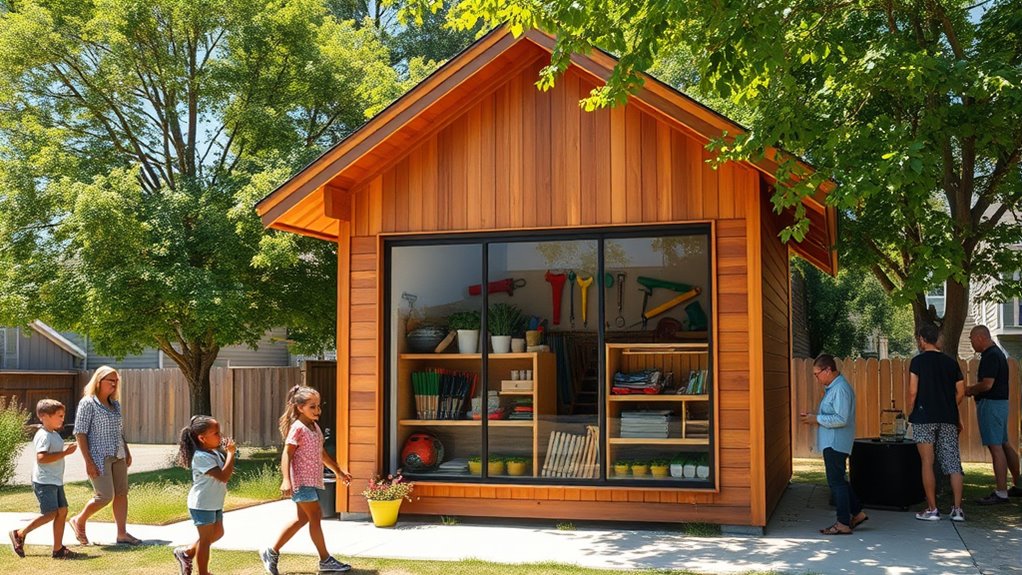

To build a neighborhood tool library, gather community members to share tools and responsibilities. Choose a accessible location and establish simple tracking systems like sign-out sheets or online platforms. Encourage members to care for tools, report damages, and participate in regular maintenance. Host workshops for proper use and safety. By fostering collective ownership and responsibility, you create a sustainable resource that strengthens neighborhood bonds. If you keep exploring, you’ll uncover more ways to make it thrive.
Key Takeaways
- Organize community meetings to gauge interest, gather input, and recruit volunteers for managing the tool library.
- Select a suitable, accessible location and set up storage with proper shelving and security measures.
- Develop a catalog system using online platforms or sign-out sheets to track tool inventory and usage.
- Promote shared responsibility by establishing community norms, hosting workshops, and encouraging respectful tool care.
- Plan regular maintenance, inventory checks, and community events to sustain engagement and ensure the library’s longevity.
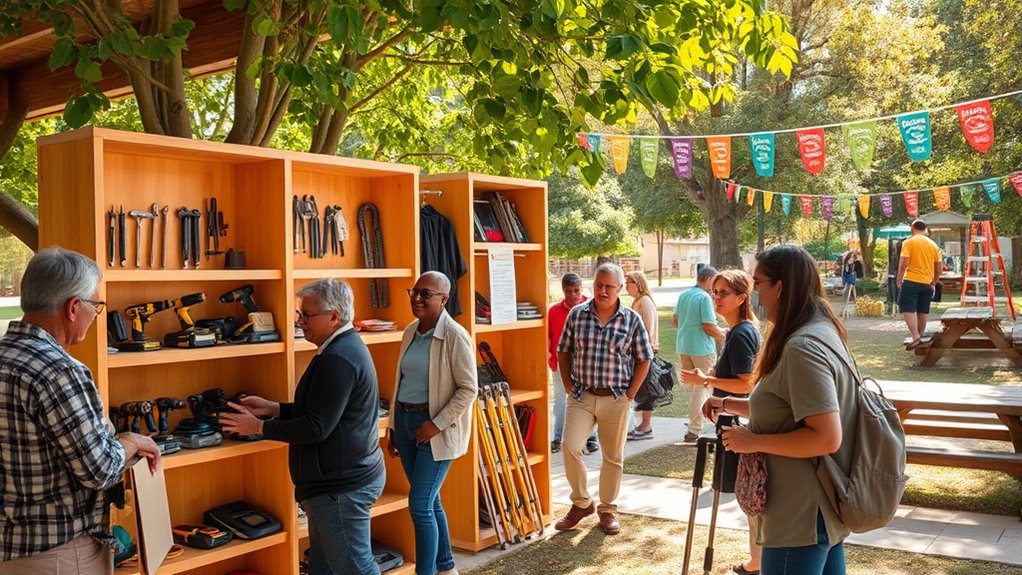
Creating a neighborhood tool library is a practical way to promote community sharing and reduce costs. When you establish a tool sharing system, you’re encouraging residents to borrow and lend tools, which minimizes individual expenses and decreases the need for everyone to buy seldom-used equipment. This approach fosters a sense of community stewardship, where neighbors take collective responsibility for maintaining and managing shared resources. By doing so, you create a culture of cooperation and support that benefits everyone involved. Building a successful neighborhood tool library hinges on community stewardship. It’s essential to foster a sense of ownership among residents. Encourage volunteers to help manage the library, organize tools, and monitor usage. You might set up a simple online platform or physical sign-out sheets to track what’s borrowed and returned. Regular communication and community events can keep members engaged and remind everyone of the shared benefits. As you develop this system, emphasize the importance of caring for the tools and respecting others’ property, reinforcing a spirit of responsibility. Additionally, creating a shared resource system can help ensure fair access and sustainability over time. Another key to sustaining your tool library is periodic maintenance and inventory checks. Encourage users to clean and report any damages or issues. This shared responsibility ensures that tools stay in good condition and are available for everyone’s use. Additionally, consider hosting workshops or demonstrations on proper tool usage and safety, which can boost confidence and ensure tools are used correctly. Over time, as more neighbors participate, your tool sharing initiative will become a cornerstone of community stewardship, strengthening bonds and promoting sustainable practices.
As an affiliate, we earn on qualifying purchases.
Frequently Asked Questions
How Do I Start Funding for the Tool Library?
You start funding your tool library by applying for community grants and launching crowdfunding campaigns. Reach out to local government and organizations for grants that support community projects. Simultaneously, create a compelling crowdfunding campaign on platforms like GoFundMe or Kickstarter to engage your community and raise initial funds. Promote your campaign through social media and local events to build support and guarantee successful funding for your neighborhood tool library.
What Safety Protocols Are Necessary for Tool Borrowers?
You should require tool borrowers to wear personal protective equipment like goggles and gloves, ensuring safety during use. Implement safety training sessions where they learn proper handling and safety protocols. Make sure borrowers sign safety agreements acknowledging they understand the risks and protocols. Regularly inspect tools for safety, and provide clear signage on safety procedures. These steps help prevent accidents and promote a safe, responsible tool-sharing environment.
How Can I Recruit Volunteers for the Library?
Think of your library as a garden needing dedicated gardeners. You can attract volunteers through community outreach, sharing stories of how the library benefits everyone. Use social media, flyers, and local events to spread the word. Highlight how their help nurtures a stronger, more connected neighborhood. By creating a welcoming atmosphere and emphasizing shared purpose, you’ll inspire passionate volunteer recruitment, turning your garden into a thriving, collaborative space.
What Insurance Is Needed for the Tool Library?
You need to secure tool insurance and liability coverage to protect your neighborhood tool library. Tool insurance covers damage or loss of tools, while liability coverage safeguards against potential injuries or accidents involving users. Make certain your policy is thorough, addressing both property and personal injury. Contact an insurance provider experienced in community or nonprofit coverage to customize a plan that suits your library’s specific needs and ensures everyone’s safety.
How Do I Manage Tool Inventory and Maintenance?
You manage your tool inventory by implementing a reliable tool tracking system, like barcode scanning or digital inventories, to keep real-time records. Regularly update maintenance schedules for each tool to guarantee safety and functionality. Conduct routine inspections and log maintenance activities to prevent breakdowns. Encourage volunteers or staff to report issues promptly, and schedule preventive maintenance to extend tool lifespan and keep your neighborhood library running smoothly.
As an affiliate, we earn on qualifying purchases.
Conclusion
Building a neighborhood tool library fosters community connections and promotes sustainability. Did you know that similar initiatives have reduced residents’ costs on home repairs by up to 30%? By sharing tools, you not only save money but also reduce waste and environmental impact. It’s a simple yet powerful way to bring neighbors together, encourage resourcefulness, and build a stronger, more connected community. So, take the first step and start turning your neighborhood into a collaborative, eco-friendly space today.
As an affiliate, we earn on qualifying purchases.
community tool lending sign-out sheets
As an affiliate, we earn on qualifying purchases.
As an affiliate, we earn on qualifying purchases.