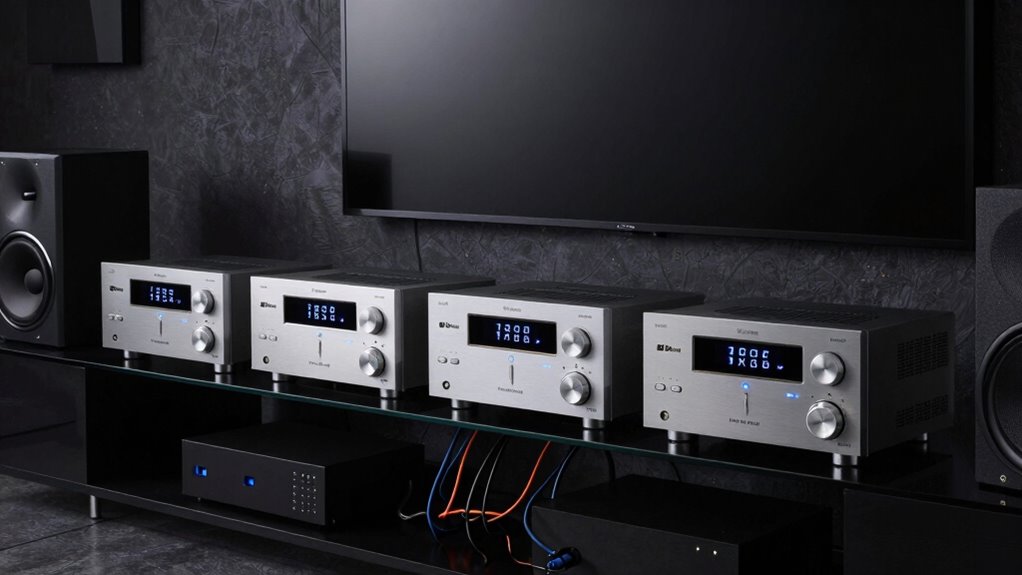

For anyone seeking an immersive home theater experience, AV receivers with Dolby Atmos 9 channels offer a compelling mix of power and spatial sound. The TX-NR7100 stands out as the best overall choice thanks to its robust processing and THX certification, ensuring high-quality sound. The Denon AVR-X4800H provides exceptional power and 8K support for future-proofing, while the Onkyo TX-RZ50 offers a balance of performance and build quality at a competitive price. Buyers face tradeoffs between power, features, and ease of use—this guide breaks down what matters most. Continue reading for a detailed comparison to help you find the right fit.

Get beauty and skincare favorites delivered free with Prime
- Fast, free delivery on millions of items
- Prime Video, Amazon Music and more included
- Member-only deals all year
Complete the kit



Key Takeaways
- Top picks balance power, features, and future-proofing, with the Denon AVR-X4800H leading in power and 8K support.
- THX certification on models like the TX-NR7100 ensures reliable sound quality and processing standards.
- Many 9-channel AVRs include built-in support for Dolby Atmos and DTS:X, but user interface and setup complexity vary widely.
- The Yamaha RX300A, while limited to 5.2 channels, offers a simplified, budget-friendly entry point for Atmos in smaller spaces.
- Higher channel counts and advanced features often come with increased cost and complexity, making it essential to match your needs carefully.
| TX-NR7100 9.2-Channel THX Certified AV Receiver |  | Best Overall for High-Performance Home Theater | Channels: 9.2 | THX Certified: Yes | HDMI Out: 3 | VIEW ON AMAZON | See Our Full Breakdown |
| Denon AVR-X3900H 9.4 Channel AV Receiver with HEOS Multiroom Audio Streaming |  | Best for Immersive Multi-Room 3D Audio | Channels: 9.4 | Power per channel: 105W | Video support: 4K, 8K with Dolby Vision | VIEW ON AMAZON | See Our Full Breakdown |
| Denon AVR-X1700H 7.2 Channel AV Receiver – 80W/Channel, Built-in HEOS |  | Best for Compact, Smart Home Integration | Channels: 7.2 | Power per Channel: 80W | HDMI Inputs: 6 | VIEW ON AMAZON | See Our Full Breakdown |
| Onkyo TX-RZ50 9.2-Channel THX Certified AV Receiver |  | Best for Premium THX-Certified Sound & Powerful Processing | Connectivity Technology: Bluetooth | Number of HDMI Ports: 8 | Output Power: 120W | VIEW ON AMAZON | See Our Full Breakdown |
| Denon AVR-X4800H 9.4 Channel Home Theater AV Receiver, 8K UHD, 125W x 9 |  | Best for Extensive Connectivity & Advanced Video Support | Channels: 9.4 | Power: 125W x 9 | HDMI Ports: 10 (7 In/3 Out) | VIEW ON AMAZON | See Our Full Breakdown |
| Yamaha RX300A 5.2-Channel Home Theater AV Receiver with Dolby Atmos, 4K HDMI, Bluetooth |  | Best for Budget-Conscious Enthusiasts Looking for Dolby Atmos | Channels: 5.2 | Power: 70W per channel | HDMI Support: 4K120/8K60, HDMI eARC/ARC | VIEW ON AMAZON | See Our Full Breakdown |
| av receivers dolby atmos 9 channel | Channels | Supports |
|---|---|---|
| TX-NR7100 9.2-Channel THX Cert | 9.2 | — |
| Denon AVR-X3900H 9.4 Channel A | 9.4 | Dolby Atmos, DTS:X, AURO-3D, IMAX Enhanced, 360 Reality Audio |
| Denon AVR-X1700H 7.2 Channel A | 7.2 | 8K/60Hz, 4K/120Hz, HDR10+, Dolby Vision, eARC |
| Onkyo TX-RZ50 9.2-Channel THX | — | — |
| Denon AVR-X4800H 9.4 Channel H | 9.4 | 8K/60Hz, 4K/120Hz, Dolby Vision, HDR10+ |
| Yamaha RX300A 5.2-Channel Home | 5.2 | — |
More Details on Our Top Picks
TX-NR7100 9.2-Channel THX Certified AV Receiver
The Onkyo TX-NR7100 stands out for its advanced Dirac Live Room Correction, which offers highly precise sound calibration, making it ideal for audiophiles who want a tailored listening experience. Its support for 8K/4K HDMI with high bandwidth future-proofs its compatibility with the latest video standards, surpassing some competitors like the Denon AVR-X1700H, which has fewer HDMI outputs. While this model excels in audio calibration and connectivity, it does require an additional microphone for room tuning, and its complex setup may challenge beginners. It’s best suited for dedicated home theater enthusiasts who value audio precision and flexibility but are comfortable with a more involved installation process.
Pros:- Advanced room correction with Dirac Live for precise sound calibration
- Supports 8K/4K HDMI with high bandwidth for future-ready video
- Multiple HDMI outputs and zone support for flexible setups
- Compatibility with Sonos for integrated multi-room audio
Cons:- Requires an additional microphone for room calibration
- Setup complexity may be daunting for beginners
- Premium features come with a higher price point
Best for: Home theater enthusiasts seeking premium sound calibration and future-proof HDMI support
Not ideal for: Casual users or beginners who prefer simple setup and minimal calibration requirements
- Channels:9.2
- THX Certified:Yes
- HDMI Out:3
- HDMI Version:2.1
- 8K Support:Yes
- Streaming Services:Spotify, TIDAL, Deezer, TuneIn, Pandora
Our verdict“This receiver is best for those who want top-tier audio calibration and high-end video support and are ready for a more complex setup.”
Denon AVR-X3900H 9.4 Channel AV Receiver with HEOS Multiroom Audio Streaming
The Denon AVR-X3900H offers robust 9.4 channels with Dolby Atmos and DTS:X support, making it ideal for creating a truly immersive audio environment. Its support for both 4K and 8K video with high-quality upscaling surpasses the 7.2-channel Denon AVR-X1700H, providing richer video experiences. The integrated HEOS multi-room streaming makes it perfect for multi-zone setups, but the setup process can be complex, especially when configuring multiple zones and streaming services. It’s best suited for users who want a comprehensive multi-room audio system and are comfortable handling advanced configuration tasks, though it may be excessive for casual or space-constrained systems.
Pros:- Immersive 3D audio with Dolby Atmos and DTS:X support
- Supports 4K and 8K video with high-quality upscaling
- Built-in Wi-Fi, Bluetooth, and HEOS for multi-room streaming
- Flexible multi-zone control with advanced connectivity
Cons:- Setup may require technical knowledge
- Higher price point may be prohibitive for some
- Large size could limit placement options
Best for: Homeowners looking to build a multi-room, immersive surround sound system
Not ideal for: Users with limited space or those preferring straightforward, plug-and-play solutions
- Channels:9.4
- Power per channel:105W
- Video support:4K, 8K with Dolby Vision
- Room calibration:Audyssey MultEQ XT32
- Connectivity:Wi-Fi, Bluetooth, AirPlay 2, HDMI
- Supports:Dolby Atmos, DTS:X, AURO-3D, IMAX Enhanced, 360 Reality Audio
Our verdict“Ideal for multi-room audio enthusiasts seeking rich immersive sound and flexible multi-zone control, provided they are comfortable with complex setup.”
Denon AVR-X1700H 7.2 Channel AV Receiver – 80W/Channel, Built-in HEOS
The Denon AVR-X1700H is a solid choice for those seeking 8K/60Hz and 4K/120Hz support in a smaller 7.2 channel package. While it doesn’t have the 9-channel power of the other picks, it compensates with powerful 80W per channel and comprehensive features like voice control and seamless smart home integration. Compared to the larger AVR-X3900H, it offers a more straightforward setup with fewer HDMI inputs but enough to handle most home theaters. This model is best suited for users who want modern HDMI features in a compact form but can accept slightly fewer channels and outputs, making it less ideal for very large or audio-intensive spaces.
Pros:- Supports latest 8K and 4K video pass-through with HDR and Dolby Vision
- Seamless multi-room streaming with built-in HEOS
- Voice control compatibility with Alexa, Google Assistant, and Siri
- Compact design ideal for space-constrained setups
Cons:- Setup can be complex for beginners due to advanced features
- Fewer HDMI inputs than larger models
- Higher price for a 7.2-channel receiver
Best for: Smart home users seeking a compact, feature-rich 8K-capable receiver
Not ideal for: Large home theaters requiring extensive HDMI inputs or more power
- Channels:7.2
- Power per Channel:80W
- HDMI Inputs:6
- Supports:8K/60Hz, 4K/120Hz, HDR10+, Dolby Vision, eARC
- Voice Control:Alexa, Google Assistant, Siri
- Built-in:HEOS
Our verdict“A smart, compact choice for users wanting modern video support and multi-room streaming in smaller spaces.”
Onkyo TX-RZ50 9.2-Channel THX Certified AV Receiver
The Onkyo TX-RZ50 emphasizes THX certification and powerful 120W per channel for demanding home theaters. Its support for 8K/4K HDMI transfer and DIRAC Live Room Correction enhances both video and audio performance, making it a strong contender against the TX-NR7100. Unlike some models, it offers 8 HDMI ports, providing ample connectivity options, but its size and weight might limit placement flexibility. This receiver is best suited for high-end systems that prioritize certified audio performance, but the setup could challenge users unfamiliar with complex configurations.
Pros:- Supports 8K/4K HDMI transfer for future-proofing
- THX certification ensures high-quality audio and video standards
- DIRAC Live enhances sound clarity and bass
- Multiple HDMI-out options for versatile configuration
Cons:- Setup may require technical expertise
- Heavy and large, requiring ample space
- Higher complexity and cost
Best for: Home theater builders seeking certified high-quality audio and robust HDMI connectivity
Not ideal for: Casual or space-limited setups where size and ease of setup matter more
- Connectivity Technology:Bluetooth
- Number of HDMI Ports:8
- Output Power:120W
- Supported Internet Services:Amazon Music, Deezer, Pandora, Spotify, TIDAL, TuneIn
- Control Method:Remote
- Number of Channels:9.2
Our verdict“Best for demanding home theater setups where certified audio quality and extensive HDMI options are priorities.”
Denon AVR-X4800H 9.4 Channel Home Theater AV Receiver, 8K UHD, 125W x 9
The Denon AVR-X4800H offers a comprehensive feature set with 9.4 channels and 125W per channel, making it suitable for large, high-performance home theaters. Its support for 8K/60Hz and 4K/120Hz with multiple HDR formats exceeds the capabilities of many 9-channel models like the AVR-X3900H, with a larger array of HDMI ports for full connectivity. Its extensive input options and multi-room streaming via HEOS make it versatile, but its complex setup could overwhelm beginners. This model is best for users seeking maximum connectivity and advanced video features, especially in large spaces requiring multiple HDMI inputs and high power output.
Pros:- Supports 8K/60Hz and 4K/120Hz with HDR formats
- Multiple HDMI inputs and outputs for versatile connectivity
- Powerful 125W per channel for demanding audio
- Built-in Wi-Fi and Bluetooth for seamless streaming
Cons:- Setup may be challenging for beginners
- Premium price point may be high for casual users
- Size and complexity could limit placement options
Best for: Large home theater setups with multiple devices and high-end video needs
Not ideal for: Small rooms or users seeking simple, straightforward installation
- Channels:9.4
- Power:125W x 9
- HDMI Ports:10 (7 In/3 Out)
- Supports:8K/60Hz, 4K/120Hz, Dolby Vision, HDR10+
- Connectivity:Bluetooth, Wi-Fi, HEOS
- Inputs:Analog, digital, phono, RCA/XLR
Our verdict“Designed for large, feature-rich home theaters requiring extensive connectivity and high processing power.”
Yamaha RX300A 5.2-Channel Home Theater AV Receiver with Dolby Atmos, 4K HDMI, Bluetooth
The Yamaha RX300A stands out for delivering Dolby Atmos and DTS Virtual:X in a compact, budget-friendly package. Compared with larger models like the Denon AVR-X4800H, it offers fewer channels and lower power output, which may limit its capacity in very large or highly demanding setups. However, it compensates with support for advanced video formats like 8K60 and HDR10+ and features such as room calibration and Bluetooth Multipoint for flexible wireless streaming. The main tradeoff involves its 70W per channel power, which might not fill very large rooms with sound, making it better suited to medium-sized spaces or users who prioritize ease of use and affordability. Its automatic setup and on-screen menu simplify installation, but beginners may find configuring all sound modes and settings somewhat complex.
Pros:- Supports Dolby Atmos and DTS Virtual:X for immersive sound
- Supports 4K and 8K video up to 60Hz, future-proofing entertainment
- Easy setup with automatic calibration and on-screen menu
- Wireless streaming via Bluetooth Multipoint
Cons:- Limited to 70W per channel, which may struggle in large spaces
- Complex configuration for users unfamiliar with AV setup
- Only 5.2 channels, less than higher-end models for surround sound depth
Best for: Budget-conscious home theater enthusiasts who want Dolby Atmos and 8K support without high power demands
Not ideal for: Large-room enthusiasts or users requiring high wattage and more channels for expansive setups
- Channels:5.2
- Power:70W per channel
- HDMI Support:4K120/8K60, HDMI eARC/ARC
- Dolby Atmos:Yes
- DTS Virtual:X:Yes
- Bluetooth:Multipoint
- Room Correction:Yes
- Video Support:HDR10+, Dolby Vision
Our verdict“This receiver suits buyers seeking Dolby Atmos at an affordable price with good video support, but it may fall short in large or highly demanding environments.”

How We Picked
The AV receivers in this roundup were selected based on performance, build quality, feature set, and value for 9-channel Dolby Atmos setups. Priority was given to models with reliable processing, support for latest video standards like 8K, and user-friendly interfaces. We also evaluated their ability to deliver immersive sound, future-proofing features, and overall versatility. Products were ranked to highlight those offering the best balance of power, features, and ease of use for different types of buyers—ranging from home theater enthusiasts to entry-level users. Our goal was to present options that excel in real-world scenarios, not just raw specs.Factors to Consider When Choosing Av Receivers Dolby Atmos 9 Channel
Choosing the right AV receiver with Dolby Atmos 9 channels involves more than just looking at power ratings. It’s important to consider how well the receiver integrates with your existing gear, future-proofing features like 8K support, and ease of setup. Understanding your room size, speaker placement, and your desired level of control can help narrow down the options. Being aware of common pitfalls, such as overestimating power needs or overlooking connectivity options, ensures you make a smart investment. This guide highlights key factors that influence how well an AV receiver will serve your home theater.Power and Amplification
While wattage provides a rough idea of a receiver’s capacity, real-world performance depends on how efficiently it amplifies your speakers. For larger rooms, look for models with higher wattage per channel and robust power supplies to avoid distortion at high volumes. Conversely, smaller spaces may not need as much power, allowing for more budget-friendly options. Overestimating your power needs can lead to unnecessary expense, while underestimating can compromise sound quality. Consider your room size and speaker sensitivity to determine the appropriate power levels.
Future-Proofing and Video Support
With the rapid evolution of home entertainment technology, features like 8K HDMI support and advanced upscaling become increasingly valuable. Future-proofing ensures your system remains compatible with new devices and content sources. Pay attention to HDMI versioning, HDCP support, and their ability to handle high frame rates and HDR formats. Investing in a receiver with these capabilities can extend its lifespan and enhance your viewing experience, especially if you’re planning to upgrade your display or streaming sources soon.
Ease of Setup and User Interface
A receiver’s setup process can significantly affect your overall experience. Models with intuitive menus, well-organized inputs, and automatic calibration systems like Audyssey or Dirac make the process smoother. Complex interfaces or limited remote controls can frustrate less tech-savvy users. Consider whether the receiver offers app control or voice compatibility, which can simplify daily operation. A straightforward setup process reduces the risk of misconfiguration and ensures you enjoy your system quickly.
Connectivity and Expandability
Check for sufficient HDMI inputs and outputs to accommodate your current and future devices. Additional features like multi-room audio, Bluetooth, Wi-Fi, and Ethernet enhance flexibility. If you plan to add additional speakers or streaming options down the line, ensure the receiver supports these expansions without requiring additional hardware. Poor connectivity options can limit your setup options and restrict your ability to integrate new tech seamlessly.
Price and Value Balance
Higher channel count and advanced features typically come at a premium. Focus on matching your needs with the right features without overpaying for capabilities you won’t use. For instance, if you only have a small room or a limited budget, a less expensive model with 7 channels and basic Atmos support might suffice. Conversely, if you’re building a high-end home theater, investing in a premium receiver can provide the performance and future expandability you desire. Always weigh the feature set against the cost to find the best value for your setup.
Frequently Asked Questions
Can I upgrade my existing speakers to support Dolby Atmos with these receivers?
Yes, most of these AV receivers support Dolby Atmos configurations with compatible speakers. To upgrade, you’ll need to add upward-firing or ceiling speakers to your existing setup. The receiver’s processing power and speaker calibration features will help optimize the sound. However, ensure your room layout and speaker placement support Atmos for the best experience. Upgrading your speakers can significantly enhance immersion, but it’s worth planning the entire system around your room’s acoustics and your budget.
Is 9-channel support necessary for a typical home theater?
While 9-channel support offers more flexibility and room for future expansion, it isn’t strictly necessary for a basic home theater setup. Most immersive sound experiences can be achieved with 7 channels, especially if you’re using a soundbar or smaller room. However, if you want the most precise spatial audio and plan to incorporate ceiling or height speakers, a 9-channel receiver provides additional headroom and better surround sound placement. It’s a good choice for dedicated home theater enthusiasts or larger rooms.
What should I prioritize: power, features, or ease of use?
Prioritizing depends on your specific needs. For larger rooms or demanding speakers, power and amplification are critical to prevent distortion. If you’re integrating multiple devices or want advanced audio processing, features matter more. For less tech-savvy users or quick setup, ease of use takes precedence. A balanced approach—selecting a receiver with ample power, essential features, and an intuitive interface—often yields the best overall experience. Clarify your main goals before choosing to avoid compromises.
Are there any downsides to choosing a higher channel count receiver?
Higher channel count receivers generally cost more and can be more complex to set up and calibrate. They may also draw more power and generate additional heat, requiring better ventilation. Additionally, if your room or speaker setup doesn’t utilize all channels, you might be paying for features you won’t fully leverage. It’s important to match the receiver’s capabilities with your actual needs to avoid overspending on unused capacity. Sometimes, a well-configured 7-channel system can deliver similar immersive sound at a lower cost.
Conclusion
The best overall pick for most users is the Denon AVR-X4800H thanks to its power, future-proofing, and feature set. If value is your priority, the Onkyo TX-RZ50 offers solid performance at a more accessible price. Beginners or those with smaller spaces might find the Yamaha RX300A easier to set up and sufficient for their needs. For dedicated home theater enthusiasts seeking premium performance, the TX-NR7100 or the Denon AVR-X3900H stand out. Ultimately, your choice depends on your room size, budget, and future plans—match your needs carefully to find the ideal fit.