TL;DR

Get beauty and skincare favorites delivered free with Prime
- Fast, free delivery on millions of items
- Prime Video, Amazon Music and more included
- Member-only deals all year
Marie Claire’s hair report highlights 16 ways to wear curtain bangs, a fringe style defined by shorter center pieces and longer sides. Hairstylists Nicolas Flores and Halley Brisker describe the look as adaptable, but the best cut and styling approach depend on hair texture and personal preference.
Marie Claire has published a guide to 16 curtain-bang looks, ranging from short, eye-skimming fringe to longer retro shapes, curls and styles for pixie cuts. The report features comments from celebrity hairstylists Nicolas Flores and Halley Brisker and describes curtain bangs as a flexible option for people seeking a visible change without cutting a straight fringe across the forehead.
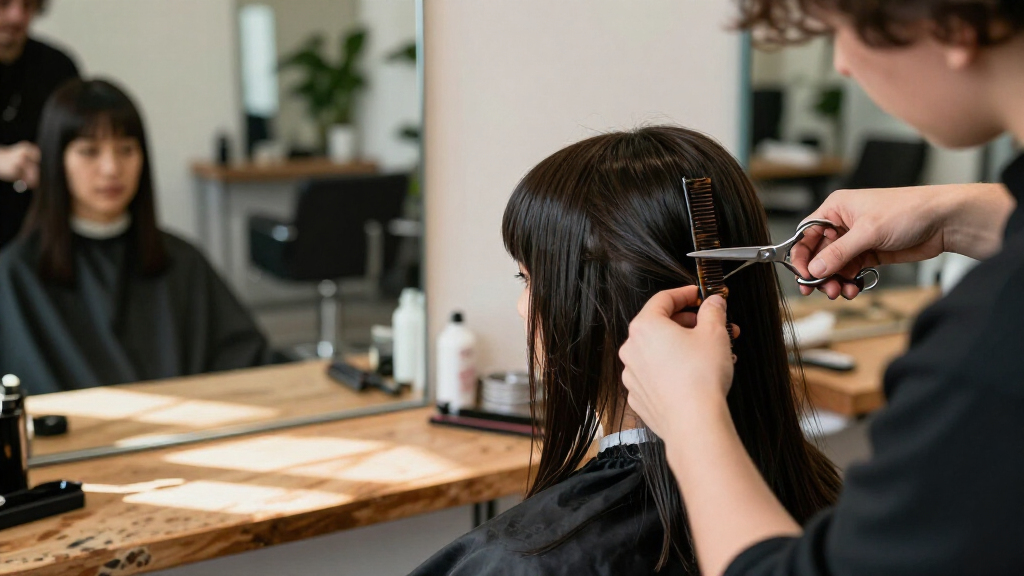
Curtain bangs are cut shorter in the center and longer toward the sides, creating a graduated shape that frames the face. Flores says the cut can change a look without requiring a dramatic haircut, and that the angled lengths can draw attention to the eyes and cheekbones while adding movement. Brisker says the style can soften and enhance many faces, while noting that styling plays a part in the result.
The 16 examples show that the term covers more than a soft, wispy fringe. The guide includes fuller curtain bangs, side-swept versions, micro bangs and longer Farrah Fawcett-inspired fringe, as well as variations worn with a pixie cut, ringlets, wispy curls, twists and braids. Other examples focus on finish or color, including wet-look styling, a blowout and two-tone bangs.
Flores describes a shift toward soft fringe blended into longer face-framing layers, with more room for the hair’s natural movement. Brisker points to shorter bangs sitting closer to the eyes as a current preference, citing Sabrina Carpenter as an example, while also saying she would welcome a return to longer, heavily flicked fringe. Those are the stylists’ observations, not a measured account of salon demand or a forecast that one version will dominate.
A Fringe With Many Versions
The guide’s practical point is that curtain bangs are not a single fixed cut. Their center-to-side length gradient can be adapted to different lengths and textures, giving readers more than one reference to discuss with a stylist. A person with curls, for example, may want a shape that works with defined ringlets, while someone with a short cut could ask about a curtain effect that blends into a pixie.
That flexibility also matters for expectations. A photograph can show the desired shape, but hair texture, cut and styling all affect the finished look. The report recommends products and styling methods for some examples, such as mousse for curl definition and a round brush and hair dryer for a blowout. It does not establish that every style will suit every person or require the same amount of daily upkeep.
For readers considering a cut, the collection offers specific ideas to bring to a salon rather than treating “curtain bangs” as a one-size-fits-all request. It also makes clear that the look can be subtle or bold: blended layers may keep the fringe understated, while a fuller shape, short center or contrasting color creates a more noticeable change.
Popular right now

Apple AirPods Pro 3 Wireless Earbuds with Active Noise Cancellation
Philips 5500 Series Fully Automatic Espresso Machine with LatteGo

Dreame L40 Ultra Gen 2 Robot Vacuum and Mop
As an affiliate, we earn on qualifying purchases.
How Curtain Bangs Are Cut
The distinction between curtain bangs and a conventional straight-across fringe is the graduated length: the center pieces are shorter, and the hair gets longer toward the temples. That shape is intended to create a parted, curtain-like frame, although the source does not prescribe one exact length or parting for everyone.
Marie Claire’s report combines the two stylists’ comments with a gallery of 16 visual examples. Among them are classic side pieces and blended fringe, plus interpretations involving micro lengths, curls, protective styles, baby hairs and a bowl-cut shape. The range reflects the article’s central theme: the cut can be adjusted in length, density, texture and finish.
The report also places its trend observations in a 2026 frame, mentioning shorter bangs close to the eyes and a possible renewed interest in longer, retro-inspired fringe. The source provides no survey, sales data or other measurement of how widely either style is being adopted, so these comments should be read as stylist perspectives.
“Curtain bangs can be so appealing because they create an immediate transformation without requiring a dramatic haircut.”
— Celebrity hairstylist Nicolas Flores, quoted by Marie Claire
What the Trend Claims Can Show
The supplied report does not state a publication date, provide data on salon bookings or search interest, or establish that curtain bangs are more popular than other fringe styles. Its descriptions of what is trending come from stylist observations and selected examples, not a quantified industry survey.
It also does not set out a single recommended cut for particular face shapes or hair types. The stylists’ positive comments are general guidance, not a guarantee that a specific variation will suit every person. How much styling a cut needs, and how it falls day to day, will depend on the individual’s hair and the chosen shape.
Take Reference Photos to a Stylist
Readers interested in the look can use the gallery to identify a variation—such as blended, full, curly, short or retro—and discuss its length and upkeep with a hairstylist before cutting. The article suggests having reference images ready and matching the requested fringe to the hair’s natural movement and the wearer’s preferred styling routine.
The report does not announce a forthcoming collection, event or next industry milestone. Its immediate takeaway is a set of examples and stylist advice; whether shorter or longer curtain bangs gain broader popularity remains to be seen.
Key Questions
What makes bangs curtain bangs?
The center is shorter and the sides are longer, creating an angled, face-framing shape rather than a straight line across the forehead.
Can curtain bangs work with curly hair?
The report includes ringlet and wispy-curl examples and suggests using curl-defining products for natural movement. The best shape will depend on the person’s curl pattern and cut.
Are curtain bangs always wispy?
No. The guide includes full, thick fringe as well as soft, blended styles. The longer pieces at the sides are what give the cut its curtain-bang shape.
Which curtain-bang lengths are being discussed?
The stylists describe both shorter bangs close to the eyes and longer, retro-inspired fringe. The report presents these as observations and preferences, not measured forecasts.
What should I bring to a salon appointment?
Bring reference photos of the specific variation you want and discuss how it may work with your hair texture, length and usual styling routine before deciding on a cut.
Source: marieclaire.com