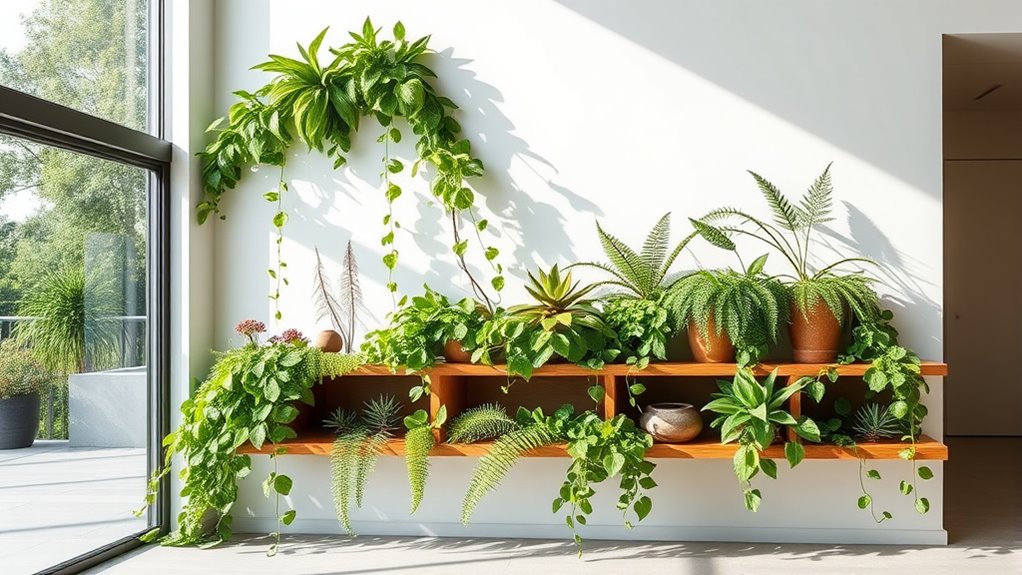

In biophilic minimalism, you use plants not just as decoration but as structural elements to create a calming, natural environment. You can incorporate living walls, plant dividers, or bold, lush foliage to define spaces while maintaining openness. Choosing plants with interesting shapes and textures adds visual impact without cluttering. This approach balances simplicity with natural vibrancy, offering a peaceful yet stimulating setting. Keep exploring how to make your space more harmonious and lively through strategic greenery.
Key Takeaways
- Use plants as natural dividers or focal points to define spaces while maintaining openness.
- Incorporate bold-shaped and lush foliage plants as structural or visual elements.
- Arrange varied textures and heights to create a dynamic, natural architectural feel.
- Focus on placement and scale for visual hierarchy and harmony within minimal designs.
- Select low-maintenance, vibrant plants that enhance the environment’s natural, calming aesthetic.
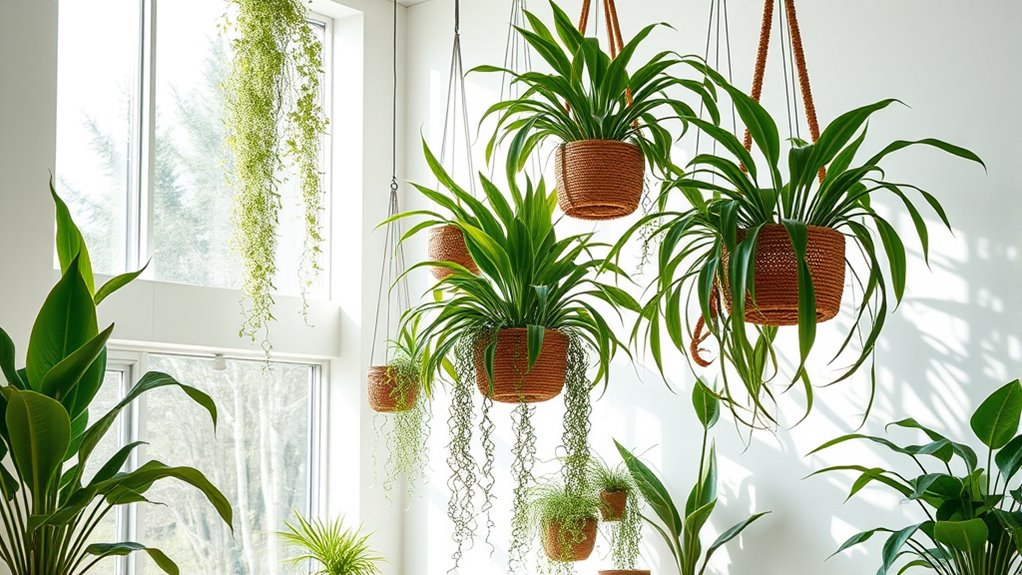
Have you ever wondered how to create a space that feels both calm and invigorating? The secret lies in blending biophilic minimalism with thoughtful plant integration. Imagine your environment infused with indoor greenery that not only beautifies but also enhances your well-being. This approach emphasizes using plants as structural elements, transforming them from mere decor into the backbone of your space. When you incorporate natural textures, you craft an atmosphere that’s both soothing and stimulating, making your environment feel alive without being cluttered.
Blending biophilic minimalism with thoughtful plant use creates calming, vibrant, and natural spaces that enhance well-being.
To start, consider how plants can serve as natural dividers or focal points within your space. Instead of traditional partitions, opt for large, sculptural plants with bold shapes and lush foliage. These indoor greenery features act as living walls or room separators, creating distinct areas while maintaining an open, airy feel. By choosing plants with varied textures—think spiky succulents, soft ferns, or bushy philodendrons—you add depth and tactile interest that invites touch and exploration. This use of natural textures enhances the sensory experience, making the space more engaging and inviting.
Using plants as structural elements also means paying attention to their placement and scale. Tall, upright plants can draw the eye upward, emphasizing vertical space and giving your room a sense of grandeur. Low-growing ground covers or trailing vines can soften edges and create a natural carpet that extends across floors or shelves. These choices help establish a visual hierarchy rooted in nature, where each plant plays a role in shaping the environment’s overall harmony. You’re not just decorating; you’re designing a living architecture that supports your daily flow.
Incorporating indoor greenery as structural components encourages a minimalist ethos—fewer, more impactful elements replace clutter. By focusing on a curated selection of healthy, vibrant plants, you eliminate excess and create a space that breathes simplicity. The natural textures of leaves, bark, and stems add subtle complexity without overwhelming. This balance between minimalism and biophilia fosters a sense of calm, grounding your space in nature’s rhythms while invigorating your senses.
Additionally, selecting plants that are easy to maintain ensures your space remains vibrant and lively over time. Incorporating low-maintenance plants like snake plants or pothos supports a sustainable and stress-free environment. Ultimately, using plants as structure in biophilic minimalism isn’t about filling every corner but about thoughtfully integrating natural elements that serve both aesthetic and functional purposes. Your environment becomes a sanctuary where natural textures and indoor greenery work together to create a space that’s lively yet peaceful—an authentic reflection of your connection to nature. With careful selection and placement, you can craft a space that feels both calming and invigorating, a true sanctuary rooted in the beauty of the natural world.
Top picks for "biophilic minimalism plant"
Open Amazon search results for this keyword.
As an affiliate, we earn on qualifying purchases.
Frequently Asked Questions
How Do Plants Influence Mental Health in Minimalist Spaces?
Plants in minimalist spaces boost your mental well-being by providing natural beauty and calming visuals. They serve as living plant therapy, reducing stress and enhancing your mood. Their presence creates a soothing environment that promotes focus and relaxation. By integrating plants thoughtfully, you foster a sense of harmony and tranquility, making your space more inviting and supportive of your mental health. This simple addition can considerably improve your overall emotional state.
What Are the Best Plant Species for Biophilic Minimalism?
You should choose succulent varieties like aloe vera and echeveria for their sleek, minimalist look and low maintenance. Additionally, include air purifying plants such as snake plants and pothos to enhance air quality and add a touch of greenery. These plants complement a minimalist aesthetic while promoting a calming environment, making your space feel more natural and inviting without cluttering your design.
Can Plants Replace Traditional Structural Elements in Design?
Think of plants as nature’s architects, weaving themselves into your design like living veins. You can indeed replace traditional structural elements with plant integration, creating a harmonious blend of nature and architecture. This structural innovation not only sustains energy but also transforms spaces into lush, breathing environments. By embracing this green revolution, you turn ordinary buildings into living works of art, where nature’s resilience becomes the new foundation.
How to Maintain Plant Health With Minimal Effort?
You can keep your plants healthy with minimal effort by establishing simple watering routines, like checking soil moisture weekly and watering only when needed. Use pest management techniques such as natural repellents or introducing beneficial insects to keep pests at bay. Guarantee proper lighting and avoid overwatering. Regularly prune dead or yellowing leaves to promote growth. These small, consistent actions make plant care easier and help maintain vibrant, healthy plants effortlessly.
Are There Eco-Friendly Materials to Integrate With Plant-Based Structures?
Yes, you can incorporate eco-friendly materials like sustainable metals, recycled plastics, and biodegradable options into your plant-based structures. These materials reduce environmental impact and blend seamlessly with natural elements. By choosing biodegradable connectors or sustainably sourced wood, you guarantee your design remains eco-conscious. You effectively create a harmonious, sustainable environment that benefits both your plants and the planet, making your space greener and more responsible.
Conclusion
By embracing biophilic minimalism, you create spaces that connect you to nature without clutter. Imagine a sleek living room with a single, striking fern perched on a minimalist shelf—drawing your gaze and calming your mind. This approach not only enhances aesthetics but also boosts well-being. When you prioritize intentional plant placements, you cultivate environments that foster tranquility and inspiration, proving that less truly can be more when nature is thoughtfully integrated into your design.