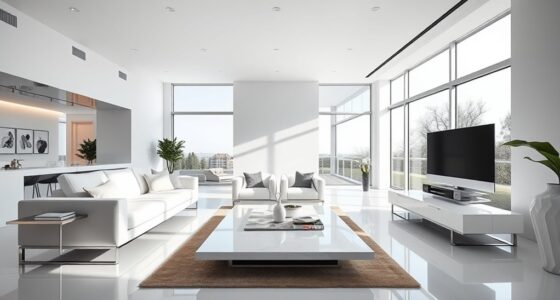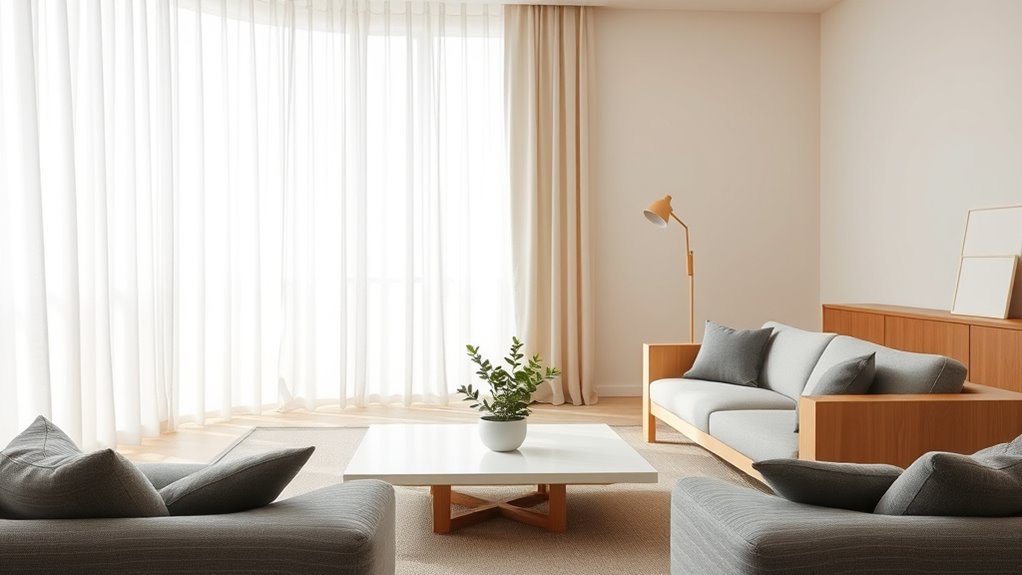

To design soundscapes at home, focus on creating acoustic zones with sound-absorbing materials like curtains, rugs, and panels that reduce echo and control noise travel. Use noise masking, such as gentle background sounds, to drown out distractions and add a buffer to loud noises. Balancing these elements helps you craft peaceful retreats or energizing spaces. If you keep exploring, you’ll discover how to layer these techniques for ultimate tranquility.
Key Takeaways
- Implement acoustic zoning to create distinct quiet, focus, or relaxation areas within your home.
- Use sound-absorbing materials like rugs, curtains, and panels to reduce echo and reverberation.
- Incorporate noise masking sounds such as white noise or nature sounds to buffer disruptive noises.
- Layer sound environments intentionally to enhance tranquility and support specific activities.
- Balance sound levels across zones to craft a harmonious, calming soundscape tailored to your needs.

Creating the perfect soundscape at home allows you to shape your environment for relaxation, focus, or energy. One effective way to do this is through acoustic zoning, which involves designating specific areas within your space for different sound environments. For example, you might create a quiet corner with sound-absorbing materials like plush rugs, soft furniture, and acoustic panels to serve as a peaceful retreat. Conversely, your living or workout areas could feature energizing sounds or music to boost activity. Acoustic zoning helps control how sound travels throughout your home, giving you the power to design each zone according to its intended purpose. It’s about layering different sound environments intentionally, ensuring that noise from one area doesn’t spill into another and disturb your focus or relaxation.
Alongside acoustic zoning, noise masking plays a vital role in designing your ideal soundscape. Noise masking involves introducing a consistent, unobtrusive background sound—like white noise, nature sounds, or specially designed sound masking devices—that helps drown out disruptive noises such as traffic, neighbors, or household appliances. When you use noise masking effectively, it creates a buffer that makes sudden or bothersome sounds less noticeable, fostering a calmer, more controlled environment. This technique is especially useful if you live in a noisy neighborhood or have a busy household. Instead of fighting noise with expensive soundproofing, noise masking provides a practical, flexible solution that can be adjusted to your needs. Combining acoustic zoning with noise masking allows you to tailor your soundscape, making your space more serene, productive, or lively as desired.
You can also enhance your acoustic zones with strategic placement of sound-absorbing materials, such as acoustic panels, curtains, or even bookshelves filled with books. These elements help reduce echo and reverberation, making each zone more distinct and comfortable. When choosing noise masking sounds, opt for those that blend seamlessly into your environment—gentle nature sounds or low-volume ambient music work well. Remember, the goal isn’t to eliminate all noise but to control sound levels and create a balanced environment where your mind can relax or concentrate without distraction.
Designing with silence isn’t about complete quiet but about crafting a harmonious soundscape that supports your daily activities. By thoughtfully applying acoustic zoning and noise masking, you take charge of your environment, transforming your home into a sanctuary tailored perfectly to your needs. With intentional sound management, you’ll find it easier to unwind, focus, or energize—your ideal soundscape is within reach.
Frequently Asked Questions
How Can I Customize Soundscapes for Different Rooms?
You can customize soundscapes for different rooms by creating personalized sound profiles tailored to each space’s room-specific acoustics. Use a variety of sound sources, like nature sounds, white noise, or soft music, adjusted for volume and tone to suit each room’s unique characteristics. Experiment with speaker placement and sound frequency to enhance comfort and ambiance, ensuring each space feels inviting and tailored to your preferences.
What Materials Help Block Unwanted Noise Effectively?
You can block unwanted noise effectively by using acoustic panels and soundproof curtains. Acoustic panels absorb sound waves, reducing echo and background noise, while soundproof curtains create a barrier that prevents sound from entering or leaving a room. Install these materials on walls, windows, and doorways to maximize soundproofing. Combining both options offers a versatile and efficient way to create a quieter, more peaceful environment at home.
Are There Eco-Friendly Soundproofing Options Available?
Ever wonder if you can soundproof your home while staying eco-friendly? Yes, you can! Eco-friendly insulation options like cellulose made from recycled paper or sheep’s wool offer sustainable soundproofing. These materials absorb noise effectively and reduce environmental impact. By choosing sustainable soundproofing, you create a peaceful space that’s kind to the planet. Isn’t it rewarding to silence noise and protect the environment at the same time?
How Do Soundscapes Influence Mood and Productivity?
Soundscapes substantially influence your mood and productivity. When you listen to ambient music or nature sounds, you create a calming environment that reduces stress and enhances focus. These sounds can block out distractions, helping you stay engaged with tasks. Incorporating soothing ambient music or nature sounds into your space boosts your mental clarity and emotional well-being, making it easier to stay motivated and productive throughout the day.
Can Soundscapes Be Integrated With Smart Home Technology?
Yes, you can integrate soundscapes with smart home technology. Think of ambient noise as your home’s heartbeat, guiding the system to adapt sound levels. With acoustic zoning, you create personalized sound zones, so each space resonates uniquely. Smart devices sync seamlessly, allowing you to control and customize soundscapes effortlessly. You become the conductor of your home’s symphony, tailoring the atmosphere to match your mood and activity with ease.
Conclusion
Creating a soothing soundscape at home is like planting a garden of calm amid everyday chaos. When you thoughtfully choose sounds that nurture peace, you turn your space into a sanctuary where silence and sound dance in harmony. Remember, you hold the power to craft an environment that feels as comforting as a warm embrace. So, embrace the art of designing with silence, and let your home become a symphony of serenity you can always tune into.