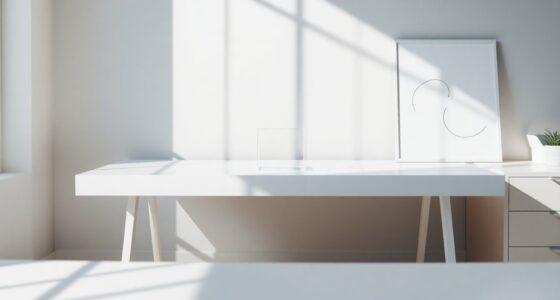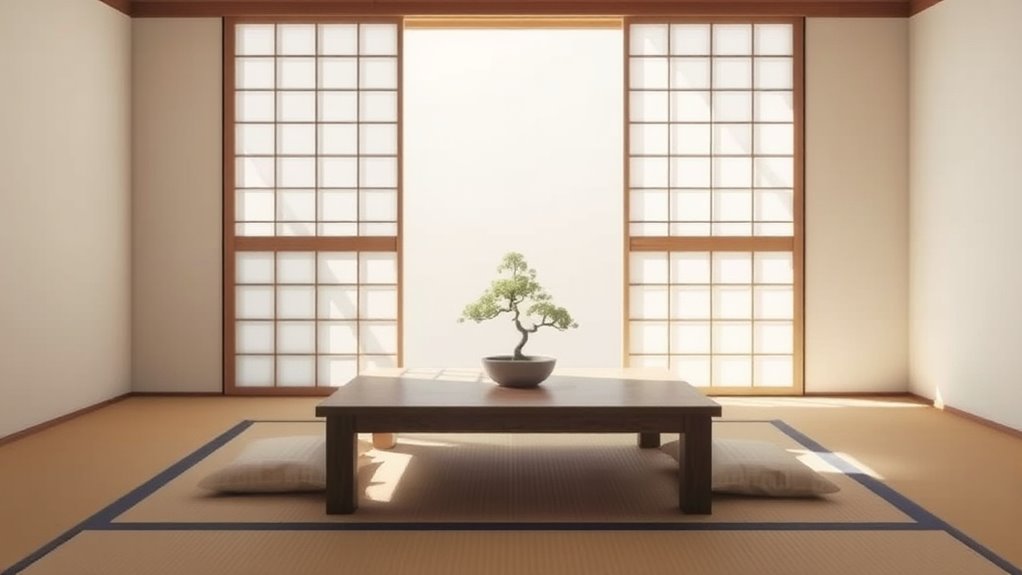

Japanese minimalist aesthetics focus on creating calm, balanced spaces by emphasizing simplicity, natural materials, and mindful design. You’ll find clean lines, muted earthy tones, and uncluttered arrangements that promote tranquility. The approach encourages stripping away excess, highlighting beauty in imperfection, and fostering a deep connection to nature. If you want to understand how these principles come together to shape serene environments, exploring further will reveal the subtle elegance behind this timeless style.
Key Takeaways
- Emphasizes simplicity, clarity, and harmony inspired by zen philosophy to create tranquil, uncluttered spaces.
- Incorporates natural materials like wood, stone, and paper to foster authenticity and tactile calmness.
- Uses muted earth tones and understated design to highlight subtle beauty and avoid visual excess.
- Prioritizes functional, unobtrusive furniture and open layouts to maintain spaciousness and purposefulness.
- Promotes mindful living through intentional space arrangement and a focus on inner peace and balance.

Have you ever wondered why Japanese design often feels so calm and uncluttered? The answer lies in a deep-rooted cultural philosophy that shapes every aspect of their aesthetic: zen philosophy. This tradition emphasizes simplicity, mindfulness, and a harmonious connection to nature. When you step into a space inspired by Japanese minimalism, you’re not just seeing a clean design—you’re experiencing a mindful approach to living that encourages clarity and tranquility. Zen philosophy teaches you to focus on what truly matters, stripping away excess and unnecessary details. This mindful approach manifests in everything from furniture choices to the arrangement of objects, creating environments that feel balanced and serene. Natural materials play a crucial role in achieving this aesthetic. You’ll notice that wood, stone, bamboo, and paper are commonly used because they bring an organic warmth and authenticity that synthetic materials can’t match. These elements help you forge a genuine connection to nature, which is central to Japanese minimalism. Using natural materials isn’t just about appearance; it’s about creating a tactile experience that calms the mind. When you touch smooth wood or feel the rough texture of stone, you’re grounding yourself in the present moment, aligning with the zen philosophy’s focus on mindfulness. The subtle beauty of these materials also emphasizes imperfection and transience, reminding you that beauty can be found in simplicity and the natural state of things. In practical terms, this means opting for furniture that’s functional yet unobtrusive. Low-profile tables, simple futons, and open shelving keep your space feeling spacious and free of clutter. You’re encouraged to keep only what you need and to arrange it thoughtfully, so each object has a purpose and contributes to the overall harmony. The color palette tends to be muted and earthy, reinforcing the sense of calm. You’re not overwhelmed by bright hues or busy patterns; instead, you’re encouraged to embrace subtlety and understated elegance. Living with Japanese minimalism means cultivating a mindful attitude toward your surroundings. Every choice, from the materials you use to the layout of your space, reflects an intention to promote peace and simplicity. By incorporating zen philosophy and natural materials into your environment, you create a sanctuary that nurtures your well-being and helps you stay centered amid the chaos of everyday life. Ultimately, this aesthetic isn’t just about design—it’s a way of life that invites you to slow down, breathe, and appreciate the quiet beauty of minimalism.

ROMGUAR CRAFT 3 Tier Bamboo Shoe Rack for Closet Free Standing Wood Shoe Shelf Storage Organizer for Entryway Small Space Stackable 27"x11"x20" (Natural)
【Preferred high-quality bamboo】The entryway shoe rack is made of eco-friendly bamboo for an elegant look and very durable….
As an affiliate, we earn on qualifying purchases.
As an affiliate, we earn on qualifying purchases.
Frequently Asked Questions
How Does Minimalism Influence Japanese Architecture?
Minimalism influences Japanese architecture by emphasizing simplicity and natural harmony, deeply rooted in zen philosophy. You’ll notice clean lines, open spaces, and minimal ornamentation that foster tranquility. This approach encourages you to connect with nature, using natural materials and light to create a peaceful environment. The focus on essential forms helps you feel calm and centered, embodying the essence of Japanese minimalism and its pursuit of harmony with the natural world.
What Are Common Materials Used in Japanese Minimalist Design?
You notice that common materials in Japanese minimalist design include natural textures like wood, bamboo, and stone, which create a calming, organic feel. Subdued tones such as muted browns, soft greys, and gentle beiges dominate, emphasizing simplicity and harmony. These materials and colors work together to foster tranquility, allowing the space to breathe and reflect the understated beauty of minimalism. It’s all about embracing nature’s raw elegance.
How Can I Incorporate Japanese Minimalism Into Everyday Life?
To incorporate Japanese minimalism into your daily life, start by creating a calming space with essentials like a small Zen garden or a simple, clean tea set for ceremonies. Keep clutter minimal, choosing quality over quantity, and focus on mindfulness. Practice quiet moments, meditation, or tea rituals to cultivate tranquility. These small, intentional actions help you embrace the serene, uncluttered spirit of Japanese minimalism every day.
Are There Specific Cultural Principles Behind Japanese Minimalism?
Did you know that over 80% of Japanese households embrace Zen philosophy in their daily lives? The core principles behind Japanese minimalism stem from Zen, emphasizing aesthetic simplicity and mindfulness. You’re encouraged to focus on what’s essential, creating harmony through uncluttered spaces. This cultural approach fosters calmness and clarity, inspiring you to adopt minimalist habits rooted in Zen, making your environment peaceful and intentional.
How Does Japanese Minimalism Differ From Western Minimalist Styles?
You’ll notice Japanese minimalism differs from Western styles through its deep roots in zen philosophy and wabi-sabi aesthetics. It emphasizes tranquility, simplicity, and imperfection, embracing natural materials and asymmetry. Unlike Western minimalism, which often focuses on sleek, clean lines, Japanese minimalism appreciates rustic charm and subtle beauty, encouraging you to find peace and meaning in the imperfect and transient aspects of life.
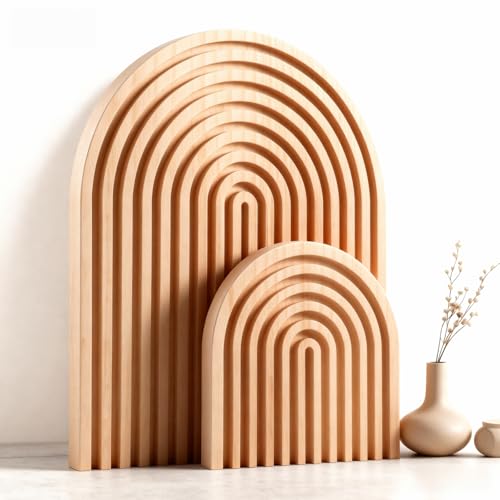
Nawwoo 2 Pcs Natural Wood Arch Decor, Boho Shelf & Serving Board for Fireplace Mantel, Kitchen Counter – Light Pine Finish, Scandinavian & Japandi Style Aesthetic Accents for Living Room, Home Office
1. Natural Wood Tone & Versatile Use Enhance your space with the warm, natural beauty of raw pine…
As an affiliate, we earn on qualifying purchases.
As an affiliate, we earn on qualifying purchases.
Conclusion
Embracing Japanese minimalist aesthetics invites you to find beauty in simplicity and serenity. By stripping away excess, you create space for clarity and mindfulness in your life. Remember, sometimes less is more, and in doing so, you discover that true elegance lies in restraint. So, don’t overlook the power of simplicity—it’s the secret sauce that transforms your space and mindset into a peaceful haven. Embrace the minimalist way and enjoy the clear, calm mind it brings.
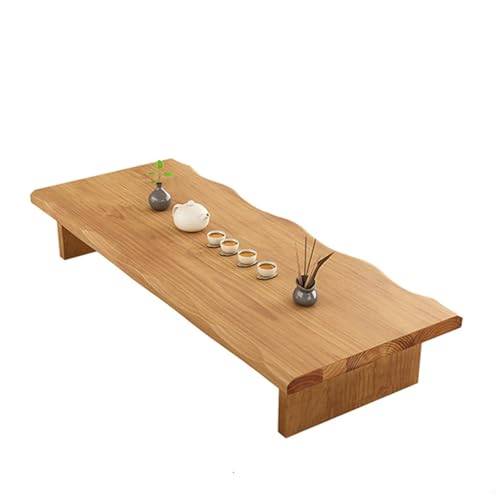
Duslykur Solid Wood Low Coffee Tea Table for Sitting, Zen Meditation Japanese Floor Table, for Living Room, Dining Room, Office (Wood, 47×23.6×13.7in)
SOLID WOOD & LIVE EDGE CRAFTSMANSHIP——Crafted from 100% solid wood with a 2-inch thick slab, this Japanese floor…
As an affiliate, we earn on qualifying purchases.
As an affiliate, we earn on qualifying purchases.

REGILLER 5-Wire Shelving Metal Storage Rack Adjustable Shelves,Standing Storage Shelf Units for Laundry Bathroom Kitchen Pantry Closet(Black,11.8" D x 16.6" W x 53.5" H)
CUSTOMER SUPPORT: We provide the best solution within 24 hours. There are many parts in the package, Please…
As an affiliate, we earn on qualifying purchases.
As an affiliate, we earn on qualifying purchases.