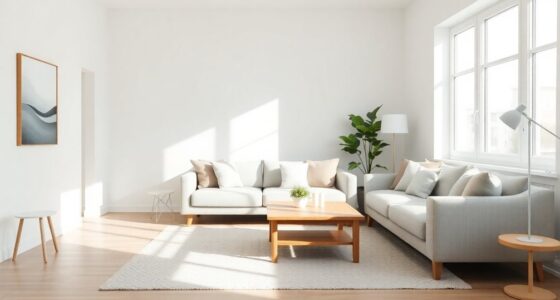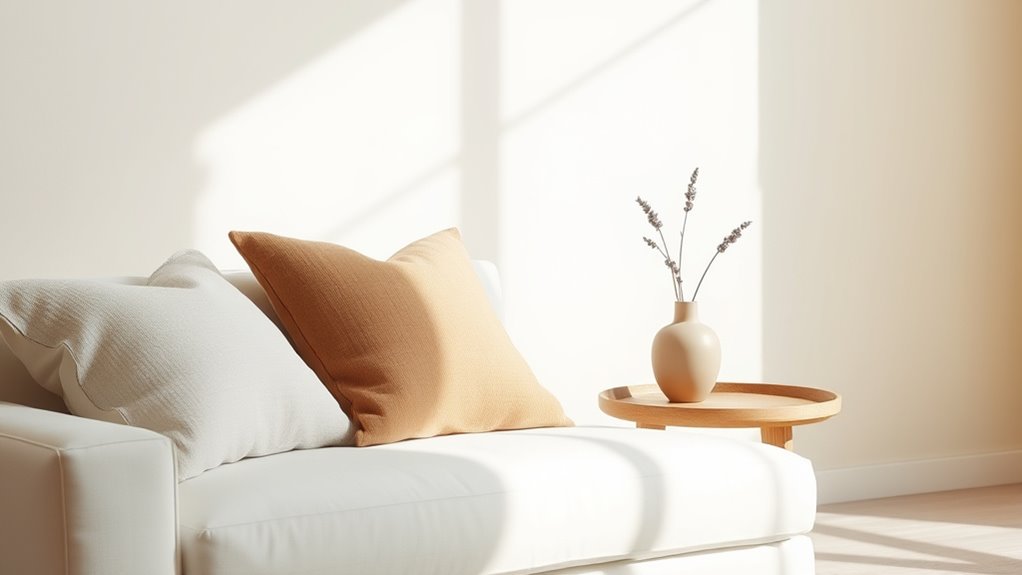

Soft minimalism helps you create warm, inviting spaces by blending simple design with rich textures and muted colors. Focus on balancing clean lines with tactile details, like cozy fabrics and natural materials, to add depth without clutter. Use a calming color palette of neutral tones with subtle accents to foster relaxation. Thoughtfully selecting each element guarantees your space feels serene and characterful. Keep exploring how this approach transforms your environment into a peaceful haven.
Key Takeaways
- Use a neutral color palette with warm beige, greys, and subtle accent hues to create a cozy, calming environment.
- Incorporate textured textiles like knit throws, woven rugs, and linen cushions to add tactile warmth and visual interest.
- Balance sleek, minimalist furniture with natural materials such as wood and ceramics for a layered, inviting look.
- Keep spaces clutter-free by selecting intentional decor that enhances harmony and promotes a serene atmosphere.
- Focus on soft lines and subtle details that combine simplicity with personality, fostering a warm, welcoming ambiance.
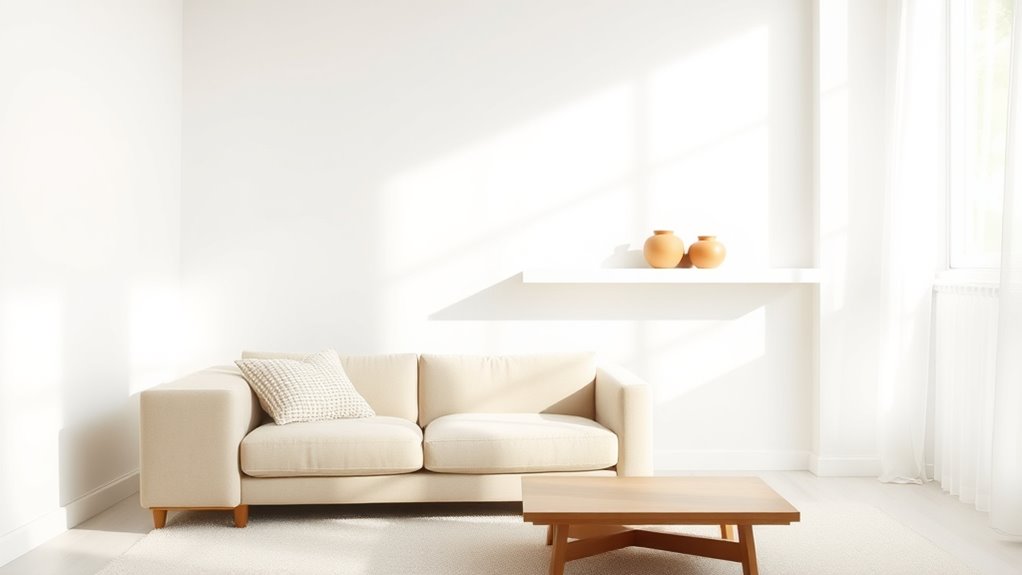
Soft minimalism is a gentle approach to design and living that emphasizes simplicity without sacrificing warmth or comfort. It’s about creating spaces that feel calm and inviting, avoiding clutter while still embracing character and personality. The secret lies in balancing clean lines with subtle details that add depth, and this is where texture contrast and a thoughtfully chosen color palette come into play.
Soft minimalism combines simplicity with warmth, balancing clean lines and subtle details to create calm, inviting spaces.
When you focus on texture contrast, you’re adding layers of tactile interest that keep a space from feeling flat or sterile. Think about pairing sleek, smooth surfaces like marble or glass with cozy, textured fabrics such as chunky knit throws or woven rugs. These contrasting textures create visual and physical depth, making your environment engaging without overwhelming it. Incorporate natural materials like wood, linen, or wool to amplify this effect, and be deliberate about mixing different textures in your furniture, accessories, and textiles. This contrast not only adds warmth but also invites touch, making your home feel more lived-in and welcoming.
Your color palette plays an essential role in maintaining the soft minimalism aesthetic. Instead of opting for bright, jarring colors, choose muted, soothing tones that promote relaxation. Soft neutrals like warm beige, gentle greys, and creamy whites serve as the foundation, creating a serene atmosphere. To add subtle interest, introduce small pops of subdued colors like blush pink, muted blues, or earthy greens. These hues complement the neutral tones and enhance the sense of warmth without cluttering the visual field. Keep your color palette cohesive and restrained—this consistency helps maintain the minimalist vibe while still feeling inviting.
In practice, combining texture contrast with a cohesive color palette allows you to craft a space that’s rich in character but free of chaos. For example, a simple sofa in a neutral tone can be elevated with textured cushions in contrasting fabrics, such as velvet and linen, in complementary shades. A wooden coffee table with smooth surfaces paired with woven baskets or textured ceramics adds layers of interest. The key is to select each element intentionally, making sure it contributes to the overall harmony and warmth.
Ultimately, soft minimalism isn’t about stripping away all personality; it’s about thoughtfully curating your environment so that it’s both visually appealing and comfortable. By skillfully balancing texture contrast and a harmonious color palette, you create a space that’s peaceful, warm, and effortlessly chic—an ideal sanctuary from the chaos of everyday life. Creating harmony through careful selection of textures and colors is fundamental to achieving this look.

Exclusivo Mezcla Fleece Throw Blanket Extra Large, Super Soft and Warm Blankets for Couch, Sofa and Bed Waffle Textured, Cozy, Fuzzy and Lightweight (Tan, 50×70 Inches)
Soft and Cozy: Made from premium and plush fabric, this blanket feels gentle against your skin, offering a…
As an affiliate, we earn on qualifying purchases.
As an affiliate, we earn on qualifying purchases.
Frequently Asked Questions
How Can I Incorporate Soft Minimalism Into Small Spaces Effectively?
You can incorporate soft minimalism into small spaces by choosing functional storage solutions and multi-purpose furniture that maximize your space without adding clutter. Opt for sleek, warm-toned pieces that create a cozy feel, and keep surfaces clear to maintain a calm atmosphere. Use hidden storage options to keep belongings out of sight, and select furniture that serves multiple functions, like a sofa bed or an ottoman with storage, to keep your space open and inviting.
What Color Palettes Best Evoke Warmth in Soft Minimalism?
You should choose warm pastel shades like soft pinks, gentle peaches, and muted yellows to evoke warmth through color psychology. These hues create a soothing, inviting atmosphere without overwhelming your space. Incorporate these colors in wall paint, textiles, or accessories. Their subtle, calming tones add warmth and depth, making your small space feel cozy and welcoming while maintaining the clean, uncluttered aesthetic essential to soft minimalism.
Are There Specific Textures That Enhance Warmth Without Clutter?
You can enhance warmth with textured fabrics like plush throws, cozy rugs, and soft cushions that add tactile comfort without clutter. Incorporate warm wood accents in furniture or decorative pieces to create a natural, inviting feel. These textures bring depth and coziness to your space, making it feel welcoming and layered while maintaining a clean, minimal look. Balance is key, so choose subtle, harmonious textures that complement your overall design.
How Do I Maintain a Soft Minimalism Aesthetic Long-Term?
To maintain a soft minimalism aesthetic long-term, focus on sustainable decorating by choosing quality, timeless pieces that add warmth and character. Limit artful clutter by curating only meaningful items and rotating decor seasonally to keep your space fresh. Regularly declutter to preserve simplicity, and incorporate cozy textures like plush throws and natural fibers that enhance warmth. Staying intentional with your decor choices guarantees your space remains inviting and serene over time.
Can Soft Minimalism Work With Existing Maximalist Decor?
Imagine your home as a garden—you can blend vibrant, maximalist blooms with soft greenery for harmony. Soft minimalism can work with existing decor by using layering techniques, adding cozy textiles, and strategic decorative accents. Start by decluttering cluttered areas, then incorporate warm tones and simple lines. You’ll create a balanced space that feels inviting, seamlessly merging your maximalist personality with the calming essence of soft minimalism.

Collive Comfy Area Rug 4' x 6', Tan/Cream Woven Cotton Bedroom Rugs, Modern Indoor Accent Rug Floor Carpet with Tassel for Living Room, Nursery Room, Dining Room, Bedside, Office, Patio Decor
Built to Last: A material made of 45% Cotton, 45% Polyester and 10% Viscose, our woven rug is…
As an affiliate, we earn on qualifying purchases.
As an affiliate, we earn on qualifying purchases.
Conclusion
Embrace soft minimalism, and you’ll find your space transforming into a haven of warmth and calm, much like a cozy hearth in a quiet cottage. By stripping away excess and choosing gentle textures, you create a sanctuary that invites tranquility. Remember, as the minimalist sage Thoreau once suggested, simplicity is the key to true richness. So, let your home whisper serenity, and let your heart feel the gentle echo of less being more.
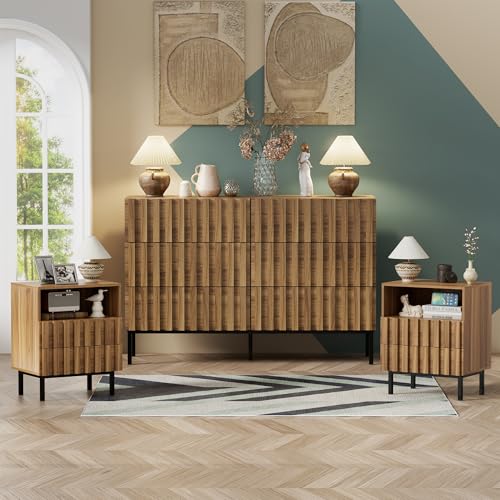
UEV 3 Piece Dresser and Nightstand Sets for Bedroom, 47" Wide 6 Drawer Dresser & Nightstand Set of 2, Mid Century Modern Fluted Wooden Dressers Set, Bedroom Furniture Set (Natural Wood)
Modern Design: This wooden bedroom furniture sets feature fluted pattern on its drawers, complemented by a smooth finish…
As an affiliate, we earn on qualifying purchases.
As an affiliate, we earn on qualifying purchases.

Foindtower Set of 2 Decorative Linen Fringe Throw Pillow Covers Cozy Farmhouse Boho Cushion Cover with Tassels Soft Accent Pillowcase for Couch Sofa Bed Living Room Home Decor 20×20 Inch Beige
【Natural Fabric】Our pillow cover is crafted of 70% natural ramie linen and 30% cotton. Natural fabric makes it…
As an affiliate, we earn on qualifying purchases.
As an affiliate, we earn on qualifying purchases.