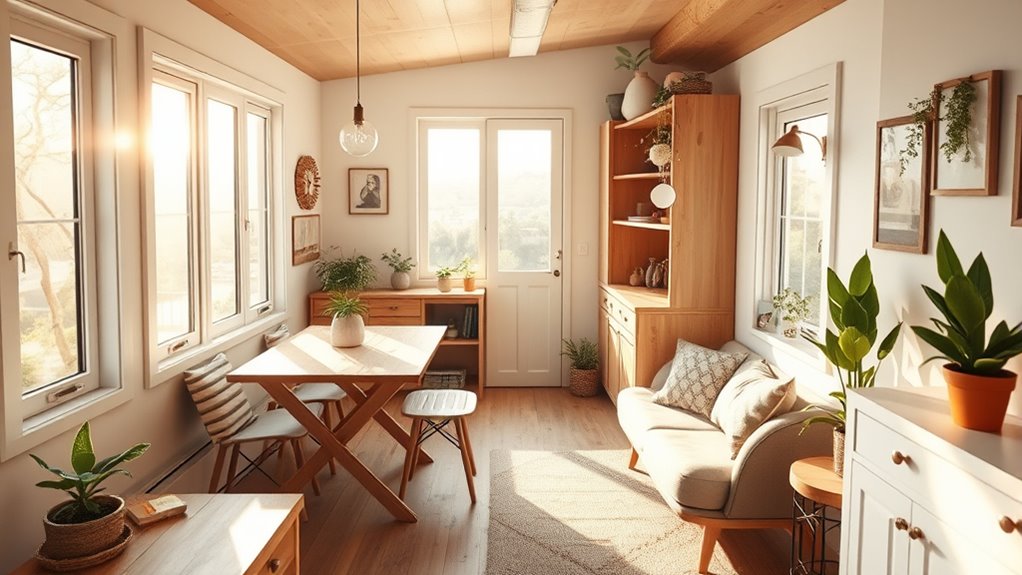

To make your tiny home breathe, focus on smart layout tricks like multi-purpose furniture and vertical storage solutions. Use fold-away tables, wall-mounted desks, or Murphy beds to free up space when needed. Maximize wall height with tall shelves and hanging hooks to keep things accessible and clutter-free. Combining these strategies creates an open, functional environment. Keep exploring to discover even more ways to optimize your small space and enhance your comfort.
Key Takeaways
- Incorporate multifunctional furniture like sofa beds and fold-away tables to maximize space and flexibility.
- Use vertical storage solutions such as tall shelves and wall-mounted cabinets to free up floor space.
- Combine hidden storage options under beds and within furniture to reduce clutter and enhance openness.
- Design adaptable layouts with sliding partitions or foldable furniture to easily reconfigure for different needs.
- Prioritize clever, intentional design choices that optimize space and create a breathable, inviting environment.
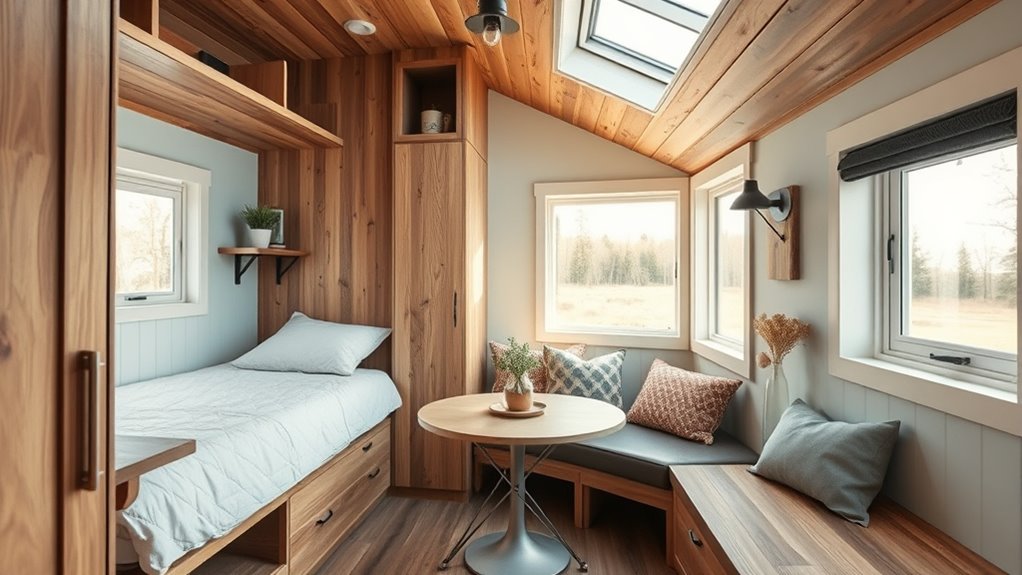
Have you ever wondered if smaller living spaces can offer a better quality of life? The answer often lies in smart design choices that maximize every inch of your tiny home. One of the most effective ways to do this is by incorporating multifunctional furniture. These pieces serve more than one purpose, helping you save space while maintaining comfort and style. For example, a sofa bed not only provides seating during the day but transforms into a cozy sleeping area at night. Fold-away tables or wall-mounted desks allow you to create a workspace when needed and free up space when you’re done. These versatile items eliminate clutter and make your small home feel more open.
Smart design with multifunctional furniture and vertical storage maximizes small space comfort and style.
Vertical storage is another game-changer. Instead of spreading out storage horizontally, you utilize the height of your walls to keep your belongings organized without sacrificing floor space. Tall bookshelves, wall-mounted cabinets, or hanging hooks can hold everything from books and kitchen supplies to clothing and decorative items. By reaching upward, you create a sense of openness because your belongings are stored out of the way, leaving more room to move around comfortably. When you combine multifunctional furniture with vertical storage, you *access* a new level of space efficiency, making your tiny home feel larger and more functional.
Designing with these principles also encourages you to think creatively about how you use each area. For instance, a bed with built-in drawers or under-bed storage can hide away seasonal clothes or extra linens. Installing vertical storage in the kitchen with hanging racks and tall pantry cabinets helps keep your counters clear, making meal prep easier and less cluttered. You can also add hooks or pegboards on walls for utensils, keys, or other everyday items, keeping things accessible but out of sight. This approach helps your small space stay organized and visually appealing. Additionally, paying attention to wall surfaces and finishes can enhance the sense of space and atmosphere in your tiny home, creating a more welcoming environment.
Moreover, choosing furniture that can be easily moved or folded away means you can adapt your layout to suit your needs at any time. When friends visit, you can clear some space by folding down a Murphy bed or sliding away a partition. This flexibility makes your tiny home feel less confined and more like a versatile living space. By combining multifunctional furniture and vertical storage solutions, you’re not just fitting into a smaller footprint—you’re creating a comfortable, efficient environment that truly enhances your quality of life. Small spaces become less about limitations and more about clever, intentional design that works with you, not against you.

Ecoviva Water E6 600GPD Compact Reverse Osmosis System, 9 Stage Tankless RO System Under Sink Water Filter, Simple Installation, 600 GPD Fast Flow, High Pure to Drain, RO Filtration Water Purification
[ 600 GPD High Capacity ] E6 600GPD RO system under sink filtration delivers an impressive 600 gallons...
As an affiliate, we earn on qualifying purchases.
Frequently Asked Questions
What Are the Legal Zoning Restrictions for Tiny Homes?
You need to check local zoning laws and property restrictions to understand tiny home regulations. Many areas have specific zoning codes that specify minimum size, foundation types, and where you can place a tiny home. Some places treat tiny homes as RVs, requiring different permits, while others have restrictions on permanent residences. Always research your local ordinances to guarantee your tiny home complies with all legal zoning requirements.
How Do Tiny Homes Handle Plumbing and Sewage?
Think of your tiny home’s plumbing as its lifeblood—essential and needing care. You’ll typically use a compact black tank for sewage or connect to an existing septic system if available. Regular plumbing maintenance prevents clogs and leaks, ensuring smooth sewage treatment. Some tiny homeowners opt for composting toilets, eliminating the need for traditional sewage systems altogether. Proper setup and maintenance keep your home efficient and eco-friendly, making small living sustainable and hassle-free.
What Are the Best Storage Solutions for Tiny Homes?
You should focus on multifunctional furniture and vertical storage to maximize space in your tiny home. Choose beds with built-in drawers, fold-out tables, or sofas that double as storage. Use vertical shelves, hanging racks, and wall-mounted units to free up floor space and keep essentials organized. This approach helps you make the most of limited square footage while maintaining a tidy, functional living area.
How Is Climate Control Managed in Small Spaces?
You manage climate control in a small space by choosing efficient heating and cooling options like mini-split systems or portable units. Insulate well to retain heat in winter and stay cool in summer. Use draft stoppers and thermal curtains to prevent air leaks. Ventilation is key—install exhaust fans or open windows strategically. These tricks help you maintain a comfortable environment without sacrificing valuable space.
Can Tiny Homes Be Moved Easily or Are They Stationary?
You can move tiny homes easily because they often feature mobile portability and flexible foundation options. Some are built on wheels, making transportation simple and straightforward, while others use permanent foundations that are less mobile. If mobility is a priority, opt for a tiny home on wheels, which allows you to relocate with minimal effort. However, if you prefer permanence, fixed foundations provide stability but limit movement.

Hczrc Portable Scanner, Photo Scanner for A4 Documents, Handheld Scanner for Business, Photo, Picture, Receipts, Books, JPG/PDF Format Selection, UP to 900 DPI, with 16G SD Car
Note: No software installation is required. You need 2 AA batteries ( not included) and a memory card...
As an affiliate, we earn on qualifying purchases.
Conclusion
With clever layout tricks, your tiny home becomes a canvas of space and style, transforming cramped corners into open skies. Think of your layout as a refreshing breeze—each design choice a gust that clears the clutter and invites freedom. As you master these tricks, your tiny home will feel like a sanctuary, where every inch breathes life and possibility. Embrace these secrets, and watch your small space blossom into a big, beautiful world.
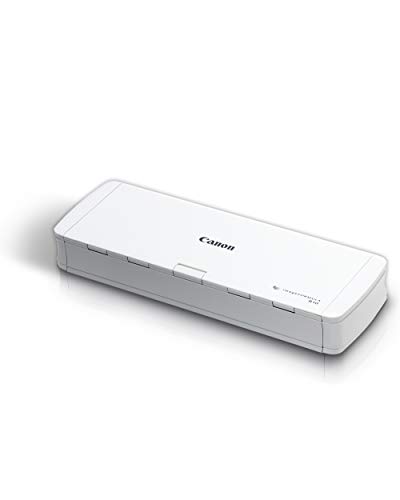
Canon imageFORMULA R10 - Portable Document Scanner, USB Powered, Duplex Scanning, Document Feeder, Easy Setup, Convenient, Perfect for Mobile Users, White
STAY ORGANIZED – Easily convert your paper documents into digital formats like searchable PDF files, JPEGs, and more.Power...
As an affiliate, we earn on qualifying purchases.

Epson WorkForce ES-50 Portable Sheet-Fed Document Scanner for PC and Mac
Fastest and lightest mobile single sheet fed document scanner in its class(1) small, portable scanner ideal for easy,...
As an affiliate, we earn on qualifying purchases.