If your monitor feels too low and causes neck strain, the easiest fix is to raise it to eye level. You can do this by stacking sturdy books or using an ergonomic monitor riser or stand. Keep the top of your screen at or just below eye level to promote good posture and prevent discomfort. This simple adjustment can make a big difference, and if you want to learn more, there are additional tips to improve your workspace setup.
Key Takeaways
- Raise your monitor to align the top with your eye level to prevent neck tilting and strain.
- Use ergonomic monitor risers or stack sturdy books underneath to elevate the screen easily.
- Adjust your desk or monitor height to ensure a natural, comfortable viewing angle without craning your neck.
- Keep the monitor at an arm’s length distance to reduce eye and neck fatigue.
- Regularly check your posture and make small adjustments for sustained ergonomic comfort.
How to Tell If Your Monitor Is Too Low for Comfortable Viewing

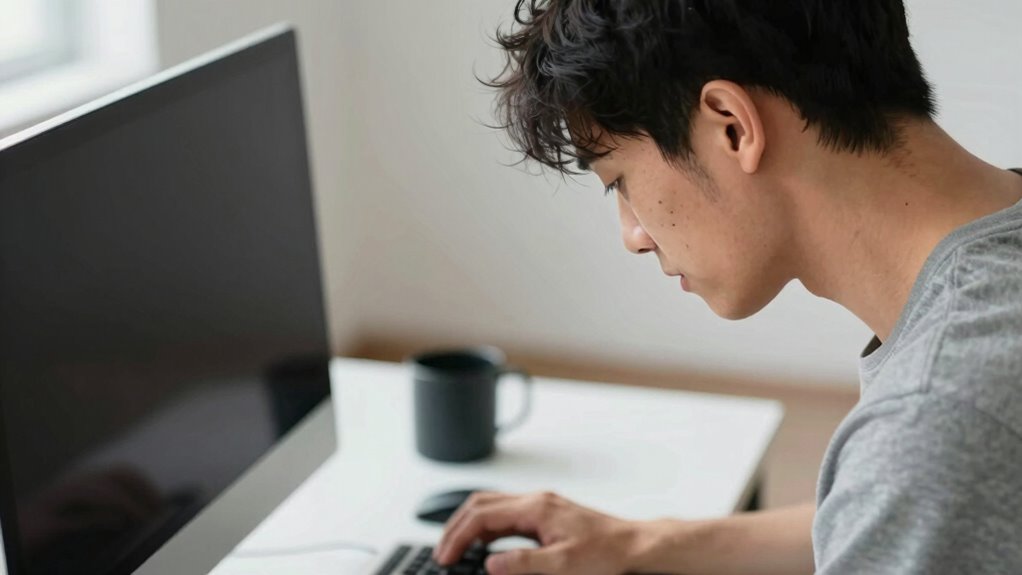
If you find yourself constantly tilting your head or squinting at your screen, your monitor might be positioned too low. Proper monitor placement is key to maintaining an ergonomic posture. When your monitor is too low, you’ll likely notice discomfort in your neck and shoulders, and your eyes may strain from looking downward. To check, sit comfortably and look straight ahead; the top of your screen should be at or just below eye level. If you have to crane your neck or tip your head downward, your monitor isn’t at the right height. Adjusting your monitor to a proper height helps promote ergonomic posture, reducing strain and preventing long-term discomfort. Pay attention to your body’s signals to ensure your monitor’s placement supports your comfort. Additionally, user consent is crucial when using digital platforms that track your interactions, emphasizing the importance of a comfortable workspace.
Simple Ways to Elevate Your Monitor Without Tools

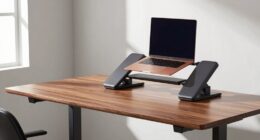
Raising your monitor without tools is easier than you might think, especially when you use everyday items around your home or office. To improve monitor placement, try stacking sturdy books or boxes underneath your monitor to elevate it to eye level. Make sure the surface is stable to prevent slips or falls. You can also use ergonomic accessories like monitor risers or stands if available. These are designed to provide quick, tool-free height adjustments, making it simple to achieve the right eye level. Additionally, incorporating seating areas can help create a more organized workspace, which in turn enhances your productivity. Remember, implementing home soundproofing techniques can further improve your focus by reducing distractions from outside noise. Keep in mind, the goal is to reduce neck strain by aligning your monitor with your natural line of sight. These simple solutions are effective, inexpensive, and can be customized based on what you have on hand. Additionally, high refresh rates can enhance your overall comfort by minimizing eye strain during long work sessions. Remember that proper tool safety is essential when making any adjustments to your workspace setup to avoid potential hazards.
What Is the Ideal Monitor Height for Comfortable Work?

Sure! Here’s the revised content with the requested adjustments:
—
To work comfortably, your monitor should be at eye level so you don’t strain your neck. The viewing angle should be natural, with the screen slightly tilted for minimal glare. Adjusting your desk height ensures your monitor aligns with these points for ideal comfort. Additionally, fostering a growth mindset can lead to better adaptability and resilience in your work habits. Using mount leveling kits can help achieve the perfect alignment for your setup. Proper ergonomics can enhance your overall workspace experience, similar to how straining paint can affect the quality of your airless spray job. It’s also important to be aware of early detection for health issues like breast cancer, as regular check-ups can lead to better outcomes. Consider using top car protection products to safeguard your vehicle, as maintaining a comfortable workspace also enhances overall productivity and focus.
—
Let me know if you need any further modifications!
Eye Level Alignment
Finding the right monitor height is essential for comfortable work, and positioning it at eye level is the best way to reduce strain. When your monitor is aligned correctly, you avoid neck discomfort and improve focus. Confirm the top of your screen is roughly at eye level, so you don’t tilt your head up or down. Proper alignment also helps with color calibration, making visuals clearer, and reduces screen glare by minimizing reflections. Use the table below to adjust your setup effectively:
| Aspect | Tip | Benefit |
|---|---|---|
| Eye Level | Raise/lower monitor to match eye line | Less neck strain |
| Screen Angle | Tilt screen slightly for comfort | Reduce glare and reflections |
| Distance | Keep 20-30 inches away | Minimize eye fatigue |
This setup promotes healthier, clearer viewing.
Viewing Angle Comfort
Have you ever experienced discomfort after working long hours at your desk? Your monitor’s viewing angle plays a big role in comfort. The ideal monitor height aligns the top of your screen with your eye level, reducing strain. To optimize viewing angle comfort:
- Adjust the monitor so you don’t tilt your head up or down
- Keep the screen at a distance where you can view content without straining your eyes
- Make sure color calibration is accurate for clearer visuals
- Set the screen resolution high enough for sharp text and images
Proper height reduces neck tension and improves focus. Additionally, a well-calibrated display enhances color accuracy, making work easier on your eyes. Finding the right height ensures you maintain a natural, comfortable posture throughout your work session.
Desk Height Optimization
Ensuring your monitor is at the right height is essential for comfortable, strain-free work. The ideal monitor height places the top of your screen at or just below eye level, so you don’t have to tilt your head up or down. This position helps maintain proper neck alignment and reduces strain. Adjust your desk height or monitor stand accordingly. While setting the height, also consider screen brightness to prevent eye fatigue and perform color calibration to ensure accurate visuals. Properly calibrated colors and appropriate brightness make it easier to work for extended periods without discomfort. When your monitor is correctly positioned, you’ll naturally adopt better posture, decreasing the risk of neck and shoulder pain. Regularly check and refine your setup for ongoing comfort. Additionally, exploring new frontiers in ergonomics can lead to further innovations in workplace comfort and efficiency.
Common Mistakes That Lower Your Monitor and Cause Neck Strain
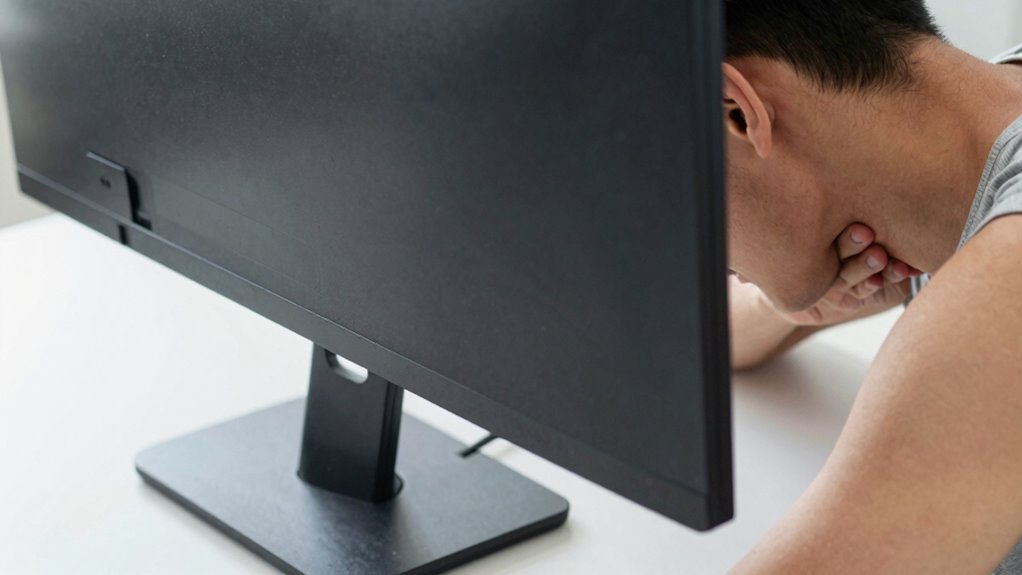
One of the most common mistakes that lead to neck strain is placing your monitor too low. When your screen sits below eye level, you constantly tilt your neck upward, causing discomfort over time. Additionally, neglecting proper color calibration can make it harder to see details clearly, prompting you to lean in or adjust your neck position. Screen glare from improper placement or lighting forces you to squint or move your head to see better, increasing strain. To avoid these issues, watch out for these mistakes:
Placing your monitor too low causes neck strain and discomfort over time.
- Setting your monitor below eye level
- Ignoring screen glare and lighting conditions
- Overlooking color calibration for better visibility
- Not adjusting the monitor’s tilt or height for ideal viewing angle
Improving your workspace can also enhance indoor air quality, which is essential for overall comfort and health. Additionally, using essential oils like eucalyptus oil can support respiratory health, creating a more pleasant environment. Moreover, ensuring optimal comparative advantage in your workspace setup helps maximize efficiency and comfort. Creating a space that allows natural light to flow in can significantly boost your mood and productivity. Fixing these mistakes helps reduce neck strain and improves comfort during long hours at your desk.
Tips to Prevent Neck Pain and Improve Your Desk Setup
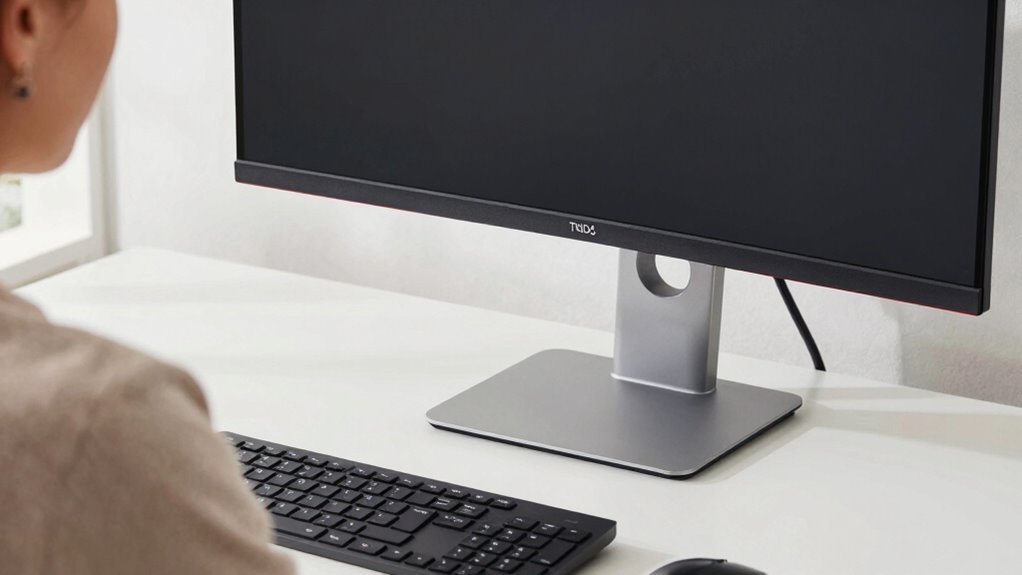
Adjusting your workspace can make a significant difference in preventing neck pain and enhancing comfort. Start by setting your monitor’s height so your eyes are level with the top of the screen, reducing strain. Proper color calibration ensures that you see images clearly without squinting or leaning in, which can cause neck tension. Keeping your screen brightness aligned with ambient lighting to prevent eye fatigue encourages a more natural head position. Additionally, effective personal finance planning often emphasizes the importance of a comfortable work environment, as it can lead to increased productivity and focus. Creating a workspace that supports eldercare decisions can also enhance your overall well-being. Use a consistent setup, avoiding unnecessary movements that strain your neck. Regularly taking breaks and stretching also helps. By finely tuning color calibration and screen brightness, you create a more comfortable visual environment that minimizes the need to adjust your head awkwardly, supporting good posture and reducing neck pain. Additionally, maintaining a whole-home water system can contribute to overall wellness, further supporting a healthy workspace.
When to Use Ergonomic Accessories to Elevate Your Monitor
Sure! Here’s the revised content with the requested adjustments:
—
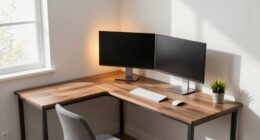
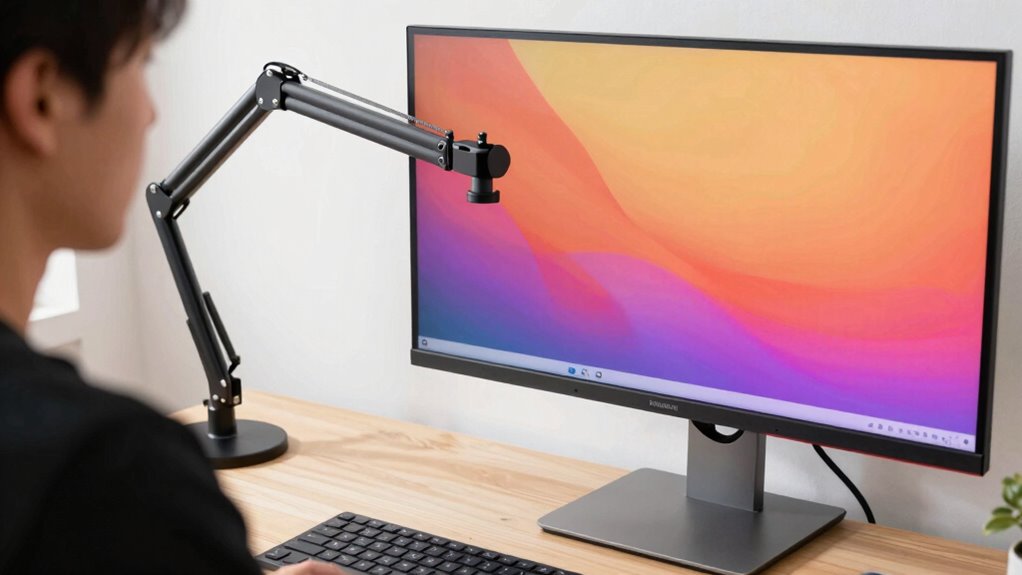
Sometimes, your monitor’s position isn’t enough to maintain proper ergonomics, especially if it’s too low or at an awkward angle. When this happens, ergonomic accessories can help elevate your monitor and improve monitor placement. Use adjustable monitor risers, monitor arms, or stands to bring your screen to eye level. These accessories are ideal if you work long hours or have limited desk space. They provide a customizable height, reducing neck strain and promoting better posture. Travel tips can also include recommendations for setting up your workspace effectively, ensuring you remain comfortable even while working remotely. Consider ergonomic accessories when your current setup causes discomfort, or if you frequently adjust your monitor to see it clearly. A proper ergonomic setup is essential for your health. Investing in ergonomic accessories guarantees your workspace supports your body’s natural alignment, which is crucial for long-term well-being. Additionally, optimizing your setup can enhance overall performance, similar to how a flywheel upgrade improves engine efficiency. Utilizing anti-fatigue mats in conjunction with these accessories can further enhance your comfort during long hours of standing.
—
Let me know if you need any further modifications!
Frequently Asked Questions
Can an Adjustable Monitor Stand Improve Neck Posture Effectively?
Yes, an adjustable monitor stand can improve your neck posture effectively. It boosts monitor stability, guaranteeing it stays at the right height, reducing strain. Plus, it’s compatible with most desks, making setup simple. By positioning your screen at eye level, you prevent slouching and neck pain. Just make certain the stand’s height adjustment suits your workspace, and you’ll enjoy better comfort and posture during long work sessions.
How Often Should I Adjust My Monitor Height During Work?
You should adjust your monitor height whenever you notice discomfort or after every couple of hours to maintain good posture. Regularly checking your ergonomic accessories, like monitor stands, helps guarantee your monitor stays at an ideal eye level. By making these adjustments, you prevent neck strain and stay comfortable. Keep your monitor height consistent with your eye level, and don’t forget to take short breaks for better overall ergonomics.
Are There Specific Ergonomic Guidelines for Monitor Placement?
Yes, there are ergonomic guidelines for monitor placement. You should set your monitor height so that the top of the screen is at your eye level, allowing you to look straight ahead comfortably. Keep the monitor about an arm’s length away to reduce eye strain. This positioning helps maintain proper neck alignment, minimizes discomfort, and promotes better posture during long work hours. Adjust regularly to stay comfortable.
Can Using a Monitor Arm Reduce Overall Neck Strain?
A monitor arm can markedly minimize neck strain by allowing you to easily adjust the monitor height, promoting proper neck alignment. With a flexible monitor arm, you can position your screen at eye level, reducing the need to tilt or crane your neck. This simple switch supports sustained comfort and correct posture, preventing pain and promoting productivity by keeping your neck naturally aligned and relaxed during long work sessions.
What Signs Indicate My Monitor Is Too High or Too Low?
You’ll know your monitor is too high if you have to tilt your neck up or experience discomfort, and it’s too low if you look down excessively, causing strain. Signs include persistent neck pain, eye strain from improper color calibration, or glare issues that make viewing uncomfortable. Adjust your monitor to align the top of the screen with your eye level, reducing strain and improving focus, especially when managing screen glare or color accuracy.
Conclusion
So, are you ready to transform your workspace and say goodbye to neck strain? The right monitor height can make all the difference — but what if the perfect fix is just a simple adjustment away? Stay tuned, because the next step could surprise you. Don’t settle for discomfort when a small change might release a whole new level of comfort and productivity. Keep reading — your neck will thank you!