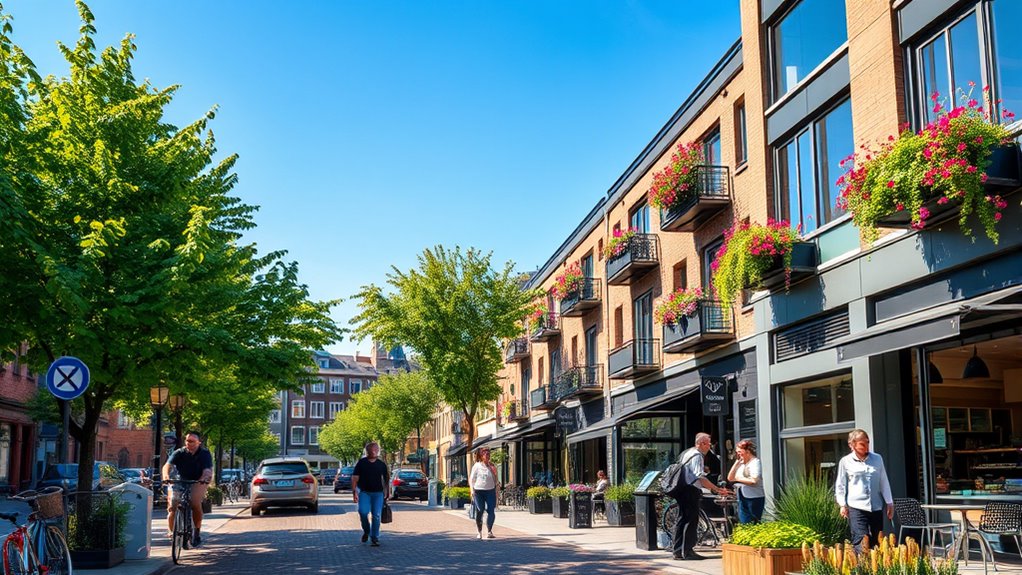
Switching to a car-free or less-car lifestyle can save you money, reduce your environmental impact, and improve your health. Use public transportation like buses and trains for convenient, affordable travel, and invest in a good bike for local errands and daily commutes. Combining modes and planning routes ahead make everything smoother. With some planning and community support, you can make the change confidently—more tips and strategies await to help you start your journey.
Key Takeaways
- Assess your local transit options, including buses, trains, and bike-sharing programs, to replace car trips effectively.
- Invest in a reliable bike and learn safe cycling routes to incorporate active commuting into your routine.
- Plan your daily routes in advance, utilizing transit apps for schedule updates and optimal travel times.
- Join community groups focused on biking and public transit to share tips and stay motivated.
- Organize your home to reduce clutter and support eco-friendly habits, making sustainable living easier and more enjoyable.

Have you ever considered what life would be like without a car? It might seem intimidating at first, but many find it freeing and practical once they embrace alternative transportation options. The key to making a car-free lifestyle successful is understanding how to utilize public transportation and bike infrastructure effectively. Public transportation, including buses, trains, and subways, can take you nearly anywhere you need to go without the hassle of driving. It’s often more affordable than owning a car, especially when you factor in insurance, maintenance, and fuel costs. Plus, using public transit reduces your carbon footprint and helps decrease traffic congestion. When you plan your routes using transit apps or schedules, you’ll find that many destinations are easily accessible, even if you don’t own a vehicle. It’s a matter of adjusting your routines and being flexible with your timing, but the convenience and savings make it worthwhile. Incorporating wall organization solutions can help keep your home clutter-free and streamline your daily routines, making your less-car lifestyle even more manageable.
Bike infrastructure plays a vital role in supporting a less-car-dependent lifestyle. Many cities are investing heavily in bike lanes, protected paths, and bike-sharing programs, making cycling a safe and practical option for daily commutes and errands. Once you get comfortable on a bike, you’ll notice how it offers a level of flexibility that public transportation alone might not provide. You can hop on your bike to reach local shops, parks, or friends’ houses quickly, avoiding transit schedules altogether. Bike infrastructure also encourages a healthier lifestyle and reduces emissions, aligning perfectly with eco-conscious values. If you’re worried about weather or long distances, combining biking with public transit can be a perfect solution. Many cities allow you to take your bike on trains or buses, giving you the freedom to cover larger areas without needing a car. This integration makes the idea of living without a car much more feasible and less restrictive. Planning your table linens with seasonal fabrics can enhance your home’s ambiance, complementing your eco-friendly and minimalist lifestyle.
Transitioning to a car-free lifestyle requires some planning, but it’s entirely doable with the right mindset and resources. You’ll want to familiarize yourself with local transit options and invest in a good bike. Planning your routes in advance, knowing peak transit times, and joining community groups focused on biking or transit can make the process smoother. Over time, you’ll discover that you don’t miss the hassles of car ownership—no parking worries, less money spent, and more opportunities to enjoy your community actively. Living without a car isn’t just about avoiding vehicle costs; it’s about embracing a more sustainable, connected way of life that keeps you healthier and more engaged with your surroundings. Additionally, choosing eco-friendly serveware and dinnerware can further support your sustainable living goals, making your home environment more stylish and environmentally conscious.
Frequently Asked Questions
How Do I Manage Emergency Vehicle Access Without a Car?
To manage emergency vehicle access without a car, you should plan for clear driveway access and establish evacuation routes. Keep driveways unobstructed and communicate your needs with neighbors and local authorities. Consider installing signage or markings indicating access points for emergency vehicles. Regularly review and update your evacuation plan to guarantee quick, easy access when needed, giving you peace of mind during emergencies.
What Are the Best Apps for Public Transportation Scheduling?
Think of public transit apps as your GPS for city travel. Apps like Google Maps, Moovit, and Transit are top scheduling tools that give real-time updates and route options, making steering buses and trains seamless. They help you plan ahead, avoid delays, and stay on schedule. Download these apps to turn your commute into a smooth, stress-free journey, ensuring you’re always in sync with the transit system.
How Can I Ensure Reliable Grocery Deliveries?
To guarantee reliable grocery deliveries, you can use a combination of an electric bike and car sharing programs. Schedule deliveries during times when the store is less busy, and choose services with real-time tracking to stay updated. Using an electric bike helps you quickly pick up essentials if needed, while car sharing programs provide backup transportation, making your grocery runs more flexible and dependable.
What Legal Considerations Exist for Bike-Only Zones?
Bike-only zones are protected by strict bike zone regulations and pedestrian zone laws, so you must adhere to them closely. Violating these laws can lead to hefty fines or legal trouble, making it feel like you’re risking a small fortune just for cycling. Always check local signage and regulations before entering these zones. Staying aware and respectful of these rules ensures you avoid legal pitfalls and keep your eco-friendly ride smooth and worry-free.
How Do I Maintain Social Connections Without a Personal Vehicle?
You can maintain social connections by exploring carpool options with friends or neighbors, making travel easier and more eco-friendly. Attend local community events or join groups that align with your interests, often held conveniently within walking or biking distance. Using these options, you stay connected without a personal vehicle, reducing your carbon footprint while actively engaging with your community. This approach keeps your social life vibrant and sustainable.
Conclusion
Living car-free or with fewer cars can transform your daily life, saving money and reducing your environmental impact. Imagine moving to a walkable neighborhood, where you enjoy morning strolls and quick bike rides to errands. Take Sarah, who ditched her car and now spends weekends exploring local parks on foot or bike. Embracing this lifestyle might seem challenging at first, but with small steps, it becomes rewarding—and you’ll help create a cleaner, healthier community for everyone.