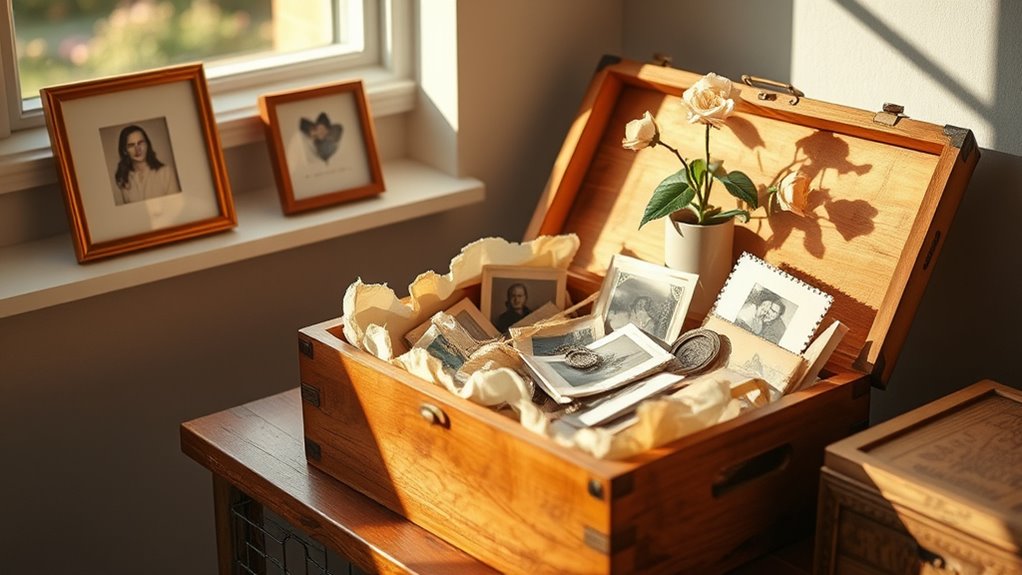

To manage sentimental items without regret, set clear categories like keep, donate, or repurpose, and focus on what truly matters. Recognize that emotional attachment is normal, but making intentional decisions helps prevent overwhelm. Photograph meaningful objects to preserve memories without cluttering your space, and be gentle with yourself throughout the process. Remember, managing sentiment is ongoing, and balancing your past with present needs creates a more peaceful environment. Discover how to navigate this journey with confidence.
Key Takeaways
- Set clear categories (keep, donate, discard) to make decisions intentional and reduce guilt.
- Focus on preserving memories through photos or digital backups instead of physical items.
- Practice self-compassion; celebrate small progress to ease emotional attachment.
- Revisit decisions over time, allowing flexibility and reducing regret.
- Clarify why each item matters, ensuring only meaningful possessions are retained.
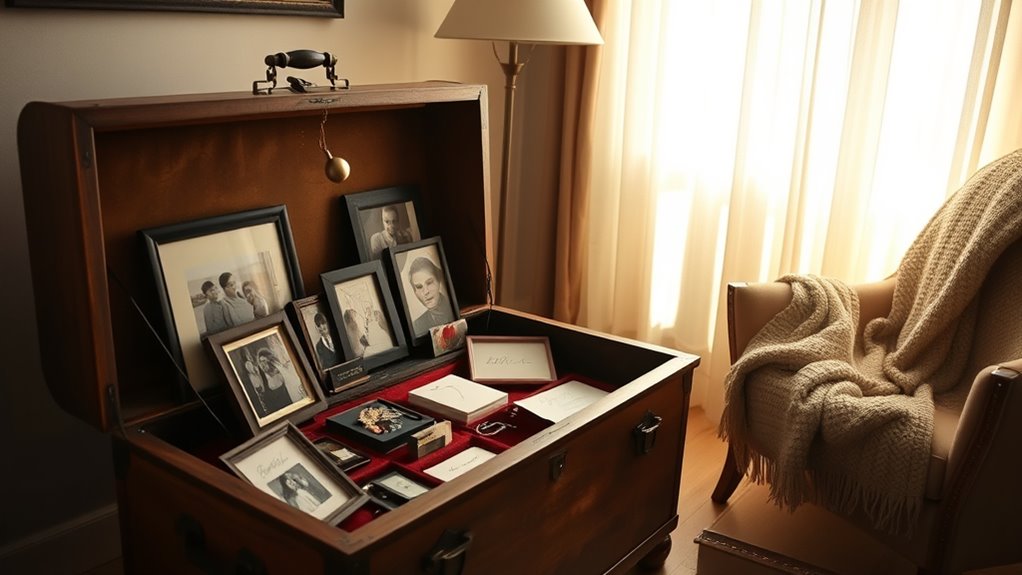
Managing sentimental items can be a challenging but rewarding process. As you sort through your belongings, you might find yourself overwhelmed by the emotional attachment you feel toward certain objects. It’s natural to hold onto items that evoke memories, but it’s equally important to create a manageable space for yourself. One effective step is digital decluttering. Today, much of our sentimental value resides online—photos, videos, messages, and digital keepsakes. By organizing and reducing digital clutter, you can ease the emotional weight these items carry and prevent feeling overwhelmed. Delete duplicates, back up essential files, and categorize your digital memories into albums or folders. This process helps you preserve meaningful moments without letting your digital space become cluttered and stressful. When dealing with physical possessions, recognize that emotional attachment often makes decision-making difficult. Instead of viewing this process as discarding, think of it as curating a collection of meaningful items. Ask yourself why each object matters. Does it tell a story or represent a specific moment in your life? If the answer is yes, find a way to honor that memory without keeping every physical reminder. Sometimes, taking photographs of sentimental items allows you to preserve the memory while freeing up space. This way, you hold onto the essence of the object without the burden of physical clutter. It’s important to set boundaries and give yourself permission to let go. Managing sentimental items isn’t about erasing memories; it’s about creating a space that reflects your current life and priorities. You might find it helpful to establish categories—keep, donate, repurpose, or discard. Items that no longer serve a purpose or evoke positive feelings can often be released without guilt. Remember, the goal isn’t to eliminate sentiment but to manage it consciously and intentionally. You can keep a few treasured items that truly resonate with you, while letting go of the rest. This process can be emotionally taxing, but it’s also liberating. Throughout this journey, be gentle with yourself. Celebrate small victories, like parting with an item that’s been sitting untouched. Recognize that managing sentimental items is an ongoing process, and it’s okay to revisit decisions later. Ultimately, by balancing digital decluttering with mindful physical organization, you create a space that respects your memories while supporting your well-being. This approach helps you cherish what truly matters without feeling weighed down by the clutter of the past. Incorporating reliable backup power strategies can help ensure that your digital and physical memories are protected during unexpected disruptions, adding an extra layer of security to your sentimental management.

ThePhotoStick® Omni 128GB USB Flash Drive & Memory Stick – Photo & Video Backup for iPhone, Android, Mac & PC – Multiport Connection to Easily Store & Transfer Files
Simple, secure content backup – ThePhotoStick Omni automatically finds and saves photos, videos, and other files, helping to…
As an affiliate, we earn on qualifying purchases.
As an affiliate, we earn on qualifying purchases.
Frequently Asked Questions
How Do I Decide What to Keep and What to Let Go?
You decide what to keep or let go by identifying emotional triggers tied to each item. Ask yourself if it truly brings joy or serves a purpose. Limit decision fatigue by sorting items into categories, like keep, donate, or discard, in one session. Trust your instincts, and remember, letting go can be freeing. Focus on what matters most, and avoid overanalyzing to prevent regret later.
What Are Creative Ways to Repurpose Sentimental Items?
You can turn sentimental items into artistic transformations or functional repurposing projects. For example, turn old jewelry into a unique necklace or use vintage fabric to create a quilt. Repurpose photo frames into shadow boxes or craft a keepsake box from cherished boxes. These creative ideas let you honor your memories while giving your items new life, making them both meaningful and useful instead of just stored away.
How Can I Manage Emotional Attachment During Decluttering?
You can manage emotional attachment by setting emotional boundaries and recognizing sentimental triggers. Take a moment to acknowledge your feelings without judgment, then decide what truly matters. Use techniques like journaling or talking to a friend to process emotions. Focus on keeping items that evoke positive memories and let go of those causing distress. This approach helps you declutter with compassion, avoiding regret while honoring your emotional needs.
What Should I Do With Items of Sentimental Value I Can’t Keep?
You don’t have to keep every sentimental item. Instead, consider digital preservation—scan photos and documents to preserve memories without physical clutter. For items with deep meaning, think about charitable donation; it allows others to cherish them. If you’re hesitant, remember that letting go doesn’t erase your memories. By digitizing or donating, you honor your feelings while freeing your space and heart.
How Can I Involve Family Members in Decision-Making?
You can involve family members through shared decision making by organizing a family meeting. Encourage everyone to share their feelings and ideas about sentimental items, creating a supportive environment for family collaboration. Listen actively, respect each person’s perspective, and work together to prioritize which items to keep, donate, or pass on. This approach guarantees everyone feels valued and helps you make thoughtful decisions without regrets.

Oxford Keepsake Box, Protective Storage Box, Home and Office Organizer, Photo Storage Box, Souvenir Organizer, Large, 16" x 12" x 4 1/4" (41787)
Ideal storage solution for photos, trading cards, artwork, office and school supplies and more; each souvenir box has…
As an affiliate, we earn on qualifying purchases.
As an affiliate, we earn on qualifying purchases.
Conclusion
Remember, managing sentimental items is like tending a delicate garden—you have to nurture what truly matters and let go of what no longer serves you. By making thoughtful decisions, you create space for new memories to bloom. Don’t let your belongings anchor you to the past; instead, let them be gentle reminders of moments worth cherishing. With each item you release, you’re freeing your heart to embrace the future with hope and grace.

Declutter Your Digital Life: Take Back Control in 52 Weeks
As an affiliate, we earn on qualifying purchases.
As an affiliate, we earn on qualifying purchases.

Photo Album Self Adhesive 3×5 4×6 5×7 6×8 8×10 8.5×11 11×10.6 Magnetic Scrapbook Album DIY Length 11×10.6 Inch 40 Pages Linen Cover DIY Photo Album with A Metallic Pen and and Plastic Board(Grey)
Album Size: Length 11 x Width 10.6(inches), internal self-adhesive page length 10.8 x Width 8.6 (inches), 20sheets/40 pages….
As an affiliate, we earn on qualifying purchases.
As an affiliate, we earn on qualifying purchases.