To make clutter impossible, establish simple daily routines like tidying up after meals and assigning specific spots for keys, mail, and coats. Keep designated areas for essentials to avoid guesswork and encourage quick, automatic put-away. Incorporate consistent times for quick surface cleanups, which reinforce habits and prevent messes from stacking up. Mindfulness and routine habits strengthen your decluttering efforts, making clutter less likely to invade your space. Keep going, and you’ll discover even more ways to keep clutter at bay effortlessly.
Key Takeaways
- Perform brief daily cleaning to prevent messes from accumulating.
- Assign specific storage spots for keys, mail, and daily essentials.
- Create designated areas to streamline organization and reduce searching time.
- Establish a consistent routine tidying time each day to reinforce habits.
- Practice mindfulness to maintain awareness and commitment to clutter-free living.
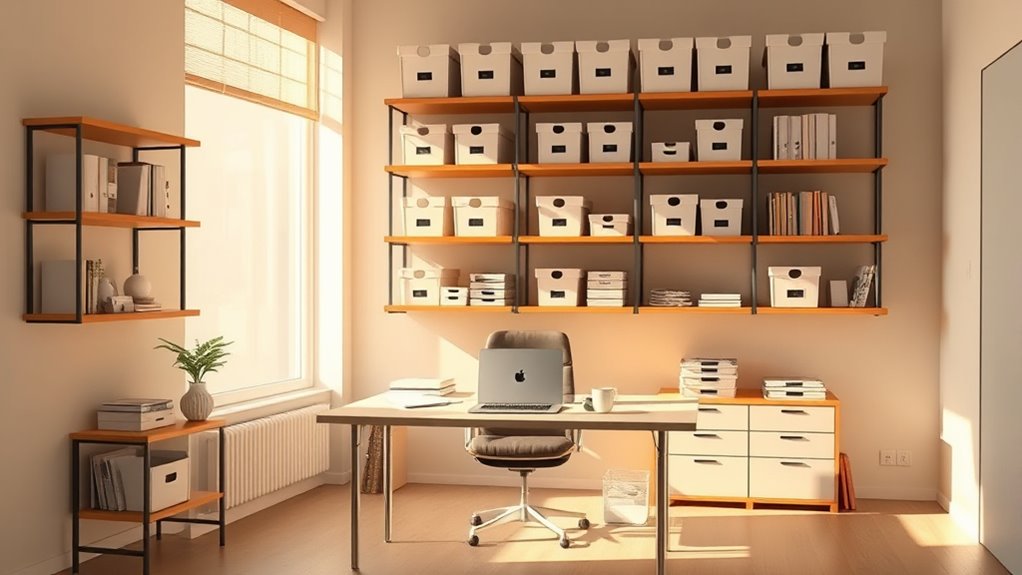
Keeping clutter at bay isn’t about one-time cleaning; it’s about establishing routines that prevent messes from piling up in the first place. Daily cleaning is essential because it keeps your space manageable and prevents clutter from taking over. When you develop the habit of tidying up every day, you stop small messes from turning into overwhelming chaos. It’s not about spending hours each day; rather, it’s about dedicating a few minutes to clear surfaces, put away items, and ensure everything has its place. By making daily cleaning a non-negotiable part of your routine, you create a natural rhythm that keeps clutter from accumulating.
Daily routines prevent clutter from piling up and keep your space manageable.
One of the most effective ways to support daily cleaning is by designating specific spaces for your belongings. When everything has a designated spot, you eliminate the guesswork and the temptation to leave things lying around. For example, assign a particular drawer for keys, a hook for your coat, and a bin for mail or paperwork. This way, when you come home, you know exactly where to put things, and it becomes second nature to return items to their designated spaces. Consistently doing this forms a habit that lessens the chances of clutter building up because you’re actively organizing as you go.
Creating designated spaces also makes daily cleaning easier because it streamlines the process. Instead of wasting time searching for misplaced items, you simply return them to their places. This small step can save you minutes each day and reduce the stress that comes with clutter. Plus, when your belongings have a clear home, you’re more likely to put things away immediately rather than leaving them to pile up. Over time, this routine becomes automatic, and your home stays tidy without much effort.
To reinforce these habits, set a specific time each day for a quick tidy-up session. Whether it’s right after dinner or before bed, choose a time that fits your schedule. During this routine, focus on doing a quick sweep of your space, putting items back in their designated spaces, and wiping down surfaces if needed. Consistency is key—by sticking to this schedule, clutter becomes less of a problem because you’re addressing it daily instead of letting it accumulate. Incorporating mindfulness about organization habits can further enhance your ability to maintain a clutter-free environment.
As an affiliate, we earn on qualifying purchases.
Frequently Asked Questions
How Long Does It Typically Take to Establish These Routines?
It typically takes about three to four weeks of consistent habit formation and time investment to establish routines that prevent clutter. You might see quicker results if you’re dedicated, but sticking with these routines daily helps them become second nature. The key is persistence—maintaining regularity and patience until the habits become automatic, making clutter less likely to build up and keeping your space organized effortlessly.
Can These Routines Be Adapted for Small Living Spaces?
Yes, these routines can definitely be adapted for small spaces. You simply need to tailor your routine to prioritize compact organization and quick cleanup. For instance, designate small storage areas for essentials, and set specific times for tidying up. By incorporating routine adaptation, you make clutter less likely to accumulate, even in tight quarters. Consistency is key, so keep these habits simple and manageable for your small space.
What Are Common Mistakes to Avoid When Implementing These Routines?
When implementing routines, avoid rushing or skipping habit formation steps, like setting specific times for tidying. For example, Sarah tried to declutter her small apartment by random cleaning, but she quickly reverted to clutter. Focus on consistent time management and gradually building habits to guarantee lasting change. Don’t underestimate the importance of patience; rushing can lead to burnout and inconsistent routines, making clutter creep back in.
Do These Routines Work for Households With Children?
Yes, these routines can work for households with children. You should incorporate childproofing strategies to keep clutter manageable and safe. Use chore chart ideas tailored for kids to encourage their participation in tidying up. Consistently involving children in routines helps them develop good habits, making clutter less likely. Adjust routines as needed, ensuring they’re practical and engaging, so everyone stays motivated and the space remains organized.
How Do I Stay Motivated to Maintain These Routines Long-Term?
To stay motivated long-term, focus on habit tracking to see your progress and celebrate small wins. Find accountability partners—family or friends—who can encourage you and hold you responsible. Remember why you started these routines and visualize the benefits of a clutter-free space. Keep your routines flexible, adjust when needed, and reward yourself for sticking to them. Consistency and support make maintaining habits easier and more rewarding.
As an affiliate, we earn on qualifying purchases.
Conclusion
By weaving these routines into your daily life, clutter becomes a thing of the past. Picture your space as a flowing river—clean, clear, and effortless to navigate. Each small habit acts like a steady current, guiding debris away and keeping your environment serene. When you commit to these routines, chaos dissolves into calm, and your home becomes a sanctuary of order. Keep the rhythm steady, and clutter will never find a foothold again.
As an affiliate, we earn on qualifying purchases.
designated storage bins for essentials
As an affiliate, we earn on qualifying purchases.
As an affiliate, we earn on qualifying purchases.