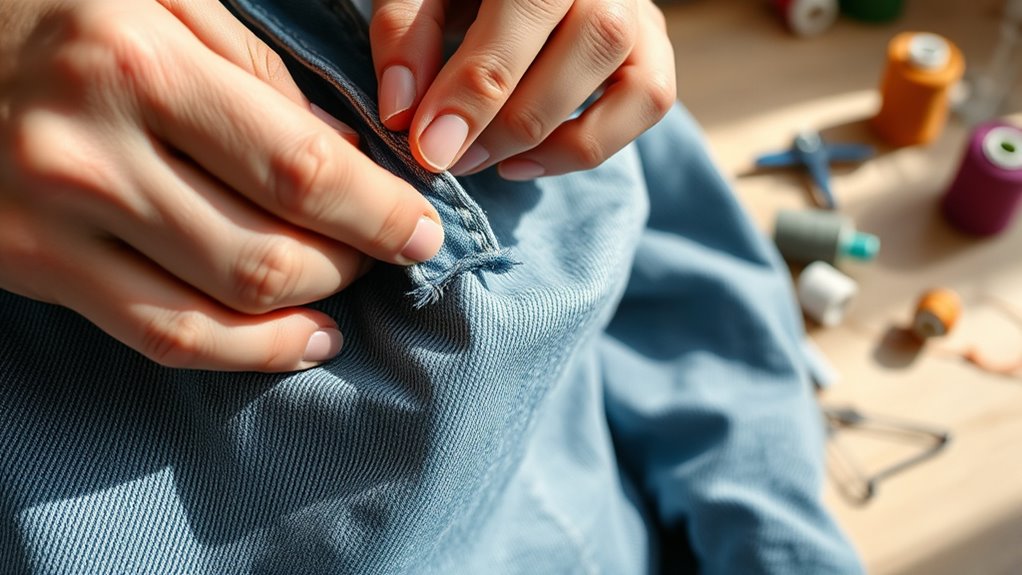

To make your clothes last longer, take simple steps like repairing minor damage, sewing on missing buttons, and patching holes with eco-friendly materials. Wash in cold water, air-dry, and use gentle detergents to keep fabrics in good shape. Developing basic repair skills helps you save money and reduces waste, benefiting the environment. Continuing with these practices will help you discover more ways to keep your wardrobe sustainable and eco-conscious.
Key Takeaways
- Perform small repairs like sewing on missing buttons or patching holes to extend garment lifespan.
- Use eco-friendly materials and methods, such as biodegradable threads and natural fibers, for sustainable repairs.
- Follow sustainable laundering practices like washing in cold water and air-drying to preserve fabric quality.
- Develop basic sewing skills to efficiently fix tears, hems, or loose seams, reducing the need for new clothing.
- Maintain responsible clothing care to minimize waste, conserve resources, and promote environmentally conscious wardrobe management.
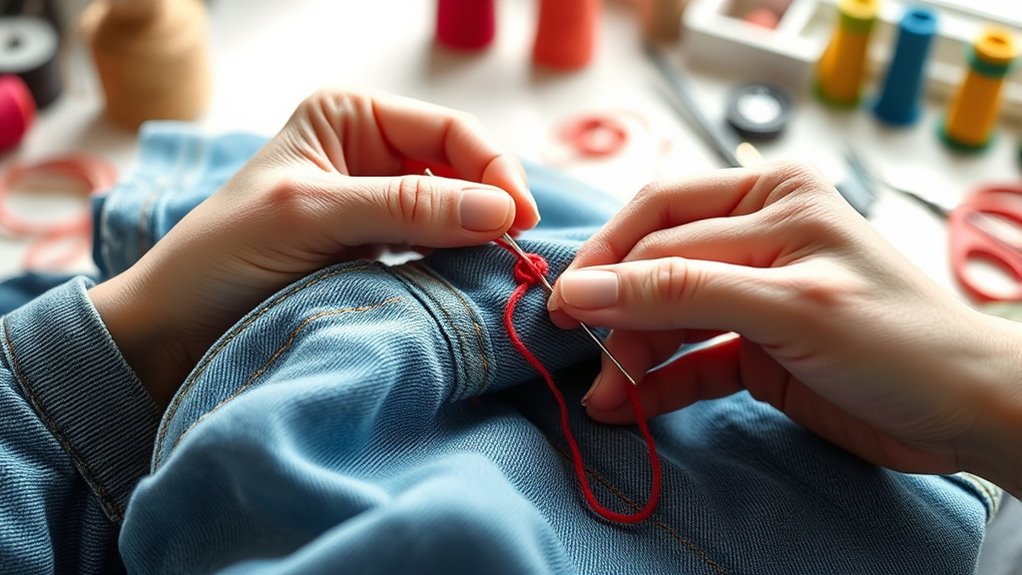
Ever wondered how small repairs can keep your home safe and comfortable? The same idea applies to your clothes. Taking a few simple steps to mend your garments not only extends their life but also benefits the environment. Sustainable laundering and eco friendly mending are essential parts of responsible wardrobe care. Instead of tossing out worn or damaged clothing, you can repair and restore, saving money and reducing waste. These practices promote a more sustainable approach to fashion, where longevity is prioritized over fast consumption.
When you focus on eco friendly mending, you’re choosing to repair clothes using environmentally conscious methods and materials. For example, using natural fibers or biodegradable threads for stitching ensures your repairs don’t introduce harmful chemicals into the environment. In addition, small fixes like sewing on missing buttons, patching holes, or reinforcing seams can make a significant difference. Not only will your clothes last longer, but you’ll also develop a sense of satisfaction knowing you’ve taken eco-friendly steps to care for your wardrobe.
Sustainable laundering complements eco friendly mending by reducing the wear and tear caused by harsh washing practices. Washing clothes in cold water, using eco-friendly detergents, and avoiding unnecessary machine cycles help preserve fabrics and colors. These habits prevent faster deterioration and keep your clothes looking fresh and new longer. Furthermore, air-drying instead of tumble drying minimizes energy consumption and reduces fabric shrinkage, which can lead to more repairs or replacements. By combining sustainable laundering with eco-friendly mending, you create a cycle that maximizes your clothes’ lifespan and minimizes your environmental impact.
In addition, understanding the impact of currency fluctuations on the cost of imported fabrics can help you make more informed choices about your wardrobe and repair supplies. It’s also worth learning some basic repair skills. Simple sewing techniques can fix loose hems, tears, or missing buttons without needing professional help. Investing in a small sewing kit with eco-friendly needles and thread can empower you to take quick action whenever needed. Over time, these small repairs become second nature, and you might even find joy in giving your clothes a new lease on life. Plus, doing your own repairs reduces the demand for new garments, which in turn cuts down on the resources used in manufacturing and transportation.
Incorporating sustainable laundering and eco friendly mending into your routine isn’t just good for your wardrobe; it’s good for the planet. Every garment you repair and care for thoughtfully is a step toward reducing waste and conserving resources. Small repairs and mindful laundering practices may seem minor, but they collectively make a significant impact. With just a little effort, you can keep your clothes looking great and help foster a more sustainable, environmentally conscious way of living.

Waterdrop T3-C Reverse Osmosis Water Filter, NSF/ANSI 372 Certified, 8-Stage Under Sink RO Water Filter, 450 GPD Tankless Water Filtration System, 2:1 Pure to Drain, BPA Free, Plug-in Required
[Advanced 8-Stage Filtration]: The Waterdrop Reverse Osmosis Water Filter — WD-T3-C uses advanced 8-stage filtration to reduce heavy...
As an affiliate, we earn on qualifying purchases.
Frequently Asked Questions
How Can I Remove Stubborn Stains Effectively?
To remove stubborn stains effectively, start with effective stain pretreatment by applying a stain remover directly to the area. Let it sit for a few minutes before washing. Use stain removal techniques like gently rubbing the fabric or soaking it in a mixture of water and stain remover. For tough stains, repeat the process. This approach helps break down the stain and guarantees your clothes look fresh and clean.
What Are the Best Methods for Drying Clothes?
Imagine your clothes hanging like art masterpieces on a clothesline—air drying is your best bet for gentle, eco-friendly care. It preserves fabric and prevents shrinkage. If you’re in a hurry, tumble drying is faster, but it can be rough on delicate fibers. Use a low heat setting to avoid damage. Both methods can keep your clothes looking fresh and lasting longer, so choose wisely based on your needs.
How Often Should I Replace My Wardrobe?
You should replace your wardrobe when your clothing longevity starts to decline, and maintenance no longer guarantees items in good condition. Regular wardrobe maintenance, like proper washing and storing, helps extend the life of your clothes. Keep an eye on wear and tear; when repairs become frequent or items lose their shape and color, it’s time for fresh pieces. This approach ensures your wardrobe remains functional and stylish longer.
Are Eco-Friendly Detergents Better for Clothes?
Eco-friendly detergents are better for your clothes because they often contain sustainable ingredients that gently clean without harsh chemicals. Plus, they usually come in biodegradable packaging, which reduces environmental impact. Using these detergents helps preserve your garments’ quality and extends their lifespan. You’ll feel good knowing you’re making eco-conscious choices while keeping your clothes fresh and in great condition for longer.
Can I Repair Clothes at Home or Should I See a Professional?
Think of your clothes as a cherished storybook—you can fix minor tears with DIY repairs, like mending a torn page. For small issues, you can confidently repair at home, saving money and extending their life. However, for more complex problems or delicate fabrics, professional tailoring is your best bet to preserve the garment’s integrity. Trust your skills first, but don’t hesitate to seek expert help when needed.

VIOMI 600GPD RO Water Filtration System, TDS and PFOS/PFOA Reduction, 9-Stage Reverse Osmosis Water Filter, NSF/ANSI 42, 53, and 372 Certified, Tankless Reverse Osmosis System Under Sink with Faucet
[Important Compatibility & Installation Note] This purifier works only with the included faucet—cannot connect to other faucets, refrigerators,...
As an affiliate, we earn on qualifying purchases.
Conclusion
By caring for your clothes, you’re weaving a lasting story, stitch by stitch, thread by thread. Think of each repair as a gentle hug, giving your garments a second wind and a longer life. When you mend and maintain, you’re not just saving fabric—you’re nurturing memories and crafting sustainability. So, embrace these small acts of love, and watch your wardrobe bloom with resilience, turning every worn piece into a cherished treasure that whispers stories of care.

Electrolux Eco Reverse Osmosis Water Filter, 600GPD, 9-Stage Reverse Osmosis System, 3:1 Pure to Drain Tankless RO System Under Sink, Reduces TDS & Fluoride RO Water Filtration System, BPA Free
𝐂𝐨𝐦𝐩𝐚𝐜𝐭 𝐒𝐢𝐳𝐞 𝟔𝟎𝟎𝐆𝐏𝐃 𝐑𝐞𝐯𝐞𝐫𝐬𝐞 𝐎𝐬𝐦𝐨𝐬𝐢𝐬 𝐒𝐲𝐬𝐭𝐞𝐦: Electrolux 600 GPD reverse osmosis water filter under sink features an ultra-compact...
As an affiliate, we earn on qualifying purchases.

GLACIER FRESH GFU03 Reverse Osmosis System – 800 GPD, Non-Electric, 3:1 Pure-to-Drain, No Noise/No Drilling, 5-Stage Tankless Under-Sink RO Water Filter System, Reduces PFAS/PFOS, Classic Version
800 GPD High Capacity: The GLACIER FRESH GFU03 Reverse Osmosis System delivers an impressive 800 gallons per day—perfect...
As an affiliate, we earn on qualifying purchases.