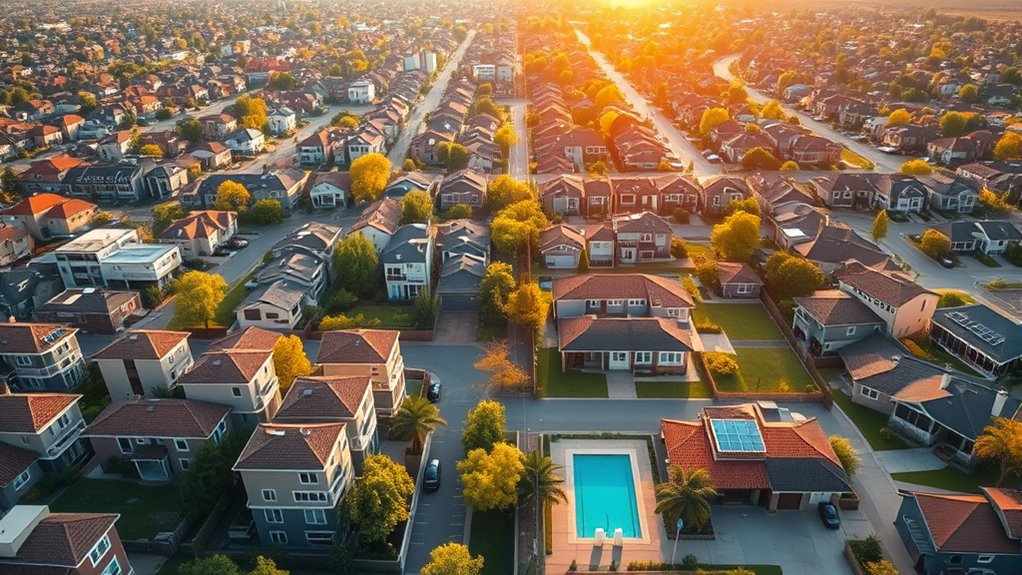

Deciding whether to rent or buy impacts your environmental footprint considerably. Owning a home gives you the freedom to install energy-efficient upgrades and solar panels, reducing emissions over time. Renting often involves less resource use since landlords handle maintenance, and shared amenities save energy. Your choice depends on market trends, your financial situation, and environmental goals. To see how your decision affects sustainability and explore long-term benefits, keep exploring more options.
Key Takeaways
- Homeownership enables eco-friendly upgrades like solar panels and insulation, improving energy efficiency over time.
- Renting often involves less resource use, with landlords managing maintenance and upgrades, reducing individual environmental impact.
- Market trends influence sustainability; affordable rentals with eco-conscious options can lower overall emissions.
- Long-term homeownership allows for sustainable improvements, but requires ongoing resource consumption and maintenance.
- Renting offers flexibility for eco-friendly living choices, such as proximity to public transit, reducing carbon footprint.
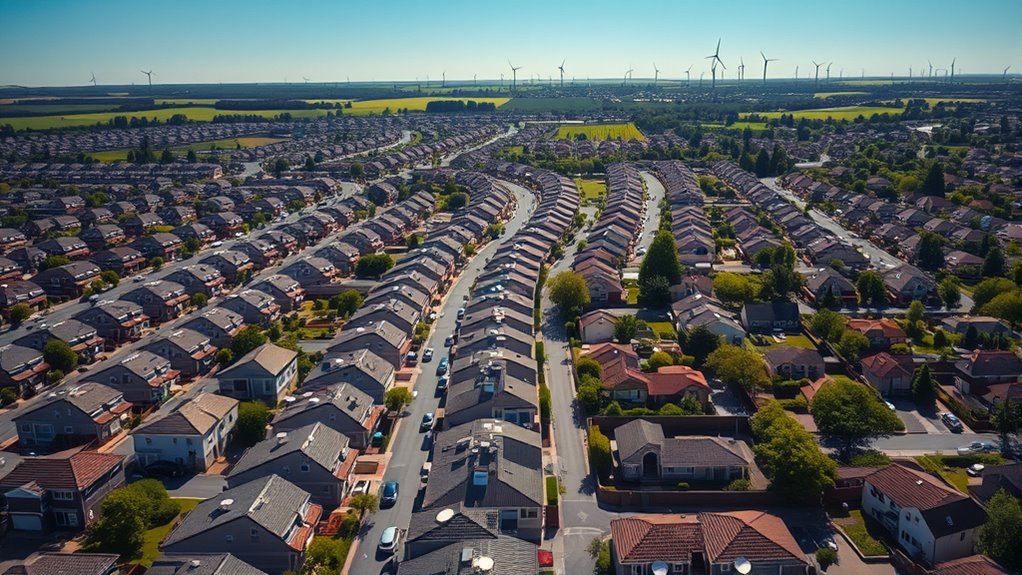
Are you struggling to decide whether to rent or buy a home? It’s a common dilemma, and understanding the environmental impact can add a new layer to your decision. When weighing your options, consider not only your financial situation but also the broader implications for the planet. Homeownership benefits often include the ability to make long-term improvements and customize your space, which can lead to more sustainable living. For instance, owning a home allows you to install energy-efficient appliances or solar panels, reducing your carbon footprint over time. On the other hand, the rental market trends reveal a different picture. Renting typically involves less upfront resource use since landlords handle maintenance and renovations, which can sometimes be more sustainable if managed efficiently. Additionally, rental properties often have shared amenities like laundry or heating systems, which can lower overall energy consumption compared to standalone homes.
From an environmental perspective, homeownership can promote sustainability when you’re committed to making eco-friendly upgrades. Installing solar panels, upgrading insulation, or using sustainable building materials can turn your home into a model of energy efficiency. These improvements, however, require significant initial investment and may take years to offset through energy savings. Conversely, renting can support sustainable living by enabling flexibility. You can choose to rent in areas with better public transportation, reducing the need for car ownership and lowering emissions. Since tenants typically don’t bear the costs of major upgrades or renovations, the environmental impact of their living space can be less, especially if they select eco-conscious rental properties. Moreover, considering the nutritional value of seeds like chia can inspire sustainable habits in other areas of life, emphasizing the importance of mindful choices.
The decision also hinges on your long-term plans and how they align with current rental market trends. If rental prices are soaring and the market indicates a tight supply, renting might seem less sustainable financially, and buying could be a more stable choice. Conversely, if rental market trends suggest increasing availability and affordability, renting might be the more environmentally and economically sound option. Owning a home can create a more predictable environment for implementing sustainability measures, but it also involves ongoing maintenance and resource consumption. Renting, while seemingly less impactful in terms of personal resource use, can support sustainability when chosen thoughtfully, like selecting energy-efficient units or properties in walkable neighborhoods.
Ultimately, your choice depends on balancing your financial capacity, lifestyle preferences, and environmental values. Both options have their sustainability merits, but understanding the broader market trends and long-term benefits can help you make a more informed, eco-conscious decision.
DIY Home Solar Power System: The Complete Guide to Solar Panels, Battery Storage, Wiring, and Off-Grid Energy Systems
As an affiliate, we earn on qualifying purchases.
As an affiliate, we earn on qualifying purchases.
Frequently Asked Questions
How Does Rental Energy Consumption Compare to Ownership Over Time?
You’ll find that rental energy consumption tends to be higher over time because rentals often lack energy efficiency upgrades owners might make. Ownership usually involves investing in energy-efficient appliances and insulation, reducing your carbon footprint long-term. While initial costs are higher for owners, their energy use declines over time, making it more sustainable. So, owning can lead to lower energy consumption and a smaller environmental impact compared to renting.
What Are the Hidden Environmental Costs of Manufacturing New Homes?
You should know that manufacturing new homes generates over 40% of construction waste, heavily impacting the environment. The sourcing of materials, often from distant locations, increases carbon emissions and depletes natural resources. Every step in construction, from extraction to assembly, adds to environmental costs you might overlook. By choosing existing homes or sustainable options, you help reduce these hidden impacts, making a real difference for the planet.
How Does Transportation Impact the Eco-Friendliness of Renting Versus Buying?
Transportation impacts your eco-friendliness by contributing to emissions, especially through daily commutes. Renting often means you’ll rely more on public transit or shorter drives, reducing transportation emissions. Buying a home farther from work can increase your vehicle miles, lowering vehicle efficiency and raising your carbon footprint. To improve sustainability, choose a location close to work and prioritize vehicles with higher efficiency, making your transportation choices greener whether you rent or own.
Can Renting or Buying Help Reduce Overall Carbon Footprints Effectively?
You can reduce your carbon footprint effectively by choosing energy-efficient homes and prioritizing material sustainability. Renting often offers access to newer, energy-efficient properties, helping lower emissions. Buying allows you to invest in sustainable materials and upgrades that improve energy efficiency over time. Both options can be eco-friendly if you focus on reducing energy use and selecting sustainable materials, making conscious choices that benefit the environment regardless of your housing decision.
What Role Do Local Policies Play in Environmental Benefits of Housing Choices?
Local policies like zoning regulations and building incentives notably influence the environmental benefits of your housing choices. When zoning encourages higher density or mixed-use development, it reduces urban sprawl and promotes walkability, cutting down emissions. Building incentives for energy-efficient constructions encourage eco-friendly upgrades. By supporting these policies, you help create sustainable communities, lowering your carbon footprint and fostering environmentally responsible housing options.

Amazon Basics A19 LED Light Bulbs, 100W Equivalent, 15W Energy Efficient, E26 Standard Base, Daylight White 5000K, Non-Dimmable, 10,000 Hour Lifetime, 6-Pack
ENERGY EFFICIENT: These 15W LED light bulbs provide the brightness of 100 watt light bulbs, saving $93.18 in…
As an affiliate, we earn on qualifying purchases.
As an affiliate, we earn on qualifying purchases.
Conclusion
Ultimately, deciding whether to rent or buy depends on your personal situation. Did you know that owning a home can produce roughly 2.5 times more carbon emissions than renting? If minimizing your environmental footprint matters, renting might be the smarter choice. But consider your finances and lifestyle too. Weigh the environmental impact against your needs, and you’ll find the best option for you. Making an informed decision benefits both your wallet and the planet.

Spray Foam Insulation Kit for Walls & Attic -18 Pack Foam Insulation Spray – 360 Board ft/sq.ft. Heat & Sound Control, Energy Saving, Seal Gaps & Cracks Complete Kit with 2 Guns, Cleaner & Safety Gear
Comprehensive Set – Y’allCanDIY Kit Pack of 18 includes 18 expanding foam cans (25.3 fl. oz / 750…
As an affiliate, we earn on qualifying purchases.
As an affiliate, we earn on qualifying purchases.

Travel Size Hotel Toiletry Set 300 Count 0.85 oz Bottles Guest Amenities for Vacation Rentals and Short Term Rentals Paraben Free White Tea Scent Infused with Aloe and Olive Oil by Eco Botanics
PROFESSIONAL HOSPITALITY GUEST AMENITIES: Designed specifically for hospitality environments, including vacation rentals, motels, inns, resorts, and STR properties…
As an affiliate, we earn on qualifying purchases.
As an affiliate, we earn on qualifying purchases.