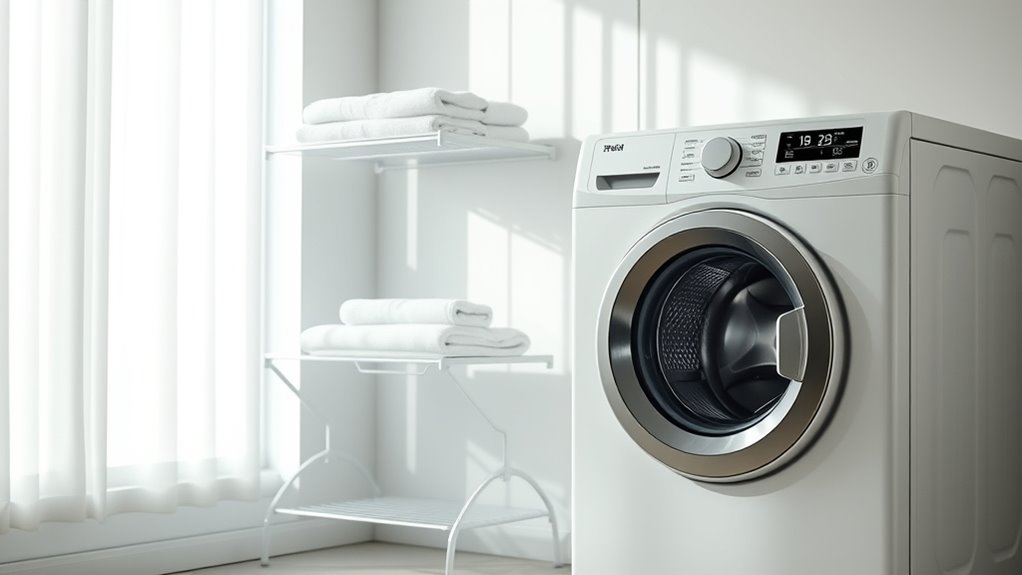

To save water and energy, wash clothes in cold water whenever possible, as it’s effective for most fabrics. Don’t overload your machine—about three-quarters full is ideal for thorough cleaning. Opt for air drying or use moisture sensors on your dryer to prevent over-drying. Properly adjusting these habits, along with selecting the right load sizes, can make a big difference in conserving resources. Keep exploring to discover more tips for greener laundry habits.
Key Takeaways
- Use cold water for most loads to save energy and reduce environmental impact.
- Load the washing machine about three-quarters full to optimize cleaning and water use.
- Select appropriate cycle temperatures based on fabric type and soil level for efficiency.
- Air dry clothes whenever possible to minimize energy consumption and prolong garment life.
- Regularly clean lint filters and use moisture sensors to prevent over-drying and save energy.

Water-smart laundry is an effective way to save both water and energy while keeping your clothes clean. One of the simplest ways to do this is by optimizing your detergent use and improving laundry cycle efficiency. Using the right amount of detergent ensures your washer isn’t working harder than necessary, which can waste water and electricity. Too much detergent can leave residue on your clothing, requiring extra rinses, while too little may not clean effectively, forcing you to rewash garments. Follow the manufacturer’s guidelines and consider high-efficiency (HE) detergents that are specifically designed to produce less suds and rinse out more easily. This helps your machine operate more efficiently and reduces water consumption during each cycle.
Optimize laundry with proper detergent use to save water and energy efficiently.
Another *essential* aspect is selecting the appropriate temperature for your laundry loads. Washing clothes in cold water saves energy because it eliminates the need to heat water, and it’s often just as effective at cleaning everyday garments. For heavily soiled items or whites that need whitening, warm or hot water may be necessary, but for most loads, cold water is sufficient. This not only lowers energy use but also extends the lifespan of your clothing and colors, preventing fading and shrinkage. Remember to adjust your water temperature based on the type of fabric and level of soiling to maximize laundry cycle efficiency without sacrificing cleanliness.
Load size also plays a *key* role in water and energy conservation. Overloading your washer can hinder proper agitation and rinsing, leading to inefficient cleaning and more water use as the machine struggles to do its job. Conversely, underloading doesn’t make the most of each cycle and wastes water. Aim to fill the drum about three-quarters full, allowing clothes enough room to move freely. This ensures thorough cleaning and rinsing, making each laundry cycle more efficient. Using the appropriate load size optimizes water use and energy, and it helps your machine run smoothly for a longer time.
Finally, drying habits matter just as much. Air drying clothes whenever possible is the most water- and energy-efficient method. If you need to use a dryer, clean the lint filter regularly and avoid over-drying, which consumes extra energy. Using moisture sensors on modern dryers can prevent over-drying and save electricity. By paying attention to these details—detergent optimization, cycle efficiency, temperature, load size, and drying practices—you’ll make your laundry routine more water-smart, saving resources and reducing your environmental impact without sacrificing cleanliness.
Additionally, choosing energy-efficient appliances and staying informed about lifestyle practices can further enhance your water and energy savings.

Tide Laundry Detergent Liquid, Original Scent, 64 Loads, 80 FL OZ, Works on 100% of Common Stains, Laundry Soap, Liquid Laundry Detergent
6X BOOSTED CLEAN: Tide liquid laundry detergent is engineered to be 4X cleaner and 2X fresher vs Tide…
As an affiliate, we earn on qualifying purchases.
As an affiliate, we earn on qualifying purchases.
Frequently Asked Questions
How Can I Tell if My Laundry Is Water-Efficient?
You can tell if your laundry is water-efficient by checking for water monitoring features on your washing machine, like cycle indicators or smart sensors that track water usage. Additionally, using the right detergent selection helps optimize water use. If your machine is designed to reduce water consumption and you notice minimal water during cycles, it’s a good sign your laundry routine is water-efficient. Regularly monitor your water bills for improvements too.
Are There Specific Detergents for Water-Smart Washing?
Yes, you should look for eco-friendly detergents or biodegradable cleaning agents. These are specially formulated to use less water and reduce environmental impact while effectively cleaning your clothes. Check labels for sustainability certifications or phrases like “biodegradable” and “eco-friendly.” Using these detergents supports water-smart laundry practices, ensuring you minimize water waste without sacrificing cleaning power. It’s a simple switch that makes your laundry routine more environmentally responsible.
How Do I Measure Water Savings From My Laundry Habits?
You can measure water savings from your laundry habits by tracking your water usage over time, using water meters or utility bills. Switching to eco-friendly detergents reduces environmental impact, and keeping an eye on your water usage tracking helps you identify how your habits affect consumption. By monitoring these factors, you’ll see how small changes, like washing full loads or using cold water, make a big difference in saving water.
What Are the Best Laundry Practices for Conserving Water Long-Term?
To conserve water long-term, you should use eco-friendly detergents and optimize your laundry cycle. Always run full loads to maximize efficiency, and choose the appropriate water level for each load. Wash in cold water whenever possible, as it uses less energy and water. Skipping unnecessary cycles and using a high-efficiency washer also help. These practices reduce water waste and save you money over time.
Can Water-Smart Techniques Extend My Washing Machine’s Lifespan?
Yes, water-smart techniques can definitely extend your washing machine’s lifespan. By practicing proper machine maintenance and water usage monitoring, you prevent problems before they start. Regularly cleaning filters and hoses keeps the machine running smoothly, while monitoring water levels avoids overloading. These small, consistent steps create a cycle of care, curbing wear and tear, and cultivating a long-lasting, efficient laundry routine — a simple yet significant sustainable cycle.
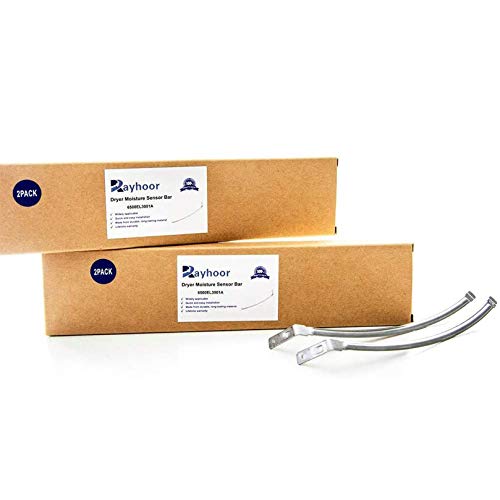
(2 Pack) Rayhoor 6500EL3001A Dryer Moisture Sensor Bar Replacement Part Fit for LG Kenmore – Replaces PD00001914, 1268224, AP4445128, EAP3529161
【Perfect Replacement】 Our 2 Pack 6500EL3001A Dryer Moisture Sensor Bar replaces part numbers: 6500el3001a, pd00001914, 1268224, ap4445128, eap3529161,…
As an affiliate, we earn on qualifying purchases.
As an affiliate, we earn on qualifying purchases.
Conclusion
So, next time you toss in a single sock or crank up the heat, remember—your laundry habits aren’t just about clean clothes but about saving the planet one spin at a time. After all, who knew that being water-smart could turn you into an eco-warrior in disguise? With a few simple tweaks, you’re not just doing laundry; you’re subtly saving the world—one perfectly timed, temperature-optimized load at a time. Cheers to greener habits!

Amazon Basics Foldable Portable Clothes Drying Rack for Indoor Air Drying, Collapsible Design, 14.5" D x 29.5" W x 41.8" H, White
Clothes drying laundry rack for energy savings and gentle air drying so clothes last longer; for indoor use
As an affiliate, we earn on qualifying purchases.
As an affiliate, we earn on qualifying purchases.

COMFEE' Portable Washing Machine, 0.9 cu.ft Compact Washer With LED Display, 5 Wash Cycles, 2 Built-in Rollers, Space Saving Full-Automatic Washer
The full-automatic washing machine equipped with Heavy, Soft, Normal, Rapid, and Soak 5 programs and 3 water levels,…
As an affiliate, we earn on qualifying purchases.
As an affiliate, we earn on qualifying purchases.