
When choosing a data center site, you need to consider water use, noise, and grid impacts. You’ll want locations with reliable water sources and innovative cooling to reduce environmental strain. Managing noise from equipment is key to maintaining good community relations. It’s essential to assess local electrical grid capacity to prevent overloads or outages. Staying aware of these factors helps balance operational needs with environmental and community concerns—continue exploring to learn how these debates shape data center siting decisions.
Key Takeaways
- Water usage for cooling is a major concern, leading to adoption of recycled water and innovative cooling methods.
- Noise from cooling systems and generators can disturb nearby residents, requiring mitigation strategies like soundproofing.
- Grid stability issues arise from increased energy demand, prompting investments in on-site renewables and storage solutions.
- Site selection considers water availability, community impact, and infrastructure capacity to balance environmental and social factors.
- Regulatory policies and community engagement are critical in addressing water, noise, and grid challenges during siting decisions.
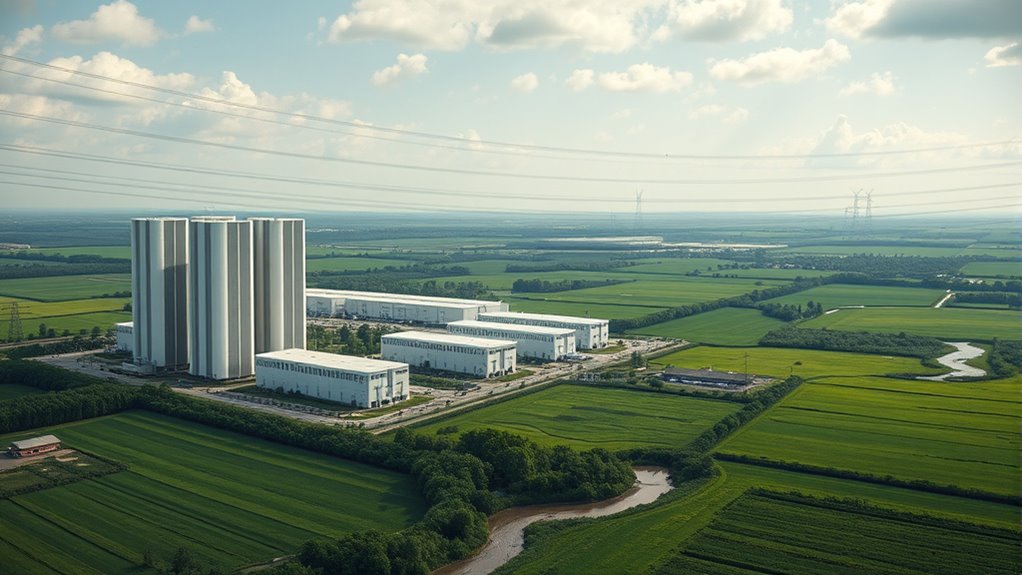
As the demand for digital infrastructure continues to grow, the debate over where to locate data centers has become increasingly crucial. You’re likely aware that data centers consume significant amounts of energy, which sparks discussions about sustainable placement. Many organizations now prioritize sites that leverage renewable energy sources, such as solar or wind power, to minimize environmental impact. By choosing locations with abundant renewable energy, you can reduce carbon footprints and align with corporate sustainability goals. Additionally, economic incentives play a essential role in siting decisions. Governments and local authorities often offer tax breaks, grants, or other financial benefits to attract data centers to specific regions. These incentives help offset the high capital and operational costs and make a particular site more appealing. When considering locations, you might weigh these economic advantages against potential challenges like water use, noise, and grid stability.
Choosing sites with renewable energy and economic incentives supports sustainable, cost-effective data center growth.
Water consumption is a key concern in data center siting. Many facilities require substantial water resources for cooling, which can strain local supplies, especially in arid regions. If you’re evaluating potential sites, it’s essential to assess existing water availability and policies to prevent adverse environmental impacts. Some data centers aim to use recycled water or implement innovative cooling techniques to reduce dependency on freshwater sources. This approach not only benefits local ecosystems but also aligns with sustainable practices, which can be a selling point for communities and regulators.
Noise pollution is another factor that influences siting decisions. Data centers generate significant noise from cooling systems, generators, and other equipment. If you’re considering proximity to residential areas, you’ll need to account for noise mitigation measures. Proper soundproofing and operational controls can minimize disturbances and foster good community relations. Ignoring noise concerns could lead to conflicts, delays, or additional costs, so proactive planning is essential.
The impact on the local electric grid is equally important. Data centers demand reliable, high-capacity power supplies, which can strain existing infrastructure. When siting a facility, you should evaluate grid capacity and stability, ensuring the local network can handle increased loads without risking outages. In some cases, investing in on-site renewable energy generation or energy storage can help mitigate grid impacts and enhance resilience.
Ultimately, choosing a data center location involves balancing multiple factors—leveraging renewable energy, maximizing economic incentives, managing water and noise impacts, and ensuring grid stability. Your decision must consider both environmental sustainability and cost-effectiveness, fostering responsible growth in the digital age.
Frequently Asked Questions
How Do Data Centers Impact Local Wildlife Habitats?
You might unknowingly disrupt local wildlife habitats when building data centers, as they can fragment habitats and block wildlife corridors. This habitat disruption can threaten species that rely on continuous spaces for migration or breeding. To minimize these impacts, you should consider careful siting, preserving natural corridors, and implementing measures that protect native wildlife. Doing so helps maintain ecological balance and reduces the negative effects on local ecosystems.
What Are the Long-Term Economic Effects of Siting Decisions?
Remember, a stitch in time saves nine. Siting decisions can boost local economic growth through job creation and infrastructure improvements, but they may also affect property values negatively if communities face increased noise or congestion. Long-term, these choices shape regional prosperity, influencing economic stability and development. You need to weigh immediate benefits against potential shifts in property values and overall economic health to make informed, sustainable decisions.
How Do Siting Conflicts Influence Regional Energy Policies?
Siting conflicts directly shape regional planning and policy development by highlighting the need to balance economic growth with environmental and community concerns. You’ll find that these disputes push policymakers to create clearer guidelines, enhance stakeholder engagement, and prioritize sustainable solutions. As a result, regional energy policies become more adaptable, ensuring that future siting decisions consider water, noise, and grid impacts effectively, fostering resilient and responsible energy infrastructure.
Are There Innovative Technologies to Reduce Water Use in Data Centers?
You can explore water-saving innovations like advanced cooling technology, which drastically reduces water use in data centers. Techniques such as liquid cooling, evaporative cooling, and air-based systems allow you to minimize water consumption while maintaining ideal performance. By adopting these innovative cooling technologies, you not only cut water use but also enhance energy efficiency and sustainability, helping address regional water scarcity concerns and easing siting conflicts.
How Is Community Input Integrated Into Siting Approval Processes?
You participate in the siting approval process through public hearings and community surveys. These forums allow you to voice concerns, ask questions, and provide input on the proposed data center. Developers and regulators review your feedback to guarantee the project aligns with community needs and addresses potential impacts. Your engagement helps shape decisions, ensuring the siting process considers local perspectives and mitigates negative effects on the community.
Conclusion
As you navigate the crossroads of data center siting, remember it’s like balancing on a tightrope over a stormy sea. Water, noise, and grid impacts ripple like waves, threatening harmony. Your choices shape a future where technology and nature dance—sometimes in harmony, sometimes in conflict. By weighing these factors carefully, you become the captain steering toward a sustainable horizon, ensuring that progress doesn’t drown out the whispers of the environment beneath.