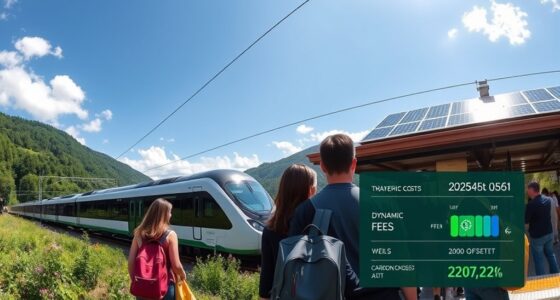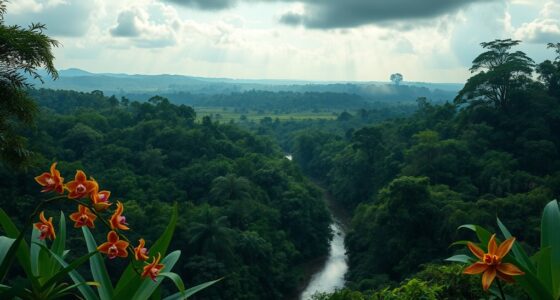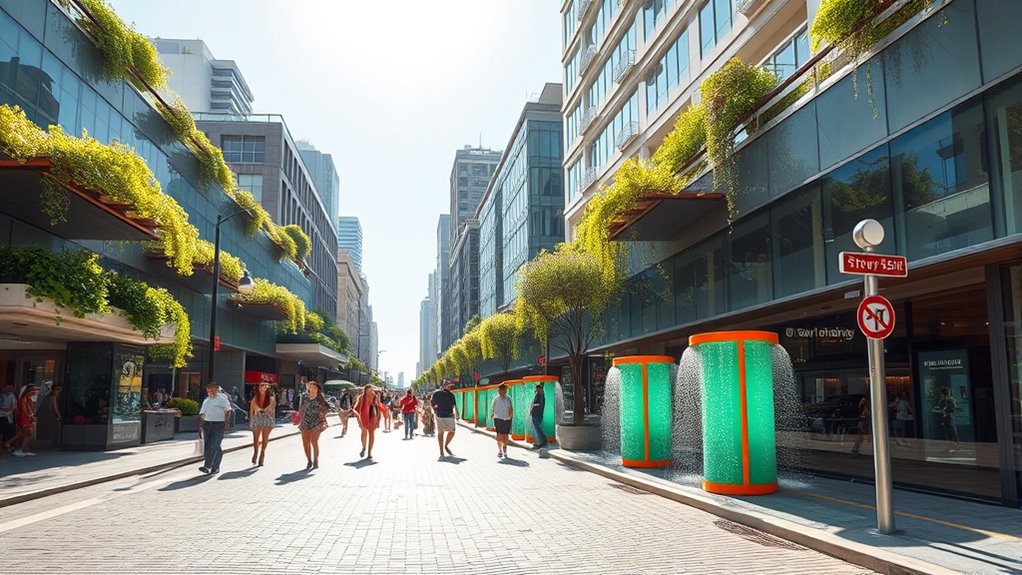

To adapt to heatwaves, focus on new urban design responses like adding green infrastructure such as parks, street trees, and green roofs to reduce the urban heat island effect. Incorporate reflective surfaces, water features, and natural shading to cool down hot spots. Engaging communities and adopting policies that promote sustainable practices further boost resilience. If you explore these strategies, you’ll discover how urban areas can stay cooler and safer during extreme heat events.
Key Takeaways
- Incorporate green infrastructure like parks, street trees, and green roofs to reduce urban heat islands and enhance shade.
- Use reflective surfaces and cool pavements to lower surface and ambient temperatures in high-density areas.
- Design buildings with natural ventilation, shading devices, and insulation to improve indoor comfort during heatwaves.
- Implement community-based greening projects and promote policies supporting urban cooling initiatives.
- Combine natural shading, water features, and innovative materials for holistic, resilient urban heat adaptation strategies.
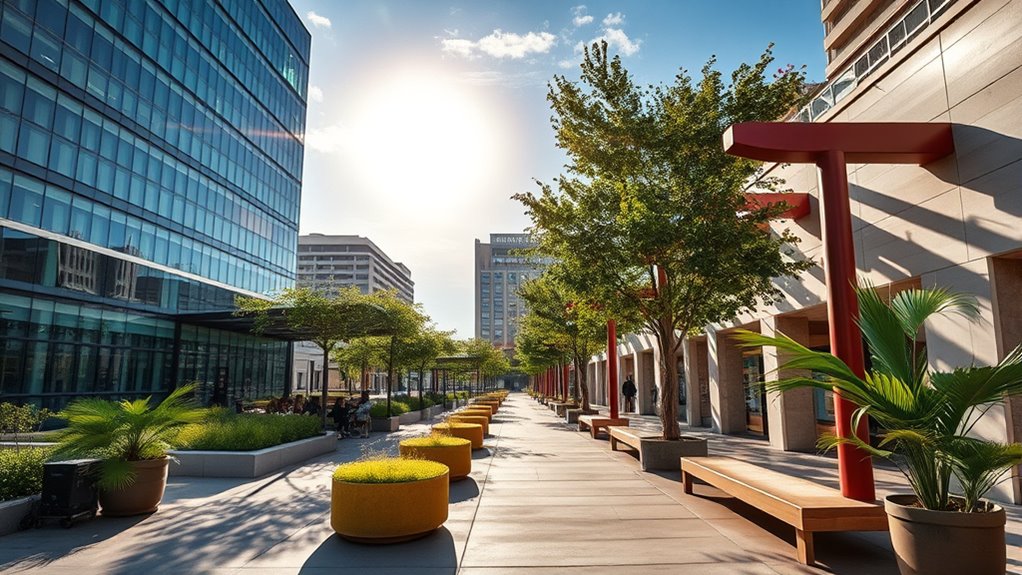
As urban areas face increasingly frequent and intense heatwaves, adapting cities to withstand these conditions becomes essential. One of the most effective ways to do this is by integrating green infrastructure into urban design. Green infrastructure includes parks, green roofs, street trees, and permeable surfaces that help reduce the urban heat island effect. These natural elements provide shade and evaporative cooling, making city environments more comfortable during extreme heat events. By strategically planting trees along streets and around buildings, you can create shaded corridors that lower ambient temperatures and improve air quality. Green roofs not only insulate buildings but also serve as cooling zones, absorbing heat during the day and releasing it slowly at night. Incorporating green infrastructure isn’t just about aesthetics; it’s a practical, cost-effective approach to cooling cities and protecting residents from heat-related health risks. Additionally, the presence of vegetation can improve stormwater management, reducing urban flooding risks during intense rainfall events.
Integrate green infrastructure like trees and green roofs to combat urban heat and enhance city resilience.
Alongside green infrastructure, implementing targeted cooling strategies transforms urban spaces into safer, more livable environments during heatwaves. These strategies include installing reflective or light-colored surfaces that reflect more sunlight and absorb less heat, reducing surface temperatures. You can also consider cool pavements and reflective coatings on rooftops and roads to diminish heat absorption. Water features, such as fountains or misting stations, introduce localized cooling and create comfortable gathering spots. Additionally, designing buildings with natural ventilation and shading devices enhances airflow and reduces reliance on energy-intensive air conditioning. Incorporating these cooling strategies into city planning ensures that heat is managed effectively, especially in densely populated areas where heat stress can escalate quickly.
You should also recognize the importance of community engagement in adopting these solutions. Educating residents about the benefits of green infrastructure and cooling strategies encourages participation and maintenance. When neighborhoods embrace these changes, the collective cooling effect becomes more pronounced, and the risk of heat-related illnesses drops markedly. Furthermore, policies that incentivize green building practices and urban greening initiatives can accelerate progress, making heat-resilient design a standard rather than an exception.
Ultimately, combining green infrastructure with innovative cooling strategies creates a holistic approach to heatwave adaptation. These measures not only mitigate the immediate impacts of extreme heat but also foster sustainable urban environments for the long term. By prioritizing natural shading, reflective surfaces, and community involvement, you help craft resilient cities that can better cope with rising temperatures. This proactive approach ensures that urban spaces remain safe, accessible, and comfortable, even as climate challenges intensify. Incorporating natural elements into urban planning is crucial for long-term climate resilience and public health.

Relaxweex Waterproof Rolling Camera Hard Case 22x14x9 Inch, Impact-resistant Travel Case with Padded Dividers & Wheels for Cameras, Lenses & Accessories(Black)
Product Contents: you get a rolling camera case, the wheeled camera hard case is equipped with a two-layer...
As an affiliate, we earn on qualifying purchases.
Frequently Asked Questions
How Do Urban Design Changes Impact Local Ecosystems?
Urban design changes can positively impact local ecosystems by enhancing urban biodiversity and supporting ecosystem services. When you incorporate green spaces, native plants, and permeable surfaces, you promote habitats for wildlife and improve air and water quality. These modifications help sustain local flora and fauna, making ecosystems more resilient. As a result, your city benefits from cleaner air, better water management, and a healthier environment for both humans and wildlife.
What Are the Cost Implications of Heatwave Adaptation Strategies?
You’ll find that heatwave adaptation strategies come with significant cost implications, impacting your budget considerations and their economic feasibility. Implementing green roofs, reflective surfaces, and shaded walkways requires upfront investments, but they can reduce long-term energy costs and heat-related health risks. Balancing these expenses with your community’s financial capacity is crucial, as you weigh the benefits of resilience against the costs to ensure sustainable urban living for everyone.
How Do Community Residents Participate in Urban Heat Solutions?
You can participate in urban heat solutions through community engagement and resident involvement. Attend local meetings to share ideas, volunteer for tree planting projects, and advocate for green spaces. Your input helps prioritize projects that reduce heat, like installing cool roofs or creating shaded parks. By staying informed and actively contributing, you help shape a cooler, healthier environment for everyone in your neighborhood. Your involvement makes a real difference in climate resilience efforts.
Are There Legal Regulations Supporting Heatwave Resilient Architecture?
Imagine you’re stepping into a future where ancient wisdom meets modern laws. Yes, there are legal regulations that support heatwave resilient architecture. Building codes now incorporate cooling strategies like reflective roofs and green walls, while zoning laws encourage shaded streets and open spaces. These rules help guarantee urban areas can withstand extreme heat, making your environment safer and more comfortable during heatwaves.
What Are the Long-Term Maintenance Needs for Adaptive Urban Features?
You’ll need to regularly inspect and maintain adaptive urban features like green infrastructure and stormwater management systems to guarantee they function effectively long-term. This includes cleaning green roofs, pruning vegetation, and checking for blockages or leaks. Consistent upkeep helps these features absorb heat, manage stormwater, and promote cooler urban environments, ultimately supporting resilience against heatwaves. Proper maintenance guarantees your investments continue to perform and protect your community over time.

Pelican Vault - V100 Multi-Purpose Hard Case with Foam for Camera, Drone, Equipment, Electronics, and Gear (OD Green)
RUGGED PROTECTION: Crushproof high-impact polymer multi-purpose case, heavy duty handles, push button latches and stainless steel lock hasps...
As an affiliate, we earn on qualifying purchases.
Conclusion
By adopting innovative urban design strategies, you can effectively reduce heatwave impacts. For example, incorporating green spaces can lower city temperatures by up to 5°C, making your environment more livable. Embracing these responses not only protects vulnerable populations but also creates cooler, healthier cities. Remember, proactive adaptation transforms urban spaces into resilient habitats, ensuring you’re better prepared for future heatwaves. Act now, and help shape a cooler, sustainable urban future for everyone.

Jack Boss Hard Case, 13.6 x 11.4 x 6 Inch Portable Weather Waterproof Protective Camera Case with Customizable Foam, Fit Use of Drones, Camera, Equipments,Black
Enhanced Protection: Our waterproof camera case provides superior protection for your valuable items. With precise outside dimensions of...
As an affiliate, we earn on qualifying purchases.

MEIJIA Portable All Weather Waterproof Protective Hard Case, Small Camera Case,Dry Case with Customizable Foam,Fit Use of Drones, Camera,Equipments, 11.65 ”x8.35”x3.78”
▶Outside Dimension: Length 11.65inch Width 8.35Inch Height 3.78 inches.Inside Dimension: Length 10.54inches Width 6.04 Inch Height 3.16 Inch.Lid...
As an affiliate, we earn on qualifying purchases.