When choosing a desk lamp, understanding lux helps you pick the right brightness for your space, while Kelvin shows the light’s color—warm tones create a cozy feel, cool tones boost focus. Watch out for flicker, which can cause eye strain, especially in cheap LED lamps. Glare from bright reflections can also tire your eyes—aim for even, diffused light. To learn how to select the best lamp for you, keep exploring these key features.
Key Takeaways
- Lux measures how bright a lamp appears over a specific area, helping you choose sufficient lighting for your workspace.
- Kelvin indicates the color warmth of the light, from cozy yellow (2700K) to crisp daylight (5000K+).
- Flicker can cause eye strain; modern LED lamps with high flicker frequency are more comfortable.
- Glare from direct or reflected light can cause discomfort; diffuse and position lamps to minimize glare.
- Adjustable brightness and color temperature improve comfort and suit different tasks and preferences.

shinelife LED Desk Lamp for Office Home, Bright Desk Light with USB Charging Port, Adjustable Dimmable Desk Lamps 5 Modes 5 Brightness, Touch Study Lamp for Nail, Craft, Puzzle, Sewing, Study, Black
Superior Brightness Enjoy crisp, natural lighting with our office lamp, designed to enhance focus and reduce eye fatigue….
As an affiliate, we earn on qualifying purchases.
As an affiliate, we earn on qualifying purchases.
What Do Lux and Kelvin Mean for Your Desk Lamp’s Brightness and Color

Understanding the terms lux and Kelvin is essential when choosing a desk lamp because they directly affect how bright and how the color appears. Lux measures luminous intensity, or how much light is cast over a specific area, helping you determine if a lamp provides enough brightness for your tasks. Kelvin relates to color temperature, which influences the appearance of the light’s color. A lower Kelvin, around 2700K, produces warm, yellowish light ideal for relaxing spaces. Higher Kelvin, like 5000K or more, creates cool, bluish light suited for focus and detail work. By understanding these terms, you can select a desk lamp that offers the right brightness level and color temperature for your needs, ensuring comfort and productivity.

LitONES LED Desk Lamp for Home Office, Eye-Caring Diffused Desk Light, 3 Color Temperature 10 Brightness Computer Light, Dimmable Desk Light with Memory & Timer Func, Metal Swing Arm Table Lamp
【More than a Desk Light】This office lamp isn't just for brightening your workspace—it's designed to brighten you, too….
As an affiliate, we earn on qualifying purchases.
As an affiliate, we earn on qualifying purchases.
How Flicker Affects Your Eyes and Why It Matters
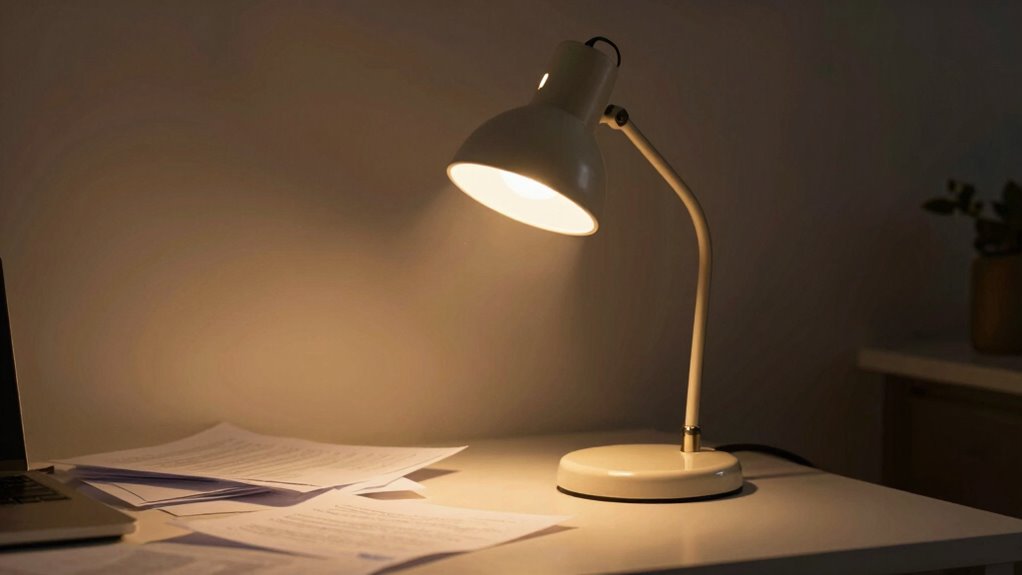
Have you ever noticed eye strain or headaches after working under certain lights? That’s often caused by flicker, which happens when a lamp’s flicker frequency is too low. When lights flicker at a slow rate, your eyes constantly adjust, leading to eye discomfort. Even if flicker isn’t visible, it can still affect you by causing fatigue or headaches over time. Modern LED lamps usually have a higher flicker frequency, reducing this problem, but cheaper options might flicker more noticeably. Understanding how flicker impacts your eyes helps you choose better lighting. The goal is to find lamps with stable, high flicker frequency that minimize eye discomfort, so your workspace stays comfortable and your eyes remain happy throughout the day. Additionally, outdoor ovens can provide a warm ambiance, similar to how proper lighting influences your workspace atmosphere. Implementing accessibility features can also enhance your overall lighting experience, ensuring it supports your needs effectively. Maintaining a quiet environment can further reduce distractions, allowing you to focus better and prevent eye strain. Furthermore, choosing lamps with high refresh rates can also contribute to a better visual experience, minimizing flicker-related issues.
LitONES LED Desk Lamp for Home Office, Eye-Caring Diffused Desk Light, 3 Color Temperature 10 Brightness Computer Light, Dimmable Desk Light with Memory & Timer Func, Metal Swing Arm Table Lamp
【More than a Desk Light】This office lamp isn't just for brightening your workspace—it's designed to brighten you, too….
As an affiliate, we earn on qualifying purchases.
As an affiliate, we earn on qualifying purchases.
Understanding Glare: How to Avoid Eye Strain

Even with flicker minimized, glare from your desk lamp can still cause eye strain and discomfort. Glare occurs when bright light reflects off surfaces or shines directly into your eyes, making it harder to focus. To reduce glare, guarantee your workspace has good ambient lighting, which balances overall illumination and minimizes harsh contrasts. An ergonomic design for your lamp helps position the light correctly—aiming it away from your eyes and reducing direct exposure. Use lamps with matte finishes or shades that diffuse light evenly, preventing hotspots. Adjust the height and angle so the light illuminates your work area without creating reflections or glare. Keeping your workspace well-lit and thoughtfully arranged reduces eye strain, making your tasks more comfortable and less tiring. Additionally, exploring content formats can provide insights into optimal lighting setups for various tasks.

Vgogfly LED Bulb 3W 25 Watt Equivalent Light Bulbs Night Stand Table Lamp Warm White 2700K LED Energy Saving E26 Medium Screw Base for Home Light 4 Pack
ENERGY SAVING: Vgogfly 120v 25W led bulb have special LED filaments that consume only 3 watts worth of…
As an affiliate, we earn on qualifying purchases.
As an affiliate, we earn on qualifying purchases.
How to Choose the Best Desk Lamp for Your Needs

Choosing the right desk lamp depends on your specific needs and workspace setup, so it’s important to prioritize features that enhance comfort and functionality. Consider how the lamp’s design aesthetics complement your space, creating a cohesive look. Energy efficiency is also key—look for LED options that save power and last longer, similar to how car repair basics can help you maintain efficiency in your vehicle. Focus on adjustable brightness and color temperature to suit different tasks. Portability and size matter if you move your lamp around frequently. In conclusion:
- Stylish design aesthetics that match your decor
- Energy-efficient LED lighting
- Adjustable brightness and color temperature
- Compact size for limited space
- User-friendly controls for easy operation
Additionally, understanding gelato culture can inspire a more relaxed and enjoyable work environment.
Testing and Comparing Desk Lamps: Tips for the Best Choice

To find the perfect desk lamp, you need to test and compare different options effectively. Start by examining the color temperature; decide if you want a warm, cozy glow or a cool, daylight-like light for better focus. Check how each lamp performs regarding energy efficiency—look for LED models that save power without sacrificing brightness. Turn on the lamps in your workspace and observe how they illuminate your area, paying attention to glare and shadows. Test the adjustable features to see if the light can be directed where you need it most. Compare the overall brightness, ease of use, and how well each lamp fits your style and needs. Additionally, consider how paint straining techniques can improve your workspace by ensuring a clean, professional finish on surfaces you may be painting. Taking these steps guarantees you choose a lamp that’s not only functional but also energy-efficient and perfectly suited to your environment.
Frequently Asked Questions
Can Desk Lamp Features Impact Energy Efficiency?
Yes, your desk lamp features can impact energy efficiency. Choosing LED bulbs, adjustable brightness, and automatic on/off timers reduces energy consumption. Lower energy use means less environmental impact and saves you money. Additionally, features like glare reduction and proper Kelvin temperature guarantee effective lighting without waste. By selecting smart, efficient features, you optimize your workspace lighting while minimizing your ecological footprint.
How Does LED Lifespan Compare to Other Bulbs?
Did you know LED bulbs last up to 25 times longer than traditional incandescent bulbs? When comparing lifespan, LED bulb longevity far surpasses that of CFLs and incandescent options, often reaching 25,000 to 50,000 hours. This means you spend less time replacing bulbs and enjoy consistent brightness longer. Selecting LEDs for your desk lamp guarantees reliable, energy-efficient lighting that keeps shining for years, saving you money and effort over time.
What’s the Ideal Lamp Height for Different Tasks?
For ideal height, position your desk lamp so it’s about 12-20 inches above your work surface, providing adequate task-specific placement. For reading or detailed work, keep it closer, around 12 inches, to reduce shadows. When working on larger projects or crafts, elevate the lamp slightly higher, around 18-20 inches, to evenly illuminate your workspace. Adjust as needed to minimize glare and guarantee comfortable, focused lighting.
Do Smart Lamps Offer Better Lighting Control?
Yes, smart lamps offer better lighting control. With smart controls, you can easily customize your lighting to suit your mood or task, adjusting brightness, color temperature, and even scheduling lights on or off. This advanced lighting customization helps create the perfect environment, whether you’re working, relaxing, or sleeping. Plus, many smart lamps integrate with voice assistants, making it even more convenient to manage your lighting effortlessly.
How Often Should I Replace My Desk Lamp?
You should replace your desk lamp every 3 to 5 years, as bulb efficiency diminishes over time—by up to 30%. Regular lamp maintenance guarantees ideal lighting and safety. Check if your bulb compatibility matches your current lamp; using incompatible bulbs can reduce lifespan or cause damage. If your lamp flickers or dims often, it’s a sign to replace or upgrade it for better illumination and energy efficiency.
Conclusion
Choosing the right desk lamp is like finding a trusty sidekick—bright enough without blinding, warm enough to cozy up your space, and gentle on your eyes. By understanding lux, kelvin, flicker, and glare, you can pick a lamp that fits your needs perfectly. Take your time to test and compare; it’s worth it. A good desk lamp will brighten your workspace as reliably as the sun rises each morning.