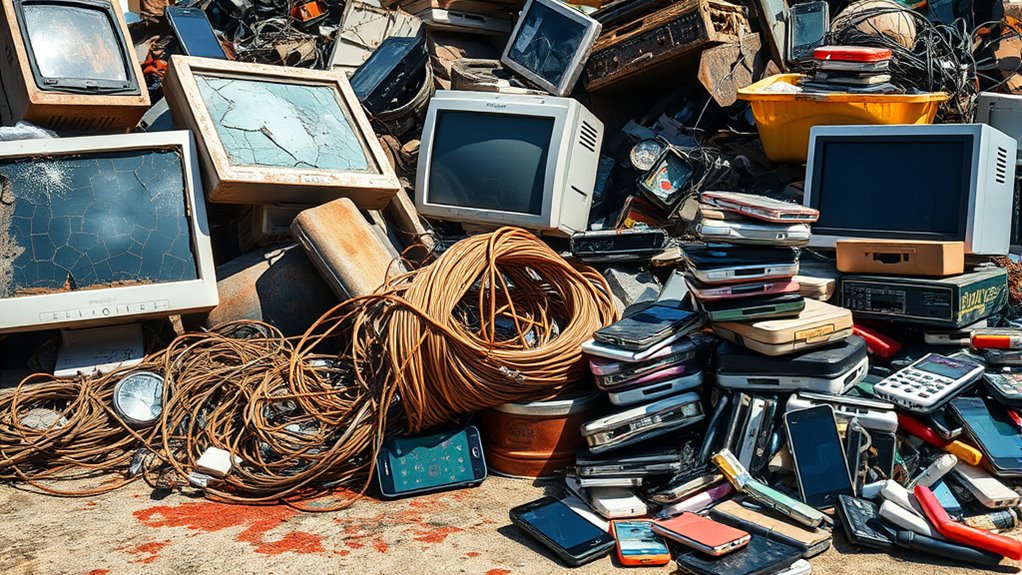

To dispose of e-waste the right way, avoid throwing gadgets in the trash and instead use certified recycling centers or take-back programs. These facilities safely handle hazardous materials like lead and mercury, preventing contamination of soil and water. Many countries have regulations that support responsible disposal, so check local laws and participate in eco-friendly initiatives. Continuing to learn more can help you make smarter choices for protecting the environment and your health.
Key Takeaways
- Use certified e-waste recycling centers or take-back programs to ensure proper disposal.
- Avoid throwing electronics in regular trash to prevent environmental contamination.
- Follow local regulations and guidelines for safe e-waste handling and recycling.
- Support responsible recycling practices that recover valuable materials and reduce hazardous waste.
- Educate others about the environmental and health benefits of proper e-waste disposal.
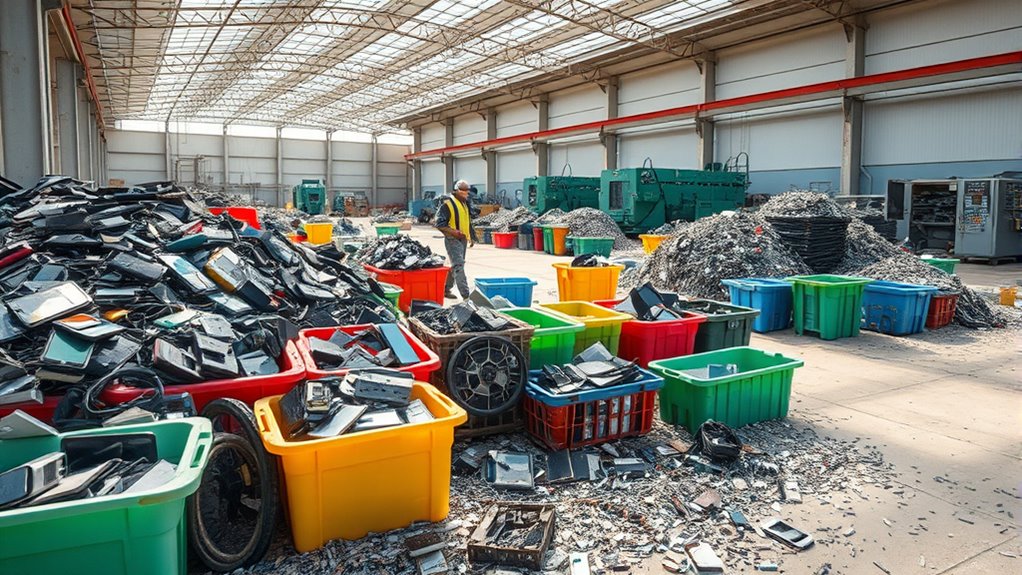
Have you ever wondered what happens to your old gadgets after you toss them out? Many people simply discard their e-waste without thinking about where it ends up or how it impacts the environment. The truth is, e-waste contains a variety of materials that require careful handling. Proper disposal involves understanding recycling methods that can safely process electronic waste. These methods are designed to recover valuable components while minimizing environmental harm. When you choose responsible disposal, you help prevent hazardous materials from leaching into soil and water sources, which can cause serious health problems for communities and ecosystems.
Proper e-waste disposal protects health and the environment by recovering valuable materials responsibly.
Recycling methods for e-waste are continually evolving to become more efficient and environmentally friendly. Modern facilities use specialized techniques such as mechanical separation, chemical treatment, and smelting to extract precious metals like gold, silver, and copper. These processes not only reduce the need for mining new resources but also help decrease the volume of waste sent to landfills. When you take your old devices to certified e-waste recycling centers, you’re supporting these sustainable practices. Furthermore, many electronics contain dangerous substances like lead, mercury, cadmium, and brominated flame retardants. If not properly managed, these hazardous materials can pose significant health risks to waste handlers and nearby communities.
It’s vital to recognize that not all disposal methods are created equal. Simply tossing your gadgets into the trash might seem easier, but it’s the least responsible choice. Landfilling e-waste allows hazardous materials to seep into the ground, contaminating soil and water over time. Instead, look for designated recycling facilities or electronic take-back programs offered by manufacturers or retailers. These options ensure your old electronics are handled by professionals trained to manage hazardous materials safely. Many countries also enforce regulations that require proper e-waste disposal, so being aware of local laws can help you make smarter decisions. By participating in these programs, you contribute to reducing pollution and conserving valuable resources.
Understanding proper handling of hazardous materials is essential to minimize environmental and health risks associated with e-waste. In essence, the way you dispose of your e-waste makes a difference. Opting for responsible recycling methods ensures harmful materials stay out of the environment and are processed safely. It’s a simple step that can have a big impact on public health and the planet’s well-being. So next time you upgrade or replace your gadgets, think about the journey they’ll take after they’re no longer useful. Choosing proper disposal isn’t just good for your conscience—it’s vital for protecting our shared environment from the dangers posed by hazardous materials in electronic waste.
Frequently Asked Questions
Are There Any Costs Associated With E-Waste Disposal Services?
Yes, there are cost considerations when it comes to e-waste disposal services. Service fees can vary depending on the type and amount of electronics you’re discarding. Some providers offer free collection for small quantities or donate services, but others may charge for larger or hazardous items. It’s a good idea to compare different options and ask about any potential service fees upfront to guarantee you’re aware of the costs involved.
How Can I Verify if a Disposal Facility Is Certified?
You can verify if a disposal facility is certified by checking their certification standards and facility accreditation. Ask them for proof of certification from recognized organizations like R2 or e-Stewards. You can also visit their website or contact local regulatory agencies to confirm their credentials. Ensuring they meet established certification standards guarantees responsible e-waste disposal and helps protect the environment. Always verify before dropping off your e-waste.
What Should I Do if My Electronics Are Still Under Warranty?
If your electronics are still under warranty, you should first check the warranty terms to see if repairs or replacements are covered. Contact the manufacturer or retailer to initiate a warranty claim. They may offer repair options or a replacement. Avoid disposal until you’ve explored these options, as warranty claims can often resolve issues without needing to dispose of your device prematurely.
Can I Recycle Broken or Damaged Devices?
Think of your broken device as a fallen leaf, still full of potential. You can recycle damaged devices through dedicated recycling programs, giving them a second life. Before tossing it out, consider device repair options; they might save you money and extend its usefulness. Recycling programs make certain your damaged electronics don’t pollute the environment, turning waste into resources. Embrace responsible disposal, and help keep our planet healthy for future generations.
How Long Does the E-Waste Recycling Process Typically Take?
The e-waste recycling process usually takes about 30 to 60 days, but timing expectations can vary depending on the facility and the type of device. You can expect the processing duration to include collection, transportation, and actual recycling procedures. To guarantee a smooth process, choose a certified recycler and ask about their estimated turnaround time. This way, you stay informed and can plan accordingly for your e-waste disposal.
Conclusion
By disposing of your e-waste responsibly, you help protect the environment and keep harmful toxins out of our communities. Did you know that only 20% of electronic waste is properly recycled worldwide? That means most e‑waste ends up in landfills, posing serious health risks. So, next time you upgrade your device, make sure to recycle it correctly. Your small action can make a big difference in creating a cleaner, safer planet for everyone.