
To sew on a button, remove any loose threads, position the button, and sew through its holes multiple times with matching thread, ending with a knot on the inside. To fix a hem, fold the fabric at the desired length, pin or clip it, and sew along the edge with small stitches for a clean look. Using proper techniques guarantees strong, discreet repairs—continue exploring how to perfect these methods for professional results.
Key Takeaways
- Gather matching thread, needle, and the replacement button before starting the sewing process.
- Sew the button securely using cross or parallel stitches, ensuring proper alignment and firm attachment.
- Fold the fabric to the desired hem length, pin or clip in place, and sew along the fold with small, even stitches.
- For torn hems, trim damaged fabric, fold raw edges inward, press, and re-hem with neat stitches for a clean finish.
- Practice sewing techniques at home to save money, maintain your wardrobe, and ensure durable, nearly invisible repairs.
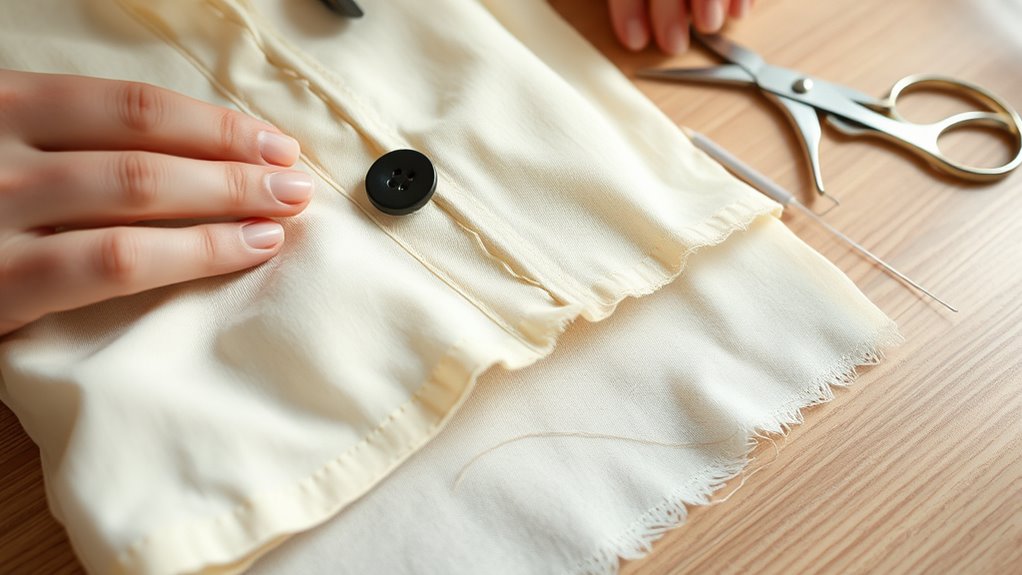
Whether you’re dealing with a missing button or a torn hem, knowing how to sew a button and fix a hem can save you time and money. These simple sewing skills are essential for maintaining your wardrobe and making quick repairs without needing a tailor. When it comes to button replacement, the key is to choose the right button that matches your garment and learn the proper techniques to secure it firmly. Starting with button replacement, you want to gather a needle and thread that match the fabric color. Remove any loose threads around the missing button, then thread your needle and knot the end. Position the new button in the original placement or where the previous one was sewn. Sew through the buttonholes several times, making sure to go through the fabric and the button shank to provide strength. For added durability, you can sew a cross pattern or parallel stitches, depending on the button style. Finish by tying a knot on the inside of the fabric and trimming any excess thread. This straightforward method ensures your button stays secure and functional.
When it comes to hem repair techniques, the goal is to restore the garment’s original length and appearance without drawing attention to the fix. For small tears or frayed hems, start by folding the fabric to the desired length, then pin or clip it in place. Use a needle and thread matching the fabric color to sew a straight or slip stitch along the fold, catching both layers of fabric evenly. If the hem is severely torn or frayed, you might need to cut away the damaged section and re-hem the edge. To do this, fold the raw edge inward by about a quarter inch, then press with an iron to create a neat fold. Sew along the edge with small, even stitches, either by hand or with a sewing machine, to secure the new hem. For a more professional finish, you can use hem repair techniques such as blind stitching or applying fabric adhesive for quick fixes. Additionally, understanding the contrast ratio in textiles can help you choose fabrics that match or complement your garment’s original look. These methods help your garments look polished and extend their lifespan.
Mastering the basics of sewing a button and fixing a hem allows you to handle common wardrobe issues efficiently. Whether replacing a button or repairing a hem, these skills keep your clothes looking neat and save you from costly professional repairs. With a little practice, you’ll find it easy to perform these repairs at home, making your wardrobe more sustainable and your skills more versatile.

Sewing Kit Basic,Marcoon Needle and Thread Kit with Sewing Supplies and Accessories for Adults,Beginner,Home,Travel,Emergency Including Scissors,Measure Tape,Needle Threader and More
Complete Sewing Kit-The travel sewing kit contains all the necessary tools that are required for performing basic repairs-a…
As an affiliate, we earn on qualifying purchases.
As an affiliate, we earn on qualifying purchases.
Frequently Asked Questions
What Types of Fabric Are Best for Sewing Buttons?
You should choose sturdy fabrics like denim, canvas, or twill when sewing buttons because of their durability, ensuring the buttons stay securely in place. These fabrics handle the strain from frequent buttoning and unbuttoning, reducing the risk of tearing. Additionally, consider the fabric’s thickness for proper button placement, as thicker fabrics provide better support, while delicate fabrics like silk or chiffon may require special attention to avoid damage.
How Do I Choose the Right Thread Color?
Think of your garment as a story, and the thread as its voice. To choose the right thread color, match it closely to your fabric for seamless seam reinforcement. If you want your stitches to subtly blend in, opt for a matching thread. For added durability, select a slightly stronger thread. The goal is to make your repairs both functional and invisible, so your clothing maintains its original charm.
Can I Fix a Hem Without Sewing?
Yes, you can fix a hem without sewing by using DIY clothing repairs like fabric glue or hem tape. These quick sewing tips allow you to secure the hem without needles or thread, making it perfect for a fast fix. Just make certain the fabric is clean and dry, then apply the adhesive or tape evenly. This method works well for temporary fixes or when you’re short on time.
How Do I Prevent Buttons From Falling off Again?
Think of your buttons like good friends; you want to keep them close. To prevent buttons from falling off again, guarantee you do proper button replacement, sewing them tightly with a strong stitch. When fixing hems, follow hem repair tips to secure fabric and prevent stress on buttons. Regularly check and reinforce buttons, especially after washing, so you won’t have to redo the work. That way, your garments stay stylish and functional longer.
What Tools Are Essential for Hemming and Button Sewing?
You’ll need a good needle, matching thread, scissors, and a seam ripper for hemming and button sewing. If you prefer, a sewing machine can speed up the process, but remember to keep it in good condition for smooth sewing. When selecting fabric, choose durable, appropriate materials to prevent fraying or damage. Proper sewing machine maintenance and fabric selection tips ensure your hems and buttons stay secure longer.

GTAAOY 100 Sets Metal Snaps Buttons with Fastener Pliers Press Tool Kit Perfect for DIY Crafts Clothes Hats and Sewing, Snap Button Fasteners Kit for Clothing Sewing (9.5mm / 400 PCS)
Metal snap buttons: Snap button set with 10 colors. The package contains 100 sets/400 pieces of snap button:…
As an affiliate, we earn on qualifying purchases.
As an affiliate, we earn on qualifying purchases.
Conclusion
Now that you know how to sew a button and fix a hem, you can confidently handle small clothing repairs at home. Did you know that the average person spends over $300 a year on alterations and repairs? By mastering these simple skills, you save money and extend the life of your clothes. So next time a button falls off or a hem comes undone, you’ll be ready to fix it quickly and keep your wardrobe looking sharp.

PLANTIONAL Upholstery Repair Sewing Kit, Heavy Duty Sewing Kit with Sewing Awl, Seam Ripper, Leather Hand Sewing/Stitching Needles, Sewing Thread for Car/Sofa/Backpack/Shoe, Craft DIY, 10 Color, 47Pc
【Heavy Duty Sewing Kit】- This comprehensive sewing kit includes 32 leather sewing needles, 10 leather sewing threads (30…
As an affiliate, we earn on qualifying purchases.
As an affiliate, we earn on qualifying purchases.

37 Pcs Big Eye Steel Sewing Needles Kit – Stainless Steel Needles for Hand Sewing Kit with Thread Ripper, Needle Threaders, Threads and Thimbles
Effortless Threading with Extra-Large Eyes – Say goodbye to frustrating needle threading! Our stainless steel sewing needles feature…
As an affiliate, we earn on qualifying purchases.
As an affiliate, we earn on qualifying purchases.