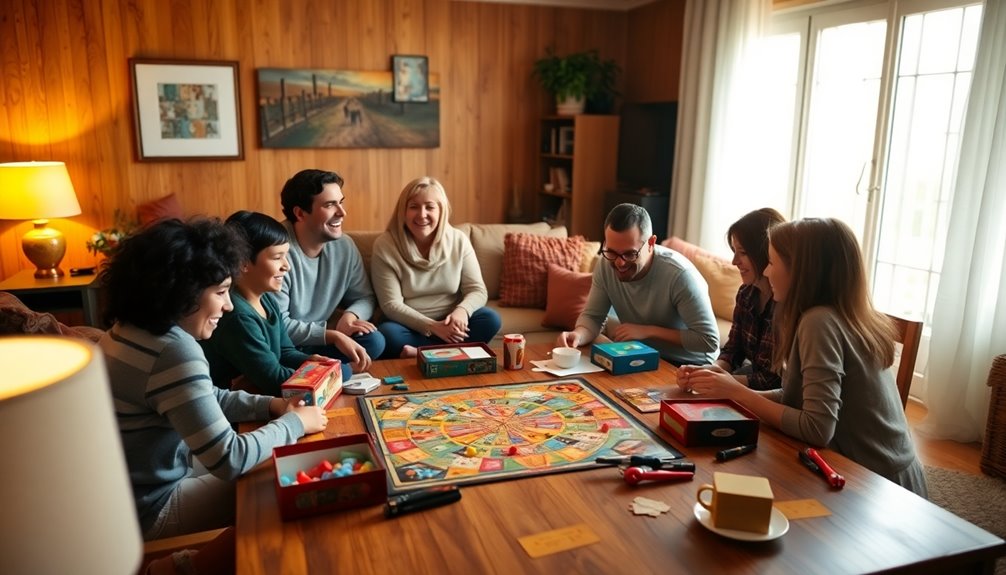

Sequence Original Board Game is my best overall pick among board games for families: its mix of cards and simple strategy gives different ages a way to compete together. CATAN stands out for families ready for longer, more strategic sessions, while Candy Land is a gentler starting point for young children. The main tradeoffs are how much reading and planning a game asks of players, how long a round lasts, and whether younger family members can take part without help. Some options are quick and easy to learn; others reward repeated play but ask for more patience. Read on for the full breakdown and help matching a game to your household.

Get beauty and skincare favorites delivered free with Prime
- Fast, free delivery on millions of items
- Prime Video, Amazon Music and more included
- Member-only deals all year
Complete the kit



Key Takeaways
- Sequence is the strongest all-rounder: it pairs accessible card play with enough planning to hold adults’ interest, without CATAN’s longer learning curve.
- Age and reading ability change the best fit: Candy Land and Trouble are more approachable for younger children, while Scrabble and Tapple ask for stronger word skills.
- Quick-play games suit mixed schedules: UNO, Yahtzee, and Connect 4 are easier to bring out for a short session than Monopoly or CATAN.
- Interaction matters as much as complexity: Hedbanz and Do You Really Know Your Family? focus on conversation and clues, while Jenga turns suspense into the main event.
- Two similar titles can serve different needs: the two Connect 4 entries give buyers a choice between a 2025 edition and a strategy-focused version, so checking the exact edition and play features matters.
| Sorry! Classic Board Game for Kids and Families, Ages 6+ |  | Best for Playful Rivalry | Brand: Hasbro Gaming | Players: 2–4 | Recommended age: 6 years and up | VIEW ON AMAZON | See Our Full Breakdown |
| Spin Master Games Hedbanz Classic Edition Picture Guessing Game |  | Best for Lively Group Play | Brand: Spin Master Games | Players: 2–6 | Recommended age: 6 years and up | VIEW ON AMAZON | See Our Full Breakdown |
| Hasbro Jenga Game with Digital Die |  | Best for Quick, Hands-On Turns | Brand: Hasbro Gaming | Players: 1 or more | Recommended age: 6 years and up | VIEW ON AMAZON | See Our Full Breakdown |
| Hasbro Gaming Scrabble Classic Crossword Board Game |  | Best for Word-Loving Families | Brand: Hasbro Gaming | Players: 2–4 | Recommended age: 8 years and up | VIEW ON AMAZON | See Our Full Breakdown |
| Mattel Games UNO Card Game |  | Best for Larger Families | Brand: Mattel Games | Game: UNO | Players: 2–10 | VIEW ON AMAZON | See Our Full Breakdown |
| Hasbro Gaming Yahtzee Classic Dice Game |  | Best for Quick, Repeatable Family Rounds | Players: 2 or more | Recommended age: 8 years and up | Dice: 5 | VIEW ON AMAZON | See Our Full Breakdown |
| Hasbro Connect 4 Game, 2025 Edition |  | Best Compact Two-Player Pick | Edition: 2025 Edition | Age range: Ages 6+ | Players: 2 | VIEW ON AMAZON | See Our Full Breakdown |
| Do You Really Know Your Family? Family Card Game |  | Best for Conversation and Shared Laughs | Recommended ages: Kids, teens, and adults; recommended ages 8–10 | Players: 3–8 | Included components: Cards | VIEW ON AMAZON | See Our Full Breakdown |
| Hasbro Gaming Trouble Board Game for Kids, Ages 5 and Up |  | Best for Younger Players | Age range: 5 years and up | Players: 2–4 | Edition: Classic Edition | VIEW ON AMAZON | See Our Full Breakdown |
| Monopoly Classic Board Game with Storage Tray and Larger Tokens |  | Best for Longer Family Game Nights | Players: 2–6 | Recommended age: 8 years and up | Tokens: 8 metal tokens | VIEW ON AMAZON | See Our Full Breakdown |
| USAOPOLY Tapple Family Word Game |  | Best for Fast, Lively Wordplay | Age range: 8 years and up | Players: 2–8 | Playing time: 15 minutes | VIEW ON AMAZON | See Our Full Breakdown |
| Hasbro Gaming Connect 4 Strategy Board Game |  | Best for Two-Player Strategy | Players: 2 | Recommended age: 6 years and up | Playing time: 30 minutes | VIEW ON AMAZON | See Our Full Breakdown |
| Hasbro Gaming Candy Land Board Game for Kids, Ages 3 and Up |  | Best for Preschool Beginners | Players: 2–4 | Recommended age: 3 years and up | Estimated playing time: 15 minutes | VIEW ON AMAZON | See Our Full Breakdown |
| CATAN Board Game, 6th Edition |  | Best for Strategy-Focused Family Game Nights | Edition: 6th Edition | Players: 3–4 | Recommended age: 10 years and up | VIEW ON AMAZON | See Our Full Breakdown |
| Sequence Original Board Game |  | Best for Large Family Groups | Players: 2–12 | Recommended age: 7 years and up | Included components: Folding game board, 2 decks of cards, 135 chips, and instructions | VIEW ON AMAZON | See Our Full Breakdown |
| board games for familie | Players | Included components | Recommended age |
|---|---|---|---|
| Sorry! Classic Board Game for | 2–4 | Gameboard, 12 pawns, 45 cards, and instructions | 6 years and up |
| Spin Master Games Hedbanz Clas | 2–6 | 6 headbands, 6 headplates, 16 scoring badges, 1 timer, 69 picture cards, 3 sample question cards, and instructions | 6 years and up |
| Hasbro Jenga Game with Digital | 1 or more | 54 hardwood blocks, stacking sleeve, and instructions | 6 years and up |
| Hasbro Gaming Scrabble Classic | 2–4 | Gameboard, 100 wooden letter tiles, 4 wooden tile racks, drawstring letter bag, and game rules | 8 years and up |
| Mattel Games UNO Card Game | 2–10 | 112 cards and instructions | 7 years and up |
| Hasbro Gaming Yahtzee Classic | 2 or more | Yahtzee shaker, 5 dice, and 100 score cards | 8 years and up |
| Hasbro Connect 4 Game | 2 | Grid and tray, 42 discs (21 red and 21 yellow), and game rules | — |
| Do You Really Know Your Family | 3–8 | Cards | — |
| Hasbro Gaming Trouble Board Ga | 2–4 | Gameboard, plastic game unit with Pop-O-Matic die roller, 16 pegs, and instructions | — |
| Monopoly Classic Board Game wi | 2–6 | Game board, money, Title Deeds, houses, hotels, storage tray, and family game records | 8 years and up |
| USAOPOLY Tapple Family Word Ga | 2–8 | Portable Tapple wheel with built-in timer, 36 cards, and instructions | — |
| Hasbro Gaming Connect 4 Strate | 2 | Grid, 2 feet, slider bar, 21 red discs, 21 yellow discs, 4 blue Blocker discs, and instructions | 6 years and up |
| Hasbro Gaming Candy Land Board | 2–4 | Gameboard, 4 gingerbread pawns, card deck, and instructions | 3 years and up |
| CATAN Board Game | 3–4 | 19 terrain hexes, 6 sea frame pieces, 18 number discs, 4 player aids, 2 victory point tiles, 96 wooden player pieces, 2 card trays, 2 dice, 120 cards, and rules | 10 years and up |
| Sequence Original Board Game | 2–12 | Folding game board, 2 decks of cards, 135 chips, and instructions | 7 years and up |
More Details on Our Top Picks
Sorry! Classic Board Game for Kids and Families, Ages 6+
Sorry! suits families who enjoy a direct race where a single card can change who is closest to home. Players draw cards to move pawns, use slides, and send opponents back to start, so turns are easy to learn but can bring sharp reversals. Compared with UNO, it gives players a shared board and a clearer sense of progress; UNO is easier to pack and supports a larger group. The tradeoff is that getting sent back can feel rough for younger or less competitive players, especially after a long climb. With room for four, this is a good pick for small family groups, but it needs at least two players and is less suited to gatherings where everyone wants a quick, low-conflict game.
Pros:- Card-driven turns are straightforward for children and adults to learn.
- Slides and pawn movement create changing opportunities to overtake opponents.
- Supports up to four players for a small family game night.
- Includes the board, pawns, cards, and instructions needed to play.
Cons:- A pawn can be sent back to start, undoing substantial progress.
- Limited to two to four players.
- Direct interference may not suit families who prefer gentler competition.
Best for: Families with children six and older who enjoy simple racing games and can take setbacks in stride.
Not ideal for: Families seeking cooperative play, a large-group option, or a game without the frustration of losing progress.
- Brand:Hasbro Gaming
- Players:2–4
- Recommended age:6 years and up
- Edition:Standard Edition
- Included components:Gameboard, 12 pawns, 45 cards, and instructions
- Language:English
- Model number:A5065
Our verdict“Choose Sorry! for a small family that wants an easy-to-learn race with lively setbacks, and skip it if being sent back would sour the mood.”
Spin Master Games Hedbanz Classic Edition Picture Guessing Game
Hedbanz turns the group into the game: one player wears a picture card and asks yes-or-no questions while everyone else watches the guesses unfold. Its six headbands and support for up to six players give it a stronger party fit than Sorry!, which is capped at four and centers on a shared race. The simple question format lets children and adults join without needing word-game knowledge, while the timer and scoring badges give turns a clear pace. The main limitation is repetition: play always revolves around identifying picture cards, so families wanting tactical choices may prefer Scrabble. It also needs at least two people, and the headband format may feel less appealing to players who dislike being the focus of the group.
Pros:- Yes-or-no questions make the core play easy to grasp across ages.
- Accommodates up to six players, more than Sorry! or Scrabble.
- Timer and scoring badges add structure to each round.
- Includes six headbands and 69 picture cards.
Cons:- The guessing format may feel repetitive after multiple rounds.
- Players need at least one other person to play.
- The headband setup can put a shy player in the spotlight.
Best for: Families with children six and older who want an interactive guessing game for groups of up to six.
Not ideal for: Players who prefer strategic board play, quieter turns, or games that do not put one person on display.
- Brand:Spin Master Games
- Players:2–6
- Recommended age:6 years and up
- Included components:6 headbands, 6 headplates, 16 scoring badges, 1 timer, 69 picture cards, 3 sample question cards, and instructions
- Model year:2023
- Edition:2029 Edition
Our verdict“Pick Hedbanz for an outgoing family group that enjoys shared laughter more than board strategy.”
Hasbro Jenga Game with Digital Die
Jenga keeps the focus on physical tension rather than cards, words, or board position: players pull and stack hardwood blocks while trying not to topple the tower. The digital die adds six challenges, including racing the clock and using thumbs only, giving this version a change of pace that UNO does not offer. It also supports solo play, so it can fill a different role from group-dependent choices such as Hedbanz. The tradeoff is practical as well as playful: the digital challenges require a phone to scan a QR code or access the web app, while classic tower play needs no such device. As the tower grows unstable, falls are part of the fun, but families wanting a calmer, more predictable game may prefer Scrabble.
Pros:- Classic block-pulling play is easy to understand without word or card skills.
- Six digital-die challenges add alternate ways to play.
- Can be played solo or in a group.
- Includes 54 hardwood blocks and a stacking sleeve for setup and storage.
Cons:- Digital challenges require a phone and QR-code scan or web-app access.
- The tower becomes harder to manage as blocks are removed, leading to sudden falls.
- Physical dexterity and a steady hand matter more than they do in UNO or Hedbanz.
Best for: Families with children six and older who like hands-on suspense and want a game that can also be played solo.
Not ideal for: Households avoiding phone-linked features, or players who prefer stable boards and low-pressure turns.
- Brand:Hasbro Gaming
- Players:1 or more
- Recommended age:6 years and up
- Included components:54 hardwood blocks, stacking sleeve, and instructions
- Model number:G1499
- Material:Wood blocks; product information also lists plastic
Our verdict“Choose this Jenga edition for a family that wants suspenseful, tactile turns and is comfortable using a phone for its extra challenges.”
Hasbro Gaming Scrabble Classic Crossword Board Game
Scrabble rewards vocabulary and planning, making it a better fit for families who enjoy building words than the quick matching turns of UNO. Players place letter tiles on a shared board, and premium squares shape how much each word can score; wooden racks help keep each player’s letters organized. Team play offers a way to bring younger or less confident readers into the game, though the recommended age of eight and up makes it less accessible to early readers than Hedbanz, which starts at six. This edition is limited to two to four players, and a 40-minute playing time calls for more attention than a short card session. Choose it for thoughtful word play, not for a fast, all-ages group activity.
Pros:- Word building offers a more thoughtful challenge than UNO’s color-and-number matching.
- Premium board squares give letter placement a scoring purpose.
- Wooden tiles and racks keep letters organized during play.
- Team play offers another format for family groups.
Cons:- Recommended for ages eight and up, so younger children may need help or a different game.
- Supports only two to four players.
- A listed playing time of 40 minutes may be too long for families seeking a quick game.
Best for: Families with children around eight and older who enjoy vocabulary, spelling, and deliberate turns.
Not ideal for: Families with younger children, more than four players, or a preference for short, fast-moving rounds.
- Brand:Hasbro Gaming
- Players:2–4
- Recommended age:8 years and up
- Playing time:40 minutes
- Language:English
- Edition:Standard Edition
- Included components:Gameboard, 100 wooden letter tiles, 4 wooden tile racks, drawstring letter bag, and game rules
- Model number:F4204
Our verdict“Choose Scrabble for a small family that wants sustained word-building play, rather than a quick game that accommodates a bigger group.”
Mattel Games UNO Card Game
UNO is the flexible crowd-pleaser in this group, supporting up to ten players while Scrabble and Sorry! each stop at four. Players match colors or numbers and use action cards to change the flow, keeping the basic rules accessible without the reading demands of Scrabble. Graphic symbols help identify card colors for color-blind players, a useful accessibility feature not listed for the other games here. Three customizable Wild Cards add a small way to vary play. The tradeoff is that UNO’s appeal depends on enjoying repeated matching turns and action-card interruptions; families who want a shared physical challenge may prefer Jenga, while those who enjoy tactical word choices have Scrabble. It is designed for ages seven and up and requires at least two players.
Pros:- Supports up to ten players, more than any other game in this set.
- Color and number matching keeps the core rules accessible.
- Graphic symbols help identify card colors for color-blind players.
- Three customizable Wild Cards allow some variation.
Cons:- Requires at least two players.
- Repeated matching and action-card play may feel limited for players seeking deeper strategy.
- Colors and decorations may vary.
Best for: Families and mixed-age groups who need a portable card game for two to ten players, including color-blind players.
Not ideal for: Households seeking a board-based activity, solo play, or more varied strategic decisions than matching and action cards provide.
- Brand:Mattel Games
- Game:UNO
- Players:2–10
- Recommended age:7 years and up
- Included components:112 cards and instructions
- Accessibility:Graphic symbols help identify card colors
- Customizable cards:3 Wild Cards
- Language:English
- Model number:GDJ85
Our verdict“Choose UNO when a large family needs an accessible, easy-to-carry group game, and choose Scrabble or Jenga for a more involved shared activity.”
Hasbro Gaming Yahtzee Classic Dice Game
Yahtzee suits families who want a game that is easy to teach but still gives players meaningful choices. On each turn, players can roll up to three times, deciding whether to keep useful dice or chase a higher-scoring combination across 13 rounds. That mix of luck and risk gives it more replay variety than Connect 4, though Yahtzee is less directly competitive because everyone scores their own sheet.
The shaker lid doubles as storage, making setup and cleanup straightforward, and 100 score cards provide a ready supply for repeat play. The tradeoff is that luck can undo a careful plan, and the cards are consumable. Choose this over Trouble when your family prefers score-based turns to a race around the board; skip it if you want a game with no ongoing scorekeeping.
Pros:- Up to three rolls per turn let players weigh safer scores against riskier combinations.
- Thirteen rounds give a clear structure for a family game session.
- Shaker lid provides a convenient place to keep the dice between games.
- Includes 100 score cards for repeated play.
Cons:- Dice luck can outweigh a player’s choices in a given round.
- Score cards are used up and may need to be replaced.
Best for: Families with children aged eight and up who enjoy quick turns, dice decisions, and keeping score together.
Not ideal for: Players who dislike luck-driven outcomes or families looking for a board with direct, continuous player interaction.
- Players:2 or more
- Recommended age:8 years and up
- Dice:5
- Score cards:100
- Rounds per player:13
- Rolls per turn:Up to 3
- Material:Plastic
- Included components:Yahtzee shaker, 5 dice, and 100 score cards
Our verdict“Pick Yahtzee for families who want a compact, score-based dice game with simple rules and a little push-your-luck decision-making.”
Hasbro Connect 4 Game, 2025 Edition
Connect 4 is the clearest choice here for a head-to-head match that starts quickly and ends when someone spots a winning line. Its simple goal—connect four discs—makes it easier to teach than Yahtzee, while each move asks players to block as well as build. The tradeoff is built into the format: it is strictly for two, so it cannot bring a whole family into the same round the way Monopoly can.
This 2025 edition folds into a carrying case, with space for the discs and built-in score trackers. That helps keep the small pieces together and makes it more practical to pack away than a larger board game. Still, loose discs can go missing, and the game offers limited variety once players know each other’s habits. I’d choose it for quick sibling matches, not as the only game for family gatherings.
Pros:- Simple connect-four objective is quick to explain.
- Players must balance making their own line with blocking the opponent.
- Folding case and handle make storage and transport easier.
- Built-in disc storage and score trackers help keep matches organized.
Cons:- Designed for exactly two players.
- Small discs can be lost if they are not returned to the storage area.
- The same grid and objective may feel repetitive for frequent play.
Best for: Families with two players at a time, especially siblings or a parent and child who want short, tactical matches.
Not ideal for: Families who need a game for three or more players, or players who want changing rules and varied scenarios.
- Edition:2025 Edition
- Age range:Ages 6+
- Players:2
- Included components:Grid and tray, 42 discs (21 red and 21 yellow), and game rules
- Storage:Foldable carrying case with handle and disc storage
- Scorekeeping:Built-in score trackers
- Model number:G1500
Our verdict“Choose this Connect 4 edition for portable, quick two-player strategy, but look to Yahtzee or Monopoly when more relatives need to play at once.”
Do You Really Know Your Family? Family Card Game
Do You Really Know Your Family? centers on conversation rather than board strategy: trivia prompts and silly challenges give relatives a reason to share stories and surprise one another. That makes it a better fit than Connect 4 for a group of three to eight, and less focused on winning than Monopoly. Its accessible format suits mixed ages, with a recommended range that includes children, teens, and adults.
The compact tin is easy to bring along, and the card-based setup avoids a large board or complicated pieces. The tradeoff is that the fun depends on the group’s willingness to talk and join in; families seeking tactical play or a clear competition may prefer Yahtzee. The product information lists cards but does not specify a card count or detailed challenge variety, so buyers should not assume a particular session length or depth from the description alone.
Pros:- Conversation prompts give players a way to share opinions and family stories.
- Silly challenges add variety beyond answering questions.
- Designed for groups of three to eight, unlike two-player Connect 4.
- Portable tin makes the card game easier to pack and store.
Cons:- The experience depends on players being comfortable talking and taking part in challenges.
- Card count and detailed session structure are not specified in the supplied product information.
Best for: Families of three to eight who enjoy conversation prompts and light challenges across children, teen, and adult age groups.
Not ideal for: Groups that prefer competitive strategy, quiet solo decisions, or a game with a defined board and scoring system.
- Recommended ages:Kids, teens, and adults; recommended ages 8–10
- Players:3–8
- Included components:Cards
- Material:Cardstock
- Language:English
- Container:Tin
- Dimensions:2 x 4.7 x 6.7 inches
- Battery required:No
Our verdict“Pick this card game when the goal is family conversation and playful group participation rather than tactical competition.”
Hasbro Gaming Trouble Board Game for Kids, Ages 5 and Up
Trouble is aimed at families who want a low-barrier race game for younger children: players move four pegs toward the finish by pressing the Pop-O-Matic die roller. Keeping the die in the unit makes setup simpler than Yahtzee, which asks players to manage several dice and track scores. It also supports two to four players, so it works for a small family group rather than only a pair like Connect 4.
The classic rules are easy to grasp, and optional Power Up spaces add a second way to play. The main tradeoff is that a peg can be sent back to the beginning when an opponent lands on its space, which can frustrate children who dislike setbacks. Its luck-led movement also gives players fewer decisions than Yahtzee. Choose Trouble for straightforward race-to-the-finish play, not for a strategy-focused evening.
Pros:- Pop-O-Matic roller keeps the die attached to the game.
- Simple race-to-the-finish rules are approachable for young players.
- Supports two to four players.
- Optional Power Up spaces provide an alternate play option.
Cons:- A player’s peg can be sent back to the beginning, which may feel frustrating.
- Movement relies heavily on the die rather than player decisions.
- Manufacturer warranty is not provided.
Best for: Families with children aged five and up who want an easy-to-start race game for two to four players.
Not ideal for: Players who want strategic control or younger children who may get upset when a peg is sent back to the start.
- Age range:5 years and up
- Players:2–4
- Edition:Classic Edition
- Included components:Gameboard, plastic game unit with Pop-O-Matic die roller, 16 pegs, and instructions
- Gameplay options:Classic gameplay and optional Power Up spaces
- Model number:A5064
- Manufacturer:Hasbro
Our verdict“Choose Trouble for a simple, luck-driven race that younger family members can join, rather than a game built around tactical choices.”
Monopoly Classic Board Game with Storage Tray and Larger Tokens
Monopoly Classic is the pick for families who want a longer, interactive property game for two to six players. Buying properties, collecting rent, and managing money create more sustained decisions than Trouble’s race around the board. The larger tokens, houses, and hotels should also be easier to handle than smaller game pieces, while the storage tray gives cash and cards a designated place between sessions.
Those strengths come with a real time commitment: a full game can take considerable time, and the property-and-bankruptcy format may leave some players out of the action before others. Compared with Do You Really Know Your Family?, Monopoly offers clearer competition but less focus on conversation. I’d choose it when the group enjoys negotiation and longer play, and skip it for families seeking a short, low-conflict round.
Pros:- Supports two to six players, making it suitable for a larger family group.
- Property purchases and rent create ongoing decisions and interaction.
- Larger tokens, houses, and hotels are easier to handle.
- Storage tray helps organize cash, cards, and game pieces.
Cons:- A full game may take considerable time.
- Competition through property purchases and bankruptcies can create frustration or leave players out of the action.
Best for: Families of two to six who enjoy property trading, money management, and settling in for a longer game session.
Not ideal for: Families with limited playtime or players who dislike direct competition, lengthy games, or elimination through bankruptcy.
- Players:2–6
- Recommended age:8 years and up
- Tokens:8 metal tokens
- Included components:Game board, money, Title Deeds, houses, hotels, storage tray, and family game records
- Storage:Storage tray
- Token and building size:Larger tokens, houses, and hotels
Our verdict“Choose Monopoly when your family wants an extended, competitive property game and has time for a longer session.”
USAOPOLY Tapple Family Word Game
Tapple suits families who want a quick word game that gets everyone talking, rather than a board that takes over the table. Players name a word for a category, tap an unused letter, and beat the built-in 10-second timer; its 36 cards offer 144 categories, giving repeat play some variety. Compared with Sequence, which rewards planning card placements over several turns, Tapple is more about rapid recall and spontaneous answers. The portable wheel also keeps the cards together, making it easier to bring along. That pace can be exciting for confident word players, but the timer may leave younger or slower-thinking players feeling rushed. It also needs batteries, unlike Sequence, so factor that into your choice.
Pros:- Portable wheel stores the category cards for easier transport and storage.
- Accommodates 2–8 players, making it more flexible for groups than two-player Connect 4.
- 144 categories provide variety across repeat plays.
- Prompts vocabulary, quick thinking, and word association.
Cons:- Requires batteries for the built-in timer.
- The 10-second pace can put younger players or slower thinkers under pressure.
Best for: Families with children ages 8 and up who enjoy quick word challenges and want a compact game for travel or short play sessions.
Not ideal for: Families seeking relaxed, untimed turns or a game accessible to players who find rapid word retrieval stressful.
- Age range:8 years and up
- Players:2–8
- Playing time:15 minutes
- Included components:Portable Tapple wheel with built-in timer, 36 cards, and instructions
- Category count:144
- Material:Paper and plastic
- Language:English
- Power source:Battery
Our verdict“Choose Tapple for lively, short wordplay with a larger group, but pick a calmer game if your family dislikes timed turns.”
Hasbro Gaming Connect 4 Strategy Board Game
This Connect 4 version is a focused pick for families who often play in pairs and want more choices than simply dropping checkers into a grid. Its four blue Blocker discs can interrupt an opponent’s line or help lift checkers, while vertical, horizontal, and diagonal play create different tactical possibilities. Compared with Candy Land, which is built around luck and color matching for younger children, this version asks players to anticipate an opponent’s moves. That makes it a better fit for siblings or parent-child matchups looking for direct competition. The limitation is built into its format: it supports only two players, so it cannot include a whole family at once. Its small discs also call for care around very young children.
Pros:- Blocker discs add tactical choices beyond standard checker placement.
- Supports vertical, horizontal, and diagonal lines of play.
- Includes the grid, discs, and instructions needed to play.
- Requires no batteries.
Cons:- Designed for only two players, so it cannot involve a larger family at once.
- Small discs may pose a choking hazard for young children.
Best for: Families with children ages 6 and up who want a compact, head-to-head game for siblings or one-on-one parent-child play.
Not ideal for: Families who usually play as a group of three or more, or households where small game pieces must be kept away from young children.
- Players:2
- Recommended age:6 years and up
- Playing time:30 minutes
- Included components:Grid, 2 feet, slider bar, 21 red discs, 21 yellow discs, 4 blue Blocker discs, and instructions
- Dimensions:10.98 × 10.51 × 1.61 inches
- Weight:16 ounces
- Material:Plastic
- Batteries:Not required
Our verdict“Pick this Connect 4 for strategic two-player contests, but choose a multiplayer game such as Sequence when the whole family wants to join.”
Hasbro Gaming Candy Land Board Game for Kids, Ages 3 and Up
Candy Land is the most accessible starting point here for families with preschoolers: players match cards to colored spaces, so children can join without reading or needing to plan several moves ahead. Its short, roughly 15-minute playtime also suits young attention spans, and turns offer practice with color recognition and taking turns. Compared with CATAN, which asks older players to manage resources, trade, and pursue a longer strategy, Candy Land keeps the rules simple enough for a young child to follow. That simplicity is also its tradeoff. Movement depends on the card draw, leaving little room for meaningful decisions, so older children and adults may lose interest sooner. It works best as a first family game, not as a lasting challenge for mixed-age players.
Pros:- No reading is needed to take part.
- Designed for young children beginning to learn game routines.
- Practices color recognition, matching, and taking turns.
- Instructions are included in English and Spanish.
Cons:- Card draws determine movement, so players have little control over outcomes.
- The simple matching format may not hold older players’ interest.
Best for: Families with children ages 3 and up who need a no-reading introduction to taking turns and matching colors.
Not ideal for: Families seeking strategy, player choices that affect outcomes, or sustained interest from older children and adults.
- Players:2–4
- Recommended age:3 years and up
- Estimated playing time:15 minutes
- Included components:Gameboard, 4 gingerbread pawns, card deck, and instructions
- Instruction languages:English and Spanish
- Skills:Color recognition, matching, and taking turns
- Brand:Hasbro Gaming
Our verdict“Choose Candy Land as a first board game for preschoolers, but move to a more strategic option when children want meaningful choices.”
CATAN Board Game, 6th Edition
CATAN is the pick for families ready to spend more time negotiating, planning, and building than a quick game such as Tapple allows. Players gather and trade resources, build roads and settlements, and race to 10 victory points; the modular island changes the board layout between games. Those linked decisions give older children and adults reasons to adapt and bargain, rather than relying mostly on card draws as in Candy Land. The tradeoff is a longer learning curve and a 60–90-minute session, which may not suit younger children or short weeknight play. The base game also caps the table at four players; including five or six requires a separate extension. I’d rank it for families who want deeper shared strategy, not the broadest age reach.
Pros:- Modular terrain creates varied board layouts across games.
- Combines resource gathering, trading, and strategic building.
- Offers sustained group play for three or four players.
- Wooden player pieces and card trays are included.
Cons:- The 60–90-minute playtime and strategy are a large step up from short, simple family games.
- The base game supports only 3–4 players; a separate extension is needed for 5–6.
Best for: Families with children ages 10 and up who enjoy negotiation, resource planning, and longer game nights with three or four players.
Not ideal for: Families with preschoolers, limited time for learning rules, or a regular group of five or six that does not want a separate extension.
- Edition:6th Edition
- Players:3–4
- Recommended age:10 years and up
- Playing time:60–90 minutes
- Language:English
- Genre:Strategy
- Included components:19 terrain hexes, 6 sea frame pieces, 18 number discs, 4 player aids, 2 victory point tiles, 96 wooden player pieces, 2 card trays, 2 dice, 120 cards, and rules
- Manufacturer:Asmodee
Our verdict“Choose CATAN for older families who want negotiation and long-form strategy, but skip it if your group needs a quick game or room for more than four without an extension.”
Sequence Original Board Game
Sequence stands out for families that need one game to accommodate very different group sizes: it supports 2–12 players, far more than two-player Connect 4 or four-player CATAN. Players use cards from their hands to claim matching board spaces and form a five-in-a-row sequence. The basic goal is easy to grasp, while hand management and team play give older players more to weigh than Candy Land’s draw-and-move format. Its folding board helps with storage, though the listed 19.75 × 15.25-inch board still needs table space once opened. The large group range comes with a different kind of complexity: team rules and the mix of cards, chips, and board spaces need more setup than a simple preschool game. Small chips are also a concern around very young children.
Pros:- Supports 2–12 players, covering both small and large family groups.
- Simple matching rules leave room for hand management and team strategy.
- Includes two card decks and 135 playing chips.
- Folding board makes storage easier than a fixed, full-size board.
Cons:- Small chips may pose a choking hazard for young children.
- The opened board and multiple components need table space and setup.
- No manufacturer warranty is provided.
Best for: Families who regularly host game nights with mixed ages or larger groups and want simple rules with room for tactical play.
Not ideal for: Households with toddlers who may reach the small chips, or players seeking a tiny travel game or a very short, no-setup round.
- Players:2–12
- Recommended age:7 years and up
- Included components:Folding game board, 2 decks of cards, 135 chips, and instructions
- Board dimensions:19.75 × 15.25 inches
- Game mechanics:Area control, hand management, and team-based gameplay
- Batteries:Not required
- Material:Paper
- Item weight:7.04 ounces
- Brand:Jax
Our verdict“Choose Sequence when flexible player count matters most and your family wants more strategy than a basic matching game.”

How We Picked
I compared the 15 games by how well they fit shared family play, not by complexity alone. My main criteria were the age and skill range each game can accommodate, how quickly players can understand its rules, typical session demands, and whether the core activity gives adults and children meaningful ways to participate. I also looked at the kind of interaction each game encourages, from wordplay and conversation to luck, dexterity, and tactical choices.
The ranking favors games that balance easy entry with reasons to play again, while still recognizing that families have different needs. That places Sequence first as a flexible middle ground; Candy Land and Trouble serve younger players, and CATAN earns a place for households that want deeper strategy and can set aside more time. Simple classics can be strong choices, but games that rely heavily on reading, long sessions, or luck rank lower for families seeking broad age compatibility. Similar entries, such as the two Connect 4 versions, are treated as distinct options rather than assumed to be interchangeable.
Factors to Consider When Choosing Board Games For Families
Choose around the people who will actually be at the table, rather than buying for an idealized family game night. These factors can help narrow the field before you decide which style will get played most often.
Match the game to the youngest regular player
Use the age guidance as a starting point, then think about what a child can comfortably do: read cards, count spaces, plan ahead, or wait through another player’s turn. A game can be labeled for a broad age range yet still leave a younger participant needing frequent help. If a child needs support, choose rules that let an adult assist without taking over the decisions. Avoid buying a game solely because older family members enjoy its theme or strategy. A simpler shared game can be more satisfying than a difficult one where one player effectively manages the whole table.
Decide how much play time your household can spare
Game length affects whether a box becomes a regular choice or stays on the shelf. Short rounds fit weeknights, changing attention spans, and households that want to play more than once; longer sessions suit planned gatherings. Check whether the game has a natural stopping point or whether leaving early disrupts everyone else. A long game may also feel longer when a player has little to do between turns. Pick for the time your family usually has, not the rare evening when nobody needs to be anywhere.
Balance luck, skill, and player differences
Luck can give children and newcomers a chance to win, while strategy gives experienced players a reason to return. Too much dependence on luck may frustrate people who want decisions to matter; a steep skill gap can make new players feel outmatched. Consider whether the game lets players learn through play or requires advance explanation. Cooperative help, teams, or open discussion can soften differences in reading ability and experience. For a family with a wide range of ages, a modest amount of strategy often works better than either a purely tactical challenge or a game with no meaningful choices.
Choose the kind of interaction your group enjoys
Family games can bring people together through conversation, friendly competition, wordplay, dexterity, or planning, and those experiences are not interchangeable. A lively guessing game may suit a talkative group but feel uncomfortable for players who dislike being put on the spot. Direct competition can be fun, though repeated targeting or take-that moments may cause friction among siblings. If your household enjoys quieter play, a game with clear turns and thoughtful choices may be a better fit. Think about how your family likes to spend time together, not just which theme looks appealing.
Check the table, storage, and setup requirements
A game’s practical footprint can decide how often it comes out. Larger boards, many components, or pieces that need sorting may be awkward on a small table or in a busy home. Small cards and tokens are easy to store but can be harder for younger players to handle or keep track of. Look for setup steps that fit the time and patience your household has before play begins. Also think about whether the box needs a reliable storage system to keep pieces together between sessions.
Buy for repeat play, not just first-night appeal
A familiar classic can be a dependable choice, but replay value depends on whether the experience changes with different players, choices, or group dynamics. A game with one repeated task may work best as a short filler rather than the centerpiece of every gathering. Party-style games can feel fresh when the people and answers change, while strategy games may reward learning over time. Consider whether your family prefers variety, mastery, or a reliable routine. Buying several games with the same pace and style can leave a gap when the group wants a different kind of evening.
Frequently Asked Questions
Which game is the best choice when adults and children have very different skill levels?
For a broad mix of abilities, look for rules that are easy to learn but still leave room for choices, rather than a game that depends on advanced reading or long-term planning. Sequence is my leading all-round choice here because it sits between very simple children’s games and the heavier strategy of CATAN. If the youngest players are still learning basic turns, Candy Land or Trouble may be a better first step. Adults can help explain rules, but avoid games where they must make decisions on a child’s behalf. The best match is the one that lets everyone participate meaningfully, even if players use different levels of strategy.
Which games work best when we only have a short time to play?
UNO, Yahtzee, and Connect 4 are sensible places to look when your family wants a straightforward session rather than a long commitment. Their styles differ: UNO is card-based and flexible, Yahtzee centers on dice choices, and Connect 4 offers a compact head-to-head contest. A short game can still run longer if players take extended turns or ask for rematches, so think about your group’s habits as well as the rules. For a planned evening with time to settle in, CATAN or Monopoly may suit better. Keep at least one quick option available for nights when schedules are tight.
Should I choose the 2025 Connect 4 edition or the strategy board game version?
Check the exact product listing and component details before choosing, since similar names do not guarantee that editions have identical features. Both are presented as Connect 4 options, so the decision should rest on the version’s included rules, board, and any edition-specific additions rather than the title alone. A familiar, direct head-to-head game is a good fit when you want a quick contest with little explanation. If your family already owns a Connect 4 set, compare what the new version adds before buying another. When the details are unclear, confirm the edition information with the seller or publisher.
Are word games a good purchase for a family with younger children?
They can be, but the right choice depends on reading, spelling, and comfort speaking under time pressure. Scrabble and Tapple make word skills central, so younger children may need relaxed house rules or adult support to take part. Hedbanz uses visual clues and guessing instead, which can feel more accessible for players who are still building literacy skills. Think about whether your child enjoys making and spelling words or prefers identifying pictures and answering clues. A game that builds skills can be rewarding, but it should not make one player feel like the whole session is a test.
Which pick is best for a family that wants a more involved strategy game?
CATAN is the clearest choice in this roundup for families seeking a more involved strategy experience. It asks for more time and attention than quick classics such as UNO or Connect 4, so it suits a group willing to learn rules and plan across multiple turns. If you want strategic decisions in a more compact format, Sequence offers a gentler step up from simple luck-based play. Consider whether everyone at the table enjoys planning and negotiation before choosing a heavier game. A strategy game is most rewarding when the whole group wants that level of involvement.
Conclusion
For most families, I recommend Sequence as the best overall balance of accessible rules and meaningful choices. For value and easy repeat sessions, UNO is a practical pick; for beginners and younger children, start with Candy Land or Trouble according to the child’s age and confidence with turn-taking. For a premium-feeling strategy night, CATAN is the strongest fit for families ready to spend more time learning and playing, while Hedbanz or Do You Really Know Your Family? makes more sense when conversation is the point. Choose by the ages, attention spans, and play style of the people at your table, and you’ll be more likely to find a game your family returns to.
Halloween Picks
halloween
As an affiliate, we earn on qualifying purchases.