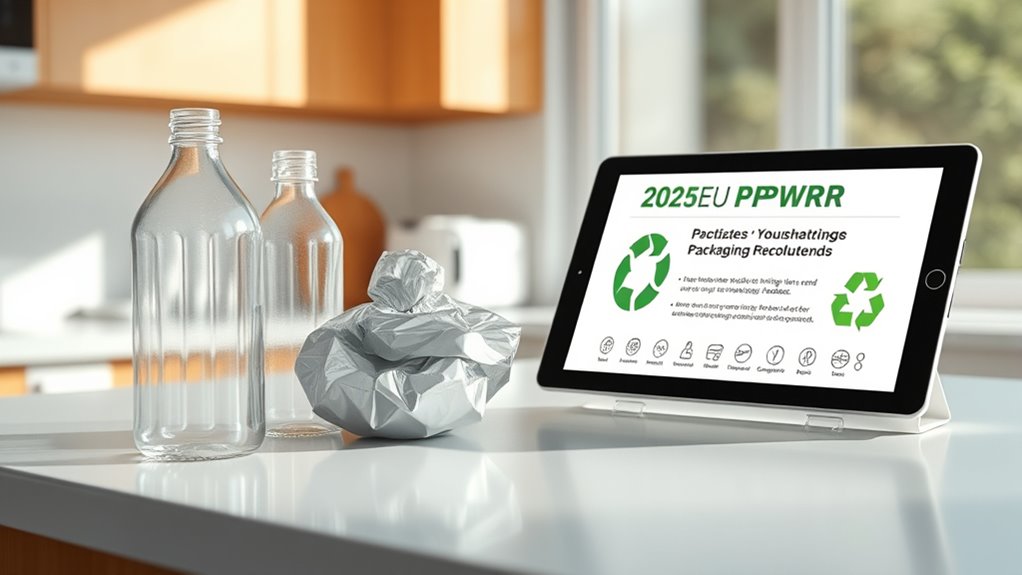

The 2025 EU packaging law means you’ll need to pay closer attention to how you sort, dispose of, and buy household packaging. Expect clearer labels, eco-friendly materials, and designs that make recycling easier. You’ll be encouraged to reduce unnecessary packaging and clean recyclables properly. Your role in waste sorting and choosing sustainable products becomes more important. Staying informed will help you adapt quickly and contribute to a greener home environment—learn more about how these changes will affect your everyday routine.
Key Takeaways
- Packaging will incorporate eco-friendly, recyclable materials with clear labels to guide proper disposal at home.
- Consumers are responsible for sorting waste correctly and following new recycling instructions.
- Education campaigns will increase awareness of sustainable packaging and proper waste management practices.
- Manufacturers will reduce packaging size and improve design for easier recycling and less environmental impact.
- Standardized standards will make recycling at home more straightforward, supporting a circular economy and reducing landfill waste.
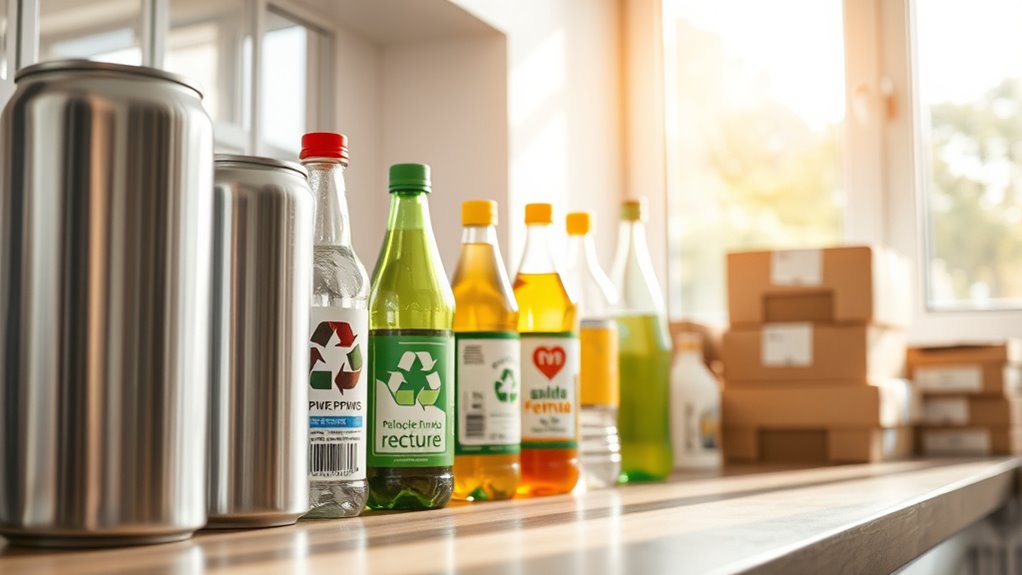
As the EU’s 2025 Packaging and Packaging Waste Regulation (PPWR) approaches, it’s important to understand how it’ll impact your daily life. One key area is how recycling standards will change and what your responsibilities as a consumer will be. This law aims to make packaging more sustainable, which means you’ll notice more eco-friendly materials and clearer labeling on packaging around your home. To comply with new standards, manufacturers will design packaging that’s easier to recycle, and you’ll be encouraged to separate waste more carefully to support recycling efforts.
Your role as a consumer becomes even more crucial under these regulations. You’ll need to pay closer attention to recycling labels, ensuring you dispose of packaging in the correct bin. The law emphasizes that consumers are responsible for sorting waste properly, so recycling standards are met at every step. This means you might see new labeling systems, like color-coded or standardized symbols, to help you identify what can be recycled and what should go into general waste. Following these guidelines ensures that recyclable materials don’t end up in landfills but are processed efficiently and reused.
The PPWR also pushes for increased transparency and education, so you’ll likely encounter campaigns or information at stores or online about correct recycling practices. It’s not just about tossing items into bins — it’s about understanding which materials are recyclable, how to clean or prepare them, and how to reduce packaging waste altogether. Your consumer responsibilities extend beyond just recycling; they include choosing products with minimal or recyclable packaging and supporting brands that prioritize sustainability.
Moreover, the law encourages manufacturers to use less packaging overall, which means you might see fewer unnecessary wrappers or packaging layers. This shift aims to reduce the volume of waste you generate and make recycling easier for everyone. As a result, your purchasing choices can influence packaging design and company practices, reinforcing your role in the sustainability chain. By staying informed about the new recycling standards and embracing your responsibilities, you contribute to a more circular economy where waste is minimized, and resources are reused.
In essence, the 2025 PPWR makes recycling more straightforward and emphasizes your role in ensuring that packaging is disposed of correctly. It’s about creating a shared responsibility—manufacturers design better, more recyclable packaging, and you, as a consumer, help close the loop through responsible waste sorting and conscious buying. Understanding recycling standards and adopting sustainable habits will be crucial in making these regulations effective. Together, these changes aim to make your home more sustainable while reducing the environmental footprint of packaging waste.

Aricsen Disposable 100 Pack 9×6 Inch Takeout Lunch Box Containers with Lids
- Eco-Friendly and Compostable: Made from FSC-certified biodegradable paper
- Heavy-Duty and Versatile: Oil-resistant, waterproof, microwave-safe
- Safe and Sustainable: Free from harmful chemicals, decomposes in months
As an affiliate, we earn on qualifying purchases.
As an affiliate, we earn on qualifying purchases.
Frequently Asked Questions
Will Existing Packaging Need to Be Replaced to Comply?
You likely won’t need to replace existing packaging if it already meets new recycling standards. However, if your current packaging doesn’t comply, you may need to contemplate redesigning it to align with the upcoming recycling standards and the new requirements. Start reviewing your packaging materials now, and plan for redesigns if necessary, to ensure your products stay compliant and environmentally friendly under the 2025 packaging law.
How Will the Law Affect Small Businesses?
As a small business, you’ll face challenges adapting to the new packaging law, but it also encourages packaging innovation. You’ll need to rethink your packaging materials and processes to meet regulations, which may require investment and creativity. While these changes can seem intimidating, embracing innovation can help you stand out and stay compliant, ultimately benefiting your business and the environment. Staying proactive and seeking support can ease this shift.
Are There Penalties for Non-Compliance?
Yes, there are penalties for non-compliance. If you don’t meet recycling infrastructure standards or fail to promote consumer awareness, you could face fines or restrictions. The law emphasizes improving recycling systems and educating consumers, so staying compliant helps avoid penalties. By investing in proper recycling infrastructure and encouraging responsible packaging use, you support a more sustainable environment and guarantee your business remains compliant with the 2025 requirements.
Will Packaging Recycling Costs Increase?
Imagine your wallet doing a sad dance, burdened by rising costs. Yes, packaging recycling costs will likely increase. As companies invest in packaging innovation and expand recycling infrastructure, expenses rise, and those costs trickle down to consumers. You might find your shopping bills climbing, all in the name of greener practices. So, brace yourself—your budget’s about to get a bit more eco-friendly, whether you like it or not.
How Can Consumers Identify Compliant Packaging?
You can identify compliant packaging by checking recycling symbols and packaging labels. Look for clear, standardized recycling icons that indicate how to dispose of the packaging properly. Labels should also provide information about recyclability and materials used. By paying attention to these symbols and labels, you guarantee you’re sorting waste correctly, helping to meet new regulations and support sustainable recycling efforts at home.

Avery® EcoFriendly Recycled Address Labels, 1" x 2-5/8", White, Permanent Label Adhesive, 300 Printable Labels (48860)
- Eco-Friendly Recycled Paper: Made from 100% post-consumer recycled paper
- Chlorine-Free Processing: Processed without chlorine to reduce harmful substances
- Soy-Based Ink Printing: Printed with renewable soy-based ink
As an affiliate, we earn on qualifying purchases.
As an affiliate, we earn on qualifying purchases.
Conclusion
Just like Pandora’s box, the 2025 packaging law opens a new chapter for household waste. By embracing these changes now, you become part of a larger story—one where sustainability isn’t just a dream but a reality. Think of it as your personal hero’s journey, transforming your home into a battleground for a cleaner planet. Together, we can turn the tide and guarantee a brighter, greener future for generations to come.

ANUANT Separate Recycling Waste Bin Bags for Kitchen Office in Home – Large Size Sturdy Double Handles 10 Gallon Recycle Garbage Sorting Bins
- Effective Recycling System: Creates a functional home or office recycling setup
- Durable Construction: Made from waterproof polypropylene for longevity
- Large Capacity: Holds 10 gallons (38 liters) of waste
As an affiliate, we earn on qualifying purchases.
As an affiliate, we earn on qualifying purchases.
sustainable household waste sorting kit
As an affiliate, we earn on qualifying purchases.
As an affiliate, we earn on qualifying purchases.