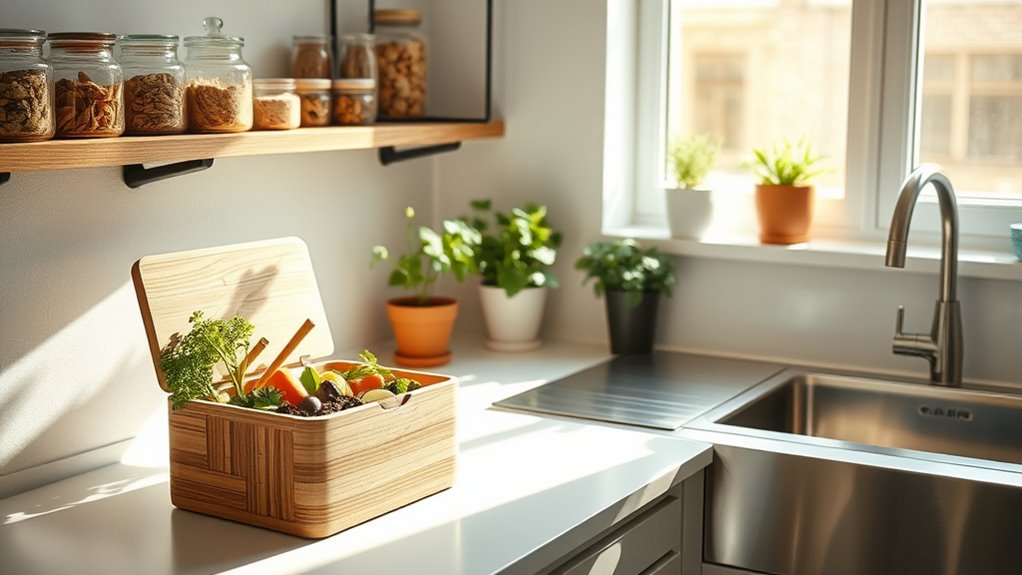

To start composting in your apartment, choose a compact, odor-controlled bin with good ventilation and a tight lid. Fill it with kitchen scraps like fruit peels, vegetable wastes, coffee grounds, and eggshells, avoiding meat and dairy. Keep the bin in a cool, dark spot and regularly turn or mix the contents to promote airflow and prevent odors. Managing moisture levels and adding dry materials keeps odors in check. If you want more tips, stay tuned for helpful guidance.

Get beauty and skincare favorites delivered free — and shop member deals
- Fast, free delivery on millions of items
- Access to Prime Big Deal Days deals on October 6–7
- Prime Video, Amazon Music and more included
Key Takeaways
- Choose a compact, odor-controlled compost bin suitable for indoor use and space constraints.
- Use worm composting with red wigglers, avoiding meat, dairy, and oily foods to prevent odors and pests.
- Place the bin in a cool, dark, well-ventilated spot away from direct sunlight.
- Regularly turn or mix compost, add dry materials, and monitor moisture to prevent odors.
- Use finished compost to nourish indoor or balcony plants, promoting sustainability and healthy growth.

Living in an apartment doesn’t mean you have to miss out on composting. With a little planning and the right setup, you can turn your kitchen scraps into nutrient-rich compost right in your own space. Indoor composting is an excellent way to reduce waste, nourish your plants, and contribute to a more sustainable lifestyle. The first step is choosing the right compost bin. Since living in an apartment usually means limited space and no outdoor yard, you’ll want a compact, odor-controlled bin designed specifically for indoor use. Look for a bin with a tight-fitting lid and good ventilation to prevent odors from escaping and to keep pests away. Some compost bins come with charcoal filters or carbon filters that trap smells effectively, making them perfect for apartment living. When selecting a compost bin, consider its size—small enough to fit comfortably on your countertop or under your sink, but large enough to handle your daily food scraps. Also, check if it has easy-to-clean features and a simple mechanism for removing finished compost.
Once you’ve picked the perfect bin, you’ll want to familiarize yourself with indoor composting methods. Many people opt for worm composting, or vermicomposting, which uses red wigglers to break down organic waste efficiently and quietly. These worms thrive in a controlled environment and handle kitchen scraps like fruit and vegetable peels, coffee grounds, and eggshells. Setting up a worm bin is straightforward: add bedding material such as shredded newspaper or coconut coir, then introduce the worms. Keep the bin in a cool, dark spot, and feed the worms regularly with your kitchen scraps, avoiding meat, dairy, and oily foods, which can cause odors and attract pests. Additionally, understanding the importance of high-quality compost helps ensure your indoor composting efforts produce valuable soil for your plants.
Managing your compost bin properly is key to successful indoor composting. Regularly turn or mix the contents to aerate the compost and prevent odor buildup. If you notice any smell, it usually means the compost is too wet or compacted; adding dry materials like shredded paper or leaves can help balance moisture and airflow. As the compost matures, you’ll see it transform into dark, crumbly soil that can be used to nourish your indoor plants or balcony garden.
Frequently Asked Questions
Can Composting Cause Bad Odors in My Apartment?
Yes, composting can cause bad odors in your apartment if you don’t practice proper odor control. To prevent this, make sure your compost bin has a tight-fitting lid and is regularly emptied or rotated. Place the bin in a well-ventilated area away from living spaces, like near a window or balcony. Using compostable liners and adding dry materials like shredded paper also helps minimize odors and keeps your apartment smelling fresh.
How Often Should I Empty My Compost Bin?
Empty your compost bin when it’s about three-quarters full, like a balloon ready to pop. Regular compost bin maintenance guarantees odors and pests. Stick to a consistent composting schedule—usually every one to two weeks—so your bin remains fresh and functional. This routine helps keep your apartment smelling clean and ensures your composting efforts stay effective and enjoyable.
Is Composting Safe for Allergies or Asthma?
Composting can be safe for allergies or asthma if you take proper precautions. You should maintain good indoor air quality by ensuring proper ventilation and avoiding excess moisture, which helps prevent mold growth. Use sealed bins and turn your compost regularly to prevent mold and dust. Always wash your hands afterward, and consider using allergy-friendly compost materials. This way, you minimize health risks and enjoy the benefits of composting safely.
What Should I Do if Pests Are Attracted to My Compost?
If pests are drawn to your compost, don’t let your efforts turn into a bug banquet. First, tighten your pest prevention strategies by covering food scraps and avoiding meat or dairy. Then, check your compost bin placement—keep it away from your apartment’s entry points and seal any gaps. Regularly turning the compost also helps, as it discourages pests and keeps everything aerated, ensuring your compost remains a healthy, pest-free environment.
Can I Compost in a Small Apartment Without a Balcony?
Yes, you can do indoor composting in a small apartment without a balcony. Use a compact, odor-controlled bin like a worm bin or a countertop compost pail designed for apartment composting. Place it in your kitchen or laundry area, ensuring good airflow and regular maintenance. This way, you can enjoy the benefits of composting without worrying about space or pests, making your apartment eco-friendly and sustainable.
Conclusion
Starting composting in your apartment is like planting a seed of sustainability that blooms into a greener future. With a little effort, you turn kitchen scraps into nourishing soil, transforming your space into an eco-friendly oasis. Remember, every small step you take adds up—like drops in an ocean—creating ripples of positive change. So, embrace composting as your personal act of environmental kindness, and watch how even tiny efforts can grow into a mighty wave of impact.
Fall Picks
fall essentials
As an affiliate, we earn on qualifying purchases.