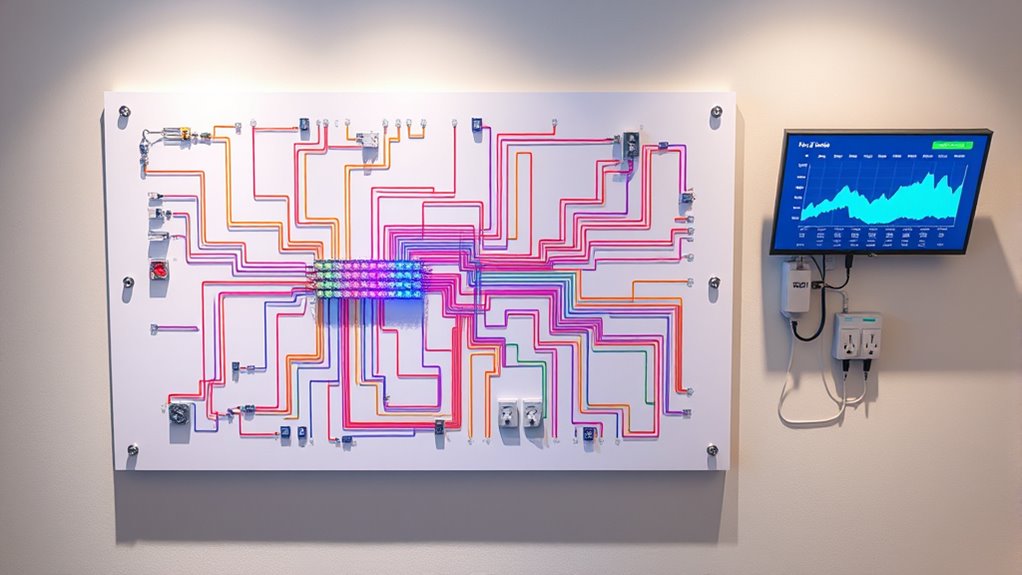

To map your home energy use, start by evaluating which areas and appliances consume the most power. Use monitoring tools or smart meters to gather real-time data on your energy flow. Check your insulation quality and identify any drafts or weak spots. Assess appliance efficiency and habits, like running full loads or unplugging unused devices. Ongoing adjustments based on this information can help you save money and reduce your environmental impact—keep exploring to learn more ways to optimize your home.
Key Takeaways
- Conduct an energy audit to identify consumption hotspots and inefficient systems in your home.
- Use smart meters or energy monitors to track real-time usage and pinpoint high-energy appliances.
- Assess insulation quality and identify areas where heat loss or gain occurs for targeted improvements.
- Analyze appliance habits and timing to optimize energy use during off-peak hours.
- Incorporate efficient design principles and ongoing monitoring to continuously improve your home’s energy performance.
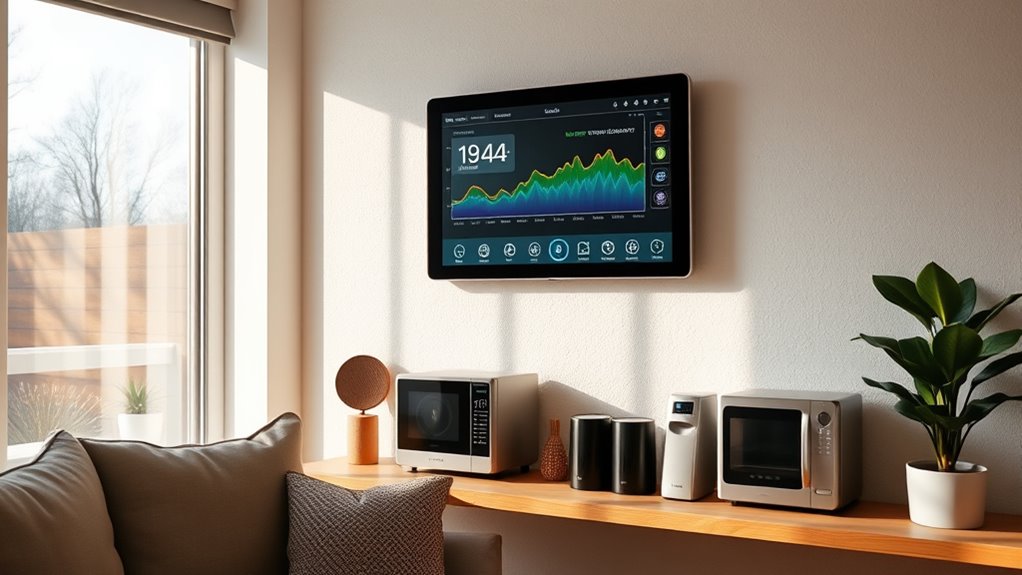
Understanding how energy flows through your home is the first step toward reducing your utility bills and minimizing your environmental impact. When you start mapping your home energy use, you gain valuable insight into where your energy is coming from, how it’s being used, and where you might be wasting it. One of the most critical factors in this process is insulation efficiency. Proper insulation ensures that your home retains heat during winter and keeps it out during summer, reducing the workload on your heating and cooling systems. If your insulation is outdated or inadequate, it’s likely causing your appliances—like your furnace, air conditioner, and fans—to work harder than necessary. By pinpointing areas with poor insulation, you can make targeted upgrades that improve overall energy flow, making your home more comfortable and less expensive to run.
Next, you’ll want to look closely at appliance consumption. Every device in your home consumes a different amount of energy, and some are more efficient than others. Start by identifying which appliances are your biggest energy hogs—these might include refrigerators, water heaters, or older HVAC units. Once you know where most of your energy is going, you can evaluate whether replacing these appliances with energy-efficient models might be worthwhile. Many modern appliances are designed to consume less power without sacrificing performance, which can make a significant difference over time. Additionally, becoming aware of how and when you use appliances helps you develop habits that cut down unnecessary consumption. For instance, unplugging devices when they’re not in use or running dishwashers and laundry machines only when full can lead to noticeable savings.
Tracking your energy use also involves observing patterns and identifying peak consumption times. This can help you adjust your habits, like running heavy appliances during off-peak hours if your utility offers time-of-use rates. As you map out your energy flow, consider installing smart meters or energy monitoring systems. These tools provide real-time data, making it easier to see exactly how much energy each part of your home consumes. This visibility enables you to make informed decisions about upgrades or behavioral changes that improve insulation efficiency and reduce appliance consumption. Incorporating efficient home design principles can further optimize your energy flow and reduce waste. Over time, you’ll develop a clearer picture of your home’s energy profile, allowing you to take targeted actions that save money and help the environment. Remember, understanding your home’s energy flow is an ongoing process, but it’s a crucial step toward creating a more efficient, cost-effective, and sustainable living space.

HP LaserJet Pro MFP 3101sdw Wireless All-in-One Laser Printer, Office Printer, Duplex, Best-for-Small Teams (9D2X4F)
FROM AMERICA'S MOST TRUSTED PRINTER BRAND – Perfect for small teams printing professional-quality black-and-white documents and reports. Print...
As an affiliate, we earn on qualifying purchases.
Frequently Asked Questions
How Often Should I Review My Home Energy Map?
You should review your home energy map at least once every six months. Regular reviews help you spot changes in your homeowner habits that impact energy savings. By staying proactive, you can identify areas where you might improve efficiency or adjust your energy use. Keeping an eye on your energy map ensures you maximize savings and maintain a suitable energy-efficient home, ultimately reducing costs and environmental impact.
What Tools Are Best for Tracking Energy Use?
Did you know that homes with energy monitoring save up to 15% on their bills? For tracking your energy use, smart meters are your best tools. They provide real-time data, helping you identify high consumption areas. You can also use energy monitoring devices that link to smartphones, giving you detailed insights. These tools make it easy to stay on top of your energy habits and cut costs effectively.
Can Mapping Energy Use Improve Home Resale Value?
Mapping your energy use can definitely boost your property value by highlighting your home’s energy efficiency. Buyers appreciate lower utility costs and eco-friendly features, making your home more attractive. When you show potential buyers you’ve actively improved energy efficiency through detailed energy mapping, it demonstrates a commitment to sustainability. This can set your property apart, increase its resale value, and even justify a higher asking price, making your investment worthwhile.
How Do Seasonal Changes Affect My Energy Map?
Seasonal fluctuations substantially impact your energy map by altering your energy consumption patterns throughout the year. During winter, you might see increased heating use, while summer could mean higher cooling needs. These changes make your energy map more dynamic, helping you identify periods of high and low consumption. By understanding these seasonal effects, you can better plan energy-saving strategies, optimize your usage, and reduce costs year-round.
Is Professional Help Necessary for Accurate Mapping?
No, professional help isn’t always essential for accurate mapping; a DIY assessment can give you a good starting point. However, for the most precise results, especially if you notice significant energy inefficiencies, a professional analysis is recommended. They can identify hidden issues and provide tailored solutions. Combining your efforts with professional insights ensures you get an accurate picture of your energy use and how to improve it effectively.
Canon imageCLASS MF465dw II - Monochrome Wireless Duplex Laser Printer with Print, Copy, Scan, Fax, Expandable Paper Capacity and 3 Year Limited Warranty, 42 PPM
Monochrome Wireless, Duplex 4-in-1: Print, Scan, Copy, Fax
As an affiliate, we earn on qualifying purchases.
Conclusion
Now that you’ve started mapping your home’s energy use, the real surprises are just around the corner. Will you uncover hidden energy drains or discover simple ways to cut costs? The next step could transform your home’s efficiency—and your wallet. Keep exploring, stay curious, and get ready to reveal secrets that might change how you power your home forever. The most surprising insights are waiting to be revealed—are you ready to find out what they are?

Brother MFC-L2820DW Wireless Compact Monochrome All-in-One Laser Printer with Copy, Scan and Fax, Duplex, Black & White | Includes Refresh Subscription Trial(1), Works with Alexa
BEST FOR SMALL OFFICES – Combining space-saving efficiency and premium monochrome (black & white) print quality with affordability,...
As an affiliate, we earn on qualifying purchases.

Brother DCP-L2640DW Wireless Compact Monochrome Multi-Function Laser Printer with Copy and Scan, Duplex, Mobile, Black & White | Includes Refresh Subscription Trial(1), Works with Alexa
BEST FOR SMALL BUSINESSES – Engineered for extraordinary productivity, the Brother DCP-L2640DW Monochrome (Black & White) 3-in-1 combines...
As an affiliate, we earn on qualifying purchases.