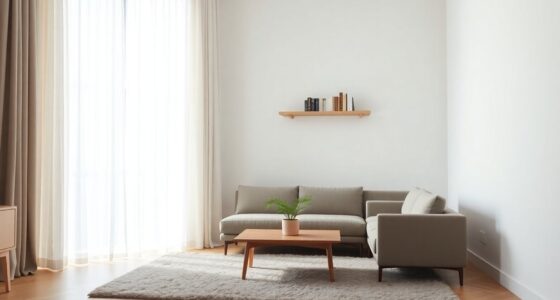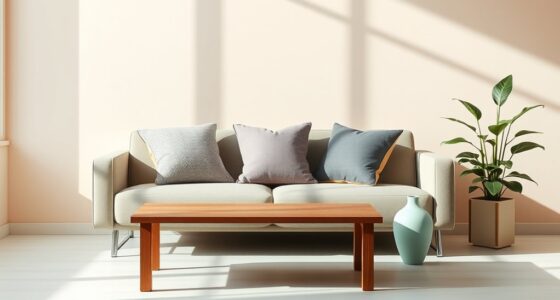

Wabi-sabi and minimalism combine to create a space that values natural imperfections, simple lines, and authentic materials. You’ll find beauty in irregular textures, handmade objects, and aged finishes that tell a story. By stripping away clutter and focusing on meaningful details, your environment becomes calming and genuine. Embracing this blend encourages mindfulness and deeper appreciation for each piece. If you keep exploring, you’ll discover how to bring this harmonious balance into your own surroundings.
Key Takeaways
- Wabi-sabi and minimalism together emphasize beauty in imperfections and simplicity, creating tranquil, authentic spaces.
- Incorporate natural, handcrafted materials with visible irregularities to highlight uniqueness and aged character.
- Focus on uncluttered environments with clean lines and open spaces that foster mindfulness and calmness.
- Celebrate asymmetry, textures, and natural flaws as expressions of craftsmanship and authenticity.
- Use minimal decor to accentuate meaningful, imperfect elements that tell a story and evoke serenity.
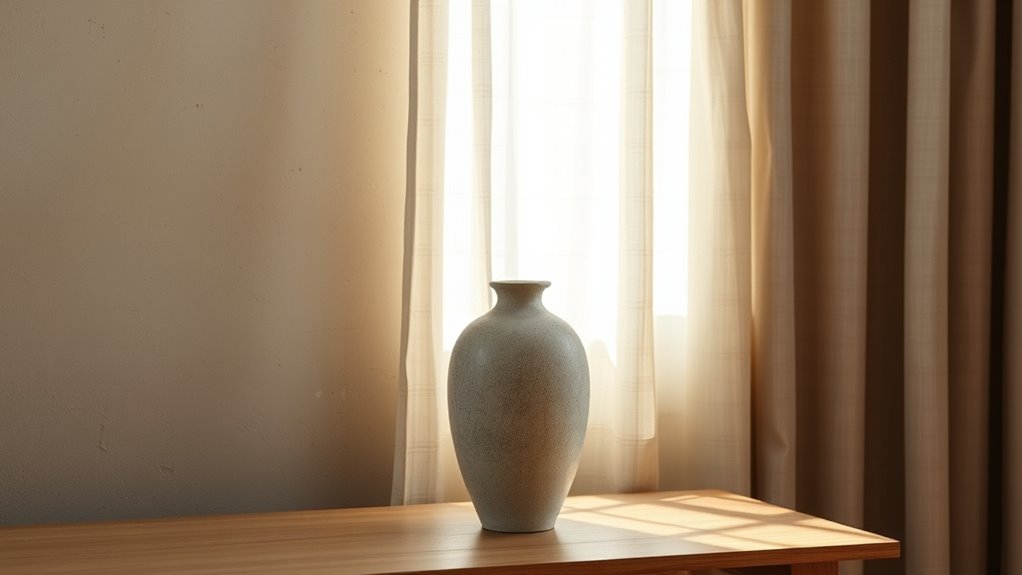
When you combine the philosophy of wabi-sabi with minimalism, you discover a way to find beauty in imperfection and simplicity. This approach encourages you to embrace the natural, unrefined aspects of life and design, shifting your focus from excess to what truly matters. Instead of striving for flawless symmetry or ornate details, you learn to appreciate the charm found in imperfections—those small flaws that tell a story. Imperfection appreciation becomes a central theme, allowing you to see the unique character in each object or space, rather than dismissing it as flawed. This mindset fosters a sense of authenticity and contentment, reminding you that beauty doesn’t have to be pristine or perfect to be meaningful. Incorporating diverse and creative planters into your environment can further enhance this aesthetic, highlighting the beauty of natural irregularities and handcrafted textures.
Embrace beauty in imperfections and simplicity to find authentic, meaningful spaces and moments.
Minimalism supports this philosophy by stripping away unnecessary clutter and emphasizing clean lines, open spaces, and functional design. When you adopt a minimalist aesthetic, you create environments that are calm, uncluttered, and intentional. The result is an understated elegance that’s subtle yet powerful. There’s a quiet confidence in simplicity, where every piece serves a purpose and adds value. This understated elegance isn’t about ostentation; it’s about subtlety and restraint, allowing the true essence of each object and space to shine through. When clutter is minimized, your surroundings become more than just visually appealing—they become a sanctuary for mindfulness and clarity.
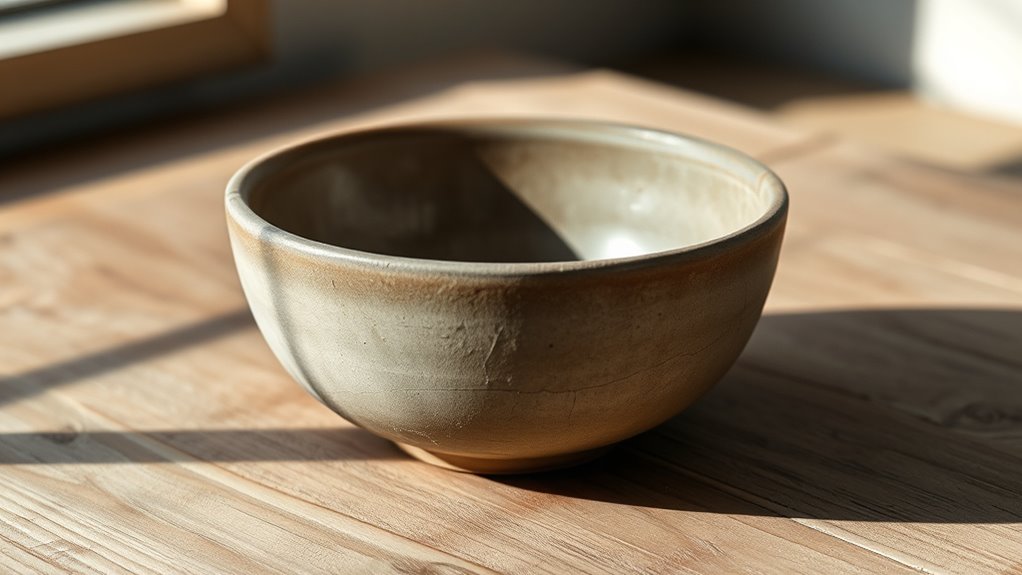
Incorporating wabi-sabi into your minimalist lifestyle means valuing the imperfect and transient nature of things. You might choose handcrafted ceramics with uneven glazes or furniture with visible grain and slight irregularities. These imperfections aren’t flaws—they’re evidence of craftsmanship and uniqueness. By appreciating these details, you foster a deeper connection to your belongings and surroundings. This perspective encourages you to slow down and notice the beauty in the everyday, transforming mundane objects into meaningful symbols of imperfection and resilience. It’s about seeing elegance in the unassuming and embracing the natural aging process of materials, rather than fighting against it.
Together, wabi-sabi and minimalism guide you toward a more mindful way of living and decorating. They teach you to value simplicity, authenticity, and imperfection, creating a space that feels both serene and genuine. As you incorporate these principles, you’ll find that true beauty lies not in perfection or excess, but in the honest, understated elegance of things as they are. This harmony between simplicity and imperfection nurtures a sense of peace and appreciation that can transform your environment and mindset alike.
Top picks for "wabi sabi meet"
Open Amazon search results for this keyword.
As an affiliate, we earn on qualifying purchases.
Frequently Asked Questions
How Can I Incorporate Wabi-Sabi Into a Small Living Space?
To incorporate wabi-sabi into your small living space, embrace zen simplicity by decluttering and choosing natural textures like wood, linen, and stone. Keep your decor minimal, focusing on imperfect, aged, or handcrafted items that evoke authenticity. Use muted, earthy tones to create a calming atmosphere. By highlighting the beauty in imperfection and valuing simplicity, you’ll cultivate a serene, wabi-sabi-inspired environment even in limited space.
What Are Common Materials Used in Minimalist Wabi-Sabi Decor?
You’ll find ceramic textures and natural fibers are key in minimalist wabi-sabi decor. Use earthy ceramics for pottery or accent pieces, embracing their imperfect, organic shapes. Incorporate natural fibers like linen, jute, or hemp in textiles and furniture to add warmth and authenticity. These materials highlight simplicity, imperfection, and nature, helping you create a serene space that balances minimalism with the beauty of wabi-sabi’s raw, organic feel.
How Do I Balance Imperfection With Modern Aesthetics?
You balance imperfection aesthetics with modern contrast by embracing raw, textured materials that highlight imperfections, creating a sense of authenticity. Incorporate sleek, clean-lined furniture to anchor the space in modern aesthetics while allowing imperfect, natural elements like weathered wood or handmade ceramics to stand out. Keep color palettes simple, and focus on subtle contrasts. This blend enhances your space’s unique character while maintaining a minimalist, contemporary vibe.
Can Wabi-Sabi Principles Apply to Digital or Virtual Spaces?
Yes, you can apply wabi-sabi principles to digital and virtual spaces. Focus on embracing imperfections and authenticity in your digital aesthetics by intentionally incorporating raw, unpolished visuals or authentic content. This enhances virtual authenticity, creating a more genuine connection. By prioritizing simplicity, natural elements, and accepting flaws, you foster a space that feels warm, real, and beautifully imperfect, aligning with wabi-sabi’s timeless philosophy.
What Are Simple Steps to Start Embracing Wabi-Sabi Minimalism?
They say, “Less is more,” and to start embracing wabi-sabi minimalism, focus on finding tranquility by decluttering your space and appreciating natural imperfections. Begin small by selecting meaningful items that evoke authenticity and let go of perfection. Embrace imperfection in your surroundings and mindset, allowing you to cultivate a sense of calm. Practice mindfulness daily, and gradually, you’ll discover the beauty in simplicity and the serenity it brings.
Conclusion
As you embrace wabi-sabi meets minimalism, you’ll find your space transforming into a serene sanctuary so pure, it feels like stepping into a tranquil forest at dawn—where imperfections bloom like wildflowers and simplicity radiates like sunlight through a clear window. Your life becomes a masterpiece of subtle beauty, where every crack and flaw tells a story, and clutter vanishes like morning mist. It’s not just a style; it’s a revolution of peace, waiting to sweep over you.