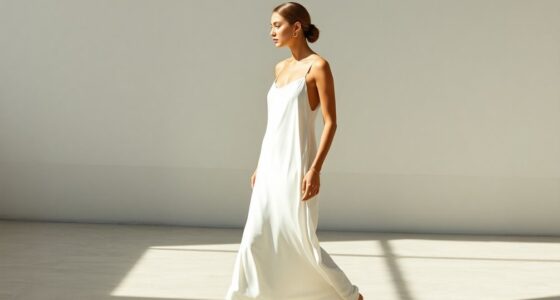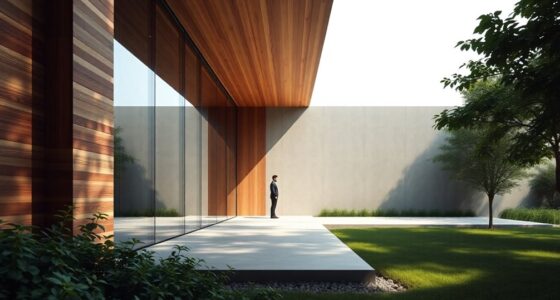

To master minimalist photography composition, focus on emphasizing your subject by simplifying the scene and using clean, uncluttered backgrounds. Apply the rule of thirds to create balanced framing, and incorporate negative space to give your subject room to breathe. Use leading lines and unique angles to guide viewers’ eyes directly to the main element. Every detail should serve a purpose—if you keep these basics in mind, you’ll discover ways to craft striking, minimalist images that communicate clearly.
Key Takeaways
- Use negative space to create visual rest and emphasize the subject.
- Apply the rule of thirds to achieve balanced and engaging compositions.
- Simplify scenes by removing clutter and focusing on a single, impactful element.
- Incorporate bold or contrasting colors to guide the viewer’s eye and evoke mood.
- Experiment with angles and perspectives to add interest while maintaining minimalism.

Have you ever wondered how simplicity can create powerful images? In minimalist photography, the key lies in stripping down your scene to its essentials, allowing your subject to stand out against a clean, uncluttered background. To achieve this, understanding composition basics is essential, especially when considering color theory and camera settings. When you choose to emphasize a single element, using color intentionally can evoke mood and guide the viewer’s eye. For example, a bold red object against a neutral background instantly draws attention, leveraging the psychology of color to amplify the image’s impact. Applying color theory helps you select complementary or contrasting hues that enhance your subject without overwhelming the scene. Additionally, studying visual storytelling can help you craft images that communicate a clear and compelling message with minimal elements. Your camera settings also play an important role in creating minimalist compositions. Start by using a wide aperture to blur the background with a shallow depth of field, which isolates your subject and minimizes distractions. Lower ISO settings ensure your image remains clean and free of noise, preserving the purity of your minimalist aesthetic. Adjust your shutter speed to freeze motion or introduce slight blur, depending on the mood you want to convey. For instance, a fast shutter speed captures sharp, crisp details, emphasizing simplicity, while a slower one can add a sense of calm or motion. Remember, the goal is to keep the image simple, so be deliberate with your settings to avoid cluttered or overly busy scenes. Composition in minimalist photography often relies on the rule of thirds, leading lines, or negative space to create a balanced and harmonious image. When you frame your shot, think about how empty space can serve as a visual rest, highlighting your subject even more effectively. Experiment with different angles and perspectives—sometimes a slight change can transform a cluttered scene into a striking minimalist shot. Keep in mind that less is more; every element in your frame should serve a purpose, contributing to the overall story or mood you’re trying to communicate.
Frequently Asked Questions
How Do I Choose the Right Subject for Minimalist Photography?
To choose the right subject for minimalist photography, look for simple, striking elements that create strong visual balance. Focus on objects with clear lines, shapes, or colors that complement each other through color harmony. Avoid clutter and distractions, opting instead for subjects that evoke emotion or curiosity. Your goal is to highlight the subject’s essence, making it stand out against a clean background, ensuring a harmonious and balanced composition.
What Camera Settings Are Best for Minimalist Images?
You should set your camera to a low ISO to reduce noise, use a narrow aperture like f/8 or higher for sharpness, and choose a focal length that emphasizes simplicity—perhaps a longer lens to isolate your subject. Pay attention to color contrast to make your subject pop, and experiment with focal length to create a sense of depth. These settings help you craft striking minimalist images that draw the viewer’s eye effortlessly.
How Can I Effectively Use Negative Space?
You can effectively use negative space by placing your main subject off-center, creating a sense of balance in your composition. Emphasize negative space around your subject to draw viewers’ attention and evoke simplicity. Keep the background uncluttered, and use ample negative space to highlight your focal point. This approach enhances composition balance, making your minimalist images feel more harmonious and visually impactful.
What Are Common Mistakes to Avoid in Minimalist Composition?
You should avoid cluttering your frame, as it distracts from your focal point and disrupts color harmony. Don’t ignore the importance of balance; too much negative space can feel empty, but too little can overwhelm. Keep your focal point clear and intentional, ensuring it stands out. Steer clear of overly busy backgrounds or too many contrasting colors, which undermine the simplicity and harmony that make minimalist composition effective.
How Does Lighting Influence Minimalist Photography?
Lighting is essential in minimalist photography, like a spotlight highlighting a single star in a dark sky. You’ll notice that light intensity can create stark contrasts, while shadow play adds depth and mood. For example, a soft glow can emphasize serenity, whereas harsh light sharpens focus. You control the scene’s simplicity and emotion through your lighting choices, guiding the viewer’s eye and enhancing the overall impact of your minimalist shot.
Conclusion
As you embrace minimalist photography, remember that simplicity is your guiding star, like a gentle breeze clearing away clutter. Focus on clean lines, negative space, and a single subject to make your images breathe. With each shot, you’re sculpting visual poetry from the quiet moments, turning ordinary scenes into extraordinary stories. Keep experimenting, and let your compositions speak louder than words—because in minimalism, less truly is more.