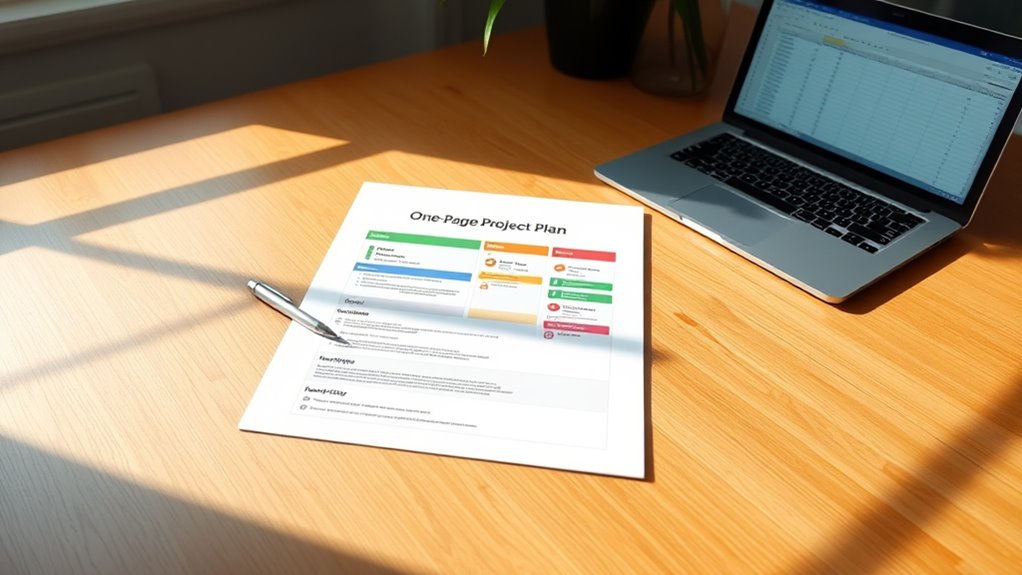

A one-page project plan helps you simplify complex projects by consolidating key details into a clear, easy-to-understand document. It keeps everyone on the same page, improves stakeholder communication, and enables you to prioritize tasks effectively. This streamlined approach promotes early risk identification, encourages ongoing collaboration, and prevents scope creep. Staying focused on the big picture minimizes overwhelm and keeps your project on track—continue to explore, and you’ll discover how to make it even more effective.
Key Takeaways
- The One-Page Project Plan consolidates essential project details into a single sheet for clarity and ease of management.
- It facilitates early risk identification and ongoing risk assessment to prevent surprises and enable contingency planning.
- The plan clarifies project objectives, scope, and stakeholder expectations, enhancing communication and alignment.
- It helps prioritize tasks, manage scope, and allocate resources effectively, ensuring realistic project planning.
- The plan promotes transparency and accountability by providing a quick overview of progress, roles, and next steps.
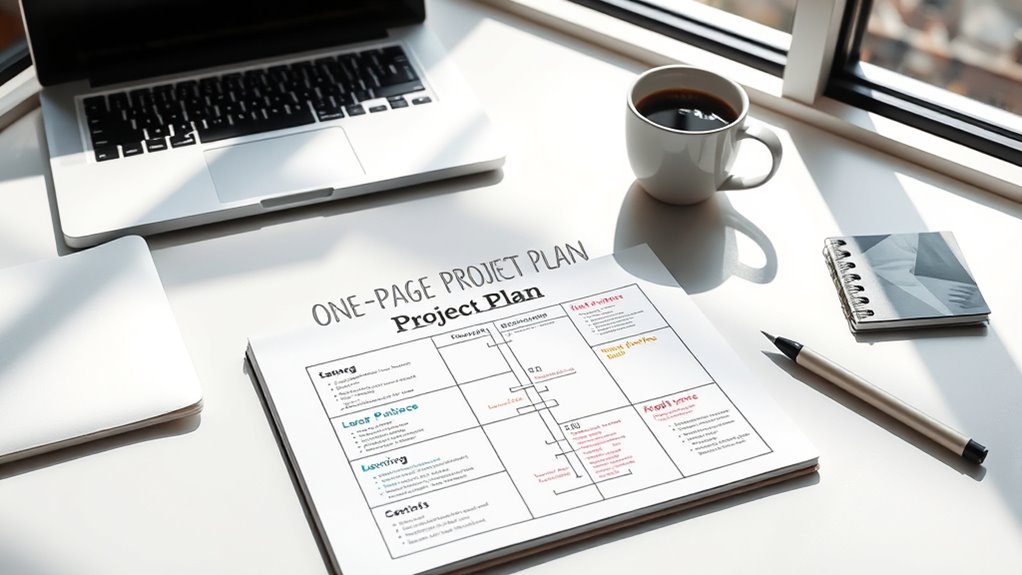
Have you ever felt overwhelmed trying to manage a complex project with endless details and documentation? It’s easy to get bogged down in the minutiae, losing sight of the bigger picture. That’s where the One-Page Project Plan comes in. This streamlined approach helps you focus on what truly matters, condensing all essential information onto a single, easy-to-understand sheet. It’s a powerful tool for simplifying project management and maintaining clarity throughout the project lifecycle.
One of the key advantages of the One-Page Project Plan is its ability to promote effective risk management. Instead of letting potential issues sneak in unnoticed, this plan forces you to identify risks early. You can document possible obstacles, assess their impact, and develop contingency strategies right upfront. By keeping this information front and center, you become more proactive, reducing the chances of surprises derailing your progress. It encourages ongoing risk assessment, so you’re always aware of new threats and can respond swiftly.
Stakeholder engagement is another critical aspect that the One-Page Project Plan emphasizes. When you create this plan, you’re compelled to clarify your project’s purpose, objectives, and scope right from the start. Communicating this concisely helps you align expectations with stakeholders, keeping everyone on the same page. As you update the plan, involving key stakeholders ensures their input is integrated, fostering ownership and support. This engagement minimizes misunderstandings and builds trust, making it easier to navigate challenges and make decisions collectively.
Using this plan also enhances your ability to prioritize tasks. Since it distills your project down to its core components, you quickly see what must be done first and what can wait. This clarity helps you allocate resources more effectively and avoid wasting time on less critical activities. As your project progresses, the plan serves as a reference point, helping you stay focused and avoid scope creep. Additionally, understanding project scope is vital for maintaining a realistic and achievable plan.
Moreover, the simplicity of the One-Page Project Plan encourages transparency. It’s easy to share with team members, clients, or sponsors, who can quickly grasp the project’s status and next steps. This transparency fosters accountability and keeps everyone engaged and informed. When everyone understands their role and the project’s overall direction, collaboration becomes smoother, and obstacles are addressed more efficiently.
As an affiliate, we earn on qualifying purchases.
Frequently Asked Questions
How Often Should the Plan Be Reviewed and Updated?
You should review the plan regularly, ideally every few weeks or at key project milestones, to guarantee it stays aligned with your goals. The update process involves evaluating progress, identifying any changes needed, and adjusting tasks accordingly. By maintaining a consistent review frequency, you stay proactive, avoid surprises, and keep your project on track. Regular updates help you adapt quickly and ensure everyone remains focused on the same objectives.
Can the Plan Be Adapted for Large or Complex Projects?
Yes, you can adapt the plan for large or complex projects by incorporating scaling strategies and complexity management techniques. Break down the project into manageable sections, use layered or nested plans, and prioritize key milestones. This approach helps maintain clarity, ensures focus, and allows you to handle complexity effectively. Continuously review and adjust the plan as needed, guaranteeing it remains relevant and practical for the project’s evolving scope.
What Tools or Software Can Facilitate Creating the Plan?
You can use digital templates and project management software like Trello, Asana, or Monday.com to create your plan efficiently. These tools offer customizable templates, real-time collaboration, and task tracking, making it easier to organize complex projects on a single page. They help you visualize your plan, assign responsibilities, and monitor progress, streamlining your project management process and ensuring your plan stays clear and actionable throughout the project lifecycle.
How to Handle Changes or Unexpected Obstacles in the Plan?
When faced with changes or unexpected obstacles, you should implement contingency planning and risk management strategies. Identify potential risks early and develop backup plans to address them swiftly. Regularly review your plan, stay flexible, and adapt quickly as new issues arise. Communicate changes clearly with your team, and prioritize the most critical tasks to keep your project on track despite unforeseen challenges.
Is Training Required to Effectively Implement the One-Page Project Plan?
Training isn’t strictly required to implement the One-Page Project Plan, but it’s highly recommended for effective skill development. With proper training, you’ll understand the plan’s components, improve your ability to adapt to changes, and guarantee everyone stays aligned. Investing in skill development helps you maximize the plan’s benefits, making your project management more efficient and responsive. Ultimately, training boosts your confidence and success in applying the plan consistently.
As an affiliate, we earn on qualifying purchases.
Conclusion
By embracing the one-page project plan, you turn complexity into clarity, transforming chaos into control. It’s your map through the maze, guiding every step with purpose and precision. Think of it as your compass—steady, reliable, essential. With this simple yet powerful tool in hand, you’ll navigate projects confidently, knowing that the path to success is just one page away. After all, clarity isn’t just a goal; it’s the key to revealing your project’s full potential.
As an affiliate, we earn on qualifying purchases.
project task prioritization planner
As an affiliate, we earn on qualifying purchases.
As an affiliate, we earn on qualifying purchases.