
TL;DR

Get beauty and skincare favorites delivered free with Prime
- Fast, free delivery on millions of items
- Prime Video, Amazon Music and more included
- Member-only deals all year
Marie Claire published a guide recommending five women’s eau de toilettes for readers who prefer a softer fragrance. The article describes EDTs as typically containing less perfume oil than stronger fragrance concentrations, while noting that wear time and scent experience vary by product and person.
Marie Claire has published a guide to five women’s eau de toilettes, presenting the fragrance type as an option for people who want a softer scent that does not project as strongly as some more concentrated perfumes. The recommendations include fragrances from Chanel, Snif, Diptyque, Miu Miu and Molton Brown; the article is a product roundup, not a new scientific finding or an announcement from the brands.
The guide explains that eau de toilette, commonly shortened to EDT, typically has a perfume-oil concentration of about 5% or 10% and more alcohol than more concentrated fragrance formats. Marie Claire attributes that description to J.J. Vittoria, founder of customizable fragrance brand Olfactory NYC, in a statement previously given to the publication. The article says lower oil content can mean a scent fades sooner, though actual wear depends on the formula and how it performs on an individual’s skin or clothing.
Its five picks are Chanel Chance Eau Tendre, named best overall; Snif Me, the gourmand selection; Diptyque Orphéon, the unisex choice; Miu Miu Rose, the floral pick; and Molton Brown Neon Amber, the amber option. The supplied article text gives more detail about the first three than the latter two, so it does not support a full comparison of all five products’ notes, prices or performance.
Beauty writer Ariel Baker describes Chanel Chance Eau Tendre as a soft, powdery musk that can be layered with other fragrances. The guide says Snif Me combines peach skin, orris and musk and is designed to sit closer to the skin. For Diptyque Orphéon EDT, it highlights green mandarin, juniper berries and cedar, describing the version as fresher than the eau de parfum. Those assessments are the writer’s product impressions, not independently established performance measures.
When a Softer Fragrance Fits
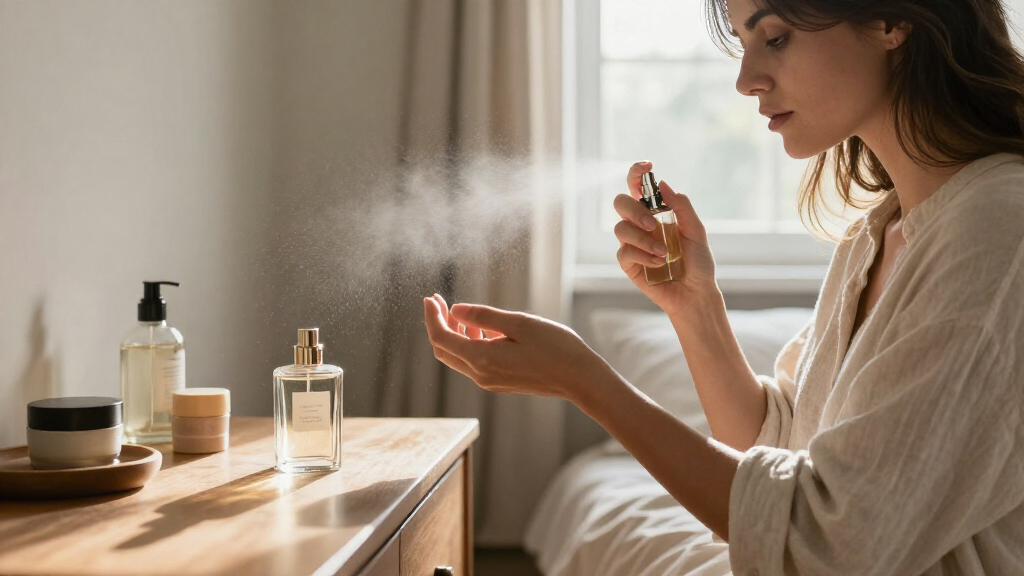
The roundup addresses a practical choice for fragrance shoppers: how noticeable a scent feels, not only which notes it contains. People who prefer a fragrance close to the skin, or want something less assertive for a particular setting, may find EDTs worth trying. Marie Claire’s writer describes wearing a lighter formula during a nighttime routine and says it becomes a skin scent by bedtime.
That experience is personal, not a guarantee. Fragrance perception and longevity can differ between wearers, and a label such as EDT does not by itself establish how subtle a particular product will smell. Readers can use the guide’s categories and note descriptions to narrow their choices, but should treat its rankings as editorial recommendations rather than objective test results or universal endorsements.
Popular right now

Bose QuietComfort Wireless Noise Cancelling Headphones, Sandstone

Shark PowerPro Reveal Plus Cordless Vacuum Cleaner, Charcoal, IZ376H

Shark Clean & Empty Cordless Stick Vacuum with Auto-Empty System, BU3521
As an affiliate, we earn on qualifying purchases.
How EDT Differs From Stronger Formats
The source presents EDT as one point on a fragrance concentration spectrum. In Vittoria’s explanation, EDT formulas typically contain about 5% or 10% perfume oil and more alcohol; the article links lower oil content with less scent remaining on skin over time. It also says an EDT can still contain complex fragrance notes. The supplied material does not give a complete technical comparison with every other fragrance category, so the concentration figures should be read as a general description, not a rule applying identically to every product.
The Marie Claire writer frames the recommendations around subtle wear and personal preference, including bedtime use. The list spans fruity-floral, fruity-musky, fresh-woods, floral and amber categories. Its descriptions combine stated notes, the writer’s impressions and individual wear observations; they do not report controlled comparisons among the fragrances.
“Typically, an eau de toilette has a five percent or 10 percent perfume oil concentration and more alcohol content.”
— J.J. Vittoria, founder of Olfactory NYC, as quoted previously by Marie Claire
What the Product Guide Cannot Establish
The supplied source does not state the article’s publication date, provide complete details for all five recommendations, or document a standardized test of fragrance longevity or projection. It is also unclear from the material whether the listed products or formulations have changed since publication. The guide’s descriptions of performance—including the writer’s reported experience with Diptyque Orphéon—should not be taken as a promise that the same result will occur for every wearer.
The article offers personal and editorial guidance, not evidence that EDTs prevent headaches or are suitable for everyone with fragrance sensitivity. Readers who experience irritation or discomfort from fragrance should avoid relying on concentration labels alone and may choose not to use scented products.
Compare Before Choosing an EDT
The source does not announce a follow-up test or a forthcoming product release. For shoppers, the practical next step is to check current product details with the brands or retailers and, where possible, sample a fragrance before buying. Trying a small amount and allowing time to see how it smells on one’s own skin can help set expectations about notes, projection and wear time.
Any later assessment would need current product information and comparable testing to establish how the five options perform against one another. Until then, the recommendations remain Marie Claire’s editorial picks, and the described scent impressions remain individual observations.
Key Questions
What is an eau de toilette?
Eau de toilette, or EDT, is a fragrance category. Marie Claire quotes J.J. Vittoria saying EDTs typically contain about 5% or 10% perfume oil and more alcohol; formulas can vary.
Which five fragrances does the guide recommend?
The guide lists Chanel Chance Eau Tendre, Snif Me, Diptyque Orphéon, Miu Miu Rose and Molton Brown Neon Amber, each in a different editorial category.
Does an EDT always last less time than other fragrances?
The article says lower oil content can mean a scent fades sooner, but it does not establish a fixed wear time for every EDT. Formula, wearer and application can affect the experience, and the source does not provide standardized comparative testing.
Are the guide’s scent descriptions guaranteed to match my experience?
No. The notes and rankings are useful starting points, but descriptions of how a fragrance smells or lasts include editorial opinions and personal wear observations. Sampling a scent, when available, may help you decide whether it suits your preferences.
Source: marieclaire.com