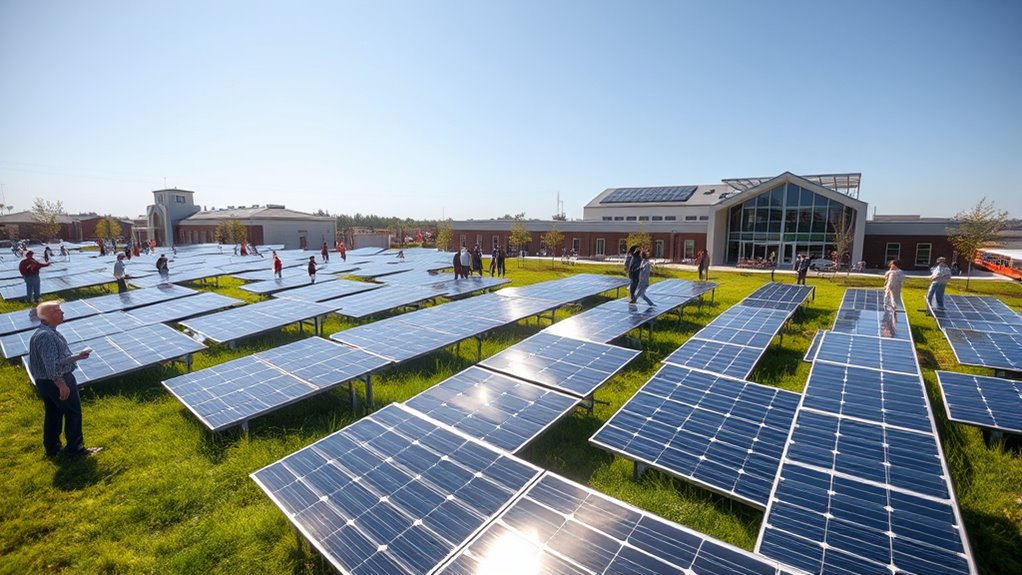

Community solar lets you access renewable energy without installing panels on your roof. You subscribe to a nearby shared solar farm and get credits on your utility bill, reducing your costs. You don’t need upfront investments or maintenance, making it simple and affordable. Utility policies vary, so understanding them can help you maximize benefits. Want to discover how easy it is to join and what you could save? Keep exploring to learn more.
Key Takeaways
- Community solar allows participation in solar energy without installing panels on your property.
- Subscribers buy a share of a shared solar farm, avoiding upfront costs and maintenance.
- Utility policies can affect eligibility, credits, and program limits; review these before joining.
- Credits from the solar farm appear on your utility bill, reducing your overall energy costs.
- Projects are strategically located for maximum sunlight, making solar accessible without roof installation.

Community solar offers a practical way for you to access renewable energy without installing panels on your property. Instead of bearing the costs of individual solar panel pricing or managing your own system, you can subscribe to a shared solar farm nearby. This allows you to enjoy the benefits of solar power without the upfront investment or maintenance responsibilities that come with home solar installations. When contemplating community solar, it’s important to understand how solar panel pricing differs from traditional solar setups. Community solar projects typically eliminate the need for you to pay for or install panels yourself. Instead, you purchase a stake or subscribe to a portion of the solar farm’s output. This makes the costs much more predictable and affordable, often with no large initial investment. As a result, you get access to clean energy at a fraction of the typical solar panel pricing for individual installations.
Another key aspect to evaluate is utility company policies, which greatly influence how easily you can participate in community solar programs. Some utilities actively support and promote these programs, making it straightforward for you to enroll and start benefiting from renewable energy. Others might have restrictions or specific requirements that could complicate your participation. It’s essential to review your utility’s policies on community solar before signing up. This can include understanding how your utility credits your energy bill, whether they offer net metering for community solar, and if there are any caps or limits on participation.
Joining a community solar project is often a simple process. Typically, you sign up through a local provider or a utility-backed program, and your subscription or stake entitles you to a portion of the solar farm’s output. The credits generated are usually reflected in your monthly utility bill, reducing your overall energy costs. Because you’re not installing or maintaining panels yourself, you avoid the high costs associated with solar panel pricing and the logistical hurdles of a rooftop system. Plus, community solar projects are often located in areas with ideal sunlight, which maximizes energy production and savings. Additionally, understanding utility policies is crucial, as they can significantly impact your ability to participate and benefit from such programs.

YOSUDA Magnetic Rowing Machine 350 LB Weight Capacity - Rower Machine for Home Use with LCD Monitor, Tablet Holder and Comfortable Seat Cushion-New Version
Choose YOSUDA: Design and produce top-quality exercise machines for home use for over 20 years. YOSUDA has been...
As an affiliate, we earn on qualifying purchases.
Frequently Asked Questions
How Are Community Solar Programs Regulated Across Different States?
You should know that state regulations heavily influence how community solar programs operate, leading to various program variations across states. Some states have clear policies and incentives, making it easier for you to join, while others have fewer rules, which can complicate participation. By understanding your state’s specific regulations, you can better navigate the options available, ensuring you find a program that suits your energy needs and maximizes benefits.
What Are the Potential Tax Benefits of Community Solar Participation?
By participating in community solar, you can enjoy tax credits and other financial incentives that reduce your overall costs. These tax benefits often include federal investment tax credits and state-specific incentives, which can considerably lower your tax liability. Additionally, some programs offer rebates or credits that boost your savings. Taking advantage of these benefits helps you save money while supporting renewable energy without needing a roof or solar panels on your property.
How Do Billing and Credits Work in Community Solar Programs?
You can expect a straightforward billing process where your utility company issues a single bill that includes your community solar credits. These credits are allocated based on your share of the solar farm’s energy production, reducing your overall bill. Typically, credits appear as a line item on your statement, and you can see how much solar power you’ve contributed to your savings, making the entire process transparent and easy to understand.
Can I Join Multiple Community Solar Projects Simultaneously?
Yes, you can join multiple community solar projects at the same time. This allows you to benefit from different solar farm ownership models and maximize your credits. Keep in mind, project scalability varies; some programs let you subscribe to several farms, while others have limits. Check each project’s rules and your utility’s policies to make certain you can participate in multiple projects without issues.
Are There Any Hidden Fees or Costs Involved?
Did you know nearly 40% of solar subscribers worry about hidden fees? The good news is, most community solar programs prioritize cost transparency. While some providers may have hidden fees, many clearly outline all costs upfront. Always read the contract carefully, ask about any extra charges, and compare plans. By doing so, you avoid surprises and make certain you’re making a smart, cost-effective decision for your energy needs.
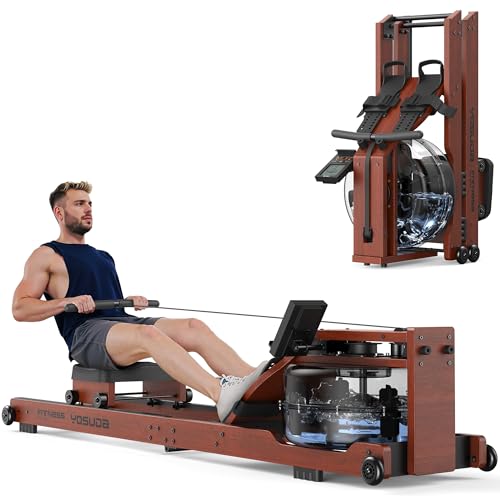
YOSUDA Water Rowing Machines for Home Use- Foldable Rower Machine 400LBS Weight Capacity with Dedicated Monitor & Bluetooth APP, Comfortable Seat
【Choose YOSUDA】 Design and produce top-quality exercise machines for home use for over 20 years. YOSUDA has been...
As an affiliate, we earn on qualifying purchases.
Conclusion
Now you know the basics of community solar—it’s simple, sustainable, and accessible. By joining a community solar project, you can enjoy clean energy without climbing on rooftops or making massive moves. It’s a win-win way to watt your wealth, reduce your reliance, and reflect your responsibility. So, step into the sphere of solar, share in the sunshine, and shine sustainably—because solar success starts with just a small, shared step.

MERACH Water Rowing Machines for Home, Foldable Row Machine with 400LBS Weight Capacity, Dedicated Monitor and Comfortable Seat, Free MERACH App for Immersive Water Rower
180° Foldable Storage: Innovative design allows one-handed folding, with bottom wheels for easy movement and storage, just like...
As an affiliate, we earn on qualifying purchases.

WENOKER Water Rowing Machine for Home Use, Wooden Foldable Rower Machine with Adjustable Monitor & Bluetooth APP, Large Water Tank & Comfortable Seat for Immersive Water Rower, 350LBS Weight Capacity
[Total Body Exercise Rowing] According to scientific reports, rowing machines can work 90% of muscle groups. Combines cardio...
As an affiliate, we earn on qualifying purchases.