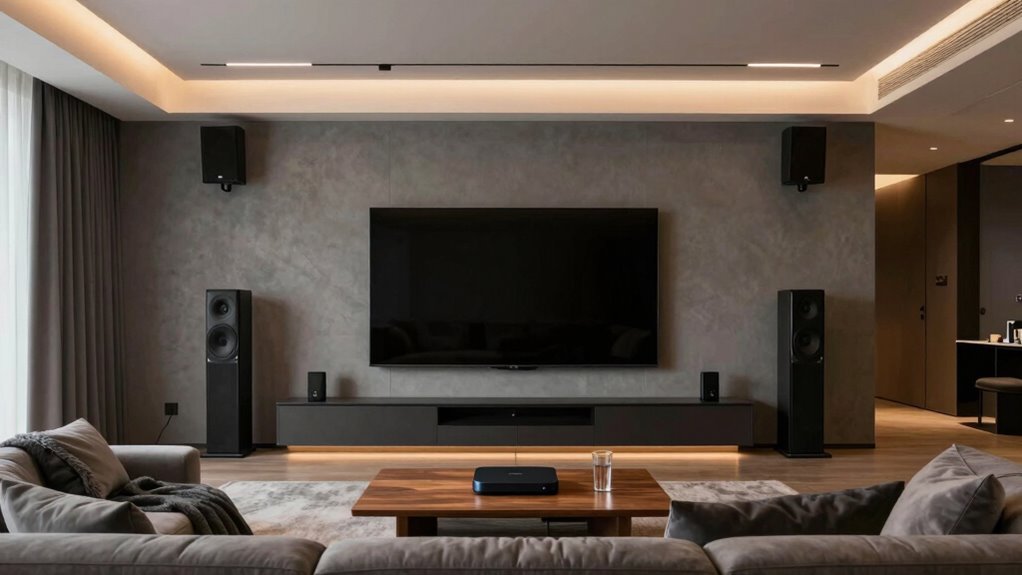

Dolby Atmos makes sound feel like it’s happening all around you, including above, creating a more immersive experience. Instead of traditional channels, it uses sound objects that can move naturally in 3D space, so you hear everything more realistically. You don’t need special equipment, but better setups improve the effect. If you’re curious about how Atmos transforms movies, music, and games and want easy tips to get started, there’s plenty more to discover.

Get beauty and skincare favorites delivered free with Prime
- Fast, free delivery on millions of items
- Prime Video, Amazon Music and more included
- Member-only deals all year
Key Takeaways
- Dolby Atmos adds a 3D layer to sound, making audio feel like it’s surrounding you from above and around.
- Instead of just channels, Atmos uses sound objects that can move freely in space for a more realistic experience.
- You don’t need special skills—just compatible devices and content optimized for Atmos to enjoy immersive sound.
- Proper setup with ceiling or upward-firing speakers enhances the height and spatial effects of Atmos.
- Not all content uses Atmos fully, but when it does, it creates a more lifelike and engaging listening experience.
As an affiliate, we earn on qualifying purchases.
What Is Dolby Atmos and How Does It Differ From Traditional Audio?

Dolby Atmos is a revolutionary audio technology that elevates the listening experience by adding a third dimension to sound. Unlike traditional audio, which relies on speakers arranged around you, Atmos creates a more immersive environment by placing sound objects in a 3D space. This enhances sound quality, making it feel more lifelike and dynamic. Proper speaker placement is key; speakers are positioned not just in front or behind but also above you, allowing sounds to move freely in all directions. This setup produces a richer, more detailed audio experience. With Atmos, you don’t just hear sound—you feel it surrounding you, creating a depth that standard audio setups simply can’t match. This innovative technology is part of a larger trend in digital content exploration, aiming to redefine how we experience sound in various media.
upward firing speakers for Dolby Atmos
As an affiliate, we earn on qualifying purchases.
As an affiliate, we earn on qualifying purchases.
How Does Dolby Atmos Create a 3D Sound Experience?
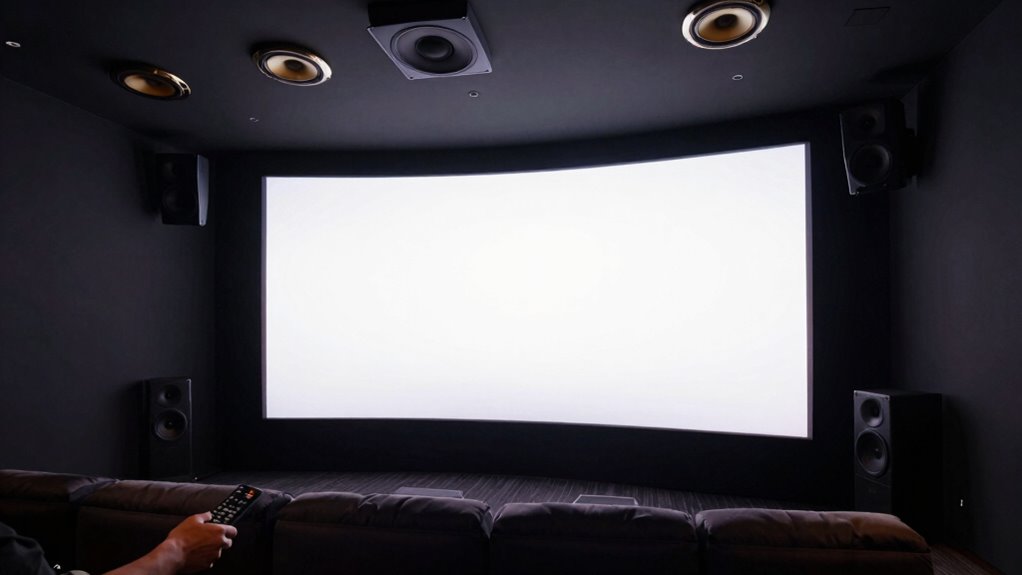
To create a 3D sound experience, Dolby Atmos uses advanced audio object technology that allows individual sounds to be precisely placed and moved in a three-dimensional space. This enhances your spatial perception by making sounds seem to come from specific points around you, not just from left or right speakers. Dolby Atmos layers sounds through complex audio layering, creating a rich, immersive environment. This technology tracks each sound object’s position, enabling it to move naturally in space, whether overhead or around you. Key features include:
- Precise placement of sound objects
- Dynamic movement of audio in 3D space
- Enhanced sense of depth and height
Additionally, effective weight management can help improve overall health, making your listening experience even more enjoyable. Together, these elements deliver a realistic, enveloping audio experience that feels like you’re inside the action. By prioritizing caregiver emotional health, you can enhance your overall well-being, making the enjoyment of immersive audio even more rewarding. The technology behind Dolby Atmos is akin to celebrity fashion, as both require meticulous attention to detail to create an outstanding experience. This precision is similar to how car protection accessories enhance your vehicle’s safety and longevity.
As an affiliate, we earn on qualifying purchases.
Which Devices Support Dolby Atmos?
Sure! Here’s the revised content with the addition based on your directions:
—
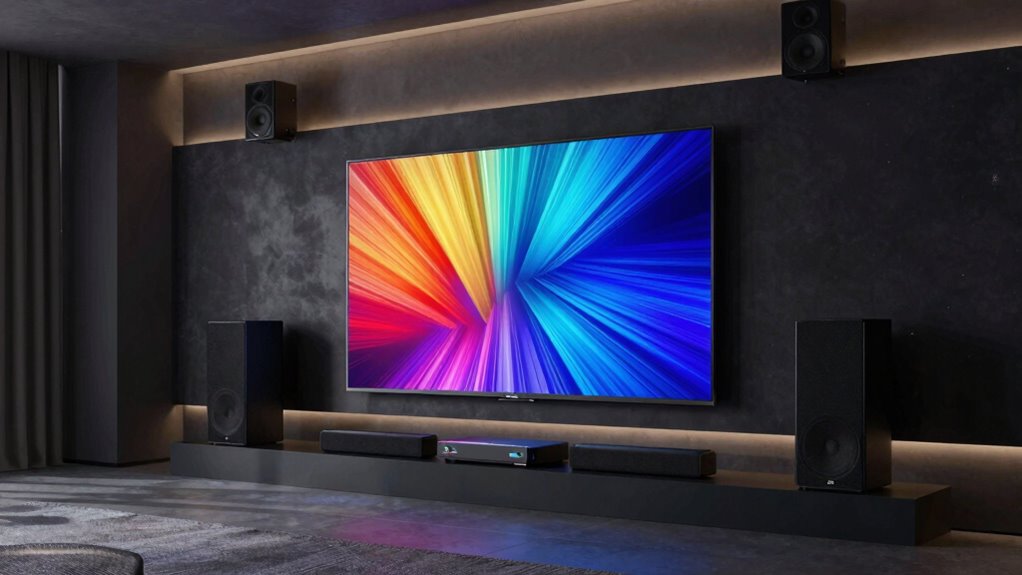
Wondering which devices can bring the immersive sound of Dolby Atmos into your home or on the go? Many modern devices now support Dolby Atmos compatibility, making it easier than ever to enjoy this immersive experience. For home setups, look for Dolby Atmos-enabled soundbars, AV receivers, and home theater systems with built-in support. Smart TVs from brands like LG, Sony, and Samsung often include Dolby Atmos compatibility, allowing seamless device integration with compatible streaming services and devices. Additionally, consider the humidity management of your room to enhance audio clarity and overall performance, as proper cabling solutions can also prevent audio disruptions. To further optimize your sound experience, ensure that your devices are part of a well-designed smart home ecosystem, which can improve overall functionality and integration. On the go, smartphones, tablets, and laptops with Dolby Atmos support deliver impressive audio. Streaming platforms like Netflix, Disney+, and Apple TV+ also offer Dolby Atmos content, provided your device supports it. With the right device, Dolby Atmos creates a truly immersive sound experience wherever you are. Additionally, audio technology has evolved significantly, influencing how sound is produced and experienced in modern entertainment, and digital archives are increasingly being used to catalog developments in this field.
—
Let me know if you need any further adjustments!
As an affiliate, we earn on qualifying purchases.
What Makes Dolby Atmos Sound So Immersive?
What Makes Dolby Atmos Sound So Immersive?
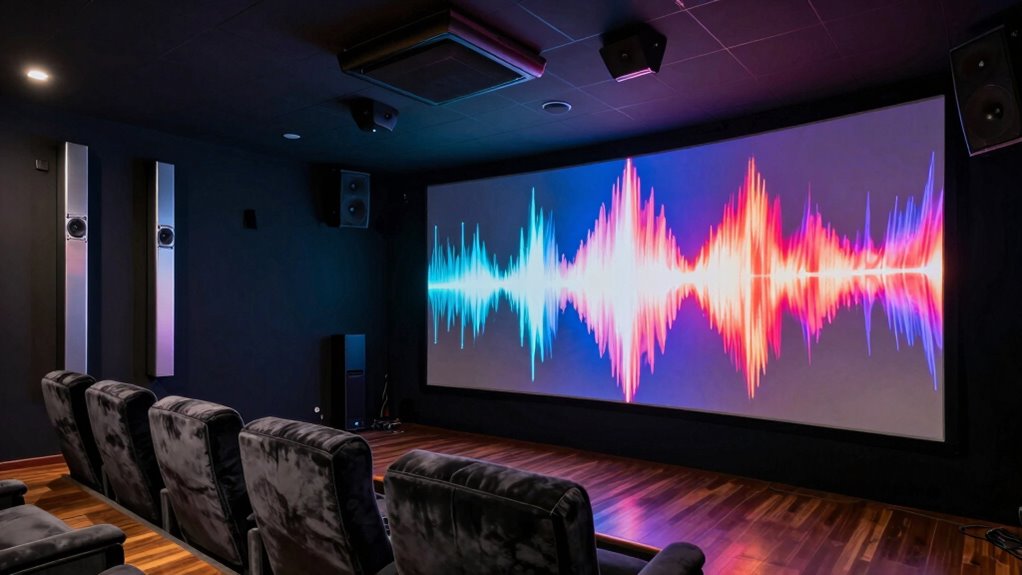
What makes Dolby Atmos sound so immersive is its ability to create a three-dimensional audio space that surrounds you from all directions. This effect taps into your psychoacoustic perception, making sounds seem to come from specific points in space, not just left or right. Dolby Atmos enhances binaural integration, allowing your brain to interpret sounds as if they’re happening around you. By layering sounds on multiple height and ceiling channels, it creates a realistic environment that pulls you into the scene. Incorporating elements like enhanced recovery techniques can further optimize your listening experience by ensuring you’re mentally and physically primed. Additionally, maintaining indoor air quality can improve your overall comfort while enjoying immersive audio. Using sound-absorbing materials in your home can also enhance the clarity of the audio experience. Furthermore, ensuring your space is equipped with optimal acoustic treatments can significantly elevate your listening environment. The sound design in films and sports broadcasts, including LPGA milestones, can be particularly enhanced by this technology, providing a more captivating experience.
- Precise sound placement in 3D space
- Height and overhead audio channels
- Enhanced spatial awareness for a more natural experience
These elements combine to create an immersive experience that feels almost tangible, engaging your senses on a deeper level.
How to Set Up Dolby Atmos at Home
Sure! Here is your revised content with the requested changes:
—
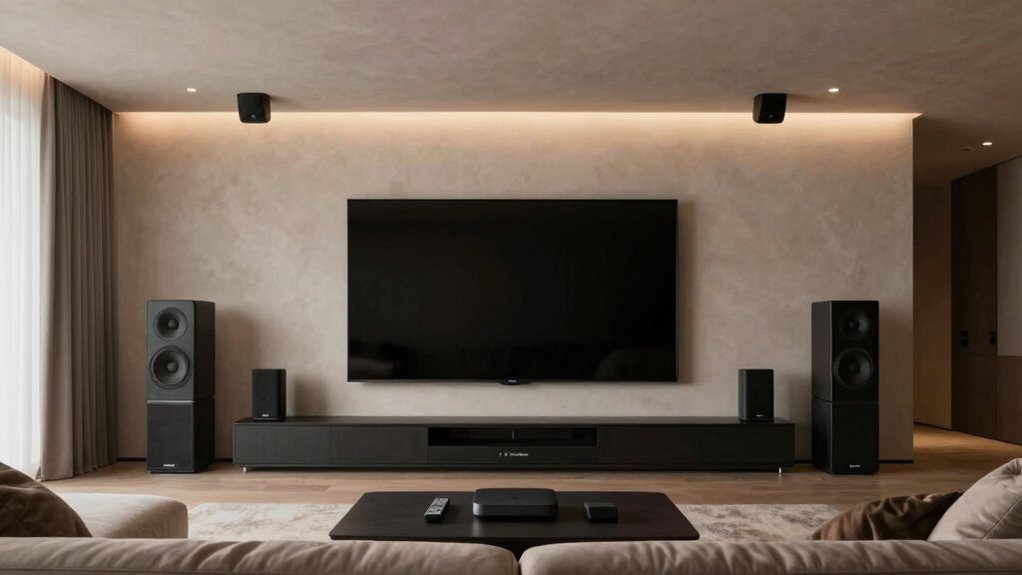
Setting up Dolby Atmos at home starts with creating an ideal room environment, so consider space and acoustics carefully. You’ll need essential equipment like upward-firing or ceiling speakers, a compatible AV receiver, and proper placement to guarantee the best sound experience. Additionally, choosing the right lipstick color perception can create an inviting atmosphere that complements your home theater. To further enhance your setup, consider implementing effective soundproofing techniques that minimize external noise interference. A well-designed room layout can significantly impact sound quality, making it crucial to understand pool setups for optimal acoustics. Incorporating shade structures in your design can also help to maintain a comfortable environment. Once everything is in place, calibration and tuning will fine-tune the system for immersive, balanced audio. Additionally, understanding color accuracy can enhance your overall home theater experience by ensuring that sound and picture quality work together seamlessly.
—
Let me know if you need any further modifications!
Optimal Room Setup
To get the most immersive Dolby Atmos experience at home, your room setup plays a vital role. Good room acoustics minimize echoes and sound reflections that can muddy audio clarity. Proper speaker placement ensures sound moves seamlessly through your space, creating a true surround effect. Key tips include:
- Position ceiling speakers or upward-firing models for optimal overhead sound.
- Keep speakers away from walls to prevent sound reflections.
- Use acoustic treatments like panels or rugs to improve room acoustics. Incorporating smart yard care practices can also enhance your overall enjoyment by reducing outdoor noise distractions. Additionally, creating comfortable seating areas can further enhance your listening experience by providing a cozy environment for long movie or music sessions. Using interactive murals can help create a more engaging and visually appealing space that complements your audio experience. Additionally, using airless paint spraying techniques for your room’s aesthetic can help eliminate distracting visual elements.
Your goal is to create a balanced environment where sound travels evenly. Adjust speaker angles and distances to avoid dead spots and ensure clear, consistent immersion. A well-thought-out room setup unlocks Dolby Atmos’s full potential. Additionally, maintaining optimal air quality can enhance your listening experience by reducing distractions and promoting comfort.
Essential Equipment List
Having the right equipment is essential for creating a genuine Dolby Atmos experience at home. You’ll need a quality AV receiver that supports Atmos, along with speakers positioned correctly for immersive sound. Proper speaker placement, especially for overhead or upward-firing speakers, enhances the experience. Room acoustics also play a crucial role—use rugs, curtains, or diffusers to reduce echo and improve sound clarity.
| Equipment | Purpose |
|---|---|
| AV Receiver | Powers and processes Atmos signals |
| Ceiling/Upward-firing Speakers | Creates overhead sound layers |
| Front & Surround Speakers | Anchors the soundstage |
| Subwoofer | Adds deep bass |
| Acoustic Treatments | Improve room acoustics for clarity |
Calibration and Tuning
Once you’ve assembled your Dolby Atmos equipment and correctly positioned your speakers, proper calibration guarantees everything performs at its best. Focus on room acoustics and use calibration techniques to optimize sound quality. Start by adjusting speaker levels, distances, and crossover points to confirm balanced audio. Use a calibration microphone and receiver’s auto-calibration feature if available—this simplifies the process. Keep in mind:
- Minimize reflective surfaces and avoid placing speakers near walls
- Use acoustic treatments like rugs or panels to improve room acoustics
- Manually fine-tune calibration settings for specific content or preferences
These steps help your system adapt to your space, delivering accurate sound localization and immersive Atmos effects. Proper calibration ensures you get the full Dolby Atmos experience at home.
Myths and Truths About Dolby Atmos
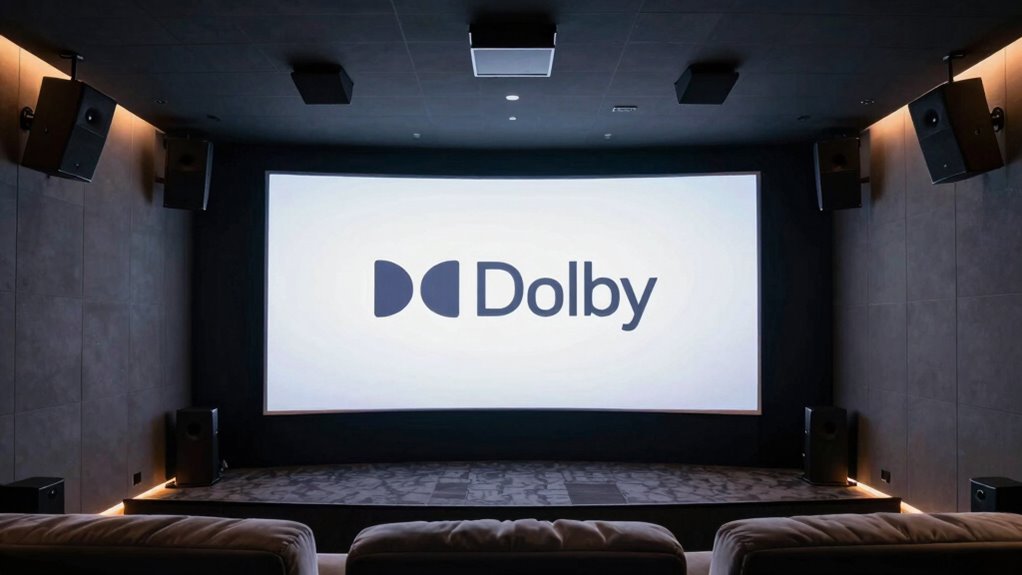
Many people believe misconceptions about Dolby Atmos that can lead to misunderstandings about its capabilities. You might think it requires expensive equipment or that it guarantees theater-quality sound everywhere, but that’s not always true. Let’s clear up these myths and reveal the facts behind this innovative sound technology.
Common Dolby Atmos Myths
Despite its popularity, several misconceptions about Dolby Atmos persist, leading many to misunderstand what this technology can actually do. Some believe Atmos guarantees a dramatic, surround-sound experience for every scene, which isn’t always true. It’s often thought that you need special equipment or a dedicated home theater for the best listening experience, but many soundbars and headphones now support Atmos.
Myth busting reveals that Atmos’s real strength lies in its ability to add height and spatial cues, enhancing immersion without necessarily increasing volume or complexity. Keep in mind:
- Not all content is mixed in Atmos
- You don’t need a multi-speaker setup
- Atmos isn’t a magic fix for bad audio quality
Debunking Audio Misconceptions
There are numerous misconceptions about Dolby Atmos that can lead to false expectations or confusion. Some believe it’s a recent breakthrough, but its historical development dates back over a decade, evolving from traditional surround sound. Others think Atmos has no technical limitations, but it requires compatible hardware and a proper setup. For example, the technology’s complexity is often underestimated, and some assume it delivers perfect sound everywhere—yet, room acoustics and speaker placement matter. Understanding these truths helps set realistic expectations.
| Misconception | Reality |
|---|---|
| Dolby Atmos is brand new | It has a historical development dating back years |
| No technical limitations | Requires specific hardware and room setup |
| Perfect sound everywhere | Room acoustics and speaker placement impact quality |
| Only for high-end systems | Available in various setups, including some soundbars |
| It solves all audio issues | Still faces technical limitations and challenges |
Reality Behind Sound Technology
Understanding the reality behind Dolby Atmos requires separating fact from fiction, as misconceptions can easily distort expectations. Many believe Atmos instantly transforms sound quality, but the truth is, it’s a result of ongoing technical innovation that enhances audio immersion. The technology allows sounds to move in three-dimensional space, creating a more dynamic experience. However, not all content benefits equally, and the quality depends on proper setup and equipment. Remember:
- Not every source is Atmos-encoded; content varies.
- Sound quality depends on the entire system, not just Atmos.
- Technical innovation continually improves Atmos capabilities but isn’t a magic fix.
Ultimately, Dolby Atmos is a significant step forward, but understanding its limitations and proper implementation guarantees you experience its true potential.
How Dolby Atmos Boosts Movies, Music, and Gaming
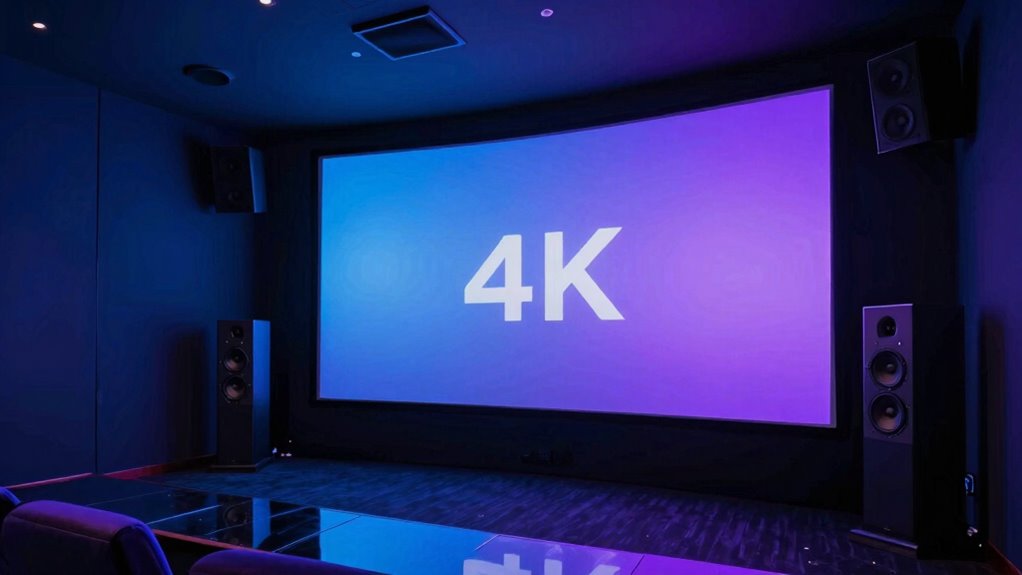
Dolby Atmos transforms how you experience movies, music, and gaming by creating a three-dimensional soundscape that surrounds you from all directions. This immersive audio technology heightens realism, making you feel like you’re right there in the scene, concert, or game world. In movies, it enhances spatial awareness, bringing sound effects and dialogue to life with incredible clarity. For music, Atmos offers a richer, more detailed listening experience, revealing layers you might miss otherwise. Gaming benefits too, as it provides precise directional sound cues, improving gameplay and immersion. Looking ahead, future applications of Dolby Atmos promise artistic innovations, enabling creators to push the boundaries of storytelling and sound design. This evolution guarantees your entertainment becomes more dynamic, engaging, and emotionally impactful.
Is Dolby Atmos Worth It? Pros and Cons
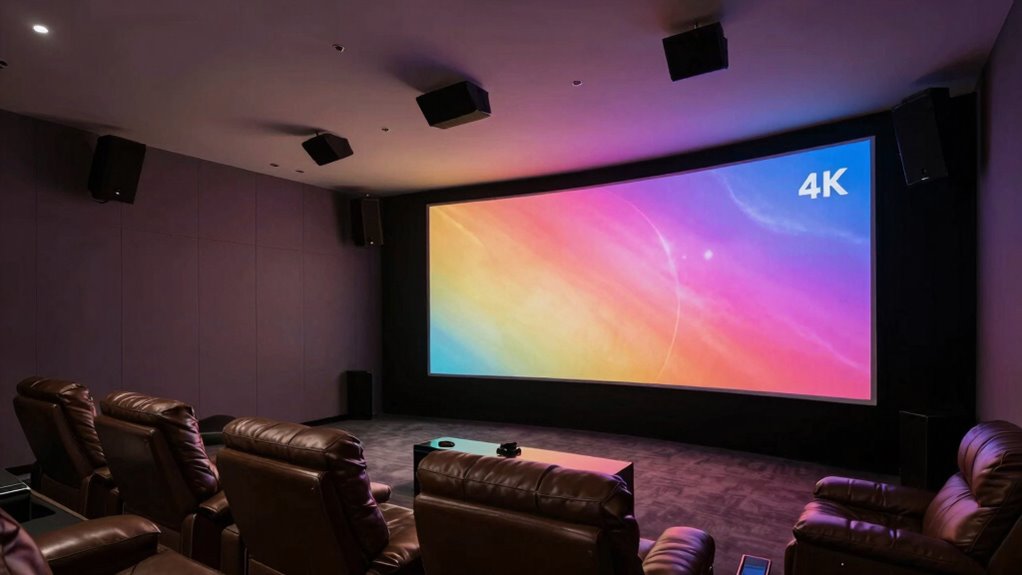
Is investing in Dolby Atmos technology truly worth it? It depends on how much you value sound quality and your budget. Dolby Atmos offers immersive audio with precise placement, enhancing movies, music, and gaming. However, the cost analysis can be a hurdle, as upgrading equipment or subscribing to compatible services adds expenses. Consider these points:
- Enhanced sound immersion justifies the higher cost if you prioritize audio fidelity
- Not all content takes full advantage of Atmos, so benefits vary
- Upgrading equipment may be costly, but it can future-proof your setup
Ultimately, if you’re a serious audiophile or regularly consume Atmos-enabled content, the improved sound quality could be worth the investment. For casual listeners, the benefits might not outweigh the costs.
Frequently Asked Questions
Can Dolby Atmos Be Experienced Through Headphones?
Yes, you can experience Dolby Atmos through headphones. Many headphones support immersive surround sound, creating a more realistic and engaging experience. By using compatible devices and specific apps or software, you’ll feel like sounds are coming from all around you, enhancing your immersive experience. While it may not perfectly replicate true surround sound, modern headphone technology substantially improves Atmos’s spatial audio, making it feel more like a theater experience right in your ears.
How Much Does Dolby Atmos Equipment Typically Cost?
Dolby Atmos equipment can range from a few hundred to several thousand dollars, depending on your setup. Think of it as building a surround sound castle, where higher costs often mean better audio calibration and more speakers. For a simple home setup, you might spend around $300-$500, but for premium audio experiences, prices can soar beyond $2,000. The key is balancing cost with quality for the immersive sound you desire.
Does Streaming Quality Affect Dolby Atmos Sound?
Yes, streaming quality does affect Dolby Atmos sound. When your streaming bandwidth is limited, audio compression increases, which can reduce audio fidelity and the richness of Atmos’s spatial effects. Higher bandwidth allows for better audio quality, maintaining Dolby Atmos’s immersive experience. So, if your internet connection is slow or unstable, you might notice a decline in Atmos sound quality, making the experience less dynamic and detailed.
Is Dolby Atmos Compatible With All Smart TVS?
Think of your TV as a musical instrument—if it’s not properly tuned, the sound won’t reach its full potential. Dolby Atmos isn’t compatible with all smart TVs. You need to check if your TV supports Atmos and consider audio calibration and speaker placement. Without these, you won’t experience the immersive sound Atmos offers. Some TVs require external devices or soundbars to access Atmos’s full 3D audio magic.
How Does Dolby Atmos Impact Audio File Sizes?
Dolby Atmos can increase audio file sizes because it often uses less efficient audio compression for immersive sound quality. This means larger files to preserve the rich, multi-dimensional audio experience. While Dolby Atmos is compatible with many devices, not all smart TVs support it natively, so file compatibility might vary. Expect slightly bigger files if you’re capturing or storing Dolby Atmos content, but the enhanced sound is worth it for many users.
Conclusion
Now that you’ve glimpsed into the world of Dolby Atmos, you see it’s like opening a window to a richer, more immersive soundscape. It’s not just a technology; it’s a portal that pulls you deeper into movies, music, and games. If you’re craving a concert-like experience right in your living room, Dolby Atmos can turn your space into a symphony of sensations, transforming ordinary listening into extraordinary adventures.
Fall Picks
fall essentials
As an affiliate, we earn on qualifying purchases.