Rechargeable digital hearing aids for seniors vary most in fit, ease of handling, sound controls, and charging design. I name the EarCentric EasyCharge my best overall pick for its behind-the-ear format and straightforward charging, while the Ceretone Core One Pro stands out for shoppers seeking a more feature-focused OTC option and the Audien Atom One for those drawn to a compact in-ear style. Smaller devices may be less visible, but can be harder to place and handle; larger behind-the-ear models are easier to grip, though more noticeable. Noise reduction and channel claims also do not replace a proper fit or a hearing assessment. Read on for the full comparison and guidance on matching a device to your needs.

Get beauty and skincare favorites delivered free with Prime
- Fast, free delivery on millions of items
- Prime Video, Amazon Music and more included
- Member-only deals all year
Complete the kit


Key Takeaways
- EarCentric EasyCharge is the roundup’s best overall choice for buyers who favor a familiar behind-the-ear shape and a charging setup designed for routine use.
- In-ear discretion comes with handling tradeoffs: options such as LAMYOO and Audien Atom One may appeal to buyers who want a less visible fit, but tiny devices can be harder to insert, remove, and clean.
- Feature counts do not tell the whole story: the 16-channel model and two-channel model advertise different levels of adjustment, but fit, controls, and practical support matter just as much.
- Charging designs vary across the lineup: products with a case or magnetic charging approach may suit different routines, so check how the device is placed and whether its case meets your daily habits.
- Noise reduction appears across many picks, yet the lineup offers limited evidence for comparing real-world performance; buyers should prioritize comfort, speech clarity, and return or support terms over feature wording alone.
| Echo Rechargeable Digital Hearing Aids for Adults |  | Best Overall for Flexible Listening | Brand: Echo Hearing | Model: EchoA26A | Fit: In-ear | VIEW ON AMAZON | See Our Full Breakdown |
| LAMYOO Rechargeable Invisible Hearing Aids for Seniors |  | Best for Long Runtime | Brand: LAMYOO | Model: 955 | Fit: In-ear | VIEW ON AMAZON | See Our Full Breakdown |
| Rechargeable OTC Hearing Aids with Noise Cancellation and Magnetic Charging Case |  | Best for Simple Charging | Type: Over-the-counter digital hearing aids | Design: Discreet in-ear | Noise control: Noise reduction and feedback suppression | VIEW ON AMAZON | See Our Full Breakdown |
| Rechargeable Digital In-Ear Hearing Aids for Seniors, 2-Channel |  | Best for Clear Left-Right Identification | Brand: JMTO | Model: G-19 | Processing: 2-channel digital | VIEW ON AMAZON | See Our Full Breakdown |
| FVUH Rechargeable In-Ear Hearing Amplifiers with Noise Reduction |  | Best for Multiple Everyday Modes | Brand: FVUH | Model: 127 | Fit: In-ear | VIEW ON AMAZON | See Our Full Breakdown |
| Rechargeable OTC Hearing Aids with Noise Reduction and Feedback Cancellation | | Best for Extended Use | Type: OTC digital hearing aids | Design: Discreet mini in-ear | Noise control: Smart noise reduction and feedback cancellation | VIEW ON AMAZON | See Our Full Breakdown |
| Hearing Aids for Seniors, Rechargeable Hearing Amplifier with Noise Cancelling, Adjustable Volume Control, One Pair Hearing Assist Devices with Charging Box |  | Best for Long Wear Between Charges | Fit type: In-ear | Battery life: Up to 40 hours per charge | Charging time: 2–4 hours | VIEW ON AMAZON | See Our Full Breakdown |
| Rechargeable OTC Hearing Aids with Noise Cancellation, 16-Channel DSP, and 3-Level Volume Control |  | Best for Wind and Transient Noise Management | Brand: nvdskn | Model: M3111 | Fit: In-ear | VIEW ON AMAZON | See Our Full Breakdown |
| Rechargeable Digital Behind-the-Ear Hearing Aids with Noise Reduction | 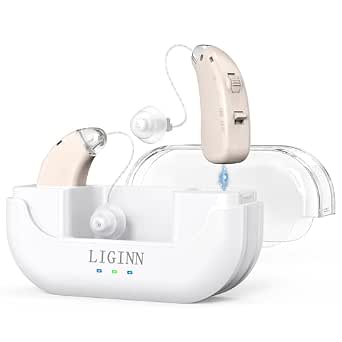 | Best Behind-the-Ear Pick | Fit type: Behind-the-ear | Weight: 4.1 g | Hearing loss suitability: Mild to moderate | VIEW ON AMAZON | See Our Full Breakdown |
| Karthus Rechargeable OTC Hearing Aids for Adults and Seniors | 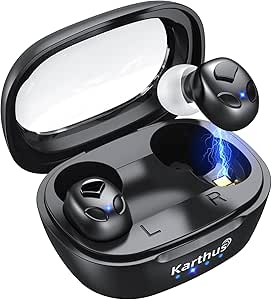 | Best for Switching Listening Modes | Type: OTC hearing aids | Design: Compact, discreet in-ear | Noise modes: Quiet Mode and Noise-Canceling Mode | VIEW ON AMAZON | See Our Full Breakdown |
| Flawwors Rechargeable Digital Hearing Aids for Seniors with Noise Cancelling | 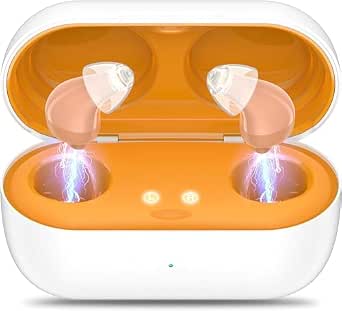 | Best for Noise Filtering | Fit type: Behind-the-ear | Sound processing: 16-channel digital | Noise control: Active noise cancellation | VIEW ON AMAZON | See Our Full Breakdown |
| EarCentric EasyCharge Rechargeable Behind-the-Ear OTC Hearing Aids, Pair, Beige |  | Best for Extended Time Between Outlets | Type: Behind-the-ear OTC, pair | Battery: Rechargeable lithium polymer, 3.7 V | Use per charge: Up to 3 days | VIEW ON AMAZON | See Our Full Breakdown |
| Ceretone Core One Pro Rechargeable OTC Hearing Aids |  | Best for Discreet In-Ear Wear | Intended use: Mild to moderate hearing loss | Fit: In-ear | Digital chip: Intricon | VIEW ON AMAZON | See Our Full Breakdown |
| Audien Atom One OTC Hearing Aids |  | Best for Hands-On, App-Free Adjustment | Fit type: In-ear | Controls: Analog volume and frequency dials | Battery: Rechargeable lithium-ion | VIEW ON AMAZON | See Our Full Breakdown |
| Flaygo Rechargeable In-Ear Hearing Aids for Seniors |  | Best for Quick Charging and Case Reserve | Fit: In-ear | Sound processing: 16-channel digital chip | Noise control: Active noise cancellation | VIEW ON AMAZON | See Our Full Breakdown |
| rechargeable digital hearing aids for senior | Controls | Charging time |
|---|---|---|
| Echo Rechargeable Digital Hear | — | — |
| LAMYOO Rechargeable Invisible | One-button control | 100 minutes |
| Rechargeable OTC Hearing Aids | One-button operation | — |
| Rechargeable Digital In-Ear He | Push button with volume adjustment | Approximately 1.5 hours |
| FVUH Rechargeable In-Ear Heari | — | 2 hours |
| Rechargeable OTC Hearing Aids | One-button power, volume, and function control | — |
| Hearing Aids for Seniors | — | 2–4 hours |
| Rechargeable OTC Hearing Aids | — | — |
| Rechargeable Digital Behind-th | Button control and volume control | — |
| Karthus Rechargeable OTC Heari | — | 2 hours |
| Flawwors Rechargeable Digital | — | 1–2 hours |
| EarCentric EasyCharge Recharge | Button control | — |
| Ceretone Core One Pro Recharge | — | — |
| Audien Atom One OTC Hearing Ai | Analog volume and frequency dials | About 3 hours |
| Flaygo Rechargeable In-Ear Hea | Automatic | 1–2 hours |
More Details on Our Top Picks
Echo Rechargeable Digital Hearing Aids for Adults
Four listening modes give the Echo a useful edge for seniors who move between quieter rooms and noisier settings. Six button-controlled volume levels also offer more adjustment steps than the LAMYOO 955, which specifies four. Its charging case supports up to 60 hours of use, a practical middle ground between the LAMYOO’s longer stated runtime and the JMTO G-19’s 40-hour total. The included silicone tip sizes and cleaning tools can help with routine fit and care, while USB-C charging keeps the setup familiar. The tradeoff is that Echo is intended for mild-to-moderate hearing loss and has no Bluetooth connectivity. I’d choose it for straightforward everyday listening, not for streaming audio or highly tailored hearing adjustments.
Pros:- Four listening modes support use across different listening environments.
- Six button-controlled volume levels provide more steps than the four specified on the LAMYOO 955.
- Charging case provides up to 60 hours of use.
- Multiple silicone tip sizes and cleaning accessories are included.
Cons:- No Bluetooth connectivity is specified.
- Designed for mild-to-moderate hearing loss rather than a broader range.
- The in-ear fit may not suit seniors who prefer a behind-the-ear device.
Best for: Seniors with mild-to-moderate hearing loss who want several listening modes, straightforward buttons, and a rechargeable in-ear set for daily use.
Not ideal for: People who want Bluetooth streaming, app-based fitting, or a device intended for hearing loss beyond the stated mild-to-moderate range.
- Brand:Echo Hearing
- Model:EchoA26A
- Fit:In-ear
- Listening modes:4
- Volume levels:6
- Use with charging case:Up to 60 hours
- Charging time and connector:2 hours; USB-C
- Noise control:Active noise cancellation
Our verdict“Choose Echo if you want a rechargeable in-ear aid with more mode and volume choices than the simpler LAMYOO 955.”
LAMYOO Rechargeable Invisible Hearing Aids for Seniors
The LAMYOO 955 is the runtime-focused pick: its listing claims up to 100 hours of use after a 100-minute charge, with the case holding five extra full charges. That could mean fewer charging interruptions than with the Echo Rechargeable Digital Hearing Aids, whose case supports up to 60 hours. LAMYOO also keeps interaction simple: one-button controls, four volume levels, and a memory function for retaining a setting. Its lightweight in-ear design suits buyers who favor a discreet device over the JMTO G-19’s more explicitly described controls and left/right indicators. The tradeoff is limited adjustment detail: no app, Bluetooth, or listening-mode count is specified, and four volume steps offer less fine-tuning than Echo’s six. I’d favor this model for battery endurance and simplicity, not for buyers seeking extensive customization.
Pros:- Listing specifies up to 100 hours of use and a 100-minute charge.
- Charging case provides five extra full charges.
- One-button controls and a memory function keep routine operation simple.
- Lightweight in-ear design is suited to discreet wear.
Cons:- Only four volume levels are specified.
- No app pairing or advanced adjustment controls are described.
- No specific listening modes or Bluetooth features are listed.
Best for: Seniors who prioritize fewer charging sessions and want simple one-button controls with a portable case for extra charges.
Not ideal for: Buyers who want multiple named listening programs, more volume steps, app controls, or detailed fitting options.
- Brand:LAMYOO
- Model:955
- Fit:In-ear
- Controls:One-button control
- Volume levels:4
- Charging time:100 minutes
- Maximum use time:Up to 100 hours
- Charging case:Provides 5 extra full charges
- Battery:Lithium polymer
Our verdict“Pick the LAMYOO 955 if long stated runtime and simple controls matter more than the Echo’s extra volume steps and listening modes.”
Rechargeable OTC Hearing Aids with Noise Cancellation and Magnetic Charging Case
This pair stands out for its magnetic charging case and deliberately simple one-button operation. The magnetic setup may appeal to seniors who find it easier to place devices into a case than to manage a less guided charging arrangement. Its stated runtime is up to 20 hours per charge, with four additional full charges from the case, for up to 100 hours total. That matches the LAMYOO 955’s stated total, though LAMYOO claims a longer uninterrupted use figure and a quicker 100-minute charge. Digital noise reduction and feedback suppression are intended to support clearer conversations, but the product data gives no specific fitting or hearing-adjustment details. Compared with the Echo, it also lacks a stated set of listening modes and volume steps, making this a simpler choice rather than a more adjustable one.
Pros:- Magnetic case provides a straightforward way to store and recharge the aids.
- One-button operation limits control complexity.
- Noise reduction and feedback suppression are specified.
- Case supports up to 100 hours of total use across the stated charges.
Cons:- No specific fitting or hearing-adjustment details are provided.
- Up to 20 hours per charge is less than the LAMYOO 955’s stated maximum-use figure.
- Volume levels and listening modes are not specified.
Best for: Seniors who prefer one-button operation and a magnetic case, and who want a stated 20-hour session between case charges.
Not ideal for: Buyers who need clearly specified volume settings, listening programs, or individual hearing adjustments before choosing a device.
- Type:Over-the-counter digital hearing aids
- Design:Discreet in-ear
- Noise control:Noise reduction and feedback suppression
- Controls:One-button operation
- Battery life per charge:Up to 20 hours
- Total use with case:Up to 100 hours
- Charging case:Magnetic; provides 4 additional full charges
- Warranty:1 year for defective products
Our verdict“Choose this pair if a magnetic case and minimal controls matter more than the detailed adjustment options offered by Echo.”
Rechargeable Digital In-Ear Hearing Aids for Seniors, 2-Channel
The JMTO G-19 earns its place for buyers who want clearly marked left and right devices alongside push-button volume adjustment. Those cues can make daily setup more manageable than the less-detailed controls listed for the magnetic-case OTC pair. It also specifies 2-channel digital processing, environmental noise cancellation, and feedback reduction, giving shoppers more concrete processing information than that product provides. The small stated device weight—about 2.3 g—may suit people who prefer a lightweight in-ear fit. Runtime is the main compromise: the case supports up to 40 hours total, below the Echo’s 60 hours and the 100-hour totals claimed by LAMYOO and the magnetic-case option. I’d choose the JMTO for its clear left/right cues and listed controls, but not if minimizing charging frequency is the priority.
Pros:- Left/right indicators help distinguish each device during setup.
- Push-button controls include adjustable volume.
- 2-channel processing, noise reduction, and feedback reduction are specified.
- Each device weighs about 2.3 g.
Cons:- Case-supported use is up to 40 hours, shorter than the Echo’s stated 60 hours.
- The stated total usage depends on using the charging case.
- Listening modes and exact volume-step count are not specified.
Best for: Seniors who want lightweight in-ear aids with left/right indicators and push-button volume adjustment.
Not ideal for: People who want the longest stated case-supported runtime or more listening modes than the product data specifies.
- Brand:JMTO
- Model:G-19
- Processing:2-channel digital
- Fit:In-ear
- Device weight:About 2.3 g
- Total usage with case:Up to 40 hours
- Charging time:Approximately 1.5 hours
- Controls:Push button with volume adjustment
- Warranty:1-year free replacement
Our verdict“Choose the JMTO G-19 for its left/right indicators and clearly described controls, not for extended time between charges.”
FVUH Rechargeable In-Ear Hearing Amplifiers with Noise Reduction
FVUH offers three named settings—Normal, Noise Reduction, and Enhanced Clarity—for buyers who want a simple way to shift sound processing between everyday situations. The mode selection is more explicit than on the LAMYOO 955, which lists noise reduction but no listening programs. FVUH also specifies 16-channel DSP noise reduction and includes a Type-C cable and charging case. Its lightweight, discreet in-ear format may suit people who want an alternative to the JMTO G-19’s fit and left/right indicator emphasis. The major drawback is a conflicting battery claim: the description says up to 140 hours, while the title says 35 hours. I would not choose this set based on runtime until that discrepancy is clarified. It also does not specify volume-step counts or detailed fitting adjustments.
Pros:- Three named modes cover normal listening, noise reduction, and enhanced clarity.
- 16-channel DSP noise reduction is specified.
- Lightweight, discreet in-ear design with interchangeable ear tips.
- Rechargeable case and Type-C cable are included.
Cons:- Battery-life claims conflict: the description states up to 140 hours while the title states 35 hours.
- The number of volume levels is not specified.
- No app controls or detailed fitting information are described.
Best for: Seniors who want named sound modes for conversations, TV, and phone calls and are comfortable checking the battery-life claim before purchase.
Not ideal for: Buyers who need dependable, clearly stated runtime or a specific number of volume levels and fitting adjustments.
- Brand:FVUH
- Model:127
- Fit:In-ear
- Listening modes:Normal, Noise Reduction, Enhanced Clarity
- Sound processing:16-channel DSP noise reduction
- Weight:0.01 lb
- Charging:Rechargeable; Type-C cable and charging case included
- Charging time:2 hours
- Battery life claims:Up to 140 hours in description; 35 hours in title
Our verdict“Consider FVUH if named listening modes matter most, but confirm its actual runtime before choosing it over the more clearly specified Echo.”
Rechargeable OTC Hearing Aids with Noise Reduction and Feedback Cancellation
For seniors who want to spend less time looking for a charger, this model pairs up to 20 hours per charge with a case that supplies four additional charges, for up to 100 hours of use overall. Its compact in-ear design is less visible than the behind-the-ear B0HGDGVNKJ, while feedback cancellation may help limit whistling and smart noise reduction is aimed at everyday listening. One-button controls keep power, volume, and functions straightforward. The tradeoff is that the product details do not explain how hearing adjustment works or what fitting options are available, so buyers who need personalized setup may prefer a model with clearer fitting information. The 45-day trial and US-based support offer more stated after-sale guidance than the Karthus listing, but do not replace clinical advice.
Pros:- Charging case adds four charges, for up to 100 hours of stated total use
- Feedback cancellation and noise reduction target common everyday listening distractions
- Compact in-ear shape with one-button controls
- Includes a 45-day trial period and US-based customer support
Cons:- No specific fitting process or hearing adjustment details are provided
- Up to 20 hours per charge is less than the 40-hour claim for B0F1CFVKKM
- The description does not identify ear dome sizes or other fit options
Best for: Seniors who want a discreet in-ear device and a charging case that can cover several days between outlet access
Not ideal for: Buyers who need documented hearing adjustments or detailed fitting guidance before choosing a device
- Type:OTC digital hearing aids
- Design:Discreet mini in-ear
- Noise control:Smart noise reduction and feedback cancellation
- Battery life:Up to 20 hours per charge
- Charging case:Portable magnetic case with 4 additional charges
- Total use:Up to 100 hours
- Controls:One-button power, volume, and function control
- Trial period:45 days
- Customer support:US-based
Our verdict“Choose this model if discreet wear and extended case-supported use matter more than detailed fitting or personalization information.”
Hearing Aids for Seniors, Rechargeable Hearing Amplifier with Noise Cancelling, Adjustable Volume Control, One Pair Hearing Assist Devices with Charging Box
The standout here is a stated up to 40 hours per charge, more than the 20-hour claim for B0HDCF3V22 and enough to reduce charging interruptions for many users. Six ear dome sizes also give seniors more ways to find a secure fit, a practical advantage when comfort and feedback depend on how the device sits in the ear. Stepless volume control lets the wearer make smaller adjustments than the three fixed levels on B0H6M4QMLV, while one-touch operation keeps the basic routine simple. This is not the lightest-feeling choice: the listed battery weight is 6.4 ounces, which may feel bulky for an in-ear device. It also needs to be turned off before charging, and new users may need time to adapt.
Pros:- Up to 40 hours of use per charge
- Six ear dome sizes offer more fit options than the three sizes listed for B0HGDGVNKJ
- Stepless volume control allows fine adjustments
- One-touch on/off operation and active noise cancellation
Cons:- Listed battery weight of 6.4 ounces may feel bulky for in-ear wear
- Must be switched off before charging
- New users may need several weeks to adapt
Best for: Seniors who prioritize longer runtime and want several ear dome sizes to help find a comfortable fit
Not ideal for: People who want a very light-feeling in-ear device or need to adjust volume in preset steps rather than continuously
- Fit type:In-ear
- Battery life:Up to 40 hours per charge
- Charging time:2–4 hours
- Ear dome sizes:6
- Control type:Button control with stepless volume adjustment
- Noise control:Active noise cancellation
- Battery:Lithium Polymer
- Model:RM (GM-311T)
Our verdict“Pick this pair if long battery life and multiple ear dome sizes outweigh concerns about listed weight and charging steps.”
Rechargeable OTC Hearing Aids with Noise Cancellation, 16-Channel DSP, and 3-Level Volume Control
This model makes its strongest case through 16-channel digital processing and noise management aimed at wind and sudden sounds, which may suit seniors who move between indoor conversations and outdoor settings. Its stated 80-plus hours of battery life also reduces how often charging needs attention, although the description does not say whether that figure is per charge or includes a case. Compared with the B0F1CFVKKM, volume adjustment is simpler but less precise: it has three button-controlled levels rather than stepless control. The product data list an included quantity of one, so buyers should check what is included if they expect a pair. Fit adjustment and personalization details are limited, making this a less certain choice for anyone who needs a clearly explained setup process.
Pros:- 16-channel digital DSP is specified
- Noise management targets transient and wind noise
- More than 80 hours of stated battery life
- Button control with three straightforward volume levels
Cons:- The listing does not clarify whether the 80-plus hours is per charge or includes charging support
- Fit adjustment and sound personalization details are limited
- Included quantity is listed as one, so pair contents may not match expectations
Best for: Seniors who regularly listen outdoors and prefer simple preset volume levels over continuous adjustment
Not ideal for: Buyers who need detailed fitting guidance, personalized sound adjustment, or confirmation that a pair is included
- Brand:nvdskn
- Model:M3111
- Fit:In-ear
- Digital processing:16-channel DSP
- Volume control:3 levels, button controlled
- Battery life:80+ hours; basis not specified
- Noise management:Transient and wind noise
- Use environments:Indoor, outdoor, and noisy environments
- Included quantity:1
Our verdict“Consider this option for outdoor listening and preset controls, but verify the package quantity and battery-life basis before buying.”
Rechargeable Digital Behind-the-Ear Hearing Aids with Noise Reduction
Unlike the in-ear options B0HDCF3V22 and B0FMK8G69C, this model uses a behind-the-ear fit, which may appeal to seniors who prefer not to place the main device inside the ear canal. At 4.1 grams, it is described as lightweight, and one-button operation avoids app-based setup. Multi-channel processing is intended to clarify speech and reduce background noise; the listing also states suitability for mild to moderate hearing loss. Its full-charge runtime is up to 24 hours, with a case listed as providing 96 hours of power supply. Three ear tip sizes help with fit, but poorly seated tips can cause feedback whistling. Compared with B0F1CFVKKM, it offers less stated runtime per charge and fewer listed tip sizes, though its behind-the-ear layout is a distinct alternative.
Pros:- Behind-the-ear design provides an alternative to compact in-ear models
- Lightweight at 4.1 grams with simple button and volume controls
- Multi-channel processing is intended to improve speech clarity and reduce background noise
- USB-C charging case is listed with 96 hours of power supply
Cons:- Up to 24 hours per full charge is shorter than the 40-hour claim for B0F1CFVKKM
- Poorly fitting ear tips can cause feedback whistling
- Only three ear tip sizes are listed
Best for: Seniors with mild to moderate hearing loss who prefer a lightweight behind-the-ear design and straightforward button controls
Not ideal for: People seeking an in-ear-only device, or buyers unwilling to adjust ear tips if feedback occurs
- Fit type:Behind-the-ear
- Weight:4.1 g
- Hearing loss suitability:Mild to moderate
- Charging:USB-C
- Full charge time:2–3 hours
- Runtime per full charge:Up to 24 hours
- Charging case capacity:96 hours of power supply
- Ear tip sizes:3
- Controls:Button control and volume control
Our verdict“Choose this model if you want a lightweight behind-the-ear fit and can take time to find an ear tip that avoids feedback.”
Karthus Rechargeable OTC Hearing Aids for Adults and Seniors
Karthus stands apart from the other in-ear options here with two stated listening modes: Quiet Mode and Noise-Canceling Mode. That gives the wearer a simple way to choose between calmer surroundings and noisier settings, rather than relying only on the three fixed volume levels in B0H6M4QMLV. A two-hour charge is listed to provide over 24 hours of use, with the case supplying more than 72 additional hours, making it a practical travel-oriented setup. Speech-focused processing and feedback reduction are also claimed, but the description does not explain fit options or how sound can be adjusted for an individual. Compared with B0HDCF3V22, Karthus provides explicit listening modes but less detail about trial terms and support. Seniors who need guided fitting may want clearer information before choosing it.
Pros:- Two listening modes provide a simple change for different environments
- Two-hour charge is stated to deliver over 24 hours of use
- Charging case adds more than 72 hours of power
- Speech-focused noise reduction and feedback limitation are specified
Cons:- Fit details and hearing adjustment options are not provided
- The listing does not specify ear tip sizes or fitting guidance
- Trial period and customer support details are not stated
Best for: Seniors who want an in-ear rechargeable device with separate modes for quieter and noisier surroundings
Not ideal for: Buyers who need documented fit choices, individualized hearing adjustment, or detailed support and trial information
- Type:OTC hearing aids
- Design:Compact, discreet in-ear
- Noise modes:Quiet Mode and Noise-Canceling Mode
- Charging time:2 hours
- Use per charge:24+ hours
- Total power with charging case:72+ additional hours
- Intended users:Adults aged 18 and older
Our verdict“Choose Karthus if mode switching and case-supported runtime matter most, and you are comfortable with limited fitting details.”
Flawwors Rechargeable Digital Hearing Aids for Seniors with Noise Cancelling
For seniors who find background sound distracting, the Flawwors pair puts noise handling ahead of a minimal-control design. Its 16-channel digital processing and active noise cancellation are intended to help separate speech from surrounding sound, while automatic memory can spare you from resetting your preferred settings each time. The wireless charging case and up to 18 hours of use also suit a full day away from an outlet. Compared with the EarCentric EasyCharge, Flawwors offers more specified sound processing, while EarCentric provides a longer stated charging reserve through its portable case. The tradeoff is that Flawwors is specified for mild to moderate hearing loss, and software update support is unknown. Its behind-the-ear fit may also be less discreet than the in-ear Ceretone Core One Pro.
Pros:- 16-channel digital processing with active noise cancellation
- Up to 18 hours of use per charge
- Wireless charging case
- Automatic on/off and memory functions, with four earbud sizes
Cons:- Intended only for mild to moderate hearing loss
- Software update support is not specified
- Behind-the-ear fit may be more visible than in-ear alternatives
Best for: Seniors with mild to moderate hearing loss who want automatic settings and noise filtering for everyday conversations.
Not ideal for: People seeking a fully in-ear look, stronger hearing-loss support, or confirmed long-term software update support.
- Fit type:Behind-the-ear
- Sound processing:16-channel digital
- Noise control:Active noise cancellation
- Sound gain:35 dB
- Power source:Rechargeable lithium-ion
- Usage time:Up to 18 hours
- Charging time:1–2 hours
- Included fit options:Four earbud sizes: XS, S, M, L
Our verdict“Choose Flawwors if noise filtering and remembered settings matter more to you than an in-ear fit or a clearly documented software support policy.”
EarCentric EasyCharge Rechargeable Behind-the-Ear OTC Hearing Aids, Pair, Beige
The EarCentric EasyCharge is the practical choice for seniors who want a traditional behind-the-ear pair and fewer charging interruptions. Its stated runtime is up to three days per charge, while the portable case can provide up to three additional charges; the advertised total of up to 12 days depends on using that case. That is a different convenience advantage from the Flawwors, which lists 16-channel processing and active noise cancellation but a shorter single-charge runtime. EarCentric instead specifies noise reduction, adjustable volume, and a sweatproof design, without detailing a channel count or active cancellation. The package includes a desktop charger, portable case, and several fitting and cleaning supplies, which can help with setup, though choosing among domes and tubes may take patience. Skip it if you want a nearly invisible in-ear device like the Ceretone Core One Pro.
Pros:- Up to three days of use per charge, according to the description
- Portable case provides up to three additional charges
- Includes desktop charger, USB-C cable, and power adapter
- Multiple ear domes and tube options support fit adjustments
Cons:- The up-to-12-day figure depends on recharging with the portable case
- Finding a comfortable fit may require trying different domes and tubes
- Noise reduction is listed, but no channel count or active noise-cancellation detail is provided
Best for: Seniors who prefer behind-the-ear controls and want a portable charging case for trips or days away from a wall outlet.
Not ideal for: Buyers who prioritize a discreet in-ear appearance or want detailed sound-processing specifications such as a stated channel count.
- Type:Behind-the-ear OTC, pair
- Battery:Rechargeable lithium polymer, 3.7 V
- Use per charge:Up to 3 days
- Use with portable case:Up to 12 days as stated; depends on recharging with the case
- Features:Noise reduction, adjustable volume, sweatproof
- Controls:Button control
- Dimensions:1.4 × 0.5 inches
- Included charging accessories:Desktop charger, portable charging case, USB-C cable, power adapter
Our verdict“Pick EarCentric if you value long intervals between outlets and a full fitting kit more than an in-ear profile or specified digital processing.”
Ceretone Core One Pro Rechargeable OTC Hearing Aids
If a low-profile fit is your priority, the Ceretone Core One Pro offers an in-ear alternative to behind-the-ear models like the EarCentric EasyCharge. Its four listening programs, volume adjustment, and automatic memory give you ways to adapt without resetting your last settings each time. The stated 20–25 hours per charge is longer than the Flaygo’s 16-hour single-charge runtime, while the case provides over 80 hours of total use. Ceretone also specifies an Intricon digital chip, Knowles speakers, and wind noise reduction, giving buyers more detail about its components and listening options than the Audien Atom One’s analog-dial approach. Those features come with a fit tradeoff: an in-ear device depends on finding a comfortable tip, and only three sizes are included. It is designed for mild to moderate hearing loss, not every level of need.
Pros:- Discreet in-ear design with three tip sizes
- Four listening programs and volume adjustment
- Up to 20–25 hours of use per charge
- Charging case provides over 80 hours of total use
Cons:- Designed for mild to moderate hearing loss
- In-ear comfort depends on getting a suitable fit from the included S/M/L tips
- Wind noise reduction is specified, but broader noise-cancellation details are not provided
Best for: Seniors with mild to moderate hearing loss who want discreet in-ear wear, several listening programs, and a portable charging case.
Not ideal for: People who prefer behind-the-ear devices, need a stated fit range beyond three tip sizes, or need support for hearing loss outside the mild-to-moderate range.
- Intended use:Mild to moderate hearing loss
- Fit:In-ear
- Digital chip:Intricon
- Speakers:Knowles
- Listening programs:4 (P1–P4)
- Battery life per charge:20–25 hours
- Total use with charging case:Over 80 hours
- Included ear tips:Three pairs: S, M, L
Our verdict“Choose Ceretone if you want a discreet fit and multiple listening programs with longer per-charge use than Flaygo, and can find a comfortable in-ear tip.”
Audien Atom One OTC Hearing Aids
The Audien Atom One suits seniors who would rather adjust physical controls than use an app or cycle through several digital programs. Separate analog dials for volume and frequency offer direct adjustment, and expert-guided setup may help buyers who want assistance getting started. Its compact in-ear body is supplied with three ear-dome sizes, while the USB-C dock supports up to 24 hours of use after a roughly three-hour charge. Compared with the Ceretone Core One Pro, Audien offers simpler dial-based control rather than four listening programs; Ceretone, in turn, lists longer total use with its case and named digital components. The Audien’s controls may appeal to hands-on users but can be less convenient for anyone who prefers automatic settings. It is intended for mild to moderate hearing loss, and its charging time is longer than Flaygo’s stated 1–2 hours.
Pros:- Separate analog dials for volume and frequency
- Up to 24 hours of use per charge
- Includes expert-guided setup
- Three ear-dome sizes and a USB-C charging dock
Cons:- Designed for mild to moderate hearing loss
- Charging takes about three hours
- Manual dials may be less convenient than automatic settings or preset programs
Best for: Seniors with mild to moderate hearing loss who prefer tactile, app-free adjustment and would benefit from guided setup.
Not ideal for: Buyers who want multiple preset programs, automatic adjustments, or a shorter charging time than about three hours.
- Fit type:In-ear
- Controls:Analog volume and frequency dials
- Battery:Rechargeable lithium-ion
- Battery life:Up to 24 hours
- Charging time:About 3 hours
- Charging connector:USB-C
- Included ear domes:S, M, L
- Warranty:1 year
Our verdict“Choose Audien if you want straightforward physical controls and guided setup, rather than Ceretone-style listening programs or Flaygo’s shorter charging time.”
Flaygo Rechargeable In-Ear Hearing Aids for Seniors
The Flaygo is aimed at seniors who want automatic noise handling in a small in-ear device and a case with a large stated reserve. It lists up to 16 hours per charge, with a charging case rated for over 110 hours of use, plus a digital power display that helps you track the case’s remaining charge. The 1–2-hour charging time is shorter than the Audien Atom One’s roughly three hours, though Audien offers up to 24 hours between charges. Flaygo also describes 16-channel digital chips and active noise cancellation, but its listed controls are automatic; it does not specify manual volume adjustment or listening programs as Ceretone does. The blue-and-red color detail may be visible, so this is not necessarily the best choice for buyers seeking a discreet neutral appearance. Its stated features make it a practical option, but detailed adjustment choices are limited.
Pros:- 16-channel digital chip and active noise cancellation
- Charging time listed as 1–2 hours
- Case is rated for over 110 hours of use and has a digital power display
- Lightweight in-ear design with automatic controls
Cons:- Up to 16 hours per charge is shorter than the stated runtimes for Audien and Ceretone
- Automatic controls offer less specified manual adjustment than Audien’s dials or Ceretone’s programs
- Blue-and-red color may be less discreet than beige options
Best for: Seniors who want an in-ear aid with automatic noise reduction, quick recharging, and a case that displays its remaining power.
Not ideal for: Buyers who want manual controls, a neutral-colored discreet look, or a longer single-charge runtime like Audien’s stated 24 hours.
- Fit:In-ear
- Sound processing:16-channel digital chip
- Noise control:Active noise cancellation
- Controls:Automatic
- Use per charge:Up to 16 hours
- Charging time:1–2 hours
- Charging case use time:Over 110 hours
- Warranty:1 year
Our verdict“Pick Flaygo if quick recharging and a high-capacity, power-display case matter more than longer use per charge or hands-on sound controls.”

How We Picked
I compared all 15 listed products through the needs that shape a senior’s daily use: ease of putting them on, comfort across a normal day, controls that are practical to operate, charging convenience, and the clarity of the available product information. I also looked at form factor, including behind-the-ear, in-ear, and less-visible designs, since handling ability and preference can matter as much as appearance. Product names and descriptions vary in detail, so I did not treat claims such as noise cancellation or channel count as proof of superior sound.
The ranking favors options whose stated design gives buyers a clearer path to routine use, then separates picks by likely user priorities such as discreet fit, simple controls, or more adjustment features. The EarCentric EasyCharge leads for its recognizable behind-the-ear format and charging focus; Ceretone Core One Pro and Audien Atom One represent distinct alternatives for feature-seeking and compact-fit shoppers. Where descriptions provide little information about programming, support, or fit, I treat that uncertainty as a drawback rather than filling gaps with assumptions. These are OTC devices, not a substitute for a hearing evaluation.
Factors to Consider When Choosing Rechargeable Digital Hearing Aids For Seniors
Before choosing a model, I would match the device to the wearer’s daily routine rather than begin with the longest feature list. The right balance depends on dexterity, the kind of listening situations that cause difficulty, comfort preferences, and how much setup help is available.
Choose a shape you can handle every day
In-ear models sit inside the ear and may be less noticeable, but their small shells can be tricky for anyone with reduced finger control or vision. Behind-the-ear designs are larger and easier to grasp, though their visibility may bother some wearers and glasses can affect comfort. A device that is difficult to insert correctly can sound poor even when its electronics are capable. Ask whether the controls and charging contacts are easy to locate by touch. If possible, check the maker’s fitting instructions and return policy before deciding, especially when buying for someone who will manage the devices alone.
Treat sound claims as a starting point, not a promise
Noise reduction, feedback cancellation, and digital processing describe different functions, but labels alone do not show how speech will sound in a busy restaurant or a quiet living room. More channels can offer finer adjustment when the device provides useful controls or professional support; they do not automatically produce clearer listening. Think about the settings where hearing is hardest and whether the product explains how to adjust for them. Avoid selecting a model solely because its description uses stronger-sounding technical language. If speech remains unclear, an audiologist can help identify whether fit, the hearing profile, or another issue is involved.
Compare the full charging routine
Rechargeable designs avoid routine disposable battery changes, but charging convenience depends on the dock or case and the wearer’s habits. Check how the aids sit in the charger, whether placement requires steady hands, and whether the product provides clear charging indicators. A portable case may help someone who spends long days away from home, while a simple home dock may suit a consistent overnight routine. Do not assume that every charging case provides the same portability or battery capacity; confirm those details in the product materials. Keep charging equipment in a fixed, visible spot to reduce misplacement.
Plan for fit, cleaning, and ongoing care
Comfort is not just a first-day issue: ear tips, retention, and contact with glasses or masks can shape whether a wearer keeps using the aids. Ask what tip sizes are included and whether replacements are available. Wax and moisture can affect small sound openings, so buyers should understand the cleaning steps before purchase rather than wait for sound to weaken. Smaller in-ear models may take more careful maintenance than a larger behind-the-ear style. A realistic care routine is a better match than a device that looks discreet but is hard for the wearer to maintain.
Check what happens when the first fit is not right
OTC hearing aids are intended for adults with perceived mild to moderate hearing loss, but one preset or adjustment method will not suit every person. Review the return window, warranty, customer support access, and any fitting or adjustment instructions before buying. These terms can matter more than an extra sound mode if the wearer needs help setting up the device. Seek a hearing professional’s advice when hearing loss is sudden, affects one ear much more than the other, or comes with pain, dizziness, or ringing. A professional assessment can also help when a well-fitted OTC device still leaves everyday speech unclear.
Frequently Asked Questions
Are OTC rechargeable hearing aids suitable for every senior?
No. OTC hearing aids are intended for adults who perceive mild to moderate hearing loss, and they may not meet the needs of someone with more severe loss or a medical ear concern. A senior who struggles to hear even with a device, has sudden changes in hearing, or has pain or dizziness should seek professional care. Dexterity and eyesight matter too, since some models are small and require careful placement. I would check whether the wearer can manage the controls and charging routine before choosing a design. A hearing professional can help when the degree or cause of hearing difficulty is uncertain.
Should I choose in-ear or behind-the-ear hearing aids for an older adult?
Choose based on handling and comfort, not appearance alone. In-ear devices can be less visible, but their small size may make insertion and cleaning difficult for someone with reduced dexterity or vision. Behind-the-ear models are easier to grasp and may be simpler to position, though the wearer may find them more noticeable or need to account for glasses. The roundup includes both styles, so compare the actual fit instructions and controls for the specific model. If possible, try the chosen style during the return period and check comfort during ordinary activities.
Does a higher channel count mean an aid will sound clearer?
Not by itself. More channels can allow finer sound adjustment, but the benefit depends on how the aid uses those channels and whether the available controls let the wearer make helpful changes. A simple device with a comfortable fit may work better for a particular person than a model with more technical features. Product descriptions in this lineup do not provide enough consistent evidence to rank real-world speech clarity by channel count alone. Focus on fit, understandable setup instructions, and the ability to adjust the sound to common listening situations. If clarity remains poor, seek a hearing assessment rather than relying on the channel label.
What should I check before buying rechargeable hearing aids as a gift?
Start by confirming that the recipient is comfortable with an OTC device and can manage its fit and care. Check whether the charging method is easy to use, whether the device’s shape suits their dexterity, and whether replacement tips or cleaning supplies are available. Read the return and support terms carefully because fit and sound preference are personal. A gift purchase is less risky when the recipient can take part in choosing the style and trying it at home. If their hearing difficulty is unexplained or severe, arrange a professional evaluation before treating an OTC aid as the answer.
When is it worth paying more for a feature-rich model?
Paying more may make sense when the added adjustment options solve a specific listening problem and the wearer can use them. Extra modes or processing claims have less value if the controls are confusing, the fit is uncomfortable, or the product offers little setup support. Compare the complete ownership picture, including charging, care, warranty, and the ability to return the device. The feature-focused Ceretone Core One Pro is a distinct option in this lineup, but a higher-feature description does not establish better results for every ear. For a wearer who wants uncomplicated daily use, a simpler design may be the more practical choice.
Conclusion
For most buyers prioritizing a manageable everyday style, I recommend the EarCentric EasyCharge as the best overall pick, while the FVUH Rechargeable In-Ear Hearing Amplifiers are a value-oriented option for shoppers drawn to an in-ear design who are comfortable checking fit and care details closely. The Ceretone Core One Pro is the best premium-style choice for buyers who want a more feature-focused OTC option, though its feature claims should be weighed against setup needs and support. For beginners, I would start with the EarCentric EasyCharge or another clearly explained behind-the-ear model rather than the smallest device in the lineup. For a more discreet fit, compare the Audien Atom One and LAMYOO, keeping handling and cleaning in mind. If the wearer has complex hearing needs or still struggles to follow speech, choose a hearing evaluation over another feature claim.