Choosing the right resource for remote work minimalism depends largely on whether you struggle more with digital clutter or physical distractions. My top recommendation is Proactive Minimalism, which uniquely bridges the gap between AI-driven efficiency and human-centric focus, offering a modern framework for 2027. For those drowning in notifications, The Remote Work Digital Reset provides the most actionable step-by-step plan to reclaim attention spans. However, if your primary issue is physical space and mental load, Less Stuff, Less Work offers a foundational approach that complements digital strategies. The main tradeoff in this category is often between immediate tactical fixes and long-term philosophical shifts. Continue reading to see how these ten options stack up against each other for different remote work styles.

Get beauty and skincare favorites delivered free with Prime
- Fast, free delivery on millions of items
- Prime Video, Amazon Music and more included
- Member-only deals all year
Complete the kit



Key Takeaways
- The most effective resources in 2027 integrate AI tools into minimalist workflows rather than rejecting technology entirely.
- Digital decluttering guides now focus on ‘notification hygiene’ and boundary setting rather than just deleting apps.
- Books targeting introverts are outperforming general productivity guides by addressing the specific energy costs of remote collaboration.
- There is a clear distinction between ‘time management’ resources and ‘attention management’ resources, with the latter gaining prominence.
- Physical minimalism resources are increasingly paired with digital strategies, as one rarely solves the other in isolation.



| remote work minimalism | Target Audience | Format | Topic | Key Theme |
|---|---|---|---|---|
| Proactive Minimalism: How to W | Remote Workers | Ebook/Print | Productivity and AI | Working Less |
| The Ultimate Guide to Masterin | General Remote Workers | Guide | Remote Work Productivity | Efficiency |
| Remote Work for Introverts: Bu | Introverts | Book | Career Development | Quiet Focus |
| Less Stuff | Homeowners and Renters | — | Minimalism | Time Reclamation |
| The Remote Work Focus System | Remote Workers | System/Guide | Focus and Productivity | Attention Management |
| The Remote Work Digital Reset: | Remote Workers | Digital Book | — | — |
| The Remote Worker’s Digital De | Remote Workers | Digital Book | — | — |
| AI Minimalism: Light Work & De | Tech-Forward Workers | Digital Book | — | — |
| Mastering Remote Work: Strateg | Remote Employees | Digital Book | — | — |
| Digital Declutter for Remote W | Remote Workers | Digital Book | — | — |
More Details on Our Top Picks
Proactive Minimalism: How to Work Less, Get More Done, and Win at Remote Work, AI, and the Side Hustle Economy
This guide stands out for its integration of AI and minimalism, offering a modern approach to remote work efficiency. Unlike Less Stuff, Less Work, which focuses on physical possessions, this book targets the digital and procedural clutter that slows down knowledge workers. It argues that working less is not about laziness, but about strategic elimination of low-value tasks using current technology. The advice feels particularly relevant for those trying to balance a full-time role with side projects. However, the heavy focus on the side hustle economy might feel overwhelming for those seeking a purely calm, single-job workflow. It assumes you are already comfortable with some level of automation.
Pros:- Integrates AI tools into minimalist workflows
- Focuses on working less rather than just organizing more
- Addresses the specific pressures of the side hustle economy
- Provides actionable strategies for high-output low-input work
Cons:- May feel too aggressive for those seeking a slow-paced life
- Assumes familiarity with AI and digital tools
Best for: Remote workers who use AI tools and manage multiple projects or side hustles
Not ideal for: Traditionalists who prefer manual workflows or dislike automated productivity systems
- Format:Ebook/Print
- Topic:Productivity and AI
- Target Audience:Remote Workers
- Key Theme:Working Less
- ASIN:B0H532PY75
- Language:English
- Publication Year:2024
Our verdict“This is the right choice if you want to use technology to aggressively cut work hours while maintaining output.”
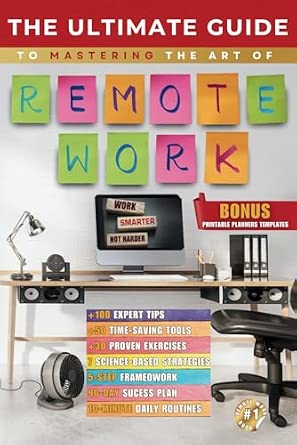
The Ultimate Guide to Mastering Remote Work: Proven Strategies to Stay Productive, Work Efficiently, and Thrive from Anywhere
This guide serves as a solid foundational resource for anyone new to the remote work environment. Compared to the niche focus of Remote Work for Introverts, this book offers a broader, more general approach to productivity and efficiency. It covers the basics of staying focused and working effectively without assuming a specific personality type or technical setup. The strength lies in its universal applicability; the strategies work whether you are in a home office or a coffee shop. The downside is the lack of specific depth on minimalist design or psychological boundaries. It reads more like a general productivity manual than a specialized minimalist manifesto, which might feel generic to advanced users.
Pros:- Broad coverage of essential remote work skills
- Applicable to various home office setups
- Focuses on general efficiency and thriving
- Accessible language for newcomers
Cons:- Lacks specific depth on minimalist principles
- Can feel generic compared to specialized guides
Best for: Beginners transitioning to remote work who need basic productivity frameworks
Not ideal for: Experienced remote workers looking for advanced minimalist psychology or specific tool setups
- ASIN:B0DXCYC82X
- Format:Guide
- Topic:Remote Work Productivity
- Target Audience:General Remote Workers
- Key Theme:Efficiency
- Language:English
- Publication Year:2024
- Category:Business & Money
Our verdict“Choose this if you need a general crash course in remote productivity before specializing in minimalism.”
Remote Work for Introverts: Build a Quiet, Focused Career from Home
This book carves out a specific niche by addressing the psychological needs of introverts in a remote setting. While Proactive Minimalism focuses on output and AI, this guide prioritizes energy conservation and boundary setting. It directly tackles the pain points of excessive meetings and social pressure, which are often overlooked in general productivity guides. The advice is tailored for those who find open digital communication draining and prefer deep, uninterrupted focus. The tradeoff is its limited audience scope; extroverts or highly collaborative roles may find the strategies restrictive. It is less about maximizing speed and more about sustaining mental health and career longevity through quietude.
Pros:- Specifically addresses introvert burnout triggers
- Strategies for reducing meeting frequency
- Focuses on quiet, focused career building
- Validates the need for solitude in work
Cons:- May not suit extroverted personality types
- Less focus on technical or tool-based efficiency
Best for: Introverted professionals who struggle with meeting fatigue and social burnout
Not ideal for: Extroverts or workers in highly collaborative, fast-paced team environments
- ASIN:B0GT2419QG
- Format:Book
- Topic:Career Development
- Target Audience:Introverts
- Key Theme:Quiet Focus
- Language:English
- Publication Year:2024
- Category:Self-Help
Our verdict“This is the essential read if your main remote work challenge is social exhaustion rather than time management.”
Less Stuff, Less Work: How Minimalism Gives You Back Your Time
Unlike the digital-first advice in The Remote Work Focus System, this book tackles the physical and mental load of owning and managing possessions. It posits that remote work efficiency is blocked by the time spent on domestic maintenance and decision fatigue. The core argument is that reducing physical clutter directly frees up mental bandwidth for professional tasks. This perspective is valuable for remote workers who feel their home environment is a source of stress rather than calm. However, it may feel less relevant for those who already live in sparse, organized spaces or who work entirely from a dedicated office. The connection between household minimalism and professional output is strong but indirect.
Pros:- Links physical decluttering to mental clarity
- Focuses on reclaiming time from maintenance tasks
- Holistic approach to work-life balance
- Reduces decision fatigue in daily life
Cons:- Less direct advice on digital workflow tools
- May feel repetitive if you are already a minimalist
Best for: Remote workers whose home environment causes stress or distracts from work
Not ideal for: Those who already maintain a minimalist home or work from a separate office
- ASIN:B0FQYN5S8T
- Product type:Book
- Topic:Minimalism
- Target Audience:Homeowners and Renters
- Key Theme:Time Reclamation
- Language:English
- Publication Year:2024
- Category:Home & Garden
Our verdict“Buy this if your home environment is actively hindering your remote work focus and energy.”
The Remote Work Focus System
This system offers a structured framework for managing attention, distinct from the philosophical approach of Proactive Minimalism. It likely provides specific protocols for handling notifications, emails, and task switching, which are the primary enemies of remote productivity. The emphasis is on systematizing focus rather than just changing mindset or environment. This makes it highly practical for those who know what to do but struggle to execute consistently. The drawback is that rigid systems can feel constraining for creative workers who prefer flexibility. It may also lack the broader life-balance context found in Less Stuff, Less Work, focusing narrowly on the workday itself.
Pros:- Provides a structured system for focus
- Addresses specific digital distractions
- Actionable protocols for daily execution
- Reduces cognitive load in task management
Cons:- Can feel too rigid for creative work
- Narrow focus on work hours only
Best for: Workers who need strict rules and protocols to manage distractions and stay on task
Not ideal for: Creative professionals who resist rigid scheduling or structured workflows
- ASIN:B0H7MH5RHQ
- Format:System/Guide
- Topic:Focus and Productivity
- Target Audience:Remote Workers
- Key Theme:Attention Management
- Language:English
- Publication Year:2024
- Category:Business & Money
Our verdict“This is the tool for you if you need a strict operational framework to protect your attention span.”
The Remote Work Digital Reset: A Practical Digital Minimalism Plan for Calmer Focus, Fewer Interruptions, and Better Workday Boundaries
This guide stands out for its immediate applicability to the specific pain points of remote isolation. Unlike broader lifestyle books like Less Stuff, Less Work, which focus on general minimalism, this text targets the digital noise that fragments a workday. It offers concrete tactics for managing notifications and defining start/stop times, which is critical for those who struggle to separate living spaces from office zones. However, the lack of detailed specs or format information suggests a text-heavy approach that may lack the interactive elements found in more structured systems. It is best suited for readers who already understand the theory of minimalism but need a tactical plan for their screens.
Pros:- Directly addresses digital interruptions
- Provides clear workday boundary frameworks
- Focuses on practical, actionable steps
Cons:- Limited information on format or length
- May overlap with general digital minimalism advice
- No mention of physical environment adjustments
Best for: Remote workers who struggle with blurred work-life boundaries and constant notification fatigue.
Not ideal for: Beginners who need a broader introduction to remote work fundamentals or physical workspace organization.
- Format:Digital Book
- Primary Focus:Digital Minimalism
- Target Audience:Remote Workers
- Key Outcome:Reduced Interruptions
- Methodology:Practical Plan
- Scope:Workday Boundaries
Our verdict“This is the right pick if your primary goal is to silence digital noise and protect your time boundaries immediately.”
The Remote Worker’s Digital Detox Blueprint: Screen Time Strategies to Reclaim Focus, Beat Burnout, and Protect Work-Life Balance
Where The Remote Work Digital Reset focuses on interruptions, this blueprint targets the physiological and psychological toll of screen saturation. It is explicitly designed to combat burnout, making it a stronger choice for those experiencing fatigue rather than just distraction. The emphasis on screen time strategies offers a health-centric perspective on minimalism, distinguishing it from productivity-focused titles like Mastering Remote Work. The tradeoff is that it may feel too focused on recovery for those who are already balanced and simply want to optimize workflow. It serves as a preventative measure for high-intensity remote roles.
Pros:- Explicitly targets burnout prevention
- Focuses on screen time health
- Prioritizes work-life balance
Cons:- May lack tactical workflow tools
- Less focused on tool selection
- Content depth unverified in data
Best for: High-performance remote employees experiencing early signs of digital burnout or eye strain.
Not ideal for: Freelancers or entrepreneurs who need aggressive productivity hacks rather than restorative practices.
- Format:Digital Book
- Primary Focus:Digital Detox
- Target Audience:Remote Workers
- Key Outcome:Burnout Prevention
- Methodology:Screen Time Strategies
- Scope:Work-Life Balance
Our verdict“Choose this option if your main concern is protecting your mental health and energy levels from excessive screen exposure.”
AI Minimalism: Light Work & Deep Living Beyond Automation
This title occupies a unique niche by bridging artificial intelligence with minimalist living principles. Unlike Mastering Remote Work, which covers general flexibility, this book addresses how automation tools can either liberate or overwhelm. It appeals to readers who want to use AI for efficiency without becoming dependent on complex systems. The minimal information provided in the product data is a significant drawback, leaving the depth of technical advice unclear. It is likely best for those already familiar with remote workflows who want to refine their tool stack rather than learn the basics.
Pros:- Unique focus on AI and minimalism
- Addresses modern automation challenges
- Promotes intentional tool use
Cons:- Very sparse product description
- Unclear level of technical complexity
- May not apply to non-digital roles
Best for: Tech-savvy professionals looking to integrate AI tools without increasing digital clutter.
Not ideal for: Non-technical users who find AI concepts intimidating or prefer traditional productivity methods.
- Format:Digital Book
- Primary Focus:AI Minimalism
- Target Audience:Tech-Forward Workers
- Key Outcome:Intentional Automation
- Methodology:Light Work Principles
- Scope:Deep Living
Our verdict“This is the ideal pick for digital natives who want to streamline their workflow using AI without losing their minimalist edge.”
Mastering Remote Work: Strategies for Success in a Flexible World
Compared to the narrow focus of Digital Declutter for Remote Workers, this title offers a broader strategic overview of remote success. It covers the holistic aspects of working flexibly, which makes it a better starting point for those new to the environment. However, this breadth means it lacks the specific tactical depth needed for someone trying to solve a specific problem like notification overload. It serves as a comprehensive manual for adapting to the remote lifestyle, rather than a quick fix for digital hygiene. The lack of detailed specs suggests a standard, potentially generic, self-help format.
Pros:- Covers broad remote work strategies
- Addresses flexibility challenges
- Suitable for foundational learning
Cons:- Lacks specific minimalism tactics
- Generic product description
- May not address digital clutter deeply
Best for: New remote employees who need a broad introduction to workplace flexibility and general success strategies.
Not ideal for: Experienced remote workers looking for advanced digital decluttering techniques or specific app recommendations.
- Format:Digital Book
- Primary Focus:Remote Work Strategy
- Target Audience:Remote Employees
- Key Outcome:Workplace Success
- Methodology:Flexibility Strategies
- Scope:General Remote Work
Our verdict“Select this option if you need a general primer on remote work success before diving into specific minimalism tactics.”
Digital Declutter for Remote Workers: Make Your Workday Calmer and More Focused in 7 Days
The seven-day structure of this guide differentiates it from the open-ended plans in The Remote Work Digital Reset. It provides a clear timeline for implementation, which can reduce decision fatigue for readers who struggle to start. This makes it highly effective for those who need a rigid framework to commit to change. However, the product data notes that details about methods are missing, raising questions about whether the daily tasks are substantive or superficial. It is best for action-oriented readers who prefer a sprint-style approach to cleaning up their digital workspace.
Pros:- Clear seven-day implementation plan
- Focuses on rapid calmness
- Structured for easy adherence
Cons:- Methods and formats are not detailed
- Short timeline may limit depth
- Risk of superficial changes
Best for: Action-oriented remote workers who prefer a short, time-bound challenge to kickstart their minimalism journey.
Not ideal for: Readers who prefer flexible, self-paced learning or deep theoretical explanations over quick fixes.
- Format:Digital Book
- Primary Focus:Digital Declutter
- Target Audience:Remote Workers
- Key Outcome:Calmer Workday
- Methodology:Seven-Day Plan
- Scope:Concentration Improvement
Our verdict“This is the best choice for those who want a clear, short-term roadmap to declutter their digital life quickly.”

How We Picked
I evaluated these resources based on their applicability to the modern remote environment, specifically looking for strategies that address the unique friction points of hybrid and fully remote roles in 2027. Criteria included the clarity of actionable steps, the relevance of digital tool recommendations, and the depth of psychological insight into burnout and focus. I prioritized resources that offer specific frameworks over vague motivational advice, ensuring each selection provides tangible methods for reducing cognitive load.
The ranking logic favors resources that address both the digital and physical aspects of minimalism, as remote work blurs these lines. Books that offer structured plans, such as 7-day resets or systematic audits, were ranked higher than general philosophical treatises. I also weighed the integration of AI and automation tools, as modern minimalism requires leveraging technology to reduce manual workload rather than simply doing less without strategic support.
| remote work minimalism | Format | Topic | Target Audience | Key Theme |
|---|---|---|---|---|
| Proactive Minimalism: How to W | Ebook/Print | Productivity and AI | Remote Workers | Working Less |
| The Ultimate Guide to Masterin | Guide | Remote Work Productivity | General Remote Workers | Efficiency |
| Remote Work for Introverts: Bu | Book | Career Development | Introverts | Quiet Focus |
| Less Stuff | — | Minimalism | Homeowners and Renters | Time Reclamation |
| The Remote Work Focus System | System/Guide | Focus and Productivity | Remote Workers | Attention Management |
| The Remote Work Digital Reset: | Digital Book | — | Remote Workers | — |
| The Remote Worker’s Digital De | Digital Book | — | Remote Workers | — |
| AI Minimalism: Light Work & De | Digital Book | — | Tech-Forward Workers | — |
| Mastering Remote Work: Strateg | Digital Book | — | Remote Employees | — |
| Digital Declutter for Remote W | Digital Book | — | Remote Workers | — |
Factors to Consider When Choosing Remote Work Minimalism
Selecting a resource for remote work minimalism requires understanding your specific friction points. Are you overwhelmed by digital noise, physical clutter, or the ambiguity of work-life boundaries? This guide helps you identify which type of minimalist strategy aligns with your current workflow.Digital Clutter vs. Physical Space
Many remote workers assume that cleaning their desk will solve their focus issues, but digital clutter is often the primary culprit. If your browser tabs number in the dozens and your email inbox is a source of anxiety, prioritize resources focused on digital reset plans. Conversely, if your home office feels cramped or visually noisy, physical minimalism guides will yield better results. The best comprehensive approaches, like Proactive Minimalism, address both, but specialized books allow for deeper dives into one area. Assess your biggest daily distraction before buying to avoid wasting time on irrelevant strategies.
The Role of AI in Minimalism
In 2027, AI minimalism is not about avoiding technology but using it to automate the mundane. Look for resources that teach you how to set up automated filters, smart scheduling, and AI-assisted drafting to reduce manual decision fatigue. Traditional minimalism books from the previous decade may miss this critical component, leading to manual systems that are hard to maintain. If your work involves heavy data processing or communication, choose a guide that explicitly integrates AI tools into a minimalist workflow. This ensures your system is sustainable without requiring constant manual upkeep.
Introversion and Energy Management
Remote work does not eliminate social interaction, it merely changes its format. For introverts, the constant availability of Slack or Zoom can be more draining than a traditional office commute. Resources tailored to introverts focus on energy conservation and selective engagement rather than just time blocking. If you find yourself exhausted after video calls, a general productivity guide may not address the root cause of your fatigue. Choose a book that acknowledges the psychological cost of digital presence and offers strategies for asynchronous communication.
Actionable Frameworks vs. Philosophical Mindsets
Determine whether you need a step-by-step plan or a mindset shift. Some readers thrive with a 7-day digital detox blueprint that provides daily tasks, while others need a broader philosophical framework to change their relationship with work. Actionable guides are better for immediate crisis management, such as when you are on the verge of burnout. Philosophical texts are better for long-term career sustainability and preventing future clutter. Identifying your current urgency level will help you choose between a tactical blueprint and a strategic lifestyle guide.
Sustainability of the System
A minimalist system must be maintainable without constant effort. Complex organizational schemes often fail because they require too much initial setup and ongoing maintenance. Look for resources that advocate for ‘good enough’ systems rather than perfection. Guides that emphasize automation and default settings will likely have a higher success rate than those relying on manual sorting and daily discipline. The goal is to reduce decision fatigue, so the resource itself should not add to your cognitive load with overly complicated rules.
Frequently Asked Questions
Is remote work minimalism the same as doing less work?
No, it is not about reducing output but about removing friction and distraction. Remote work minimalism focuses on eliminating the non-essential elements—such as redundant meetings, excessive notifications, and physical clutter—that slow you down. The goal is to create an environment where deep work can happen more easily. By stripping away noise, you often find that your actual productivity increases because you are not constantly context-switching. It is a strategy for efficiency, not laziness.
How do I start if I am completely overwhelmed by digital tools?
Start with a digital audit rather than trying to delete everything at once. Identify the top three tools that cause the most interruptions and disable their notifications first. Use a resource like The Remote Work Digital Reset to guide you through a structured unsubscription process. Focus on one category at a time, such as email or social media, to avoid decision fatigue. Small, consistent reductions in noise are more sustainable than a drastic, unsustainable purge.
Can minimalism help with work-life balance in a remote setting?
Yes, by establishing clear boundaries. Remote work often blurs the line between personal and professional time, leading to burnout. Minimalist resources teach you how to create physical and digital cues that signal the end of the workday. This might involve a specific shutdown ritual, a separate workspace, or a strict ‘no-email’ period in the evening. These boundaries help your brain switch modes, allowing for genuine rest and recovery.
Do I need to buy new equipment to achieve remote work minimalism?
Generally, no. In fact, minimalism often encourages using what you already have more effectively. The focus should be on organizing and optimizing your current setup rather than purchasing new gadgets that might add to your clutter. Before buying anything, ask if it solves a specific friction point or if it just looks nice. Many minimalist guides explicitly warn against ‘productivity porn’ and unnecessary tech purchases.
How is AI changing the concept of work minimalism?
AI shifts the focus from manual organization to strategic delegation. Instead of manually sorting emails or scheduling meetings, you can use AI tools to handle these tasks automatically. This allows you to maintain a minimalist workflow without the burden of constant manual upkeep. Resources that address AI minimalism teach you how to configure these tools to act as filters, reducing the volume of information you need to process manually. It is about using technology to do less, not more.
Conclusion
Choosing the right resource for remote work minimalism depends on your specific pain points. If you are looking for a best overall solution that balances modern tech with human focus, Proactive Minimalism is the standout choice. For those who need an immediate, tactical fix for digital overload, The Remote Work Digital Reset offers the most actionable best value plan. If you are an introvert struggling with the energy costs of remote collaboration, Remote Work for Introverts is the best for beginners in understanding their specific needs. For a holistic approach that combines physical and mental clarity, Less Stuff, Less Work remains a foundational best premium choice for long-term lifestyle change. Assess whether your primary struggle is digital noise, physical space, or energy management, and select the guide that addresses that specific friction.
Fall Picks
fall essentials
As an affiliate, we earn on qualifying purchases.