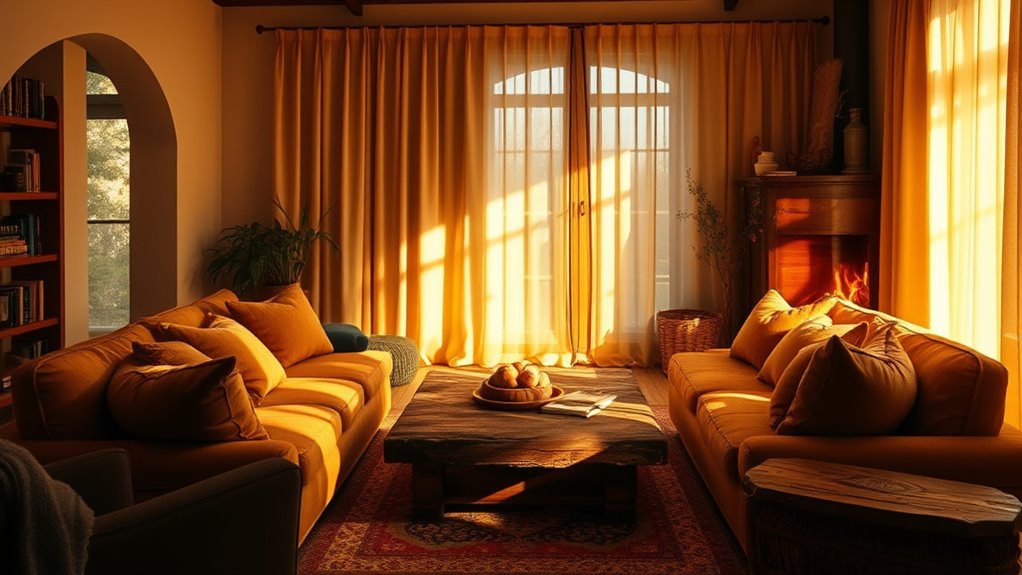

Choosing the right color temperature is key to setting the mood in your home. Warm light (2700K-3000K) creates a cozy, inviting atmosphere perfect for relaxation and comfort, while cooler light (3500K-5000K) promotes alertness and focus, ideal for workspaces. Layering different lighting types and adjusting their temperatures can enhance both ambiance and functionality. If you’d like to discover how to tailor your lighting for every space, there’s more to explore.
Key Takeaways
- Warm light (2700K-3000K) creates a cozy, inviting atmosphere, promoting relaxation at home.
- Cooler light (3500K-5000K) enhances alertness and focus, suitable for work and active areas.
- Layering ambient, task, and accent lighting helps tailor mood and functionality within different spaces.
- Bulb choice, like LEDs or incandescent, influences the emotional ambiance through color temperature.
- Adjusting lighting temperature supports personal preferences and enhances overall home well-being.
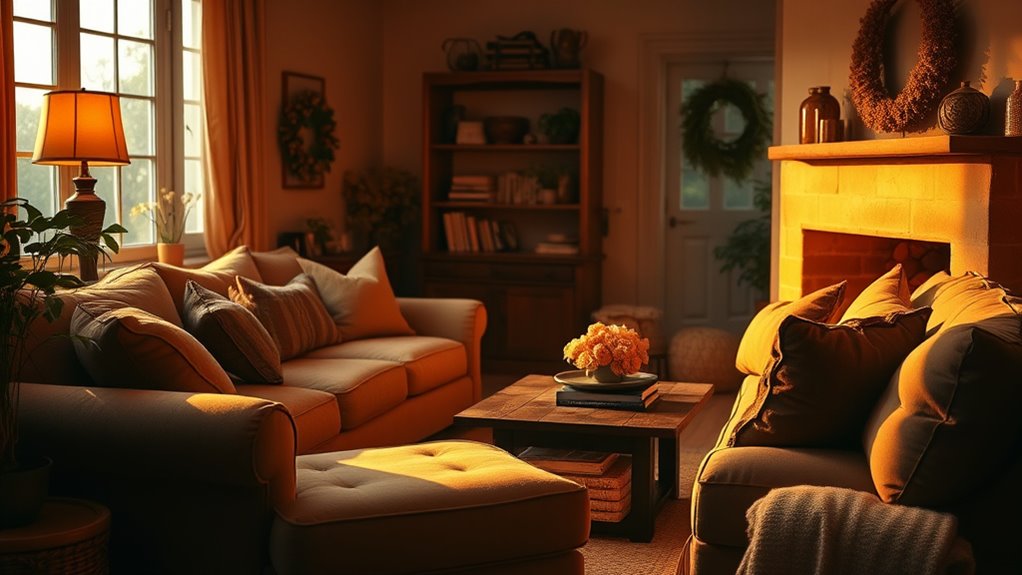
Lighting plays a essential role in shaping the mood of your home, and choosing the right color temperature can make a significant difference. Your lighting choices influence how a space feels, affecting everything from relaxation to energy levels. By selecting the appropriate color temperature, you can craft an emotional ambiance that aligns with each room’s purpose and your personal preferences. For instance, warm light creates a cozy, inviting atmosphere, perfect for unwinding after a long day, while cooler light promotes alertness, making it ideal for workspaces or kitchens.
Understanding the nuances of color temperature helps you tailor your lighting to evoke specific feelings. Warm tones, generally around 2700K to 3000K, emit a soft, yellowish glow similar to sunset or candlelight. This type of lighting encourages relaxation, making it easier to unwind and fostering intimacy in living rooms and bedrooms. On the other hand, neutral or daylight temperatures, ranging from 3500K to 5000K, produce a brighter, whiter light that mimics natural sunlight. This is great for functional areas like home offices, bathrooms, or kitchens where clarity and focus are essential. When you choose your lighting wisely, you influence not just the look of a space but also the emotional ambiance you want to cultivate.
Warm tones (2700K-3000K) foster relaxation, while neutral daylight (3500K-5000K) enhances focus and clarity in functional spaces.
Your lighting choices can also be layered to enhance mood and functionality. Consider combining ambient, task, and accent lighting to create a balanced environment. For example, use warm ambient lighting to set a relaxing tone and add task lighting with a cooler hue for activities that require focus. Accent lights can highlight artwork or architectural features, adding depth and interest. Experimenting with dimmers allows you to adjust brightness and color temperature on the fly, giving you control over the emotional ambiance throughout the day or evening. Additionally, understanding resources and tools available can help you optimize your lighting setup for both aesthetics and efficiency.
In addition, the type of bulbs you select impacts the overall mood. LED bulbs offer versatility, with options to change color temperature easily, while incandescent bulbs naturally emit warm light that enhances cozy feelings. The key is to match your lighting choices to the mood you want to evoke. Think about how each room’s purpose influences your color temperature decision—warm for comfort and relaxation, cool for productivity. When you pay attention to these details, your home becomes a space that not only looks good but also feels right, supporting your emotional well-being through thoughtful lighting choices.

SAMSUNG 34" ViewFinity S50GC Series Ultra-WQHD Monitor, 100Hz, 5ms, HDR10, AMD FreeSync, Eye Care, Borderless Design, PIP, PBP, LS34C502GANXZA, 2023, Black
DO MORE ON ONE SCREEN: See every detail on the wider display featuring a 21:9 aspect ratio; Ultra...
As an affiliate, we earn on qualifying purchases.
Frequently Asked Questions
How Does Color Temperature Affect Sleep Quality?
You’ll find that warmer color temperatures, like soft yellow or amber light, help improve your sleep quality by supporting your sleep cycle and boosting melatonin production. Cooler, bluish tones can disrupt your melatonin levels, making it harder to fall asleep. To enhance your sleep, switch to warmer lighting in the evening and avoid bright, blue-rich lights before bed. This simple change can promote better rest and a more restful night.
Can Changing Light Color Improve Productivity at Home?
Switching up your light color can turn your home into a productivity powerhouse. Bright, cool ambient lighting acts like a mental shot of espresso, boosting focus and alertness. Using color psychology, you can choose hues that energize or calm your mind, creating the perfect environment for work or study. When you control your light’s color, you harness the power of mood and mindset to get more done effortlessly.
What Color Temperature Is Best for Relaxation?
You should choose warm tones for relaxation, as they create a cozy, calming atmosphere. Warm tones typically have a lower color temperature, around 2700K to 3000K, which mimics sunset lighting. Cool shades, with higher color temperatures around 5000K or more, tend to be energizing rather than relaxing. So, opt for warm tones to unwind and promote restful sleep in your home.
How Do I Choose the Right Bulb for Different Rooms?
To select the right bulb for your rooms, consider lamp placement and bulb wattage. For ambient lighting in living rooms, use bulbs with lower wattage and warm color temperatures for coziness. In task areas like kitchens or offices, opt for brighter bulbs with higher wattage and cooler tones to improve visibility. Adjust lamp placement to guarantee even light distribution, minimizing glare and creating a welcoming, functional space tailored to each room’s needs.
Does Natural Light Influence Mood Differently Than Artificial Light?
Natural light acts like a gentle breeze that lifts your mood differently than artificial light, which can sometimes feel like a steady drumbeat. When you embrace biophilic design, you connect with nature’s rhythms, helping your circadian rhythm stay balanced. Natural light influences your mood by boosting serotonin and regulating sleep, making you feel more energized and relaxed. So, let the sunlight be your daily dose of emotional harmony.

LG 34WR55QK-B 34-inch UltraWide WQHD (3440 x 1440) Curved Computer Monitor, 100Hz, 5ms, HDR10, Reader Mode, HDMI, DisplayPort, USB Type-C, Tilt/Height Adjustable Stand, Black
21:9 UltraWide - The 21:9 UltraWide WQHD (3440 x 1440) monitor is great for work. The widescreen allows...
As an affiliate, we earn on qualifying purchases.
Conclusion
Choosing the right color temperature is like tuning a musical instrument; it sets the perfect tone for your home’s atmosphere. Warm lights wrap your space in a cozy embrace, while cool tones bring clarity and focus. By understanding how color temperature influences mood, you craft a sanctuary that sings with comfort and energy. So, think of your lighting as the brushstrokes of an artist, painting the perfect ambiance for every moment at home.

LG 34" Curved UltraWide WQHD(3440x1440) Smart Monitor with HDR10 99% sRGB, 100Hz, Magic Remote, AirPlay 2 & Adjustable Stand, webOS
Work Smart, Play Smart on a 21:9 Smart Screen - LG Smart Monitor is designed for multitasking while...
As an affiliate, we earn on qualifying purchases.
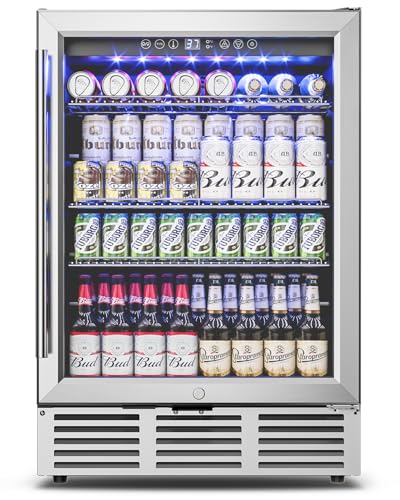
Feelfunn 24 inch Beverage Refrigerator - 180 Cans Under Counter Beverage Fridge with Glass Door & Safety Lock for Beer Wine Soda, Built-in or Freestanding Drink Fridge for Home Office Kitchen or Bar
Spacious Size & Large Capacity: This under counter beverage refrigerator measures 23.4" x 24.5" x 34.3" and can...
As an affiliate, we earn on qualifying purchases.