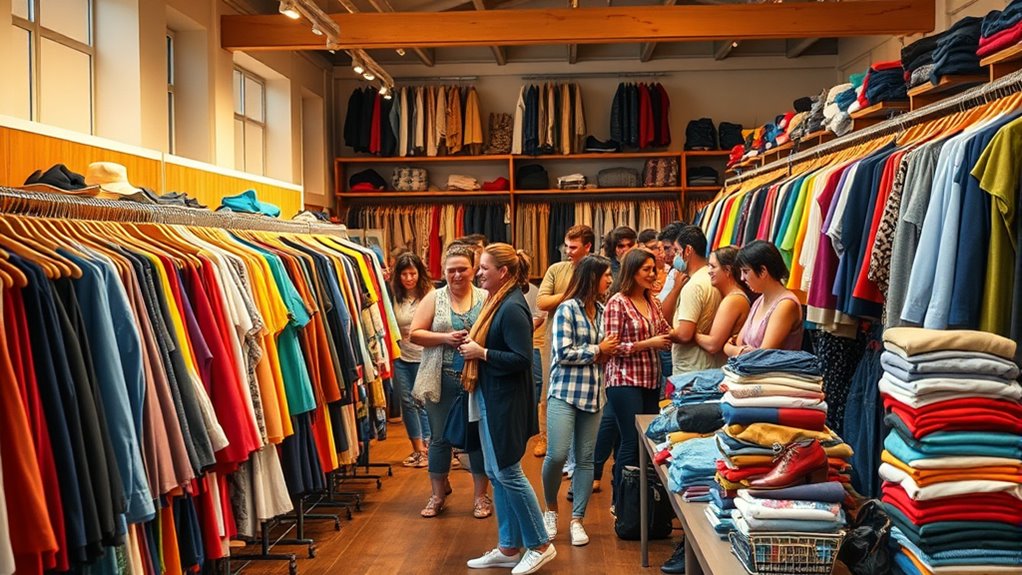
To host a clothing swap that works, choose a convenient location and promote it widely on social media and community boards. Set clear guidelines about acceptable items and limit how many pieces each person brings. Organize the space by clothing type, encourage community chatter, and add friendly touches like music or snacks. By fostering a fun, inclusive vibe and educating participants about sustainability benefits, you’ll create a successful event—learn more to make yours truly memorable.
Key Takeaways
- Select a central, accessible location and promote the event widely to attract diverse participants.
- Set clear guidelines on item condition, quantity limits, and acceptable clothing to ensure quality and fairness.
- Organize clothing areas by type and facilitate smooth flow with volunteers for an efficient experience.
- Incorporate educational talks, eco-friendly messaging, and community-building activities to enhance engagement.
- Encourage ongoing participation to sustain interest, reduce waste, and foster a supportive sustainable fashion community.

Ever wondered how you can refresh your wardrobe without spending a dime? Hosting a clothing swap is a fantastic way to do just that while promoting sustainable fashion and strengthening community engagement. When you organize a swap, you create an event where friends, neighbors, or community members can bring gently used clothes to trade for new-to-them items. It’s a simple, eco-friendly way to give wardrobe staples a second life, reducing textile waste and decreasing the environmental impact of fast fashion. Plus, it’s a fun social activity that fosters connection and shared values around sustainability.
Host a clothing swap to refresh your wardrobe sustainably and build community connections.
To make your clothing swap successful, start by choosing a convenient location, like a community center, local park, or even your backyard. Spread the word through social media, community boards, or email lists to gather a diverse group of participants. Setting clear guidelines is essential—encourage attendees to bring clean, gently used clothing in good condition. You might want to specify acceptable items, such as clothing, accessories, or shoes, and suggest a reasonable number of items per person to keep the event manageable and fair. This ensures everyone leaves with something they love, and no one feels overwhelmed by excess.
Creating a welcoming, organized environment helps foster community engagement. Set up designated areas for different clothing types—tops, bottoms, dresses, etc.—to make browsing easier. Consider having volunteers or hosts to facilitate the flow, answer questions, and ensure the event remains positive and inclusive. You can also incorporate a brief talk about sustainable fashion, emphasizing how swapping helps reduce waste and supports local efforts to promote eco-conscious lifestyles. This education piece inspires participants to think differently about their consumption habits and encourages ongoing community involvement.
Beyond just exchanging clothes, a clothing swap can become a platform for building relationships. Encourage attendees to chat, share styling tips, or even swap stories behind their items. Perhaps include some light refreshments or music to create a festive atmosphere. When everyone leaves with new wardrobe additions, they also carry a sense of contribution—knowing they helped divert clothes from landfills and fostered sustainable habits within the community. Additionally, you might partner with local organizations or eco-friendly brands to provide educational materials or small giveaways, deepening the community engagement aspect.
In the end, hosting a clothing swap isn’t just about getting free clothes; it’s a commitment to sustainable fashion, reducing waste, and nurturing community ties. It’s a practical, enjoyable way to make a positive impact while helping your friends and neighbors look great and feel good about their choices. When you approach it with enthusiasm and clear organization, you turn a simple idea into a meaningful event that everyone will appreciate and want to repeat.
Frequently Asked Questions
How Many Attendees Are Ideal for a Successful Swap?
For a successful swap, aim for an attendee limit of around 15 to 25 people. This creates an ideal group where everyone has enough items to exchange without feeling overwhelmed. With this size, you encourage lively participation and guarantee that each attendee gets a fair chance to trade. Keep the group manageable so you can organize easily and maintain a fun, engaging atmosphere for everyone involved.
What Is the Best Way to Promote the Event?
Imagine vibrant flyers and colorful social media posts catching everyone’s eye. You should use social media marketing to create buzz, sharing eye-catching images and engaging stories. Partner with local businesses, community centers, and schools to spread the word through flyers and word-of-mouth. This combination of digital and local outreach makes your event irresistible, attracting more attendees and ensuring a lively, successful clothing swap everyone will enjoy.
How Should I Handle Clothing Donations That Are Damaged?
You should start with donation assessment to identify damaged clothing. Categorize items based on damage level—such as minor, major, or unusable. Clearly communicate to donors which damages are acceptable and which aren’t. For items with minor issues, consider repairing or cleaning them before accepting. Reject or recycle clothes with major damage that can’t be fixed, ensuring your swap remains quality-focused and respectful to participants.
What Are Creative Themes for a Clothing Swap?
You can choose fashion-forward themes like “Futuristic Chic” or “Bold & Bright,” which inspire creative outfits. Vintage-inspired ideas such as “Retro Revival” or “70s Groove” add nostalgic flair. Incorporate fun elements like accessories or specific colors to make the theme pop. These themes encourage participants to get inventive, making your swap exciting and stylish. Keep the mood lively and open to diverse fashion expressions!
How Can I Ensure Sustainable and Eco-Friendly Practices?
To guarantee your clothing swap is sustainable and eco-friendly, choose items made from sustainable materials like organic cotton or recycled fabrics. Use eco-friendly packaging, such as biodegradable bags or reusable containers, to reduce waste. Encourage attendees to bring gently used clothes and avoid single-use items. Promote recycling and donation options for unclaimed clothes, and educate participants about eco-conscious practices to make your event more environmentally responsible.
Conclusion
Now you’ve got everything you need to host a clothing swap that’s truly legendary. Imagine turning your closet chaos into a fashion frenzy—your friends will be talking about this swap for years! With just a little planning, you’ll create a wardrobe revolution and save enough money to buy a private island. So go ahead, make this swap the stuff of legends, and watch your style and social life skyrocket to epic heights!