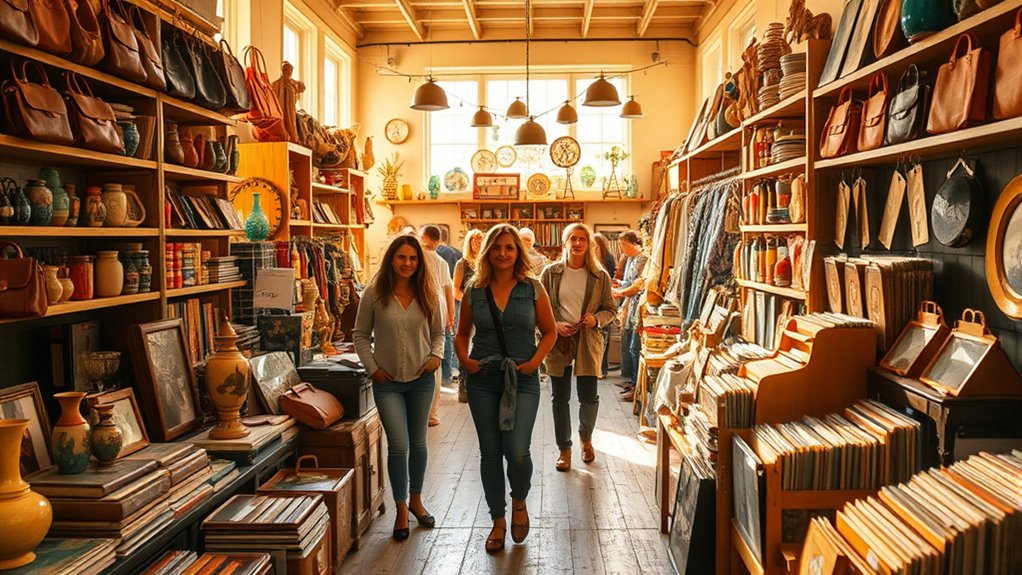

Shopping secondhand with confidence is easy when you choose reputable venues like thrift stores, consignment shops, or trusted online marketplaces. Look for authentic vintage pieces and check item conditions to guarantee quality. Opting for secondhand reduces your environmental impact, supports sustainable fashion, and helps you find unique, timeless styles that express your personality. With a little knowledge and care, you can enjoy stylish, eco-friendly finds that stand out—keep exploring to learn more about making confident secondhand choices.
Key Takeaways
- Research reputable stores and online platforms with good reviews and transparent return policies.
- Verify the authenticity and condition of vintage or designer items before purchasing.
- Understand the store’s or seller’s policies on refunds, exchanges, and authenticity guarantees.
- Inspect items thoroughly for defects, stains, or damages to ensure quality and value.
- Trust your personal style preferences while embracing unique vintage pieces confidently.
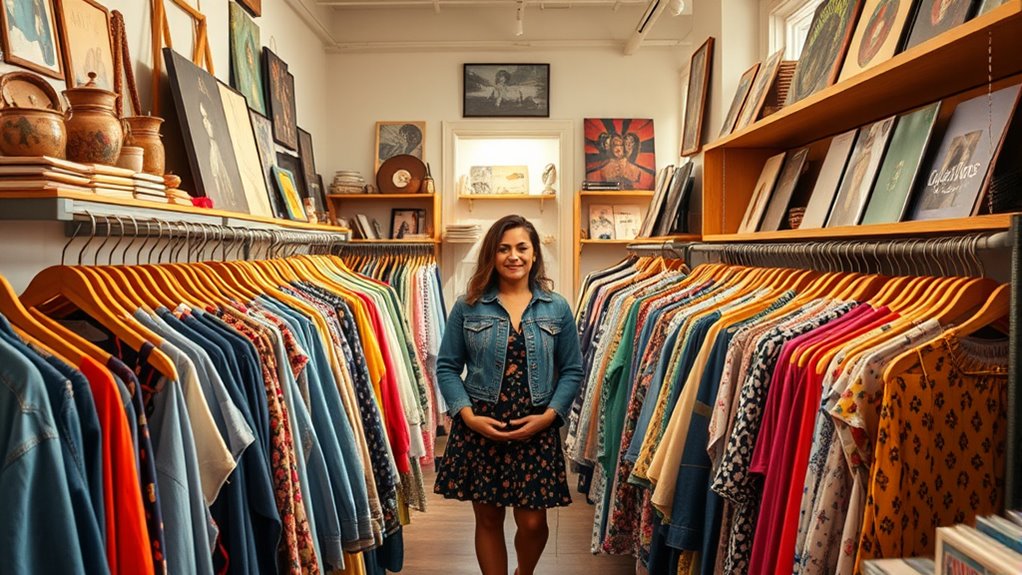
Have you ever considered how secondhand shopping can be both budget-friendly and eco-conscious? When you explore thrift stores, consignment shops, or online marketplaces, you’re making a choice that benefits both your wallet and the planet. One of the most exciting aspects of shopping secondhand is the opportunity to embrace vintage trends. These timeless pieces often come with unique details that you can’t find in mass-produced clothing. Whether it’s a 70s-inspired blazer or a retro graphic tee, vintage items let you stand out and showcase your personal style while staying on-trend. Plus, vintage fashion isn’t just about looking good; it’s a way to connect with history and add authenticity to your wardrobe. As the popularity of secondhand shopping grows, more people are recognizing its role in promoting sustainable fashion, helping to decrease waste and environmental impact.
Secondhand shopping lets you embrace vintage style while being eco-friendly and budget-conscious.
Choosing secondhand also aligns perfectly with sustainable fashion principles. Fast fashion encourages rapid consumption, leading to overflowing landfills and environmental degradation. By opting for pre-loved clothing, you’re reducing demand for new manufacturing and cutting down on waste. Every piece you buy secondhand extends its life cycle, making your wardrobe more eco-friendly. It’s a simple yet powerful way to decrease your carbon footprint without sacrificing style. The more you embrace sustainable fashion, the more you contribute to a healthier planet. And because vintage and secondhand pieces often come with stories behind them, you’re participating in a more mindful and responsible approach to fashion.

Iswee Shoulder Bag Satchel Purses Vintage Leather Handbags for Women Luxury Tote Purse Large Crossbody Bags Hobo (Coffee)
The satchel bag is made from vegetable tanned leather, made by craftsmanship, wear-resistant and have a soft hand…
As an affiliate, we earn on qualifying purchases.
As an affiliate, we earn on qualifying purchases.
Frequently Asked Questions
How Can I Verify the Authenticity of Designer Secondhand Items?
To verify the authenticity of designer secondhand items, start by checking for authenticity certificates if available. Look closely at the serial number and use the brand’s official verification tools or websites for serial number verification. Inspect the craftsmanship, logo placement, and materials. If you’re unsure, consult a professional authenticator or compare your item to official store photos. Doing these steps helps guarantee you’re buying genuine designer pieces with confidence.
What Are the Best Ways to Clean and Care for Secondhand Clothing?
Don’t let your secondhand finds go to pot; treat them like gold. Start with gentle detergent selection to avoid damage, and wash items according to their care labels. For storage tips, keep clothes in a cool, dry place, folded or hung properly to prevent wrinkles and mold. Regularly inspect and clean your wardrobe to keep secondhand clothing looking fresh and vibrant, ensuring they last for years to come.
How Do Return Policies Typically Work for Secondhand Purchases?
Return policies for secondhand purchases usually give you a return window, often ranging from a few days to several weeks, depending on the seller. You typically need to follow their refund process, which may involve providing proof of purchase and returning the item in its original condition. Make sure to check the specific seller’s policy before buying, so you know how to proceed if the item doesn’t meet your expectations.
Are Secondhand Electronics Safe and Reliable to Buy?
You can absolutely find safe and reliable secondhand electronics if you do a reliability assessment first. Focus on electronics safety by checking seller reviews, asking about warranty options, and inspecting product condition thoroughly. Many reputable sellers test devices before selling, ensuring quality. So, don’t worry—secondhand electronics can be a smart, budget-friendly choice when you take these precautions, making your purchase both safe and dependable.
How Can I Spot Hidden Damages or Repairs in Secondhand Goods?
You can spot hidden damage or repair signs by thoroughly inspecting the item’s exterior and asking about its history. Look for uneven surfaces, mismatched parts, or paint inconsistencies that may indicate repairs. Test the electronics or mechanics to guarantee they work properly, and check for any unusual odors. Always request receipts or maintenance records, as these can reveal past repairs and help you avoid hidden damages.
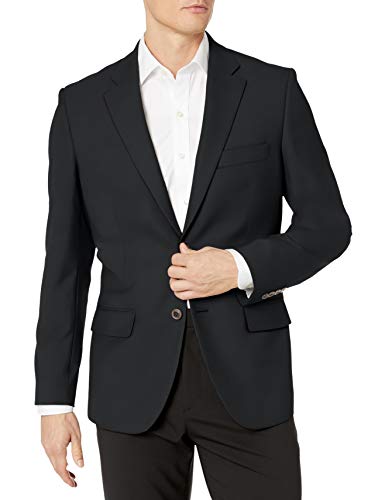
Amazon Essentials Men's Long-Sleeve Button-Front Stretch Blazer, Black, 42
REGULAR FIT: Comfortable, easy fit through the shoulders, chest, and waist.
As an affiliate, we earn on qualifying purchases.
As an affiliate, we earn on qualifying purchases.
Conclusion
When you shop secondhand, you’re opening a door to a world of stories and possibilities. Each piece you pick up is like a chapter waiting to be rewritten, a chance to give new life. Trust your instincts and embrace the journey—every item is a symbol of sustainability and individuality. With confidence, you become a steward of change, turning discarded treasures into treasured finds. Your choices ripple outward, shaping a brighter, more mindful future.
eco-friendly secondhand clothing online
As an affiliate, we earn on qualifying purchases.
As an affiliate, we earn on qualifying purchases.

30pcs Closet Dividers Baby Clothes Organizers – Girl Boy Closet Organizers Clothes Dividers Closet Labels Closet Separators Garment Organizer Boutique Clothing Rack Dividers Hanger Dividers Hanger
Get Organized: Clothes organizer can make your closet a lot neater. Suitable for all sorts of clothing, they…
As an affiliate, we earn on qualifying purchases.
As an affiliate, we earn on qualifying purchases.